Brewing Proteins from Thin Air: The TUM Breakthrough in Sustainable Amino Acid Synthesis
By the year 2050, the United Nations projects that the global population will necessitate a 60 percent increase in food production. This daunting forecast is compounded by a sobering reality: agricultural land availability is expected to expand by a mere two percent. As the world approaches this critical inflection point, the search for alternative food production methods has shifted from academic curiosity to a global imperative.
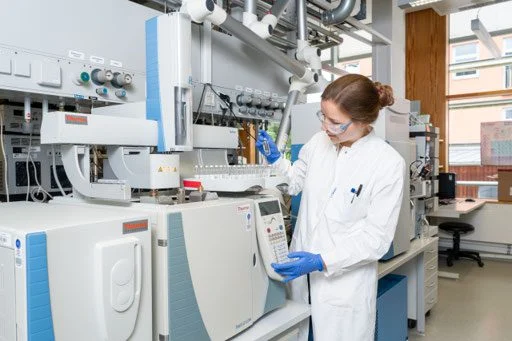
Researchers at the Technical University of Munich (TUM) have recently unveiled a pioneering solution that could fundamentally alter the agricultural supply chain. A team at the TUM Campus Straubing for Biotechnology and Sustainability has successfully engineered a “plug-and-play” modular process to produce essential amino acids—the building blocks of protein—using nothing more than carbon dioxide, hydrogen, and renewable energy. This development offers a promising pathway toward decoupling high-yield food production from the resource-intensive limitations of traditional farming.
The Scientific Core: Converting Electricity into Biomolecules
The core of the TUM research, published recently in Nature Communications under the title “Plug and Play – Enzymatic Amino Acid Production from Methanol and Carbon Dioxide,” centers on an elegant, multi-stage chemical conversion process.
The methodology begins with the capture of solar energy via photovoltaic systems, which is then utilized to generate hydrogen. This hydrogen is combined with captured carbon dioxide to produce methanol—a common industrial alcohol. While methanol is already a staple in chemical manufacturing, the innovation lies in what happens next: the introduction of specialized enzymes that act as biocatalysts.
By selecting specific enzyme configurations, the researchers can effectively “program” the conversion of methanol into specific amino acids. This modular approach allows for high precision, effectively turning a simple alcohol into the sophisticated molecular structures required for animal nutrition and human food security.
Chronology of Development: From Proof-of-Concept to Platform Technology
The path to this breakthrough was not overnight; it represents a multi-year effort to refine enzymatic pathways and stabilize volatile chemical processes.
- 2021–2022: Initial Explorations: The research team began investigating the feasibility of bypassing traditional photosynthesis. Recognizing that plants are inherently inefficient at converting solar energy into biomass, the team sought to create an artificial, high-efficiency pathway.
- 2023: The L-Alanine Milestone: The team achieved their first major breakthrough by successfully synthesizing L-alanine from green methanol. This served as the primary proof-of-concept, confirming that the enzymatic “construction kit” was viable for complex organic synthesis.
- 2024–2025: Expanding the Library: Building upon the success of L-alanine, the team focused on scaling the enzymatic library. They successfully optimized processes for an additional six amino acids: glycine, serine, L-aspartic acid, L-valine, L-glutamic acid, and L-proline.
- 2026: Scaling and Publication: With the publication of their latest findings, the TUM researchers have moved from producing single molecules to establishing a scalable platform technology. Current efforts are now transitioning toward increasing production volumes to meet industrial-grade demand.
Supporting Data: The Case for Decoupling Protein from Land
The necessity for this technology is grounded in the current, fragile state of global livestock production. As doctoral candidate Viktoria Lehmann explains, the current model of industrial agriculture is fundamentally resource-inefficient.
“A dairy cow needs far more than the grass growing in its pasture,” Lehmann notes. “High milk yields require supplemental protein, which is typically supplied through animal feed. These feeds are enriched with amino acids—the chemical building blocks of proteins. Across livestock production systems worldwide, millions of tons of amino acids are used as feed additives.”
The environmental cost of this system is staggering. Traditional feed crops like soy require vast tracts of land, massive volumes of water, and significant inputs of fertilizers, which often contribute to deforestation and soil degradation. By moving the production of these amino acids into a controlled, lab-based environment, the TUM team aims to bypass the need for traditional feed crops entirely.
Efficiency Comparison
| Feature | Traditional Feed Production | TUM Enzymatic Process |
|---|---|---|
| Land Footprint | Extremely High | Negligible |
| Water Usage | High (Irrigation) | Minimal (Process water) |
| Energy Source | Solar (Photosynthesis – 1-2% efficient) | Solar (Photovoltaics – 15-20% efficient) |
| Input Materials | Soil, Fertilizer, Pesticides | CO2, Hydrogen, Renewable Power |
Official Perspectives: Rethinking the Future of Agriculture
The project represents a shift in philosophy at the TUM Campus Straubing. Professor Volker Sieber, PhD, head of the Chemistry of Biogenic Resources, emphasizes that this research is not merely about creating a lab-grown supplement; it is about redesigning the chemical basis of our food system.
“Plants use sunlight to build biomass, but they are relatively inefficient at doing so,” says Professor Sieber. “We are investigating an alternative pathway in which renewable energy is first converted into chemical energy carriers and then into valuable protein building blocks. In the long term, this approach could help make more productive use of available land and enable a more sustainable production of amino acids.”
The research team is acutely aware of the challenges ahead. While the chemistry is sound, the engineering challenge of scaling this to industrial levels remains. Vivian Willers, PhD, whose doctoral work provided the foundational logic for the platform, describes the technology as a “construction kit.” This modularity is intended to lower the barrier for future developers, allowing industry partners to plug in new enzymes as they are discovered or engineered to produce even more complex proteins.
Implications: Beyond the Feed Trough
While the immediate application is focused on animal feed, the implications of this technology extend far into the future of food technology.
1. Cultured Meat Production
One of the most significant bottlenecks in the nascent cultured meat (lab-grown meat) industry is the cost and sourcing of nutrient media—the “broth” that feeds the cells as they grow into tissue. Amino acids are the primary components of these media. By producing these components through a sustainable, CO2-derived process, the cost of cultured meat could drop significantly, potentially making it competitive with traditional livestock.
2. Mitigating Soy Dependence
Global reliance on soy as a protein source has driven land-use changes in ecologically sensitive areas like the Amazon. If a significant percentage of the world’s supplemental protein can be produced in bioreactors powered by renewable energy, the pressure on global agricultural land would be drastically reduced. This, in turn, could allow for the rewilding of current farmland or the redirection of crops toward human consumption rather than animal feed.
3. Circular Carbon Economy
The use of CO2 as a feedstock is a masterclass in circular economics. By capturing carbon emissions from industrial processes and turning them into valuable chemical products, the technology potentially serves a dual purpose: mitigating greenhouse gas emissions while simultaneously producing high-value commodities.
The Road to Commercialization: Challenges and Outlook
Despite the excitement surrounding this technology, the TUM team remains grounded in reality. The current production volumes are, by their own admission, too low for commercial viability. Transitioning from a laboratory beaker to a multi-ton industrial bioreactor involves significant technical hurdles, including enzyme stability, purification costs, and the overall efficiency of the CO2-to-methanol conversion.
Professor Sieber notes that their current work is primarily a “proof of technological feasibility.” The next phase of research will focus on the performance of the enzymes themselves. Enzymes are delicate, and optimizing them to survive the rigors of an industrial reactor while maintaining high turnover rates is the current frontier of the research.
As the team continues to refine their “plug-and-play” system, the goal is clear: to demonstrate that the future of protein does not necessarily lie in the soil. By harnessing the precision of biotechnology and the power of the renewable energy transition, the TUM researchers are effectively attempting to rewrite the rules of biological production.
In a world where land is finite and the demand for food is ballooning, the ability to synthesize the building blocks of life from the very atmosphere that surrounds us may well be the most vital agricultural innovation of the 21st century. Whether or not this technology reaches the mass market in the next decade will depend on scaling efficiency, but for now, the proof is in the molecules.