Unlocking the Andes Virus: Scientists Map the Molecular Key to a Deadly Pathogen
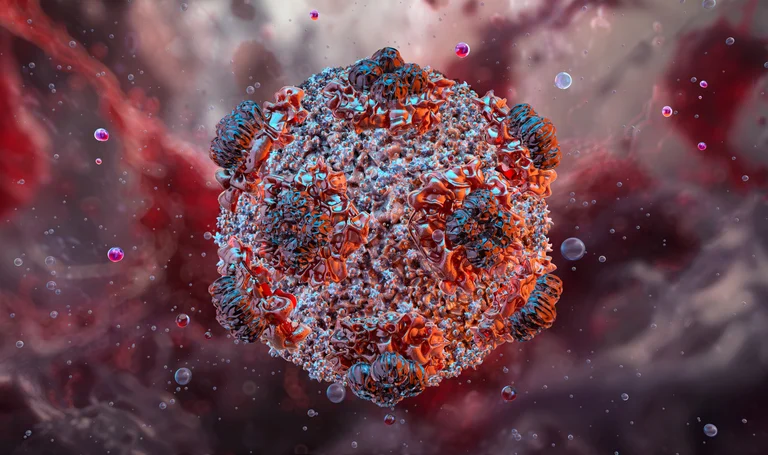
Hantaviruses have long been recognized as formidable threats to human health. While many hantaviruses are transmitted primarily through contact with the excreta of infected rodents—causing severe pulmonary syndromes that can escalate into fatal respiratory failure—the Andes virus (ANDV) represents a particularly menacing outlier. Unlike its viral cousins, ANDV possesses the rare and terrifying capability of human-to-human transmission.
For years, the mechanisms by which this virus latches onto and infiltrates human cells remained shrouded in mystery. Now, a collaborative team of scientists from the Albert Einstein College of Medicine, the Institut Pasteur, and LSU Health Shreveport has achieved a scientific milestone: resolving the interaction between the Andes virus and its human cellular receptor in near-atomic detail. Their findings, published in the journal Nature under the title "Structural basis for protocadherin-1 recognition by New World hantaviruses," offer more than just a map of viral entry—they provide a strategic blueprint for the development of life-saving antiviral therapies.
The Architecture of Infection: How the Virus Gains Entry
The core of the research focused on the Andes virus "spike"—the protein complex on the virus’s surface responsible for sniffing out and latching onto a target cell. Previous studies had established that New World hantaviruses, including ANDV, utilize a specific cell-surface protein called protocadherin-1 (PCDH1) to initiate infection. However, the precise geometry of this interaction had eluded researchers for years.
The difficulty lay in the complexity of the viral structure. When researchers attempted to study isolated spike subunits, they failed to bind with PCDH1. It became clear that the binding mechanism was not a simple "lock and key" interaction between a single protein and a receptor; rather, it was a collective effort. The virus required its fully assembled, four-part structure to interact with the host cell.
Leveraging Artificial Intelligence
To overcome this, the research team employed cutting-edge engineering techniques. They created a soluble version of the Andes virus spike, utilizing an artificial intelligence-designed scaffold to stabilize the complex. By providing this synthetic structural support, the scientists were able to keep the square-shaped complex intact outside the viral environment. This allowed them to combine the stabilized spike with the PCDH1 receptor and analyze the resulting union using cryo-electron microscopy (cryo-EM), a revolutionary imaging technique that captures the molecular structure of proteins in their native states at near-atomic resolution.
The Chronology of the Discovery
The journey to this discovery was one of incremental breakthroughs, building upon decades of hantavirus research:
- Initial Identification: Early studies identified PCDH1 as the critical receptor for New World hantaviruses, distinguishing them from Old World variants.
- The Structural Wall: Researchers identified that the viral Gn glycoprotein was the primary player in the entry process but were stymied by the inability to observe the assembly in action.
- Engineering the Spike: Between 2024 and 2025, the teams from Albert Einstein, Institut Pasteur, and LSU Health Shreveport collaborated to design a stable, soluble viral spike. This involved AI-driven protein modeling to ensure the complex would not fall apart during analysis.
- Cryo-EM Breakthrough: In late 2025 and early 2026, the team successfully captured the images of the spike bound to PCDH1.
- Validation: Through mutagenesis experiments, the team identified the specific "loops" within the Gn glycoprotein that dictate the binding site, confirming their findings by successfully transferring this binding ability to Old World hantaviruses.
Deciphering the "Deep Pocket" Strategy
The images produced by the cryo-EM analysis revealed a sophisticated evolutionary defense mechanism. The PCDH1 receptor binds asymmetrically within a deep, central pocket formed by four copies of the viral Gn glycoprotein.
This is a significant departure from standard viral entry models. Most viruses present their receptor-binding sites on the exterior of a protein, making them easily accessible to neutralizing antibodies. The Andes virus, however, constructs its binding site through the arrangement of its components, effectively recessing it into a surface depression.
The Antibody Dilemma
The researchers tested four distinct neutralizing antibodies to see how they interacted with this structure. They discovered two primary methods of inhibition:
- Direct Obstruction: Some antibodies physically blocked the mouth of the pocket, preventing the PCDH1 receptor from reaching its docking station.
- Steric Hindrance: Others created a physical barrier that occupied the surrounding area, making it impossible for the receptor to engage with the viral surface.
"The depth of this pocket also helps explain how the virus limits antibody access," noted Rohit Jangra, PhD, assistant professor of microbiology and immunology at LSU Health Shreveport. "What’s striking is how the same pocket can accommodate the receptor while restricting antibody access. PCDH1’s long, slender shape lets it reach deep inside, but most antibodies are too bulky to follow."
Implications for Future Therapeutics
The discovery that the virus uses a "deep pocket" to hide its receptor-binding site is both a challenge and an opportunity. By understanding the geometry of this pocket, the research team has identified a specific vulnerability.
Designing "Narrow" Antivirals
Current antibody-based therapies often struggle because they are large, globular proteins that cannot navigate the deep, narrow crevice where the Andes virus secures its grip on human cells. The researchers suggest that the next generation of antivirals should be engineered to mimic the "slender" profile of the PCDH1 receptor. By creating synthetic molecules that are narrow and elongated, scientists may be able to reach deep into the pocket and block the attachment site, effectively "plugging" the virus before it can initiate infection.
This strategy could be transformative not only for the Andes virus but for a range of related pathogens. The Sin Nombre virus, which causes severe hantavirus pulmonary syndrome in North America, shares similar mechanisms of entry. By mastering the structural determinants of this interaction, the medical community moves one step closer to prophylactic and therapeutic options that could prevent the most severe outcomes of these infections.
A Framework for Global Health Security
The implications of this research extend far beyond the laboratory. The ability to neutralize the Andes virus via targeted therapeutics would be a significant victory for global health, particularly in South American regions where the virus is endemic. Furthermore, the collaborative nature of this study—spanning three prestigious institutions across two continents—highlights the efficacy of international cooperation in addressing high-consequence pathogens.
As the study concludes, the authors emphasized that their work provides a foundational framework for the design of future antiviral therapeutics. By "mapping the enemy," the scientific community has moved from a reactive stance—treating the symptoms of hantavirus syndrome—to a proactive, design-based approach.
The structural insights gained from this study serve as a roadmap for future drug development. By exploiting the same structural vulnerabilities the virus uses to evade the immune system, researchers are now poised to develop high-precision tools to stop the Andes virus in its tracks, potentially saving countless lives and providing a new model for tackling other complex, receptor-dependent viral threats. As we look toward the future, the integration of AI-designed scaffolds and cryo-EM imaging will undoubtedly remain at the forefront of the fight against emerging infectious diseases.