
The Evolution of Portable Engineering: Inside the FREE-WILi 2, the Open-Source Pocket Lab That Replaces an Entire Workbench
In the rapidly evolving landscape of hardware development, engineering tools have traditionally adhered to a paradigm of specialization. Oscilloscopes sit on crowded benches, logic analyzers occupy valuable desk space, software-defined radio (SDR) dongles sprawl out with tangled antennas, and retro-gaming handhelds remain isolated as entertainment devices. For field engineers, makers, and embedded systems developers, carrying a functional diagnostic lab has always required a bulky Pelican case packed with test equipment, power supplies, and debugging interfaces.
The introduction of the FREE-WILi 2 challenges this entire workflow.
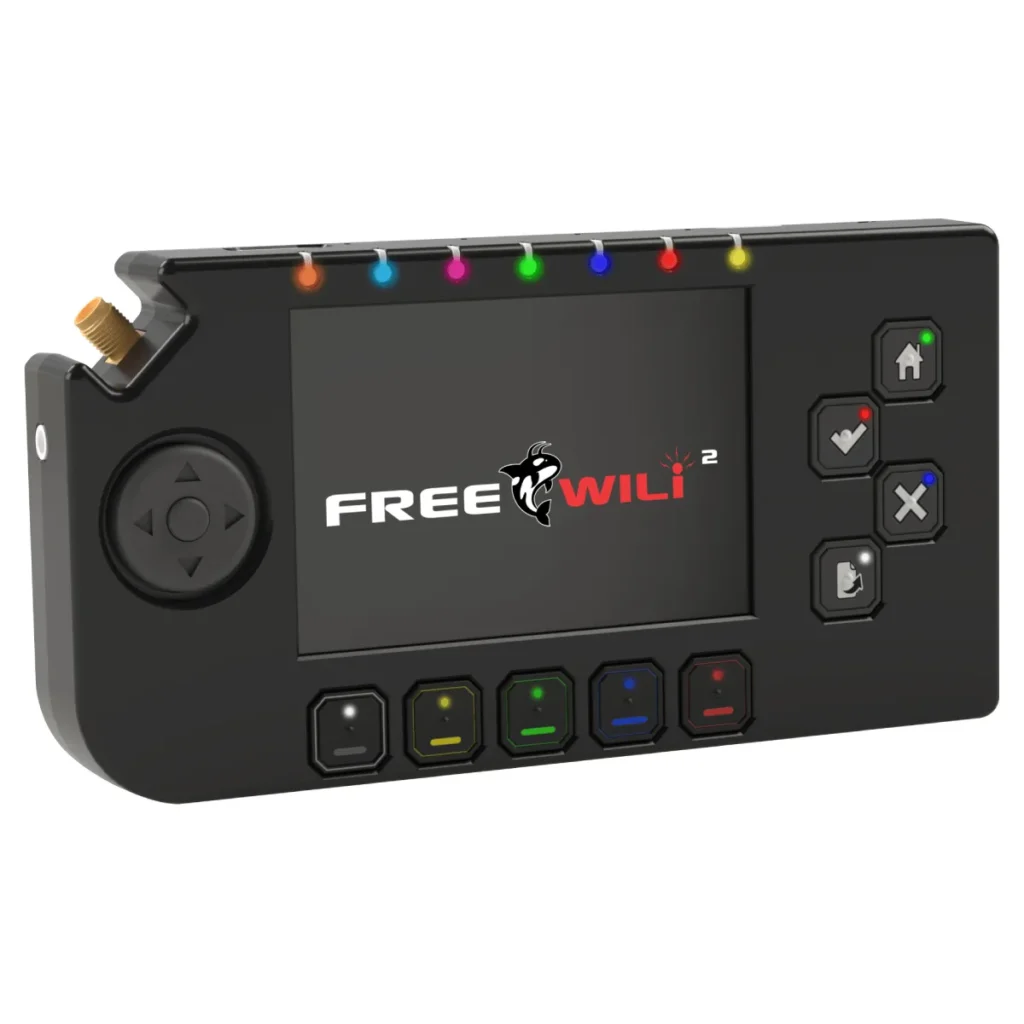
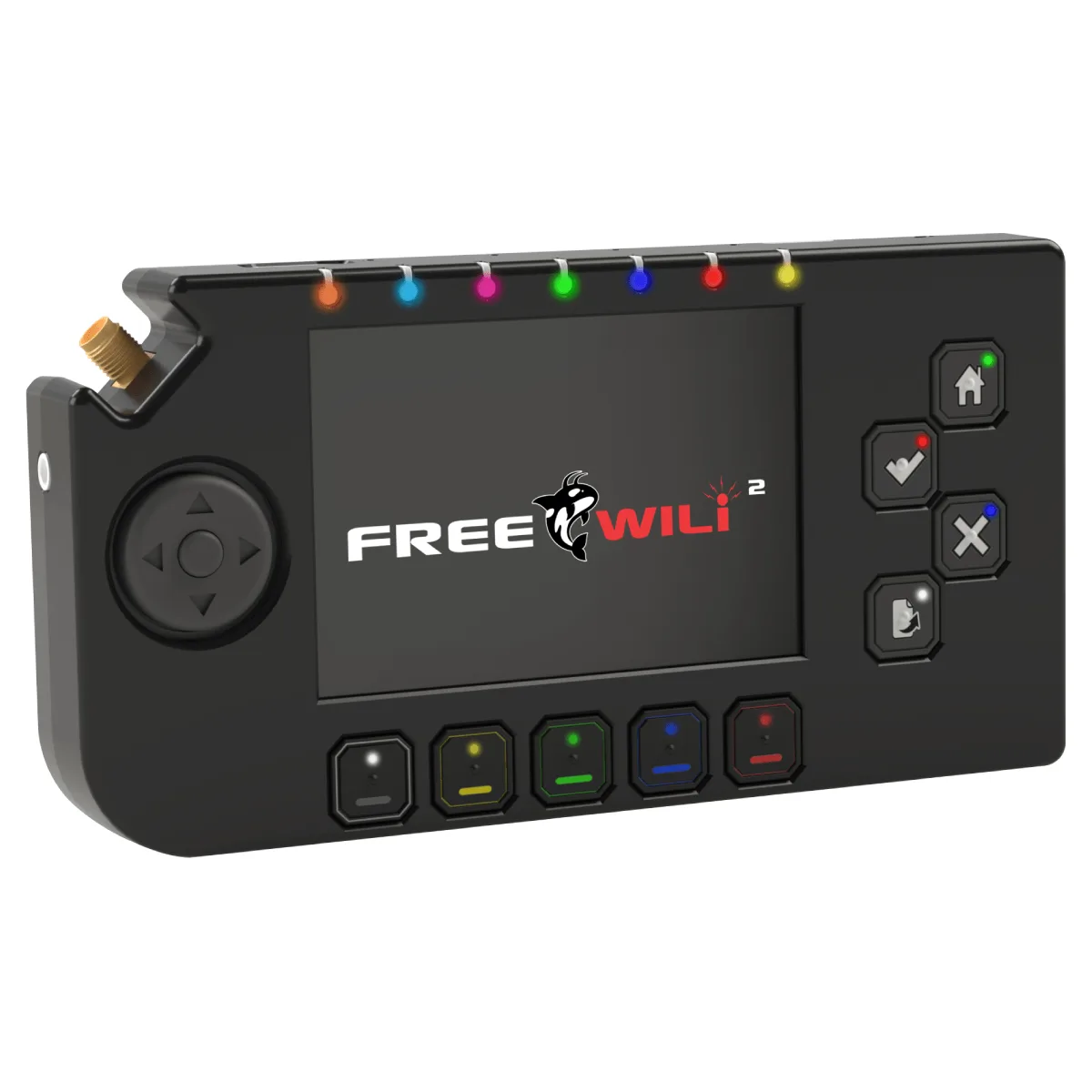
Positioned as an open-source electronic multitool small enough to slide into a pocket, the FREE-WILi 2 is not merely an incremental upgrade over its predecessor; it is a profound architectural leap. By packing a complete electronics lab, a sophisticated software-defined radio workbench, a high-performance programmable power supply, and a capable retro-gaming console into a single handheld device, this open-source project redefines what a portable tool can achieve. Supported by a heterogeneous compute cluster featuring dual Raspberry Pi RP2350 microcontrollers, a Raspberry Pi Compute Module (CM0 equivalent ecosystem footprint), an ICE40UP5K FPGA, and native integration for AI coding agents, the FREE-WILi 2 stands at the intersection of traditional hardware prototyping and futuristic, AI-driven development.
Main Facts: Deconstructing the Hardware Architecture
To understand the engineering marvel of the FREE-WILi 2, one must look beneath its 3.5-inch capacitive touchscreen. The device rejects the single-MCU design philosophy common among basic development boards, opting instead for a highly distributed, multi-architecture computing cluster where each silicon component is chosen for a hyper-specific operational domain.
The Processing Core and Compute Distribution
- Dual Raspberry Pi RP2350 Microcontrollers: The device leverages two RP2350 chips for split-brain efficiency. The primary RP2350 manages heavy input/output (I/O) routing, low-level GPIO manipulation, and real-time scripting. Meanwhile, the secondary RP2350 is dedicated entirely to rendering the display user interface, managing button matrices, processing audio streams, and driving DVI video output. Each RP2350 is paired with 8 MB of serial SRAM and 16 MB of flash memory.
- Raspberry Pi Compute Module Integration: Providing the backbone for full Python scripting, onboard compilation, and high-level operating system tasks, the onboard Raspberry Pi CM architecture brings desktop-class versatility to a handheld form factor.
- ICE40UP5K FPGA: Bridging the gap between deterministic microcontroller operations and flexible hardware logic, the Lattice Semiconductor ICE40UP5K FPGA handles demanding tasks that Programmable Input/Output (PIO) blocks cannot manage natively. This includes SPI-slave emulation, multicore RISC-V I/O routines, and complex custom protocol parsing. The FPGA is backed by an additional 8 MB of dedicated SRAM, which can be dynamically swapped and shared with the main CPU complex.
- ESP32-C5 Wireless Subsystem: For modern connectivity, the ESP32-C5 module provides dual-band Wi-Fi (2.4 GHz and 5 GHz), Bluetooth Low Energy (BLE), and IEEE 802.15.4 wireless protocols, ensuring the device can interface seamlessly with local networks, IoT sensors, and wireless debugging hosts.
Power Management and Analog Precision
Portable lab gear lives and dies by its power delivery system. The FREE-WILi 2 features an ultra-low-power supervisor microcontroller dedicated exclusively to managing 17 distinct power domains. This sophisticated power-tree design squeezes maximum runtime out of the internal 3000 mAh lithium battery.
Furthermore, the device functions as an active power source:
- Programmable Power Supply (PPS): Capable of delivering a regulated output ranging from 1.0V to 5.5V at up to 1.5A, allowing engineers to power external sensors, microcontrollers, and target prototypes directly from the handheld unit.
- Analog Capabilities: Analog outputs can reach approximately 4.84V at a 25 kHz sampling/update rate, making it a competent function generator and signal injector.
- Display Interface: A crisp 3.5-inch capacitive touch display operating at a 480×320 resolution provides a responsive, intuitive interface for debugging waveforms, monitoring packet data, and interacting with scripts.
Sensors, RF, and Expansion
The hardware suite is rounded out by industrial-grade peripherals:
- CAN FD Transceiver: Supports high-speed Controller Area Network Flexible Data-rate communications up to 8 Mbit/s with a SIC (Signal Improvement Capability) transceiver, opening doors for automotive, industrial automation, and robotics diagnostics.
- RFID Module: Integrates an ST25R3916B high-performance RFID transceiver for near-field communication analysis, emulation, and prototyping.
- Inertial and Magnetic Measurement: Includes both BMI323 (inertial measurement unit) and BMM350 (geomagnetic sensor) for spatial tracking, orientation, and motion-based applications.
Chronology: The Evolution to FREE-WILi 2
The journey toward a truly universal pocket lab did not happen overnight. It represents a multi-year convergence of maker-community ingenuity, the democratization of advanced silicon, and the rapid acceleration of artificial intelligence tools.
Phase 1: The Monolithic Era and Early Prototyping
In the early days of portable electronics diagnostics, developers relied on single-board computers coupled with custom breakout shields. While functional, these setups suffered from high power consumption, fragile physical connections, and a lack of integrated RF tools. Multitools existed—such as basic logic analyzers or handheld multimeters with serial logging—but they were strictly proprietary, closed-source, and limited to narrow use cases.
Phase 2: The Genesis of the Original FREE-WILi
The original FREE-WILi project established the foundational philosophy: combine wireless testing, GPIO manipulation, and modular firmware into a single maker-friendly platform. However, early iterations were constrained by the processing limitations of single-core or early dual-core microcontrollers. Complex tasks like running a software-defined radio workbench simultaneously with a responsive graphical interface and real-time protocol analysis pushed those older processors to their thermal and computational limits.
Phase 3: The Silicon Renaissance and the RP2350
The release of Raspberry Pi’s RP2350 silicon changed the game. Offering enhanced security features, higher clock speeds, flexible PIO state machines, and robust memory architectures, it provided the ideal building block for next-generation instrumentation. The creators of FREE-WILi recognized that a single microcontroller would still fall short of an all-in-one vision. This realization sparked the ambitious architecture of the FREE-WILi 2: a distributed computing node system leveraging dual RP2350s, an FPGA, an ESP32-C5, and a dedicated Pi CM module.
Phase 4: AI Integration and the Software Ecosystem
As hardware complexity peaked, software development threatened to become a bottleneck. Writing custom firmware for heterogeneous systems—balancing register configurations across an FPGA, two microcontrollers, and a wireless coprocessor—requires specialized, tedious coding.
In late 2024 and 2025, the FREE-WILi project integrated native AI agent support, bringing tools like Claude Code and LM Studio directly into the development pipeline. Rather than forcing engineers to write low-level C code for every custom peripheral check, the FREE-WILi 2 evolved into a self-programming platform capable of writing and debugging its own firmware on demand.
Supporting Data: Comparative Ecosystem Analysis
To contextualize where the FREE-WILi 2 sits in the modern hardware ecosystem, it is helpful to contrast its integrated approach with discrete development kits and single-board computers currently available on the market.
| Feature / Metric | FREE-WILi 2 | ESP32-C6-Zero Development Kit | Raspberry Pi 5 (2GB) |
|---|---|---|---|
| Primary Classification | Pocket Multitool & Lab | IoT Wireless Microcontroller Board | General-Purpose Single-Board Computer |
| Processing Units | Dual RP2350 + Pi CM + ICE40UP5K FPGA | Single ESP32-C6 (RISC-V) | Quad-core ARM Cortex-A76 (Broadcom BCM2712) |
| Wireless Capabilities | Wi-Fi 2.4/5GHz, BLE, 802.15.4 (ESP32-C5) | Wi-Fi 6, BLE 5, 802.15.4 | Wi-Fi 5, Bluetooth 5.0 |
| Programmable Power Supply | Yes (1.0V – 5.5V @ 1.5A) | No (Standard 3.3V/5V rails) | No (Fixed 5V output rails) |
| FPGA Acceleration | Yes (ICE40UP5K with 8MB SRAM) | No | No |
| Target Audience | Field engineers, RF makers, embedded devs | IoT beginners, wireless learners | Software developers, desktop Linux users |
| Form Factor | Handheld pocket device with 3.5" Touch LCD | Ultra-compact breakout module | Standard credit-card SBC format |
While an entry-level board like the ESP32-C6-Zero provides an exceptional, cost-effective entry point for learning wireless IoT protocols, and a Raspberry Pi 5 delivers immense raw computing power for desktop software development, neither provides the hardware integration, field-ready power supply, FPGA flexibility, or diagnostic instrumentation packed into the FREE-WILi 2. The multitool bridges the chasm between raw computing power and specialized electronic test equipment.
Official Responses and Developer Insights
The maker community and the open-source hardware sector have responded to the unveiling of the FREE-WILi 2 with immense enthusiasm, viewing it as a milestone for portable instrumentation.
The Philosophy of Open-Source Hardware
According to documentation published on the official FREE-WILi Maker Website, the project’s core tenet is absolute transparency and user empowerment. Every schematic, firmware binary, circuit layout, and API specification is made openly available to the public.
In statements accompanying the project rollout, lead developers emphasized that modern electronics shouldn’t be locked behind proprietary diagnostic walls:
"Engineers, hackers, and students should not need a thousand-dollar bench setup to test a CAN bus protocol, analyze an RFID tag, or prototype an IoT node in the field. By uniting disparate engineering domains into a single open-source device—and empowering it with modern scripting and AI tools—we are lowering the barrier to complex hardware development."
Software Flexibility and the OneWili API
A major hurdle in multi-architecture hardware design is fragmentation in software development kits (SDKs). To counter this, the FREE-WILi team engineered the OneWili API, a unified software interface that abstracts the underlying hardware complexity.
- Multi-Language Support: The OneWili API provides seamless access from Python, Rust, C, C++, and rThon.
- Host and Target Execution: Developers can execute scripts from an external host PC over USB/wireless links or run them natively on the device itself.
- Self-Generated Specifications: Uniquely, the OneWili API is generated dynamically by the device’s firmware. This ensures that the programming interface never drifts out of alignment with the actual physical capabilities and register maps of the active hardware state.
Furthermore, the default firmware suite ships with an array of built-in scripting engines tailored for different skill levels and use cases:
- rThon: A lightweight Python-like scripting environment optimized for embedded execution.
- WiliBlocks: A visual, block-based programming environment designed for rapid prototyping and educational outreach.
- ZoomIO: A real-time I/O visualization and manipulation engine.
- WiliWasm: A WebAssembly (WASM) execution engine enabling high-performance sandboxed scripts to run directly on the device.
Implications: How AI Agents and Heterogeneous Hardware Change Prototyping
The release of the FREE-WILi 2 signals several broader shifts in how electronic devices will be designed, debugged, and deployed in the coming years.
1. The Rise of Self-Programming Instrumentation
Perhaps the most forward-looking aspect of the FREE-WILi 2 is its native support for AI coding agents, including direct integration with workflows like Claude Code and LM Studio.
In traditional embedded development, if an engineer needs to interface a rare sensor or implement a custom pulse-width modulation (PWM) scheme, they must consult datasheets, write low-level register configuration code in C, compile it, flash the microcontroller, and manually debug logic analyzer outputs.
With the FREE-WILi 2, the onboard AI agent can understand the hardware topology, interpret user prompts in natural language, write the necessary firmware routines on the fly, compile them via the Raspberry Pi CM backend, and verify execution using the device’s own internal measurement loops. This transforms the tool from a passive passive analyzer into an active, intelligent co-pilot.
2. Field Engineering Without Compromise
For field service technicians, aerospace engineers, and IoT deployment specialists, carrying diagnostic gear is a constant logistical hurdle. Having an oscilloscope, logic analyzer, signal generator, CAN bus sniffer, RFID emulator, and SDR bench condensed into a pocket-sized device powered by a 3000 mAh battery means that complex field diagnostics can be performed anywhere—from a remote telecommunications tower to an industrial factory floor.
3. Democratizing Advanced Hardware Design
By combining an FPGA, dual microcontrollers, and a powerful wireless stack into an accessible open-source project, the FREE-WILi 2 bridges the educational gap between basic microcontroller projects (like Arduino or basic ESP32 boards) and enterprise-grade FPGA/SoC development. Students and hobbyists can now experiment with advanced concepts—such as multicore RISC-V co-processing, hardware-level protocol emulation via FPGA, and software-defined radio—without investing in expensive, bench-bound instrumentation.
Conclusion
The FREE-WILi 2 is much more than a clever amalgamation of popular development chips; it is a vision of what modern engineering tools should be: open, modular, powerful, and intelligent.
By refusing to compromise on hardware capability—fusing dual RP2350 microcontrollers, a Lattice FPGA, an ESP32-C5 wireless engine, a Raspberry Pi CM foundation, a programmable power supply, and an extensive suite of industrial sensors into a pocket-sized handheld—the creators have delivered an extraordinary resource for the global maker community. Coupled with native AI agent integration and the unified OneWili API, the FREE-WILi 2 ensures that whether you are debugging a high-speed CAN FD automotive network, capturing RF signals, writing automated test scripts, or winding down with a retro-video game, your entire workbench travels wherever you do.
For schematics, firmware downloads, assembly documentation, and instructions on how to build or acquire your own unit, visit the official FREE-WILi Maker Website.








