The Digital Mandate: White House App Forced Onto Homeland Security Devices Sparks Security Concerns
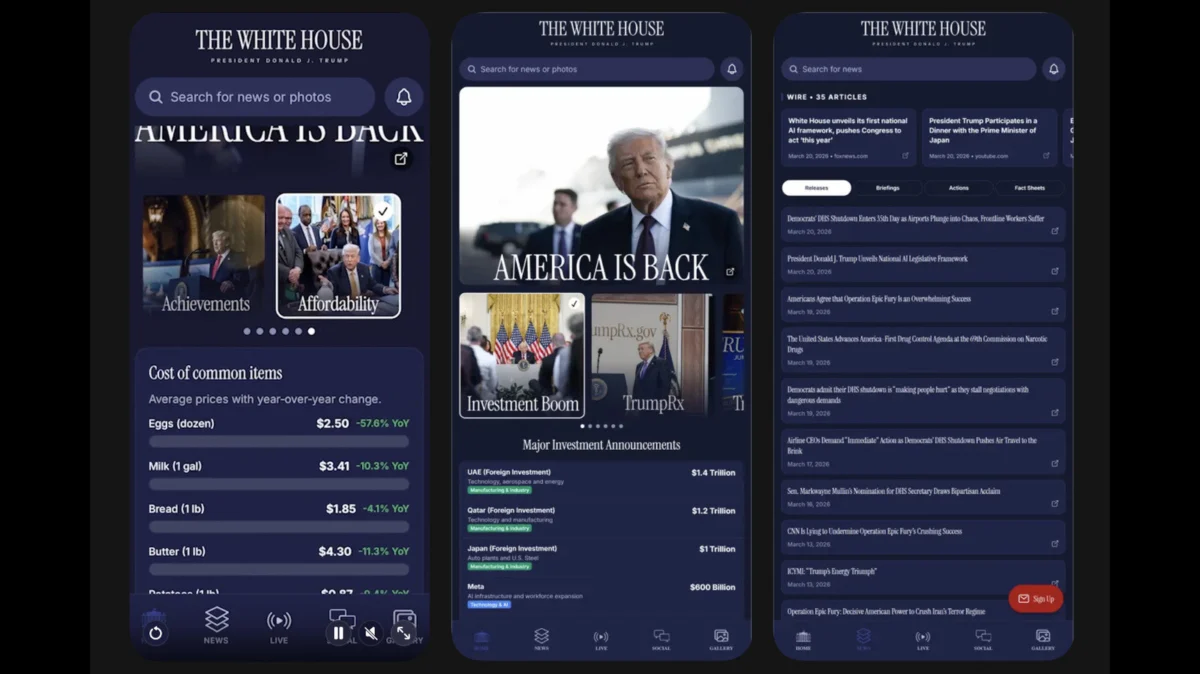
In a move that has reignited debates over federal digital policy, government oversight, and cybersecurity, the current administration has reportedly begun the process of mandating the installation of the official White House mobile application across all Department of Homeland Security (DHS) devices. According to internal communications surfaced by Politico, the directive, issued on June 16, marks a significant escalation in the government’s strategy to control the flow of information to its own workforce.
While the administration characterizes the rollout as a streamlined method for delivering official communications, critics and cybersecurity experts are raising alarms regarding the precedent this sets for federal mobile device management (MDM) and the potential for unauthorized data access.
The Core Mandate: What the Directive Entails
The notification sent to DHS personnel on June 16 was clear: the official White House application, which was launched with much fanfare in March, is no longer an optional download for federal employees. Instead, it is being pushed as a mandatory, pre-installed software component on all government-furnished mobile devices.
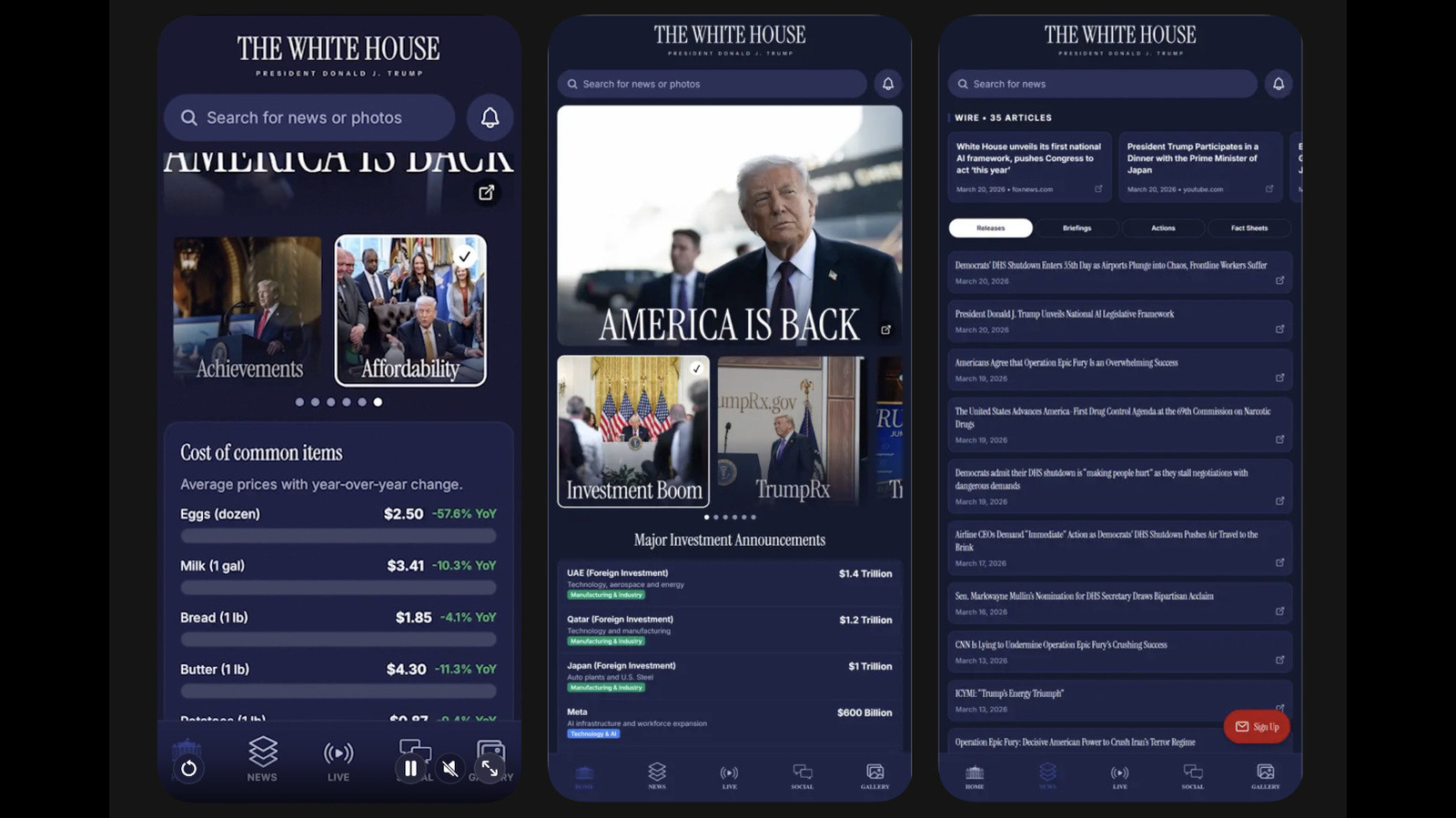
The application serves as a centralized hub for presidential communications. Users are granted access to a curated stream of executive actions, official speeches, press briefings, and promotional video content highlighting the administration’s achievements. Beyond mere news aggregation, the app includes consolidated feeds from various government social media accounts and, perhaps most curiously, a tracker for the cost of common grocery items—a feature that has drawn both curiosity and criticism regarding its utility within a government-issued tool.
The directive signals a departure from standard federal IT practices, where app installation is typically governed by necessity, security vetting, and individual departmental needs. By bypassing user choice and implementing an automated "push" installation, the administration is effectively treating the White House app as an essential utility, akin to secure email or internal communication portals.
Chronology of a Controversial Rollout
The path to this mandatory installation did not begin in mid-June; rather, it appears to be the culmination of a months-long strategy to solidify the administration’s digital footprint within the federal workforce.
- March 2026: The official White House app is launched. At the time of its release, the administration positioned it as a "transparency tool" meant to connect the public and government officials directly with the Oval Office.
- May 2026: Reports from Government Executive (GovExec) first suggested that the administration was considering—or had already planned—a broader rollout of the app across the entire executive branch. The report cited internal memos indicating that the mandate would not be limited to a single agency but would eventually encompass all government-furnished mobile phones.
- May 2026 (FAA Pilot): Early signs of this implementation were observed at the Federal Aviation Administration (FAA), where the app was already slated for mandatory installation. This served as a "proof of concept" for the broader executive branch rollout.
- June 16, 2026: The Department of Homeland Security officially notifies its personnel that the app will be pushed to their devices.
- Present Day: The implementation phase continues, with questions mounting as to whether other agencies, such as the Department of Justice or the Department of Defense, will be subject to the same directive in the coming months.
Supporting Data and Technical Context
The technical infrastructure behind this mandate relies on Mobile Device Management (MDM) solutions. MDM software allows the federal government to remotely manage, secure, and deploy applications to thousands of devices simultaneously. While this is a standard practice for ensuring that employees have access to secure VPNs, encrypted messaging, and work-related tools, the deployment of a public-facing, news-heavy application via MDM is highly unconventional.
The app itself is an aggregation tool. Its features include:
- Executive Communications: Direct push notifications regarding executive orders and presidential policy changes.
- Media Gallery: High-definition live streams of public events.
- Economic Tracker: A list detailing current prices for grocery staples, which the administration claims provides "real-time economic context" to federal workers.
- Aggregated Feeds: A unified dashboard for the government’s various social media profiles.
The integration of these features into a device-wide mandatory install is what has led to the current friction. The question is not just one of software utility, but of digital real estate: why is the government prioritizing a media-heavy app over, or alongside, the mission-critical applications that DHS personnel rely on to secure borders and critical infrastructure?
Official Responses and Strategic Rationale
The administration has remained relatively tight-lipped regarding the specifics of the rollout, largely declining to provide a formal comment to media outlets when pressed about the mandate. However, those close to the decision-making process suggest that the goal is "information integrity."
The rationale, as understood from the internal emails, is that by installing the app, the administration ensures that employees receive the "official word" on policy changes and executive intent without the "filter" of external news organizations. In an era of increasing digital polarization, the administration views the app as a secure, verified channel for internal dissemination.
Conversely, the lack of a transparent public explanation has left a vacuum filled by speculation. Without a clear statement from the White House Office of the Chief Information Officer, the rationale remains inferred from the app’s promotional materials, which emphasize the importance of employees being "informed, engaged, and aligned" with the administration’s goals.
Implications: Cybersecurity and Institutional Independence
The controversy surrounding this app touches on three primary areas of concern:
1. The Security Risk: Backdoor Fears
As noted by former government IT executives, any application pushed via MDM has high-level permissions. By forcing an app onto devices that may handle sensitive or classified communication, the administration has created an unintended vulnerability. If the app contains flaws—or if it is compromised by external bad actors—it could theoretically provide a backdoor into government networks. Every piece of software is a potential attack vector, and by mandating this app, the government has increased the "attack surface" of every DHS device.
2. The Erosion of Institutional Neutrality
The DHS is an agency tasked with non-partisan security operations. Critics argue that forcing a political app onto the phones of non-partisan career civil servants compromises the perceived independence of the agency. When a government device is used as a vehicle for the current administration’s promotional content, it blurs the line between public service and political advocacy.
3. Precedent for Digital Overreach
If the administration succeeds in mandating this app across the executive branch, it sets a dangerous precedent. It establishes that the executive branch has the authority to dictate the software environment of its employees based on political messaging rather than technical requirements. This could lead to a future where government devices are cluttered with partisan tools, potentially degrading the performance of the devices and distracting from the primary duties of the staff.
Conclusion
The forced installation of the White House app on DHS devices is more than a simple IT update; it is a signal of a shifting relationship between the administration and the federal workforce. By prioritizing the reach of its own media apparatus through mandatory MDM deployment, the administration has prompted a necessary, if contentious, conversation about the boundaries of government technology.
As the rollout continues, the focus will shift to how the DHS IT department manages the potential security risks and how Congress chooses to respond. With calls for an oversight hearing into the necessity and security protocols of the application growing, the digital mandate may yet face significant legislative pushback. For now, thousands of Homeland Security employees will find a new icon on their screens—a permanent fixture of a government that is increasingly determined to ensure its message is always just one tap away.