The Dawn of the Paid Web: AWS WAF Revolutionizes Content Economics with AI Traffic Monetization
In a landmark shift for the digital economy, Amazon Web Services (AWS) has unveiled a transformative capability for its Web Application Firewall (WAF): the ability for content owners to directly monetize traffic from AI bots and autonomous agents. This move addresses a growing existential crisis for publishers, researchers, and media organizations whose content has become the "free fuel" for the rapid expansion of Large Language Models (LLMs) and generative AI platforms. By enabling granular, per-request pricing at the network edge, AWS is effectively rewriting the rules of web interaction.
Main Facts: A New Frontier for Digital Property Rights
The core of this new functionality lies within AWS WAF’s expanded Bot Control suite. Traditionally, WAF served as a security gatekeeper—a digital bouncer designed to block malicious traffic, mitigate DDoS attacks, and prevent scraping. Today, it transitions into a financial intermediary.
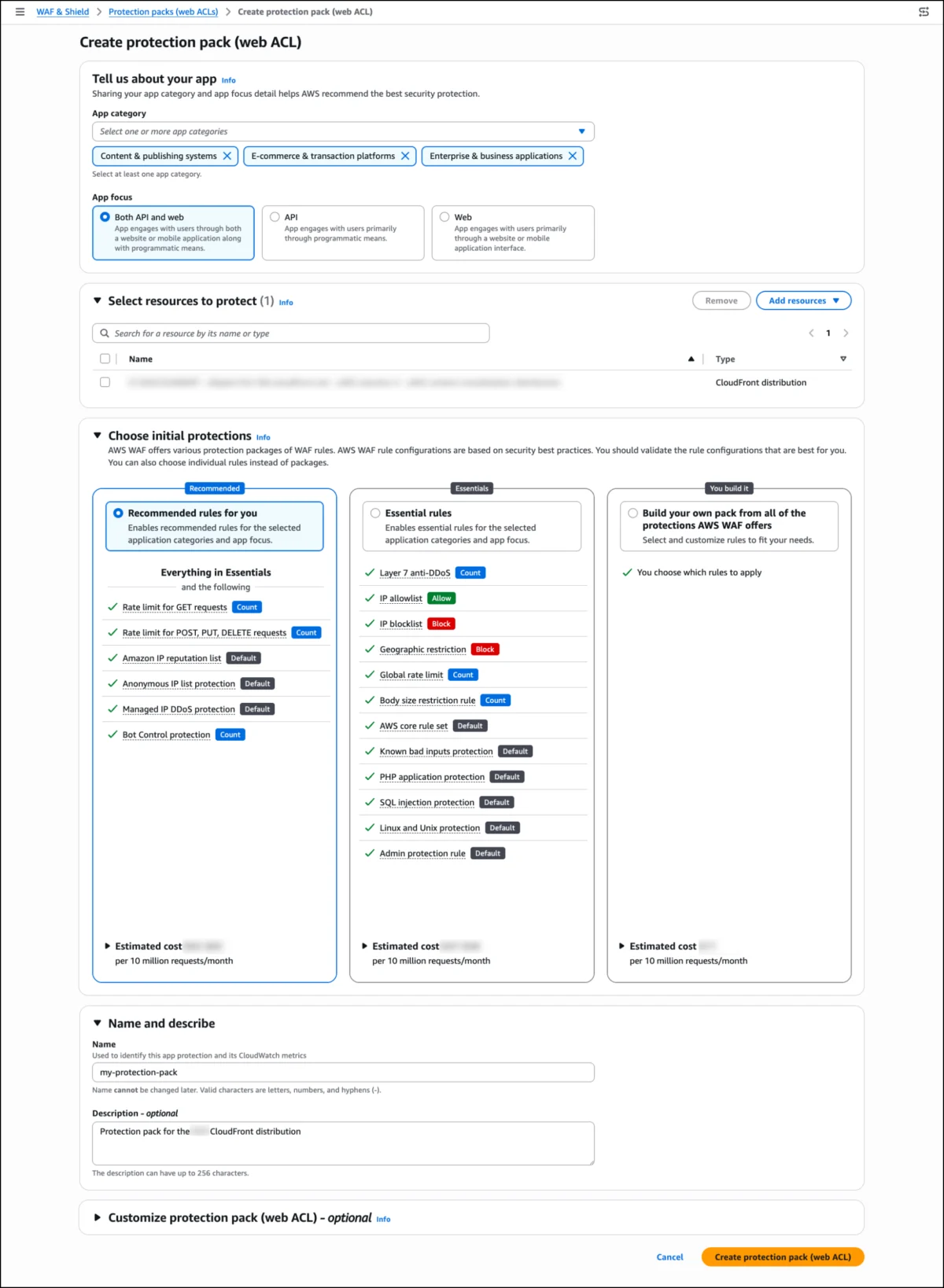
Digital publishers can now define specific access policies for AI crawlers without altering their origin infrastructure or modifying a single line of application code. Through the AWS WAF console, owners can categorize bots, set pricing tiers based on content paths, and receive payments in stablecoins directly into their preferred digital wallets.
The mechanism utilizes the x402 protocol, a machine-to-machine payment standard facilitated by Coinbase. When an AI bot requests a protected page, the AWS edge server intercepts the request and returns an HTTP 402 "Payment Required" status code. This response includes a JSON-based price manifest, informing the bot of the cost, the accepted blockchain network (such as Base or Solana), and the destination wallet. The bot—provided it is programmed to handle x402 transactions—can then submit a signed payment authorization, at which point AWS verifies the transaction and serves the content.
Chronology: From Scraper Wars to Structured Commerce
The tension between content creators and AI companies has been escalating since the release of mainstream generative AI tools.
- 2023–2024: The "Wild West" Era. As AI adoption skyrocketed, publishers faced a surge in automated traffic. Data revealed that AI-specific crawlers grew by more than 300% year-over-year. During this period, publishers were forced to play a cat-and-mouse game, updating
robots.txtfiles or blocking IP addresses to prevent unauthorized scraping, often to no avail. - Early 2025: The Visibility Gap. AWS WAF introduced advanced Bot Control features, providing publishers with better visibility into who was crawling their sites. However, the solution remained defensive. Publishers could block or rate-limit, but they could not easily negotiate terms with the hundreds of different AI agents scraping their data.
- June 2026: The Monetization Breakthrough. AWS officially bridges the gap between infrastructure protection and economic compensation. By integrating blockchain-based settlement, AWS removes the need for individual licensing agreements—an administrative nightmare for small-to-mid-sized publishers—and places the power of commerce at the network edge.
Supporting Data: The Cost of Free Content
The economic argument for this transition is grounded in stark metrics. For many content providers, AI bot traffic now accounts for more than 50% of total web volume. This creates a "value-extraction paradox":

- Infrastructure Drain: Publishers pay the bandwidth and compute costs to host content.
- Lack of Reciprocity: Unlike traditional search engine crawlers, which index content to drive traffic back to the source (creating ad impressions or subscription potential), AI agents consume the content to synthesize answers within their own interfaces. This leaves the original publisher with the bill, but none of the revenue or user engagement.
- The Scale of Exposure: With over 650 distinct AI bot types identified by AWS—including high-frequency agents like GPTBot, Claude-Web, and Perplexity-Bot—the task of manual management has become impossible for human teams.
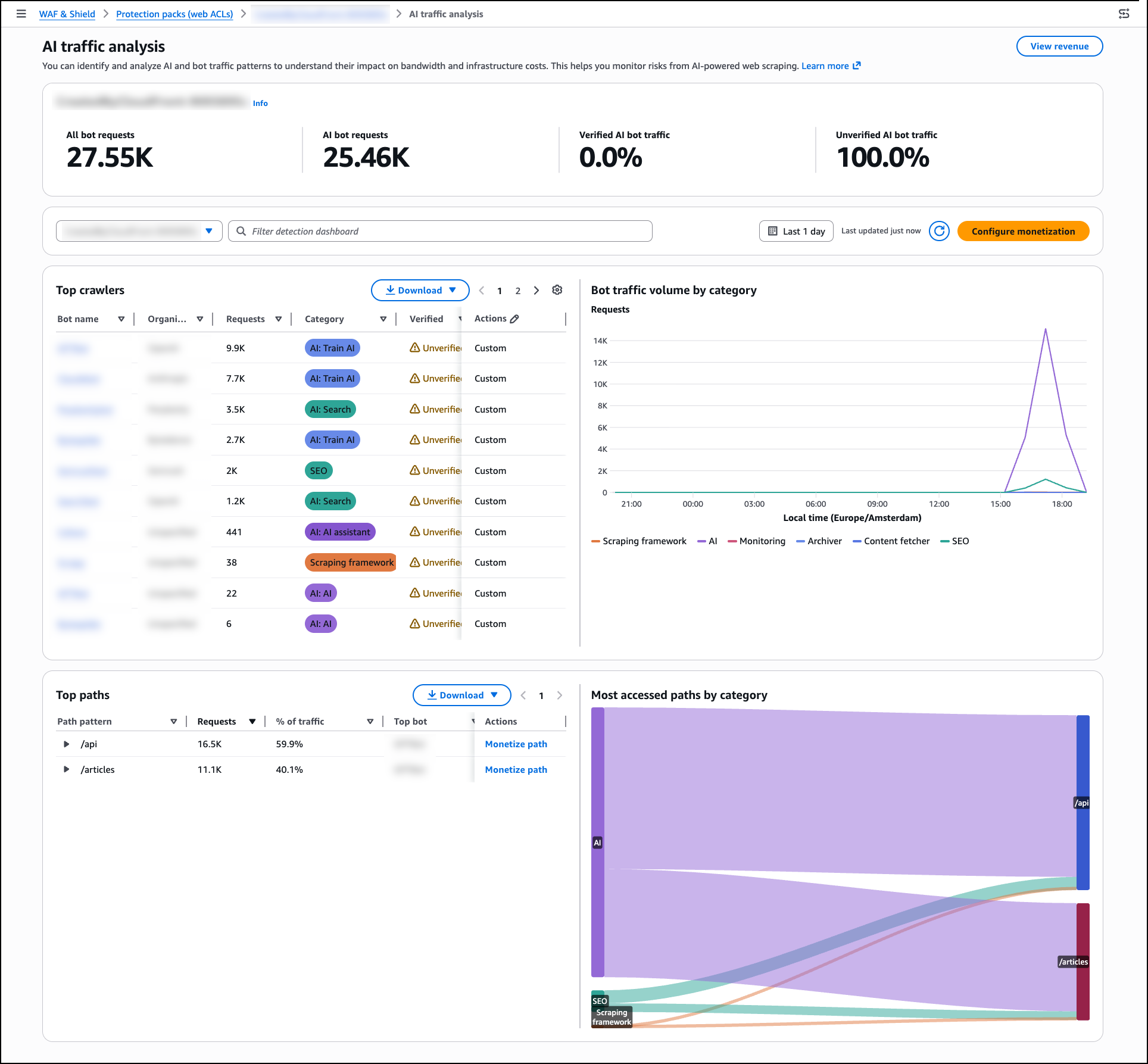
The new AI traffic analysis dashboard in AWS WAF provides the data necessary to navigate this landscape. It breaks down metrics into "Verified" and "Unverified" traffic, offering heatmaps of which content paths are most heavily targeted by AI. These insights allow publishers to transition from reactive blocking to proactive, data-driven pricing strategies.
Official Responses and Strategic Implications
AWS has positioned this release as an empowerment tool for the "creator economy." By providing the infrastructure for machine-to-machine payments, AWS is essentially standardizing the "toll booth" for the internet.
Implications for AI Companies
For AI developers, the landscape becomes more formalized. While some may view this as an added cost, it provides a legitimate, scalable way to license data without the risk of legal injunctions or site-wide blocks. By adhering to the x402 protocol, AI agents can ensure uninterrupted access to the high-quality, up-to-date data required to keep their models relevant.
Implications for Publishers
For publishers, the "Monetize" action is a game-changer. They are no longer limited to "Allow" or "Block." They can now implement a tiered access model:
- Verified Academic/Non-profit Crawlers: Allow free access to support research.
- Commercial Aggregators: Charge a premium per page view.
- Unknown/Malicious Bots: Apply standard security challenges or hard blocks.
The Technological Leap: Why Blockchain?
The decision to utilize stablecoins and blockchain networks for settlement is a pragmatic one. Traditional banking rails are too slow and expensive for high-frequency, low-cost, machine-to-machine transactions. By using networks like Base or Solana, the cost of the transaction is negligible, and settlement is near-instantaneous. It removes the need for AWS to act as a clearinghouse, keeping the platform agnostic and the publisher in full control of their revenue.
Getting Started: Implementation Roadmap
For organizations looking to deploy these controls, the process is integrated into the familiar AWS WAF workflow.
- Preparation: Ensure that AWS WAF Bot Control is enabled at the "Common" or "Targeted" level on the web ACL associated with a CloudFront distribution.
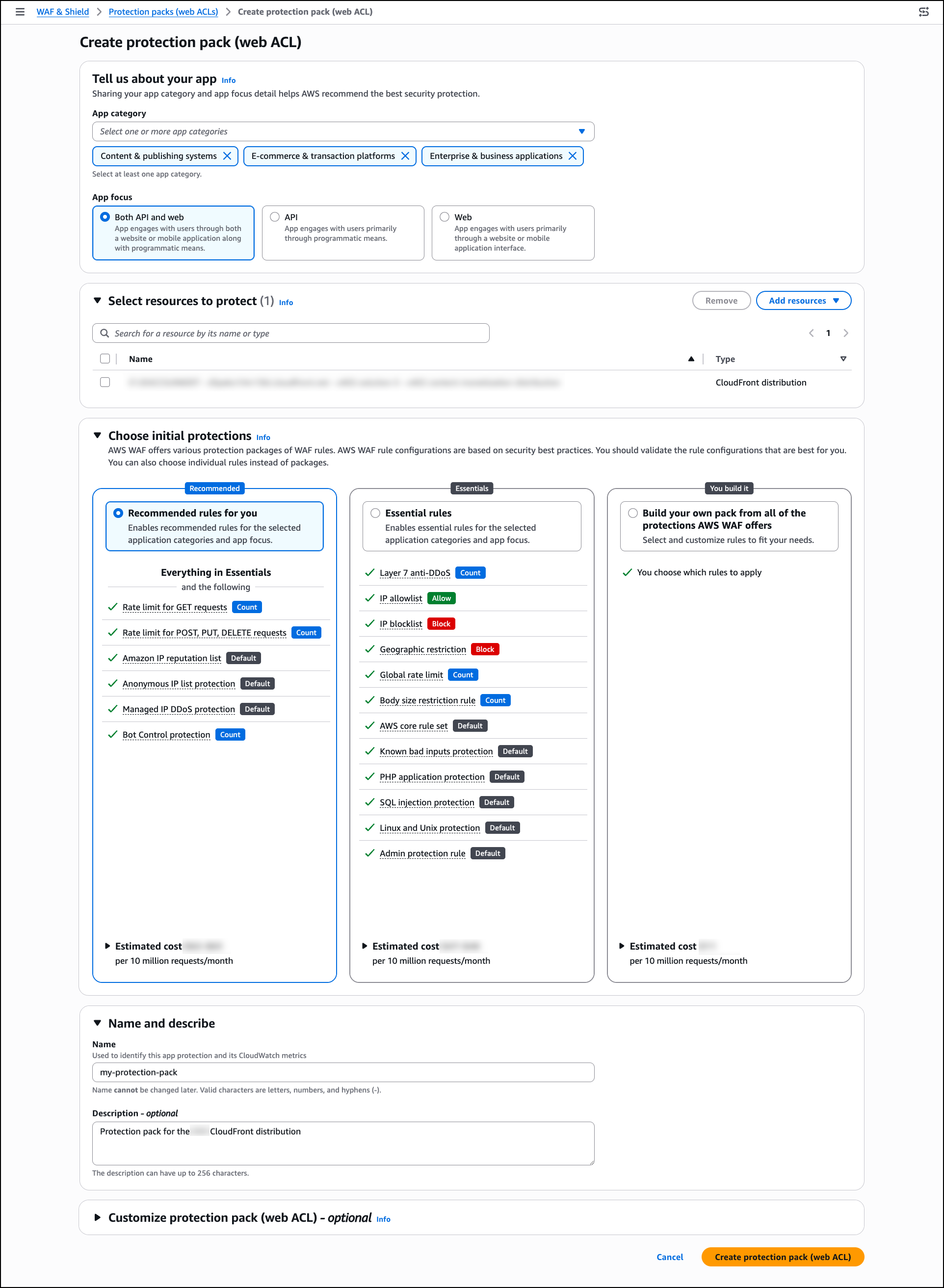
- Protection Packs: The "Protection Pack" is the new unit of configuration. It allows for the grouping of content paths, pricing, and license terms.
- The "Test" Phase: AWS wisely includes a "Currency Mode" toggle. Organizations are encouraged to run in "Test" mode using testnets (like Base Sepolia) to validate that their payment flows and x402 manifests are correctly configured before going live with real capital.
- Dashboard Integration: Once live, the "AI access monetization" dashboard acts as the command center, providing real-time views of total revenue, per-path earnings, and reconciliation of settlements.
Conclusion: The New Social Contract of the Web
The launch of AI traffic monetization by AWS signifies a move toward a more sustainable digital ecosystem. We are witnessing the end of the "free-for-all" era where data was extracted without consideration of its origin.
By embedding the capability to charge for access directly into the network edge, AWS has provided a sophisticated, scalable, and automated solution to a problem that threatened to undermine the economic viability of the open web. As more publishers adopt these tools, we can expect to see the emergence of a new "AI-content market," where the value of information is recognized, measured, and compensated in real time.
For the average web user, this may mean a more robust web, as publishers find new ways to fund high-quality content in an age where AI-driven consumption is the new normal. For the tech industry at large, it marks a critical pivot toward treating data as the valuable commodity it truly is. As the integration with Stripe and other payment protocols arrives in the coming months, the barrier to entry for this new economy will only continue to fall, cementing the role of the intelligent, monetized edge in the next chapter of the internet.