The Convergence of Everything: How IoT is Redefining the Social Media Landscape
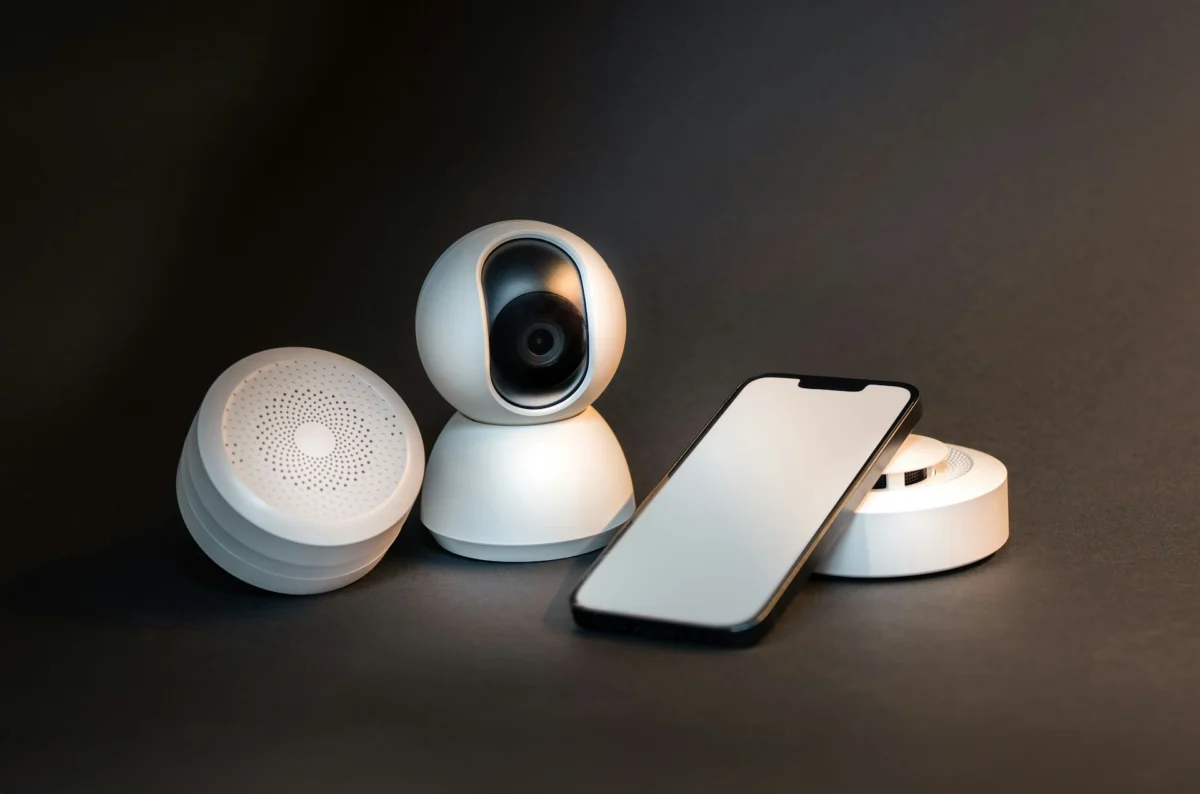
The era of manual content creation—the deliberate act of snapping a photo, crafting a clever caption, and hitting "post"—is quietly drawing to a close. For over a decade, social media was defined by human agency: we were the architects of our digital personas. Today, however, that architecture is being automated. As the Internet of Things (IoT) matures from a collection of "smart" gadgets into a pervasive, interconnected mesh of intelligence, the boundary between our physical environment and our digital social presence is dissolving.
We are entering an age where your devices do not merely report on your life; they actively curate it. From the thermostat adjusting to your preferred temperature to the smartwatch recording your REM cycles, our personal data is being harvested at an unprecedented scale. With IoT Analytics projecting that the number of connected devices will surpass 50 billion by 2035, we are standing on the precipice of a total transformation in how we interact, share, and exist online.
The Evolution of Connectivity: A Chronology
To understand where we are going, we must look at how we arrived here:
- 2005–2012: The Manual Era. Social media was a destination. Users visited platforms like Facebook or early Twitter to consciously broadcast updates. Content was ephemeral but manual.
- 2013–2019: The Algorithmic Shift. Platforms moved away from chronological feeds to personalized, algorithmically-driven experiences. The data collection began in earnest, focusing on clicks, likes, and dwell time.
- 2020–2023: The Integration Phase. IoT began to bleed into the social sphere. Wearable tech (Fitbit, Apple Watch) started allowing users to "share" health metrics to social feeds. Smart home platforms like Samsung’s SmartThings began connecting the household ecosystem.
- 2024–Present: The Predictive Transition. We are now witnessing the dawn of autonomous social media, where AI and IoT sensors trigger content generation without direct human input.
The Mechanics of an IoT-Driven Social Web
The Internet of Things is not merely a trend; it is the infrastructure for the next generation of the internet. It encompasses everything from industrial sensors to the "smart" appliances in our kitchens. When these devices share data with social platforms, the definition of "content" shifts from creative expression to objective environmental reporting.
Imagine a scenario where your refrigerator, detecting a shortage of essential items, automatically triggers a poll in your family group chat or a private neighborhood forum to coordinate a grocery run. This is not science fiction; it is an extension of the existing API integrations found in platforms like Samsung SmartThings, which currently serves over 400 million users. The potential for "frictionless sharing" is massive, turning every minute of our daily routines into potential social data points.
Four Pillars of the IoT-Social Revolution
1. Real-Time, Auto-Generated Content
Currently, social media is hampered by the "friction of creation." Most users want to share their lives but lack the time or inclination to document them. IoT removes this friction. When your smart bicycle broadcasts your performance stats to Strava or your car automatically posts your arrival at a landmark, the content becomes a byproduct of living rather than a distraction from it. With over 156 million smartwatches sold in 2024 alone, the sheer volume of auto-generated, sensor-driven content is set to dwarf human-generated posts in the coming years.
2. Hyper-Personalized Content Feeds
The efficacy of a social platform is measured by its ability to hold attention. By integrating IoT data—location habits, health metrics, sleep quality, and purchasing behavior—platforms can build a "predictive feed." Your feed will no longer show you what you liked; it will show you what you need before you have even articulated the desire. This level of hyper-personalization creates an echo chamber of unprecedented accuracy, though it raises significant questions regarding the psychological impact of such targeted, predictive environments.
3. The Shift to Social SEO and Discovery
Search engines are becoming secondary to social discovery. Approximately 46% of Gen Z users now utilize social platforms as their primary search engine, favoring peer reviews and creator-led content over static web pages. When IoT is introduced, this "Social SEO" becomes local and immediate. A smart speaker might pull recommendations from local social media trends, or a smart fridge might suggest recipes based on real-time ingredient trends shared by your social circle. Social media is evolving from a place to "scroll" into a sophisticated decision-making engine.
4. Seamless Augmented Reality (AR) Experiences
IoT and AR are the two halves of the "Spatial Internet." As smart glasses like the Ray-Ban Meta collection become more sophisticated, they will act as the interface for this IoT-social web. Walking down the street, you will no longer need to check an app to see if a restaurant is good; social data will be overlaid onto the building itself. Your friend’s review or a trending video from a local food influencer will appear as a floating tag in your field of vision, bridged by the persistent connectivity of your IoT environment.
Supporting Data and Industry Implications
The transition is backed by aggressive growth in the wearable and smart-home markets. According to data from the International Data Corporation (IDC), the rapid adoption of wearables is providing the necessary hardware for this shift. However, this growth is not without its critics.
The industry faces mounting pressure regarding the mental health impacts of these platforms. High-profile litigation, such as the ongoing Facebook/Meta mental health lawsuits, highlights a growing concern: if platforms are already accused of engineering addiction, what happens when they have access to your health, location, and emotional state via IoT sensors? PWC reports that while 51% of consumers desire personalized content, there is a palpable "personalization fatigue" and an increasing anxiety regarding data overreach.
Official Responses and Regulatory Outlook
Regulators globally are beginning to scramble to catch up with this technological convergence. The European Union’s Digital Markets Act (DMA) and similar initiatives in the United States are focusing on "data portability" and "user agency."
Experts argue that as IoT-social integration deepens, regulation must shift from protecting "data" to protecting "context." It is not just about where your data is going, but how it is being used to manipulate your daily environment. Organizations like the Electronic Frontier Foundation (EFF) have long warned that the "Internet of Things" is often an "Internet of Surveillance." The challenge for the next decade will be establishing a framework where users can benefit from the convenience of an automated social life without sacrificing their digital autonomy.
The Big Trade-Off: Privacy and the Cost of Connection
The greatest risk of this convergence is the creation of a "single point of failure" for an individual’s privacy. If your smart home, your car, and your health trackers are all linked to a singular social profile, a single data breach becomes catastrophic. You are no longer just losing an email address or a password; you are losing a comprehensive, machine-readable map of your entire life.
The industry is currently searching for a balance. Many tech giants are touting "on-device processing" as the solution—meaning your data stays on your phone or fridge and is never sent to the cloud. Whether this will satisfy the data-hungry requirements of predictive social algorithms remains to be seen.
Conclusion: The Human Element
Will the Internet of Things fully replace the human essence of social media? While the technology is poised to automate the delivery and discovery of content, it cannot automate the intent.
Social media, at its core, is a reflection of human connection. IoT is simply the lens through which that connection is mediated. As we move toward this hyper-connected future, the burden of responsibility remains on the user. We must decide which aspects of our lives deserve to be automated and which should remain private. The tools are being built, but the culture—the "social" in social media—is still ours to define. We are not merely passive participants in this evolution; we are the ones who must determine whether this new, interconnected web serves our humanity or diminishes it.