Beyond Efficiency: The Digital Mandate Transforming Global Supply Chains
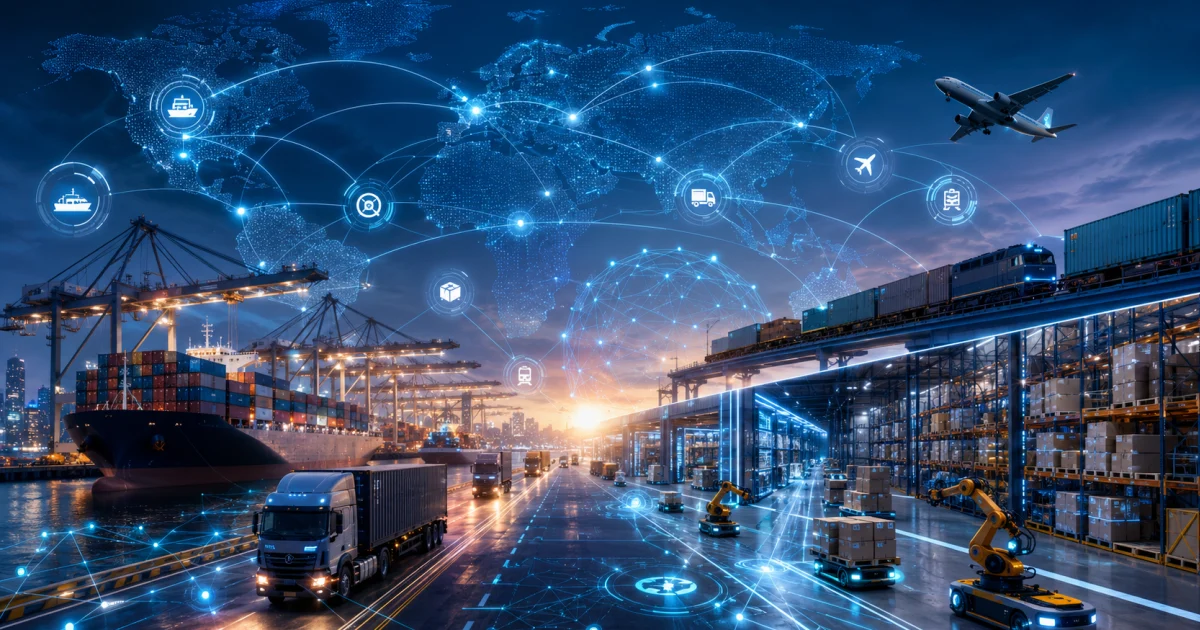
For over three decades, the global supply chain was defined by a singular, rigid mantra: efficiency above all else. Under the prevailing "just-in-time" (JIT) model, companies aggressively trimmed inventories, consolidated suppliers to secure economies of scale, and optimized for speed. In a world characterized by relative geopolitical stability and predictable consumer behavior, this model functioned with clockwork precision.
However, the cascading failures of the early 2020s—from the global pandemic to the Ever Given’s obstruction of the Suez Canal and the crippling semiconductor shortage—shattered the illusion of stability. These events unveiled a painful reality: efficiency, when decoupled from visibility, is merely a synonym for fragility. Today, the race to digitize the supply chain is no longer a peripheral IT project; it is a fundamental shift from blind optimization to intelligent, data-driven resilience.
The Core Mandate: From Opacity to End-to-End Visibility
The foundation of modern supply chain strategy is end-to-end visibility. While most enterprises possess a clear view of their immediate operations and primary suppliers, visibility typically degrades as one looks further down the chain. Tier 2 and Tier 3 suppliers—often the hidden bottlenecks where specialty chemicals or proprietary components originate—remain largely opaque.
The Geography of Risk
Disruptions rarely occur at the nodes companies monitor most closely. Instead, they arise in the "blind spots" of the supply chain—a single-source manufacturer in a volatile region or a logistics node hit by extreme weather. Digital transformation platforms are now dismantling this opacity by utilizing network-based data sharing. By integrating IoT (Internet of Things) tracking and AI-driven risk monitoring, organizations can now surface warning signals long before they manifest as full-blown crises.
Chronology of Transformation: The Evolution of Logistics
The journey toward a digitized supply chain has unfolded in distinct stages, moving from manual tracking to autonomous, predictive networks.
- 1990s–2010s: The Era of Lean Optimization. Focus was placed on cost reduction, JIT delivery, and minimizing warehouse footprint. Inventory was treated as a liability, leading to dangerously thin safety stocks.
- 2020–2022: The Crisis of Fragility. The COVID-19 pandemic and subsequent logistics bottlenecks exposed the systemic risks of lean models. Companies were forced to grapple with the "bullwhip effect" and systemic shortages.
- 2023–2025: The Rise of Real-Time Intelligence. Investments shifted toward control towers, AI-powered demand sensing, and cloud-native visibility platforms.
- 2026 and Beyond: The Autonomous Supply Chain. The current horizon is marked by predictive, self-correcting systems that move beyond human intervention to automate responses to routine disruptions.
Supporting Data: Technology as the Catalyst for Operational Precision
The efficacy of these new digital tools is supported by their tangible impact on operational metrics.
IoT and Condition Monitoring
For sectors like pharmaceuticals, food safety, and high-end electronics, logistics is not merely about moving goods—it is about maintaining integrity. Modern shipments are now instrumented with GPS, thermal sensors, and shock-detection hardware. This data allows for "live" monitoring, ensuring that quality standards are met throughout the journey.
Closing the Inventory Gap
The discrepancy between "system inventory" and "physical inventory" has long been a multi-billion dollar drain on global commerce. By deploying RFID (Radio Frequency Identification) and computer vision, warehouse operators are shifting from periodic, manual cycle counts to continuous, real-time inventory reconciliation. This transition effectively eliminates the "ghost inventory" problem that historically led to stockouts or over-ordering.
The AI Advantage in Demand Sensing
AI is fundamentally altering forecasting. Traditional models relied on historical sales data and anecdotal input from sales teams—methods that failed spectacularly when market conditions shifted overnight. Modern AI ingest a broader, more volatile dataset, including:
- Real-time Point-of-Sale (POS) data.
- Web traffic and social media sentiment.
- Macroeconomic shifts and localized weather forecasts.
- Dynamic competitive pricing models.
By updating forecasts continuously, firms can reduce inventory carrying costs while simultaneously improving service levels—a "win-win" that was mathematically impossible under older, batch-processed forecasting models.
Official Perspectives: The Shift Toward Risk Intelligence
Industry analysts and supply chain leaders are increasingly framing risk management as a live operational capability rather than a static document. In the past, companies maintained "risk registers"—manual PDFs updated annually. Today, leading firms utilize digital risk management platforms that provide a 360-degree view of the entire supplier ecosystem.
"We are moving from a reactive posture, where we manage crises after they break, to an initiative-taking posture, where we use risk intelligence to avoid them," says one industry consultant. By mapping logistics network stress and supplier financial health against specific exposure points, organizations can identify a struggling port or a bankrupt component manufacturer weeks before the impact hits the production line.
The Architecture of the Control Tower
The "Supply Chain Control Tower" serves as the nerve center for this digital evolution. By aggregating disparate data streams—from logistics providers to factory floor sensors—the control tower provides a "single source of truth." When a disruption occurs, the tower doesn’t just alert leaders; it models the downstream impact and presents actionable trade-offs, reducing decision-making windows from days to mere minutes.
Implications: Sustainability and the Human Element
The push for digitization serves two masters: operational resilience and environmental responsibility.
The Sustainability Mandate
Scope 3 emissions—the carbon footprint embedded in purchased goods and logistics—constitute the majority of most organizations’ environmental impact. Digital supply chain tools are the only viable path to accurately measuring these emissions. Furthermore, the emergence of "Digital Product Passports" is setting a new regulatory standard. These passports track a product’s lifecycle, materials, and carbon intensity, turning sustainability from a marketing narrative into a verifiable data point.
The Human Cultural Shift
Perhaps the most underestimated aspect of this transformation is the human element. For decades, supply chain professionals were trained to be "firefighters"—specialists in expediting shipments and managing constant emergencies. The digital era requires a different skillset: one centered on analytics, scenario planning, and data interpretation.
Organizations must now invest heavily in training their workforce to move from reactive decision-making to probabilistic thinking. This is not just a technological deployment; it is a cultural redesign. Employees must learn to trust simulation models and work alongside AI-driven insights to manage uncertainty, rather than simply reacting to it.
Conclusion: The Era of Strategic Advantage
The historical trade-off—choosing between efficiency and resilience—is effectively becoming obsolete. Through digital integration, organizations can now achieve both. Lower inventory levels are no longer a risk factor because visibility allows for faster response times. Diversified sourcing is no longer a cost burden because data enables smarter, more precise procurement.
The era of "flying blind" is coming to a definitive end. As global markets grow more volatile, the supply chain has transitioned from a back-office cost center to a critical driver of top-line growth. Companies that treat digital visibility as a core competency will not only survive the next wave of global disruption—they will turn that disruption into a competitive advantage. The organizations of tomorrow are being built today, one data point at a time.