Revolutionizing Edge Intelligence: Harvard Researchers Unveil "Wake Vision," a Massive Dataset for TinyML
In the rapidly evolving landscape of artificial intelligence, a quiet revolution is taking place at the very edge of our digital ecosystem. Tiny Machine Learning (TinyML)—the science of running sophisticated neural networks on ultra-low-power microcontrollers and edge hardware—is poised to transform how devices interact with the physical world. However, this field has long been hamstrung by a significant bottleneck: the scarcity of large-scale, high-quality datasets specifically optimized for the constraints of tiny hardware.
Today, a team of researchers from Harvard University, including Colby Banbury, Emil Njor, Andrea Mattia Garavagno, and Vijay Janapa Reddi, has announced a landmark solution: Wake Vision. This new, massive-scale dataset is engineered to accelerate the next generation of person-detection applications, offering a robust foundation that is nearly 100 times larger than its predecessors.
The State of TinyML: A Crisis of Constraints
To understand the magnitude of the Wake Vision release, one must first understand the unique challenges of TinyML. Unlike cloud-based AI, which can leverage massive GPU clusters and petabytes of data to train models with billions of parameters, TinyML is restricted by the harsh realities of physical hardware. These models must reside within mere hundreds of kilobytes of memory, run on battery-powered microcontrollers, and execute with millisecond latency.
Standard computer vision benchmarks, such as ImageNet, are fundamentally ill-suited for this domain. The complexity of these datasets often leads to "over-parameterized" models that are far too bulky for edge deployment. Until now, the industry standard has been the Visual Wake Words (VWW) dataset. While VWW laid the vital groundwork for person detection, it has increasingly shown its age, offering limited diversity and scale that prevents researchers from pushing the boundaries of production-grade accuracy.

Chronology of Development: Building a Foundation for the Future
The journey to Wake Vision began with the recognition that the "quality vs. quantity" debate in machine learning was being misunderstood in the context of small-scale models. Historically, the prevailing wisdom in deep learning suggested that more data—regardless of noise or labeling errors—was the ultimate panacea. However, as the Harvard team’s research progressed, they discovered a counter-intuitive truth: for the under-parameterized models essential to TinyML, data quality is paramount.
The development process for Wake Vision was meticulous. The team aimed to address the limitations of existing datasets by building a corpus that provided both the sheer volume necessary for deep learning and the high-fidelity labeling required for precise, low-parameter model performance. By iterating on the methodology used in previous datasets, the researchers synthesized a massive, 6-million-image collection that serves as the new gold standard for the field.
Supporting Data: Why Quality Outperforms Raw Volume
One of the most compelling aspects of the Wake Vision research is the empirical evidence highlighting the importance of high-quality labels. The researchers conducted rigorous testing across models ranging from 78K to 11M parameters. Their findings, visualized in recent performance benchmarks, demonstrate that as models become more constrained (under-parameterized), the impact of label noise becomes catastrophic.
While large, error-prone datasets are still useful for general pre-training, the team proved that high-quality, "clean" data is the primary driver of performance in the final deployment phase. Wake Vision addresses this by providing two distinct tiers of training data: a massive set for broad feature learning and a "quality-filtered" set for fine-tuning. This two-pronged approach allows practitioners to build sophisticated pipelines that benefit from both the diversity of a massive dataset and the precision of a curated one.

Fine-Grained Benchmarking: Addressing Real-World Complexity
A common failure point for AI in production is the "edge case." A model might perform perfectly in a laboratory setting but fail miserably when tasked with identifying a person in low light, from an unusual angle, or obscured by obstacles.
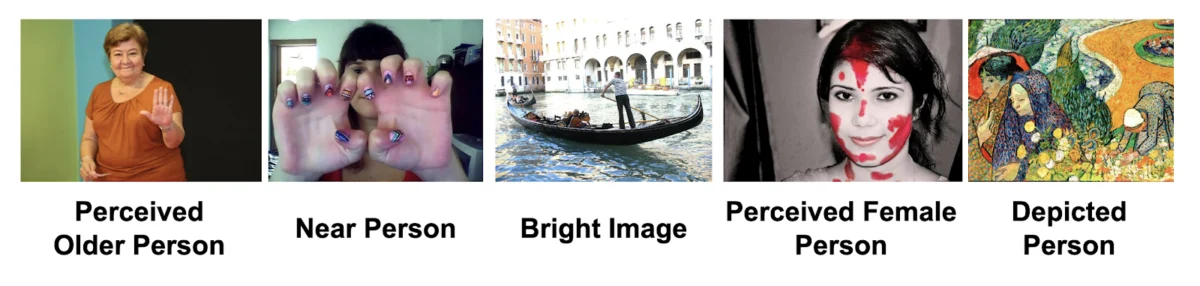
Wake Vision distinguishes itself by providing extensive, fine-grained benchmarks. These tests evaluate model performance across specific, real-world variables, including:
- Perceived Age: Ensuring models perform consistently across different age groups to mitigate demographic bias.
- Proximity Sensitivity: Testing detection accuracy for both near-field and far-field human presence.
- Environmental Conditions: Analyzing performance under varying lighting intensities.
- Demographic Representation: Examining model efficacy across different genders and physical orientations.
By offering these granular insights, the Wake Vision team is helping developers identify potential biases and limitations long before a product ever reaches a consumer’s hands. This shift toward "responsible by design" is a critical advancement for the widespread, ethical adoption of edge AI.
Official Perspectives: The Path Forward
The release of Wake Vision is not merely the launch of a dataset; it is an invitation to the global research community. By publishing the dataset under a permissive Creative Commons (CC-BY 4.0) license, the Harvard team has removed the barrier to entry for students, hobbyists, and corporate researchers alike.

"The goal is to democratize high-quality AI," notes the team. By integrating with major dataset hubs, the researchers have ensured that Wake Vision is accessible to anyone with an internet connection. The inclusion of a public leaderboard is intended to foster a spirit of competitive innovation, where the latest breakthroughs in model architecture and training techniques can be measured objectively against a standardized, high-quality benchmark.
Implications for Industry and Society
The implications of Wake Vision extend far beyond academic research. As we move into an era of ambient computing, the need for intelligent devices that respect privacy is growing. Person detection is a fundamental task for everything from smart building energy management—turning off lights when a room is empty—to elder care monitoring and industrial safety systems.
By enabling more accurate and efficient person detection, Wake Vision directly supports the development of privacy-preserving technologies. Because these models are small and efficient enough to run entirely on the local device, there is no need to stream sensitive visual data to the cloud. This "privacy-by-default" architecture is only possible if the underlying models are accurate and robust—a goal that Wake Vision makes achievable.
Furthermore, the research highlights a paradigm shift in how we approach machine learning. We are moving away from the era of "brute force" AI, where the answer to every problem was more compute and more data. We are entering the age of "efficient AI," where optimization, data quality, and architectural finesse define success.

Conclusion: Get Started Today
For developers and researchers looking to push the boundaries of what is possible on microcontrollers, the transition to Wake Vision represents a clear path forward. The dataset is currently live and available for integration into existing TensorFlow, PyTorch, and other machine learning frameworks.
To explore the findings, download the dataset, or submit a model to the official leaderboard, visit the Wake Vision website. By leveraging these tools, the community can collectively work toward a future where our devices are not just "smart," but reliably, efficiently, and ethically aware of the world around them.
The era of TinyML has arrived, and with the release of Wake Vision, it has finally found the data it needs to grow. As the leaderboard continues to update with new, cutting-edge submissions, one thing is clear: the researchers at Harvard have provided the spark, but it is the global community that will now carry this technology into the next generation of smart, edge-based hardware.