High-Precision Imaging: Unveiling the Capabilities of the 700 TVL Sony CCD Camera Module
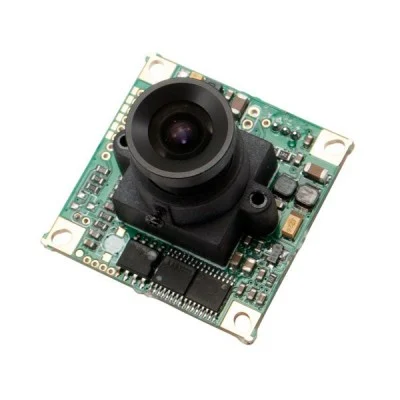
In the rapidly evolving landscape of electronic imaging, the demand for compact, high-performance visual sensors has never been greater. Whether for industrial monitoring, advanced robotics, or specialized First-Person View (FPV) applications, engineers require hardware that balances resolution, light sensitivity, and robust processing capabilities. The recently featured 700 TV-line (TVL) color camera module, built around a SONY CCD (Charge-Coupled Device) sensor, stands as a testament to the enduring reliability of CCD technology in an era increasingly dominated by CMOS sensors.
This article explores the technical specifications, operational advantages, and broader implications of utilizing high-resolution CCD modules in contemporary electronics projects.
Main Facts: A Deep Dive into the Hardware
The core of this camera module lies in its 1/3-inch CCD sensor. CCDs have historically been the gold standard for high-fidelity imaging due to their superior light-gathering capabilities and global shutter characteristics, which prevent the "rolling shutter" distortion often seen in CMOS sensors during high-speed motion.
Technical Specifications at a Glance:
- Sensor Type: 1/3” SONY CCD.
- Resolution: 700 TV Lines (TVL).
- Lens Specification: 3.6mm focal length, providing a wide-angle field of view.
- Light Sensitivity: 0.1 Lux.
- Signal Processing: Integrated SONY Digital Signal Processor (DSP).
The 700 TVL rating indicates the horizontal resolution of the camera, a traditional measurement for analog video systems. While 700 TVL does not equate to the pixel count of a 4K digital camera, in the context of analog CCTV and FPV systems, it represents high-end performance. It allows for crisp image reproduction that is vital for identifying objects, navigating obstacles, and maintaining visual clarity in variable lighting conditions.
Chronology: The Evolution of CCD Imaging
To understand the value of this module, one must contextualize the history of imaging sensors.
The CCD Era (1970s–2000s)
Charge-Coupled Devices were invented in 1969 at Bell Labs. For decades, they were the undisputed leaders in photography and video. Their ability to convert light into electrical charge with minimal noise made them the preferred choice for scientific research, professional broadcasting, and surveillance.
The Rise of DSP Integration (2000s–2010s)
As sensors improved, the bottleneck shifted to signal processing. The integration of SONY’s proprietary DSPs into camera modules—like the one being discussed here—marked a significant turning point. By embedding the processing chip directly behind the sensor, engineers could perform real-time white balance, noise reduction, and color correction. This "on-the-edge" processing minimizes latency, a critical factor for drone pilots and roboticists.
The Modern Hybrid Landscape (Present Day)
While CMOS sensors have largely taken over the smartphone and consumer photography market due to their low power consumption and manufacturing costs, CCD modules remain the preferred solution for specific professional niches. The 700 TVL CCD module serves as a bridge between legacy analog systems and the high-speed requirements of modern robotics, offering a "no-nonsense" approach to image acquisition that is immune to the complex digital artifacts sometimes found in high-compression CMOS pipelines.

Supporting Data: Why 0.1 Lux Matters
The performance of an imaging system is often judged by its "Lux" rating—the amount of light required for the sensor to produce a usable image.
- 10,000 Lux: Bright daylight.
- 100 Lux: A typical office environment.
- 1 Lux: A dark room or twilight.
- 0.1 Lux: Near-darkness, typically requiring minimal ambient light.
The fact that this module functions at 0.1 Lux is a significant achievement for a camera of its physical size. This low-light performance is achieved through the CCD’s inherent architecture, which excels at photon collection. For users operating drones in the late afternoon or monitoring indoor security in low-light corridors, this capability ensures that the video feed remains usable without needing active infrared (IR) illumination, which can sometimes wash out image detail.
The 3.6mm lens choice is equally strategic. It provides a wide-angle perspective that is neither "fisheye" enough to cause extreme edge distortion nor "telephoto" enough to narrow the field of vision too drastically. It is the "sweet spot" for situational awareness.
Official Responses and Engineering Perspectives
In the professional electronics community, the continued availability of SONY-based CCD modules is often met with approval. Engineering forums, including those hosted by Open-Electronics, highlight that the stability of these modules is their greatest asset.
"When you are designing an autonomous vehicle or a security system, you don’t necessarily want the ‘latest’ sensor if it comes with the baggage of complex drivers and high power consumption," says one industry specialist. "You want a device that is ‘plug-and-play.’ The SONY DSP integrated into this module handles all the heavy lifting—automatic gain control, backlight compensation, and color reproduction—without the host controller needing to do anything more than receive an analog signal."
From an integration standpoint, the simplicity of the interface is a major benefit. By outputting a standard analog video signal, the module can be connected directly to video transmitters, legacy monitors, or analog-to-digital converters, making it a highly versatile component for rapid prototyping.
Implications for Future Applications
The application of this 700 TVL CCD module extends far beyond basic video monitoring. As we look at the trajectory of modern technology, three specific areas stand out:
1. The FPV Drone Industry
The First-Person View community has long favored CCD sensors for their low-latency performance. Unlike digital cameras that process frames through a buffer, leading to potential lag, this analog CCD module offers near-instantaneous transmission. For a drone pilot navigating a high-speed racing course or a structural inspection, those milliseconds of saved latency can be the difference between a successful flight and a collision.

2. Industrial Automation and Robotics
Robotic platforms often require reliable "eyes" that can survive the electromagnetic interference (EMI) of motors and high-voltage actuators. CCD sensors are generally more robust against certain types of electrical noise compared to their CMOS counterparts, making them ideal for integration into heavy-duty robotic systems where signal integrity is paramount.
3. DIY Security and Surveillance
For hobbyists and system integrators building custom security setups, the "700 TVL" mark is the industry threshold for high-quality identification. While 4K is necessary for reading license plates at a distance, 700 TVL is more than sufficient for recognizing faces, identifying movement, and monitoring perimeters in a controlled environment. The reliability of the SONY DSP ensures that the system won’t "hang" or require a firmware update—a common frustration with smart IoT cameras.
Conclusion: The Endurance of Proven Technology
In an era where tech cycles move at breakneck speeds, the persistence of the SONY CCD sensor technology is not a sign of stagnation, but a sign of maturity. The 700 TVL camera module featured here provides a robust, high-clarity solution for anyone who prioritizes performance and reliability over marketing buzzwords.
Whether you are a drone enthusiast looking for the perfect analog feed, or an engineer seeking a dependable visual sensor for an automation project, the combination of a 1/3-inch CCD sensor, a 3.6mm wide-angle lens, and a dedicated SONY DSP remains an elite choice. It is a reminder that in the world of high-performance electronics, sometimes the best tool for the job is the one that does exactly what it was designed to do: capture the world clearly, quickly, and consistently.
For those interested in integrating this module into their next project, the technical documentation and procurement options are readily available through established platforms like the Open-Electronics store. By choosing components with a proven track record, developers can ensure that their projects remain functional and effective long after the initial build phase is complete.
As we continue to push the boundaries of what is possible in robotics and surveillance, the humble CCD sensor will undoubtedly remain a cornerstone of our technological infrastructure, providing the visual foundation upon which more complex systems can be built.