Bridging the Discrete and Continuous: A Deep Dive into TensorFlow GNN 1.0
In the modern landscape of artificial intelligence, data is rarely as simple as a flat table or a uniform grid. While traditional machine learning models have excelled at processing pixels, audio waves, and text sequences, the world is fundamentally structured by complex, irregular relationships. From the intricate web of global transportation networks and the chemical bonds in drug discovery to the multifaceted connections within social media platforms, these relational structures—formally known as graphs—are ubiquitous.
To address the challenge of modeling these complex systems, Google has officially announced the release of TensorFlow GNN (TF-GNN) 1.0. This production-tested library marks a significant milestone in machine learning, providing developers with the tools to build, train, and deploy Graph Neural Networks (GNNs) at an industrial scale. By enabling machines to reason about the relationships between objects as effectively as the objects themselves, TF-GNN 1.0 is set to redefine how we leverage structured data.
The Architecture of Relationships: Why Graphs Matter
At the core of the GNN revolution is the recognition that context is everything. In a standard machine learning model, an entity is often viewed in isolation. However, in reality, an entity’s identity is frequently defined by its neighbors.
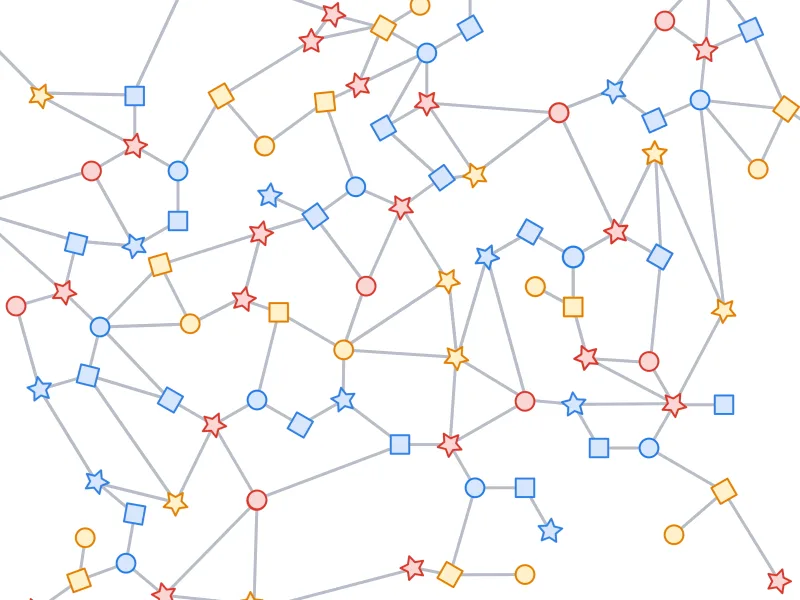
Discrete mathematics defines a graph as a collection of nodes (entities) and edges (relationships). While algorithms like DeepWalk and Node2Vec laid the early groundwork for graph analysis, GNNs have pushed the boundaries further. By utilizing both the connectivity of a graph and the specific features associated with nodes and edges, GNNs can perform high-level tasks:

- Graph-level predictions: Determining the efficacy of a new molecule.
- Node-level predictions: Classifying the subject matter of a research paper based on its citation history.
- Edge-level predictions: Recommending products based on co-purchase patterns.
The true power of a GNN lies in its ability to translate discrete, relational data into a continuous format, allowing this information to be seamlessly integrated into deep learning architectures.
Chronology of Development: From Concept to Production
The journey to TF-GNN 1.0 was a multi-year collaborative effort across Google’s most prominent technical divisions. The project represents a synthesis of expertise from Google Research, Google Core ML, and Google DeepMind.
The Evolution of the Framework
- Foundational Research: The project began with the identification of a "chasm" in existing ML tools. Most frameworks were optimized for regular grids (images) or sequences (language), leaving developers to build custom, inefficient workarounds for graph-structured data.
- Internal Adoption: Before its public release, the library was battle-tested internally. It was designed to handle heterogeneous graphs—networks where nodes and edges belong to distinct types—which are common in real-world databases.
- Refinement and Scalability: Engineers focused on the
tfgnn.GraphTensorobject, a composite tensor that acts as a first-class citizen within the TensorFlow ecosystem. This allowed for seamless integration withtf.data.Datasetand the Keras API. - The 1.0 Launch: The final release brings together high-level modeling templates, sophisticated sampling strategies, and the "Runner" API, which simplifies the orchestration of distributed training.
Supporting Data: The Mechanics of Scale
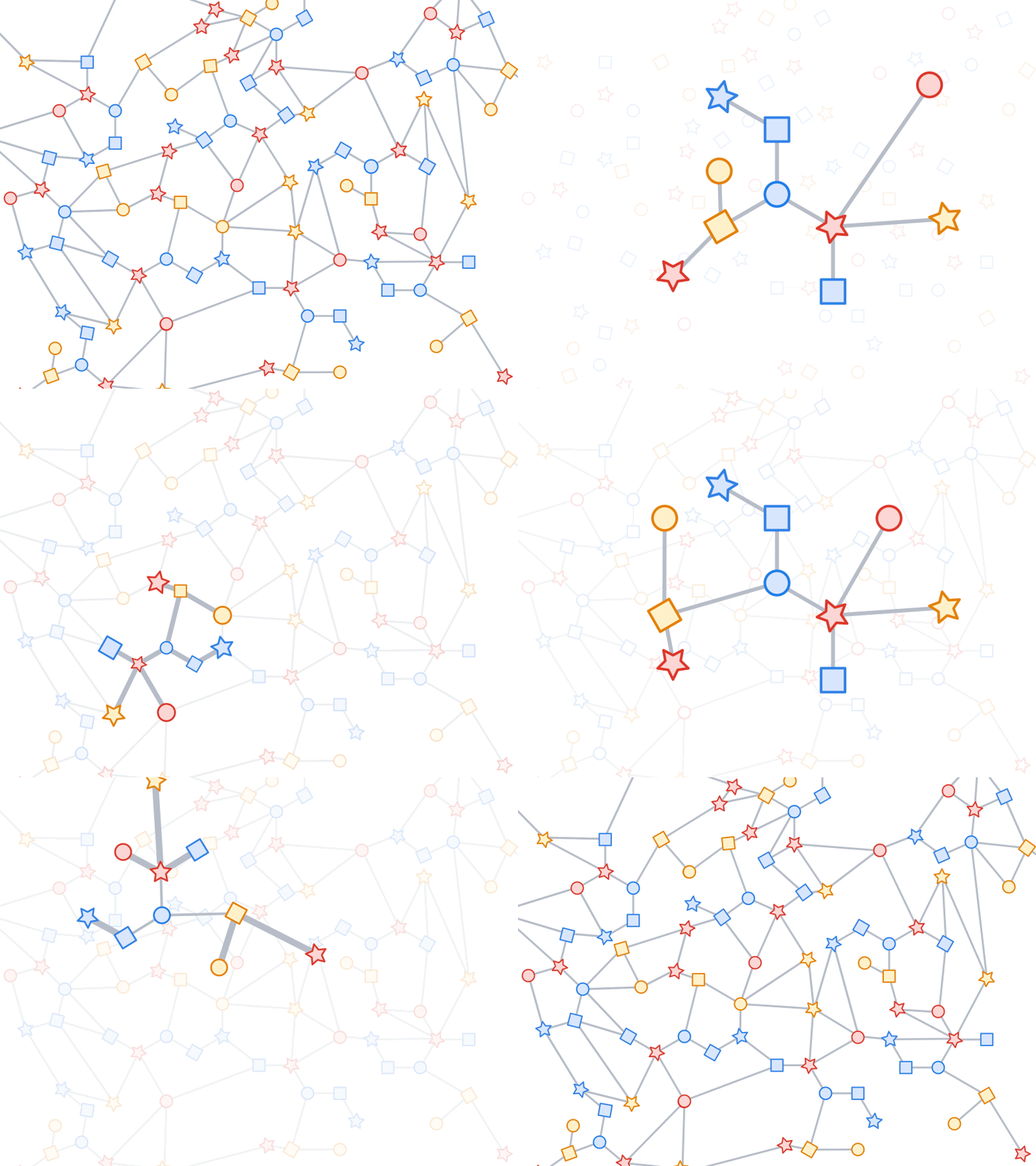
Training a GNN on millions of nodes is computationally prohibitive if one attempts to process the entire graph at once. To solve this, TF-GNN employs subgraph sampling.
The Sampling Paradigm
Instead of feeding the entire network into a model, TF-GNN samples "tractable" subgraphs—smaller, manageable portions of the original graph that retain enough structural information to allow the model to learn. This process is highly dynamic, allowing developers to configure sampling based on the scale of the data:
- Interactive/In-memory: Ideal for prototyping in Colab notebooks.
- Distributed via Apache Beam: Designed for massive datasets (hundreds of millions of nodes and billions of edges) stored on network filesystems.
Message Passing: The Engine of Inference
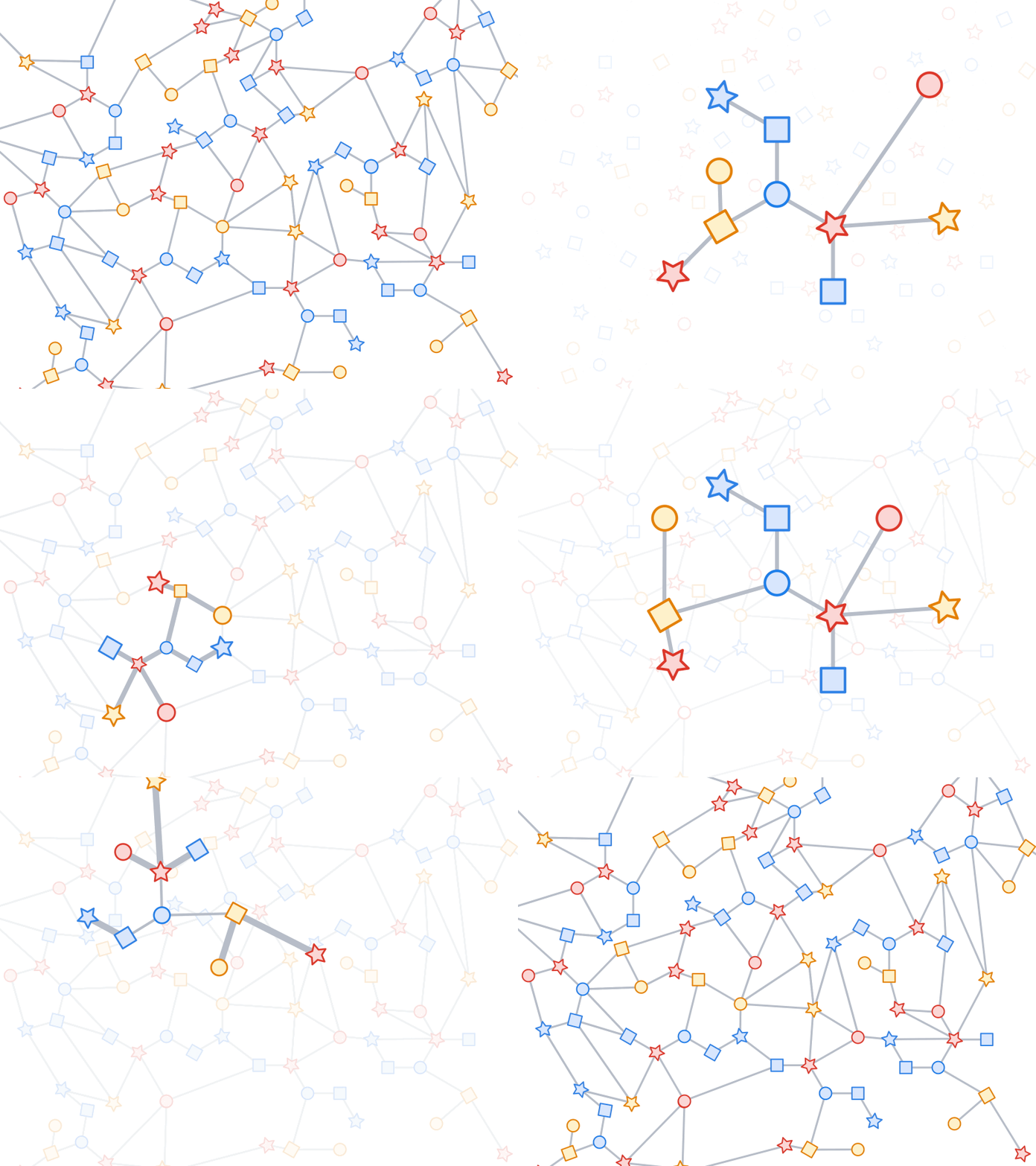
Once subgraphs are sampled, the model employs "message passing." In each round of processing, nodes aggregate information from their neighbors, updating their hidden states. After several rounds of this, a node’s internal representation effectively "encodes" the features of its entire neighborhood. This hierarchical aggregation allows the model to develop a sophisticated understanding of an object’s context, which is then used to make highly accurate predictions.
Official Perspectives and Technical Implementation
The development team, led by software engineers Dustin Zelle and Arno Eigenwillig, emphasized that the library was built to be modular. "We are excited to announce the release of TensorFlow GNN 1.0, a production-tested library for building GNNs at large scale," the team noted in their official release.
Flexibility in Modeling
TF-GNN offers a tiered approach to building architectures:
- High-Level Templates: For most users, the library provides pre-configured Keras layers. These templates implement best-practice architectures that have proven successful in internal Google use cases, allowing developers to get started with minimal boilerplate code.
- Low-Level Primitives: For researchers pushing the state of the art, the library allows for the creation of custom models from scratch. Users can define how data is broadcasted to edges or pooled into nodes, supporting both node-centric models and more complex GraphNets.
Orchestration with the TF-GNN Runner
The "Runner" API serves as the orchestration layer. It handles the heavy lifting of distributed training, including:
- Multi-task training: The ability to train on supervised and unsupervised tasks simultaneously. This is particularly useful for learning "embeddings"—continuous representations of graph nodes that can be reused in other downstream ML applications.
- Integrated Gradients: The framework includes built-in tools for model interpretability. By inspecting gradient values, developers can visualize which nodes or features had the most significant impact on a specific prediction, demystifying the "black box" of the GNN.
Implications for the Future of AI
The release of TF-GNN 1.0 signals a shift in the AI industry’s focus. As the "low-hanging fruit" of image and language processing becomes more commoditized, the next frontier for competitive advantage lies in modeling complex, interconnected systems.
Transforming Industries
- Drug Discovery: By modeling molecules as graphs, GNNs are accelerating the identification of viable therapeutic compounds, predicting properties that traditional simulations might miss.
- Recommendation Engines: By understanding the "social" or "purchasing" graph, companies can provide hyper-personalized experiences that take into account the user’s entire network of preferences.
- Knowledge Management: Large-scale knowledge graphs, used by search engines to organize the sum of human knowledge, can be processed more efficiently, leading to more accurate and context-aware query responses.
A Call to Innovation
By standardizing the GNN workflow, Google has lowered the barrier to entry for developers and data scientists. The inclusion of a comprehensive library of models, alongside rigorous documentation and integration with the wider Keras/TensorFlow ecosystem, ensures that GNNs will transition from an academic niche to a standard tool in the production engineer’s toolkit.
The collaborative nature of the project—involving teams from Google Research, Core ML, and DeepMind—underscores the strategic importance of this technology. As the industry continues to move toward more complex, multi-modal, and interconnected data models, frameworks like TF-GNN will likely become the standard for navigating the intricate webs of information that define our world.
For those eager to explore the capabilities of this library, the team has provided a suite of resources, including end-to-end Colab demos using the OGBN-MAG benchmark and extensive user guides. Whether you are a researcher looking to test a new message-passing variant or an engineer tasked with scaling a recommendation system, TF-GNN 1.0 provides the necessary structure to turn complex relationships into actionable intelligence.