The Renaissance of Innovation: How Maker Faire Rome 2024 is Shaping the Future of Global Sustainability
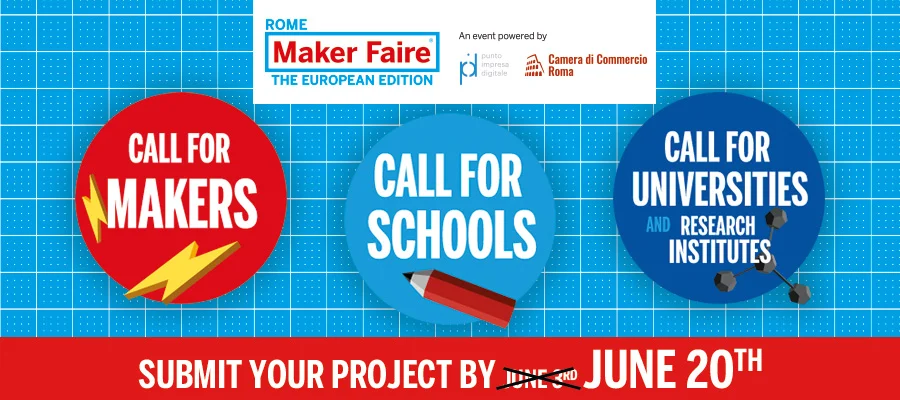
As the global community grapples with the accelerating depletion of natural resources and the existential threat of climate change, the role of technological innovation has shifted from a luxury to an absolute imperative. Nowhere is this transition more visible than at the Maker Faire Rome (MFR), Europe’s largest gathering of inventors, tech enthusiasts, and visionaries. Returning for its eleventh edition this October, the event, organized by the Rome Chamber of Commerce in collaboration with the Italian Trade Agency, stands as a testament to the power of human ingenuity in addressing our most pressing planetary challenges.
Main Facts: A Hub of Global Problem-Solving
Maker Faire Rome is more than an exhibition; it is a collaborative ecosystem designed to bridge the gap between academic research, garage-based experimentation, and industrial scalability. The event serves as a high-profile stage for "makers"—a diverse group of students, engineers, artists, and startups—to showcase prototypes that directly confront contemporary issues.
"The Maker Faire promotes the exchange of ideas and the evolution of technologies; it presents prototypes that help change the world," states Alessandro Ranellucci, the event’s content manager. His sentiment captures the essence of the faire: a space where the "little Leonardos" of the 21st century converge to demonstrate that sustainability is not merely a political talking point, but an engineering objective.
Chronology and Evolution of the Maker Movement
The history of the Maker Faire is intrinsically linked to the rise of the "prosumer" economy—a shift where the lines between consumer and creator blur. Since its inception, the Rome edition has evolved from a grassroots hobbyist gathering into a professional launchpad for international startups.
- Early Years: The focus was primarily on DIY electronics and basic rapid prototyping.
- The Mid-Cycle: Integration of IoT (Internet of Things) and Arduino-based automation became the norm.
- The Current Era (2024): The focus has pivoted toward deep-tech applications: Artificial Intelligence (AI) for predictive agriculture, bio-materials, and inclusive design for the differently-abled.
This year’s edition is marked by a significant influx of projects that utilize AI not just for software, but as the core intelligence driving hardware in fields ranging from viticulture to disaster prevention.
Supporting Data: Innovations in Action
The breadth of projects at this year’s faire illustrates a decentralized revolution in technology.
Agricultural Precision
In Bronte, Sicily, a region famous for its volcanic soil and pistachio cultivation, geography poses a challenge for traditional farming machinery. A team of local high school students has bridged this gap by developing a drone-based pollen blower. By overcoming the limitations of rugged, inaccessible terrain, the drone has reportedly increased pistachio yields by 24%. This is a prime example of "grassroots AI"—using simple but effective aerial robotics to solve a legacy agricultural hurdle.
Energy and Sustainability
The energy sector is seeing a shift toward decentralized, biomimetic solutions. Giorgio Palamara, an innovator at the faire, is demonstrating wind turbines with curved blade tips that increase energy output by 20% through double-rotation dynamics. Similarly, solar technology is moving away from rigid, static panels toward flexible, sensor-equipped units that track light like sunflowers, maximizing efficiency in non-flat environments like boats and caravans.

Circular Economy and Waste Management
Sapienza University of Rome has unveiled an "intelligent" waste container that utilizes advanced sorting algorithms to categorize trash on the fly, eliminating the need for manual separation. This, combined with student-led research into mushroom-based alternatives to plastic, highlights a growing trend toward circular design—where the end of one product’s life cycle is merely the beginning of another’s.
The Human Element: Inclusion and Technology for the Arts
While sustainability is a pillar, social inclusion remains the heartbeat of the faire. Projects such as "Brailly," a cube designed to teach Braille through tactile vibration and audio, and carbon fiber prostheses developed by Ken Endo, demonstrate that technology is at its most powerful when it empowers human agency. Endo’s "Technology for the Arts" initiative, which features dancers using his high-performance prostheses, underscores that disability is not an impediment to artistic or physical excellence when supported by thoughtful engineering.
Furthermore, the "Safecutter" project, a partnership between the Leibniz Institute for Plasma Science and Technology (INP) and Mr Beam Lasers GmbH, aims to democratize industrial precision. By integrating automated safety shutdowns and toxic exhaust filtration, they are bringing professional-grade laser cutting into smaller, safer, and more accessible environments.
Official Responses and Perspectives on the Startup Ecosystem
The event has attracted significant attention from international investors, such as Stefan Petersson of the Norwegian firm Xplorico. Petersson identifies a critical tension in the current market: while startups are responsible for the vast majority of modern innovation, the European support structure lags behind the US and China.
"Startups are signing almost all innovations at the moment," Petersson asserts. He criticizes the European tendency to favor "large-scale projects" over agile, early-stage ventures. However, he finds hope in the rise of university-led business accelerators. This sentiment is echoed by Corinne Raclin, head of a business incubator in Paris, who argues that Europe’s path to economic independence from Asia lies in "industrialization projects" that are deeply rooted in local, clean production cycles powered by AI.
Implications for the Future
The implications of the 2024 Maker Faire are profound. We are witnessing the maturation of the "Maker" movement into an industrial force. Projects like the "GALDEANO" DIY calculator, developed by veteran IT professional Ángel Cabello, exemplify this transition. By utilizing an ESP32 microcontroller to handle symbolic mathematics, Cabello proves that high-level computing can be achieved through accessible, customizable hardware. This is the new paradigm: the ability to build, repair, and innovate is being returned to the individual.
Key Takeaways for Global Industry:
- Democratization of Tech: Tools like the Safecutter and Galdeano suggest that the barrier to entry for high-end manufacturing and scientific computing is plummeting.
- AI as a Field Utility: AI is no longer confined to data centers; it is moving into the field via robots harvesting grapes, drones monitoring aquifers, and predictive irrigation systems.
- Collaborative Innovation: The success of the Safecutter and the various student-led initiatives proves that the most robust solutions emerge when academia, the public sector, and private industry share resources.
Conclusion: A Call to Action
The Maker Faire Rome 2024 serves as a mirror to our future. It shows a world where the challenges of climate change and social inequality are being met not just by massive corporations, but by a global community of makers armed with open-source tools, a sense of urgency, and an unwavering belief in their own agency.
As the fair concludes its 11th edition, the message is clear: the solutions to our most complex problems exist. They are being built in classrooms, garages, and small laboratories across Europe. The next step is not just invention, but the acceleration of these ideas into the global market. As the organizers and participants continue to bridge the gap between prototype and production, the world watches with anticipation, knowing that the next global breakthrough might just be coming from a "little Leonardo" with a 3D printer and a vision for a cleaner, more inclusive planet.