From Electric Dreams to Robotic Reality: Faraday Future’s High-Stakes Pivot
In the high-octane world of Silicon Valley startups, few companies have experienced as turbulent a trajectory as Faraday Future. Once heralded as the “Tesla killer” that would redefine the luxury electric vehicle (EV) market, the company has spent the better part of a decade mired in financial instability, executive turnover, and public skepticism. Now, in an unexpected shift that mirrors the strategic pivots of its contemporaries, Faraday Future is betting its future on an unlikely venture: robotics.
With a history defined by grandiose promises and a strikingly modest track record of vehicle deliveries, the company’s recent move to launch a specialized robotics division—featuring everything from consumer-grade quadrupeds to industrial-grade humanoids—has left industry analysts and investors scrambling to decipher the long-term viability of this latest pivot.
The State of Play: Faraday’s New Robotics Lineup
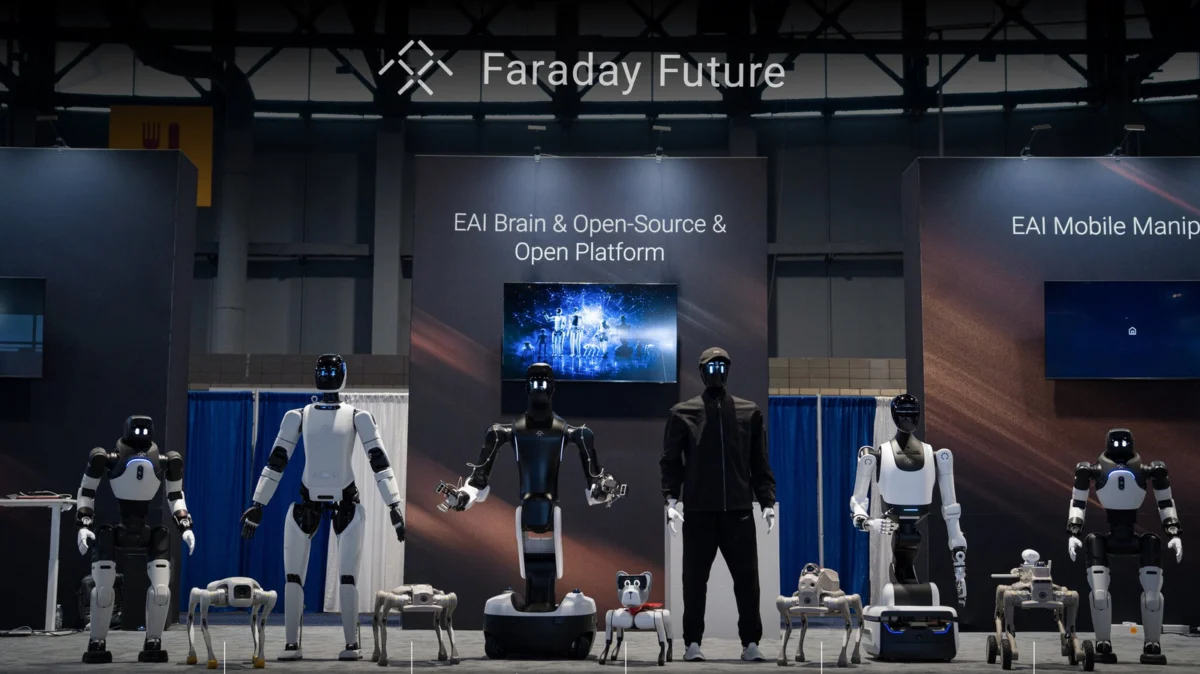
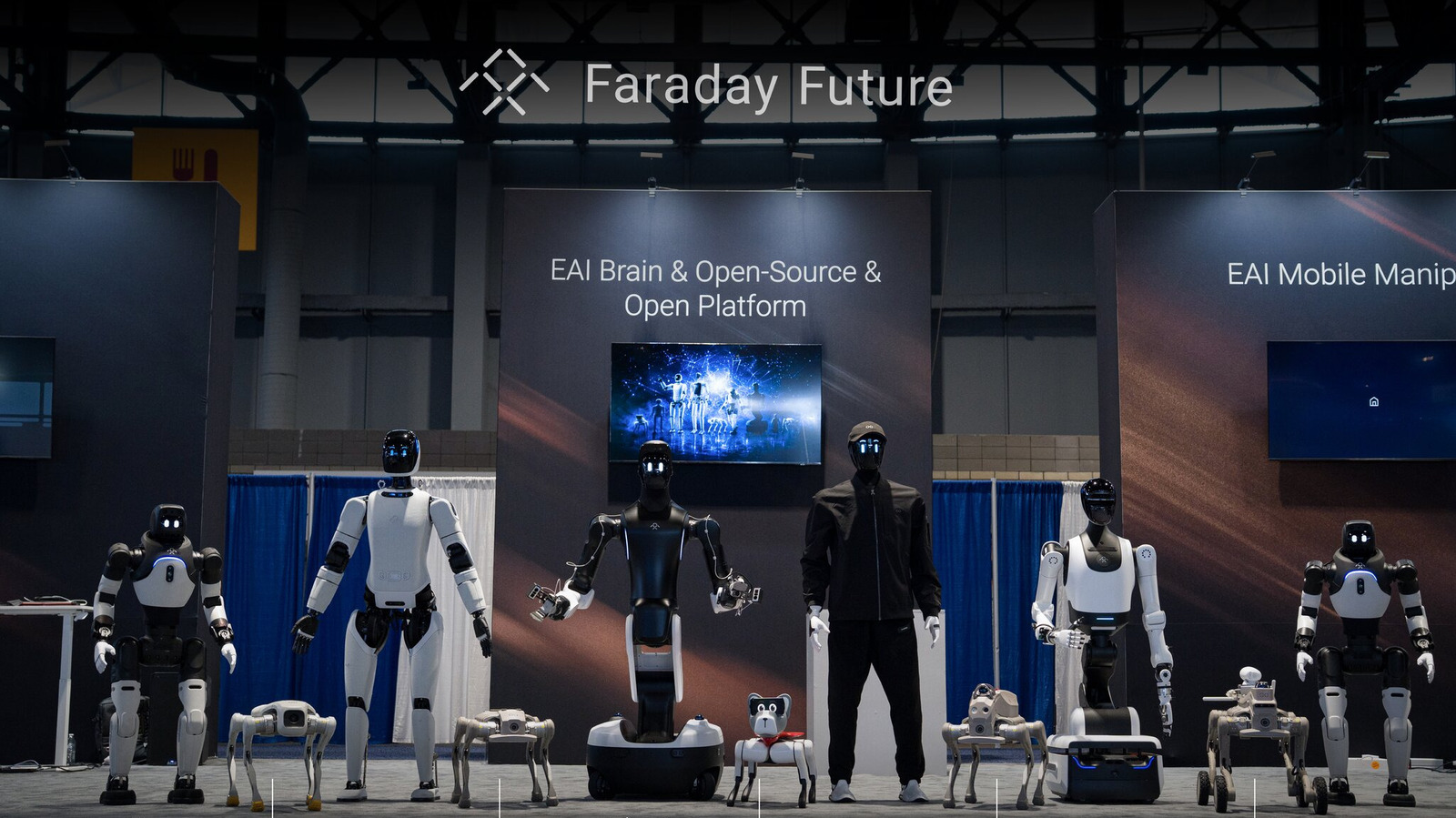
Faraday Future has officially unveiled its “FF EAI Robot World,” a suite of hardware aimed at both educational and industrial applications. The most headline-grabbing of these is the "Futurist," a 5-foot-8-inch humanoid robot. Powered by NVIDIA’s Sonic full-body motion control system, the unit is priced at approximately $89,900. While the price point places it firmly in the luxury tier of current robotics, the company is positioning it as a sophisticated tool for advanced tasks.
Beyond the humanoid, the company is diversifying its reach. The "Navi," a quadrupedal robot designed primarily for educational purposes and the study of embodied AI, enters the market at a more accessible price point of just under $2,000. For those seeking the “complete” experience, the company notes that additional aesthetic upgrades, such as a 3D-printed canine head, are available for purchase.
Perhaps the most significant, if opaque, offering is the company’s new “mobile manipulator”—an industrial-grade robotic arm. While pricing remains undisclosed to the public, the lack of transparency is widely interpreted as a signal that the cost is substantial, intended specifically for enterprise-level clients rather than the general consumer.
A Decade of Turbulence: A Chronological Review
To understand the weight of Faraday Future’s pivot, one must examine the decade of hardship that preceded it.
- 2016–2017: The Hype Cycle. Faraday Future burst onto the scene with immense fanfare, promising a revolution in transportation. At CES 2017, the company unveiled its first production-ready EV, capturing global attention. However, the internal reality was far less stable than the stage presence suggested.
- 2018–2020: The Era of Tumult. The company’s founder, YT Jia, faced severe financial crises, leading to frozen assets and a series of high-profile lawsuits. During this period, the company was plagued by internal turmoil, including reports of sexual harassment, massive layoffs, and chronic cash-flow shortages.
- 2021–2024: The Stagnation. While other EV startups matured, Faraday Future remained stuck in a cycle of "production-readiness" that rarely translated to the road. The company’s reputation as a "loser" in the tech sector solidified as delivery milestones were repeatedly pushed back.
- 2025: The “Fresh Start.” In early 2025, the company reported that it had successfully delivered only 15 to 16 vehicles. Despite this abysmal metric, the company returned to CES to pitch a new electric minivan, signaling a desire to rebuild its brand.
- 2026: The Robotic Pivot. With YT Jia returning as the sole global CEO in May, the company began integrating its EV expertise with its new robotics initiative. By June 2026, the company announced its first shipment targets for robotics, aiming to surpass 220 units in the first half of the year.
Supporting Data: Numbers in Perspective
The irony of the current situation is not lost on market observers. For years, Faraday Future struggled to deliver fewer than 20 vehicles—a goal that should have been trivial for an established manufacturer. Yet, the company is now claiming that its robotics division is poised to outperform its automotive legacy in a matter of months.
According to official press releases, the company expects to ship more than 100 robotics units in the month of June alone. When paired with earlier deliveries, the company expects to exceed its initial target of 220 units for the first half of 2026. While these figures represent a fraction of the output of industry giants like Boston Dynamics or Tesla’s Optimus project, they represent a significant psychological win for a company that has spent years failing to move product.
However, investors should remain cautious. The company’s financial disclosures have historically been opaque, and the transition from “EV startup” to “Robotics manufacturer” requires a different set of technical competencies, supply chain management, and regulatory navigation.
Official Responses and Strategic Rationale
Faraday Future maintains that this pivot is not an abandonment of its automotive ambitions, but rather a logical extension of its core technology. The company argues that the “EAI” (Embodied AI) ecosystem, which powers its robots, is a natural byproduct of the artificial intelligence, sensor fusion, and autonomous navigation systems it spent years developing for its electric vehicles.
In statements accompanying the launch, the company leadership emphasized that the robotics division allows for faster iteration and a quicker path to revenue than the capital-intensive and highly regulated EV market. By pivoting to robotics, Faraday Future is arguably attempting to "Tesla-fy" its operations—following the path of Elon Musk’s firm, which has increasingly prioritized the development of humanoid robots over the launch of new vehicle models.
Implications: Can a Robot Save a Legacy?
The implications of this move are twofold: technical and existential.
The Technical Hurdle
Building a humanoid robot that is commercially viable at an $89,900 price point requires more than just a chassis and a motor. It requires a robust software stack, reliable battery life, and a durable mechanical design. Given the company’s past struggles with quality control in its vehicle assembly, the robotics industry will be watching closely to see if Faraday Future can maintain the rigorous manufacturing standards required for autonomous hardware.
The Existential Risk
For Faraday Future, this is likely a “last stand” maneuver. The brand equity associated with the company is deeply damaged, and the "15 cars sold" statistic has become a punchline in industry circles. By pivoting to robotics, the company is attempting to reset the narrative. If the robotics division succeeds, it may provide the liquidity necessary to revive the company’s automotive projects. If it fails, it may prove to be the final chapter in a long, cautionary tale of corporate overreach.
Conclusion
Faraday Future stands at a crossroads. Its attempt to transition from a struggling boutique automaker to an ambitious player in the robotics sector is a bold, if desperate, play. While the initial shipment projections for its robotics lineup are encouraging compared to its automotive delivery history, the company must prove that it can overcome the systemic instability that has defined its past.
Investors, customers, and industry experts remain in a "wait and see" mode. Whether the Futurist and Navi robots become the foundation of a new, profitable Faraday Future, or merely another footnote in the company’s troubled history, will be determined by the next twelve months of execution. For now, the company has at least managed to trade the slow crawl of its car deliveries for the faster-paced, yet equally uncertain, world of robotics.