Beyond the Veil: NASA Unveils Unprecedented Clarity of Centaurus A for Webb’s Fourth Anniversary
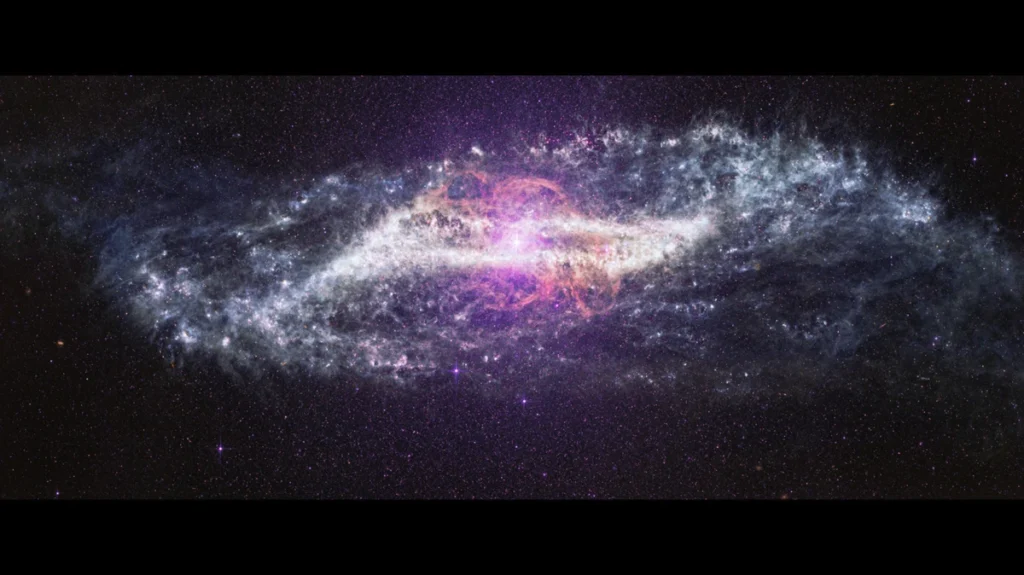
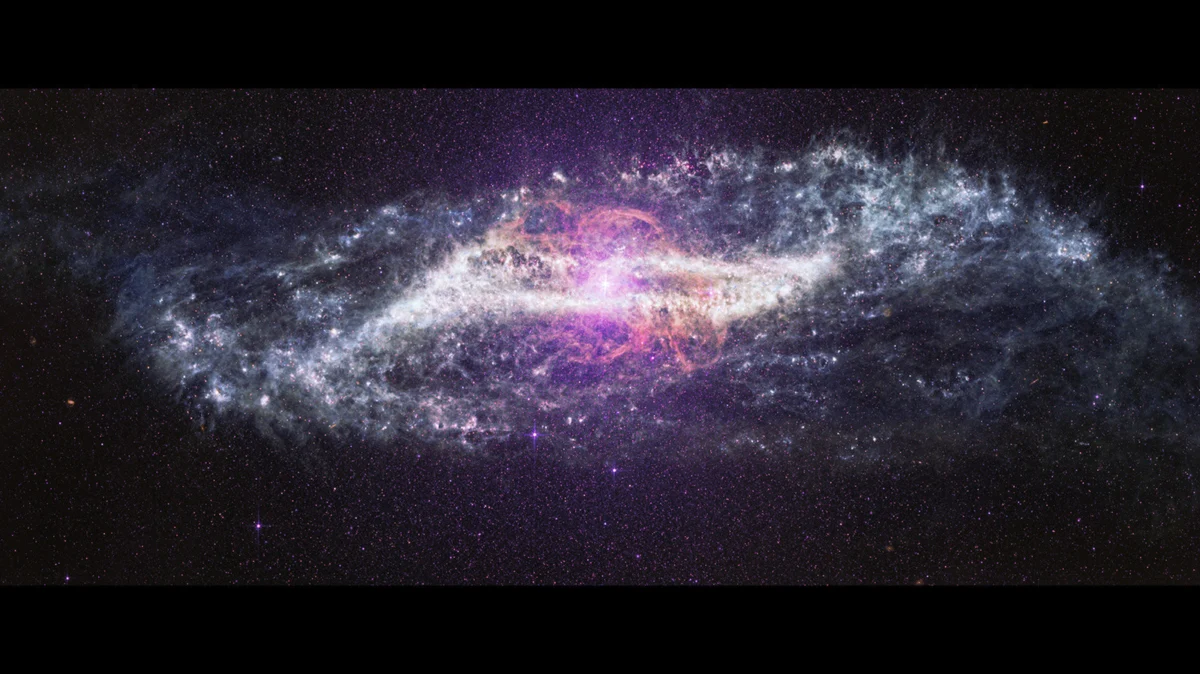
It has been nearly four years since the world collectively held its breath as the first full-color images from the James Webb Space Telescope (JWST) were beamed back to Earth, fundamentally altering our understanding of the cosmos. To commemorate this milestone of scientific achievement, NASA has released the most detailed, high-resolution imagery of Centaurus A ever captured. This latest endeavor serves not merely as a celebration of the telescope’s enduring performance but as a profound leap forward in galactic archaeology, peeling back the thick, obscuring curtains of dust that have long hidden the chaotic heart of one of our closest cosmic neighbors.
Main Facts: A Portrait of Cosmic Turbulence
Centaurus A, situated approximately 11 million light-years away, is a galaxy of stark contrasts and violent history. Unlike the relatively quiet, spiral nature of our own Milky Way, Centaurus A is a hive of intense activity. At its core lies a supermassive black hole, a gravitational titan that is actively consuming surrounding gas, dust, and stars. As this material spirals toward the event horizon, it is accelerated to relativistic speeds, generating jets of energy that stretch far beyond the galaxy’s visible boundaries.
The imagery released by NASA utilizes the sophisticated Mid-Infrared Instrument (MIRI) and the Near-Infrared Camera (NIRCam). While previous observatories—most notably the Hubble Space Telescope—offered glimpses of the galaxy’s outer structure, their view was severely hampered by thick bands of interstellar dust. By capturing light in the infrared spectrum, the James Webb telescope effectively "sees through" these opaque regions, revealing the inner workings of the galaxy with surgical precision. The resulting images display a tapestry of reddish-purplish hues, highlighting stellar nurseries where the process of birth and death occurs in tandem.
A Chronology of Discovery: From Hubble to Webb
To understand the magnitude of this achievement, one must look at the historical trajectory of our observation of Centaurus A.
The Visible Light Era
For decades, the Hubble Space Telescope provided the gold standard for optical astronomy. However, Centaurus A presented a unique challenge: it is a "dusty" galaxy. The massive dust lanes that give the galaxy its distinct appearance were, for Hubble, impenetrable barriers. Optical light is easily scattered by these microscopic particles, meaning that while astronomers could see the overall shape of the galaxy, the individual stars and complex dynamics hidden within the core remained shrouded.
The Infrared Pioneers
The Spitzer Space Telescope was the first to bridge this gap by observing in infrared. Spitzer provided the scientific community with its first look at the large-scale structures of the galaxy, helping to confirm the theory that Centaurus A was the product of a massive galactic collision. However, Spitzer’s resolution was limited by its mirror size and technology, leaving smaller details—such as individual stars within the dust clouds—as blurry, indistinct blobs.
The Webb Revolution
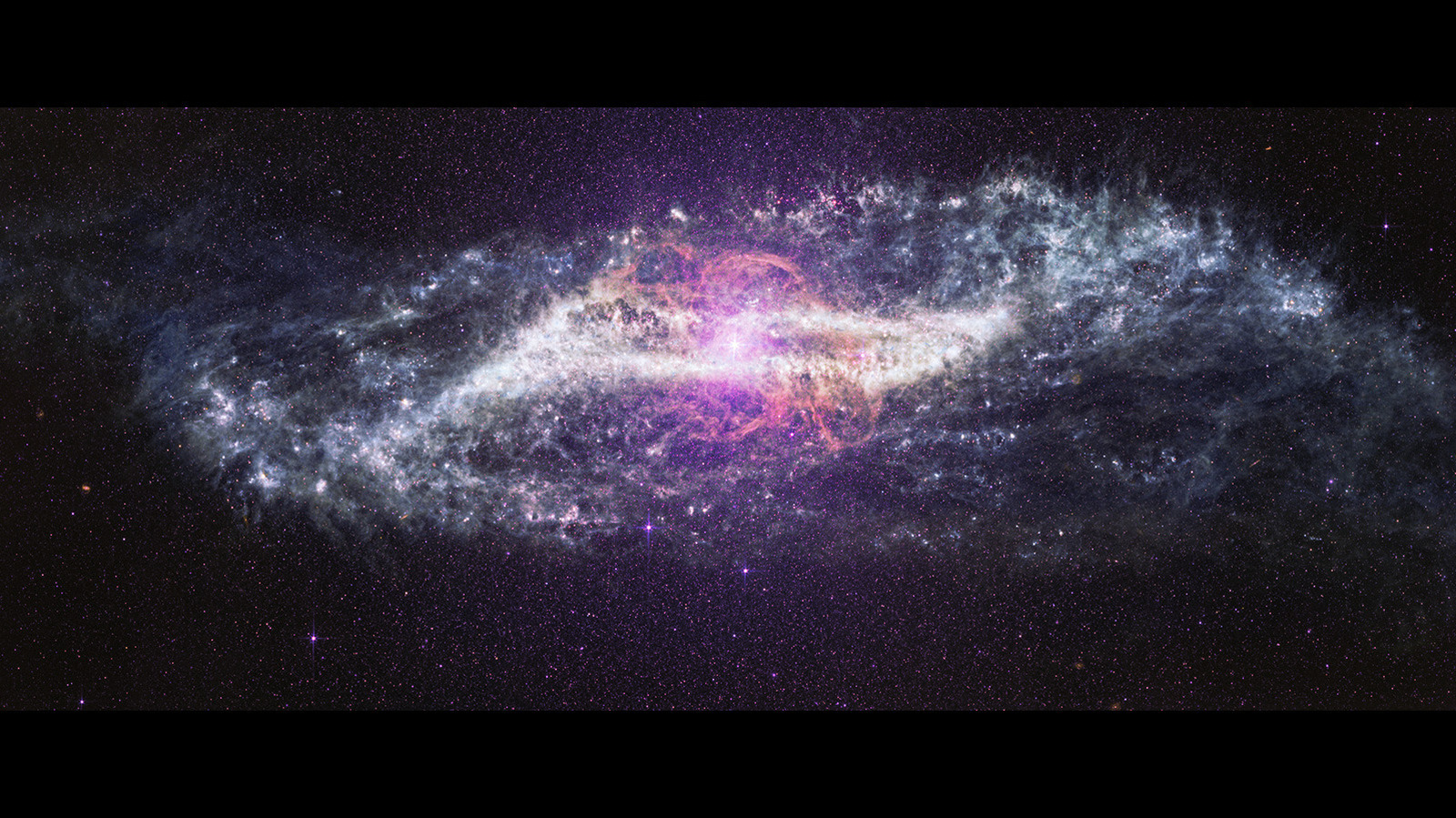
The launch and subsequent deployment of the James Webb Space Telescope in 2021 marked a paradigm shift. With a primary mirror 6.5 meters in diameter and instrumentation cooled to near absolute zero, Webb possesses an unprecedented ability to detect faint heat signatures. The fourth-anniversary images of Centaurus A represent the culmination of this capability, providing a "high-definition" view that allows astronomers to distinguish between individual stars, filaments of gas, and the turbulent outskirts of the central black hole.
Supporting Data: The Physics of a Galactic Collision
The structure of Centaurus A is not an accident of nature; it is a violent legacy. Approximately 2 billion years ago, a smaller spiral galaxy collided with a larger elliptical one. This cataclysmic event sent ripples of star formation throughout the structure, feeding the central supermassive black hole with a fresh supply of fuel.
MIRI and the Secret Life of Dust
The MIRI data is particularly revealing. In the new images, the glowing, intricate structures are not just aesthetic; they are indicators of heavy chemical enrichment. The "reddish-purplish" light mentioned in the data release represents polycyclic aromatic hydrocarbons (PAHs)—complex carbon-based molecules that are essential for the formation of stars and planets.
By analyzing the MIRI imagery, researchers can now map the temperature and density of these dust clouds. This data is critical for understanding the "star formation efficiency" of the galaxy—a metric that tells scientists how much gas is successfully converted into new stars versus how much is blown away by the energetic jets originating from the central black hole.
The NIRCam Integration
When combined with the NIRCam data, the result is a multi-layered, synthetic view. While MIRI captures the heat of the dust, NIRCam detects the light of the stars themselves. By overlaying these two data sets, NASA has created a comprehensive map of the galaxy’s anatomy, allowing researchers to study the interaction between the galaxy’s mature stellar population and its newest, most active regions.
Official Responses and Scientific Context
NASA’s official statement regarding the anniversary reflects a tone of profound satisfaction with the mission’s longevity. "These images mark four years of better-than-anticipated performance and successful science operations for the most powerful space telescope in history," the agency stated.
The sentiment among the lead researchers is one of excitement for the future of galactic evolution studies. Dr. Macarena Garcia Marin, an ESA scientist who contributed to the image processing, noted that the detail captured by Webb provides the raw material needed to reconstruct the timeline of Centaurus A. By observing the galaxy "star by star," the team expects to develop a precise chronological model of the collision that occurred two billion years ago. This model will serve as a template for understanding how other galaxies—including our own—interact with their neighbors and how supermassive black holes influence the life cycle of their host systems.
Implications: Rewriting the Galactic Manual
The implications of this imagery extend far beyond Centaurus A.
Understanding Galaxy Evolution
Most of what we know about galaxy formation is based on simulations. By observing a galaxy that is currently in a state of post-collision recovery, astronomers can verify these simulations against real-world data. Centaurus A is a "laboratory" for galactic evolution. Understanding how its black hole regulates star formation provides clues about the "feedback" mechanisms that prevent galaxies from consuming all their gas too quickly.
The Search for Life
While Centaurus A is far too violent and energetic to be a likely candidate for supporting life as we know it, the study of its stellar nurseries is essential for our understanding of planetary systems. By observing how stars form within these dense, dust-choked environments, we gain insights into the conditions that lead to the formation of protoplanetary disks—the very structures that eventually give rise to planets.
A New Chapter for Webb
As the James Webb Space Telescope enters its fifth year of operation, its mission is shifting from initial calibration and demonstration to deep-field, long-term monitoring. The success of the Centaurus A project demonstrates that the telescope is capable of sustained, high-resolution observation of complex, nearby structures, not just the early, distant universe.
In conclusion, the latest images of Centaurus A serve as a testament to the power of human ingenuity. By reaching into the infrared, NASA has moved past the limitations of visible light, proving that even the most well-studied objects in our cosmic backyard still hold secrets waiting to be uncovered. As we look at these stunning, high-resolution vistas, we are reminded that the universe is not a static painting, but a dynamic, evolving process—and for the first time, we have the tools to watch it unfold in breathtaking detail.