The Future of Enterprise Intelligence: Key Takeaways from the 2026 AWS Summit in New York City
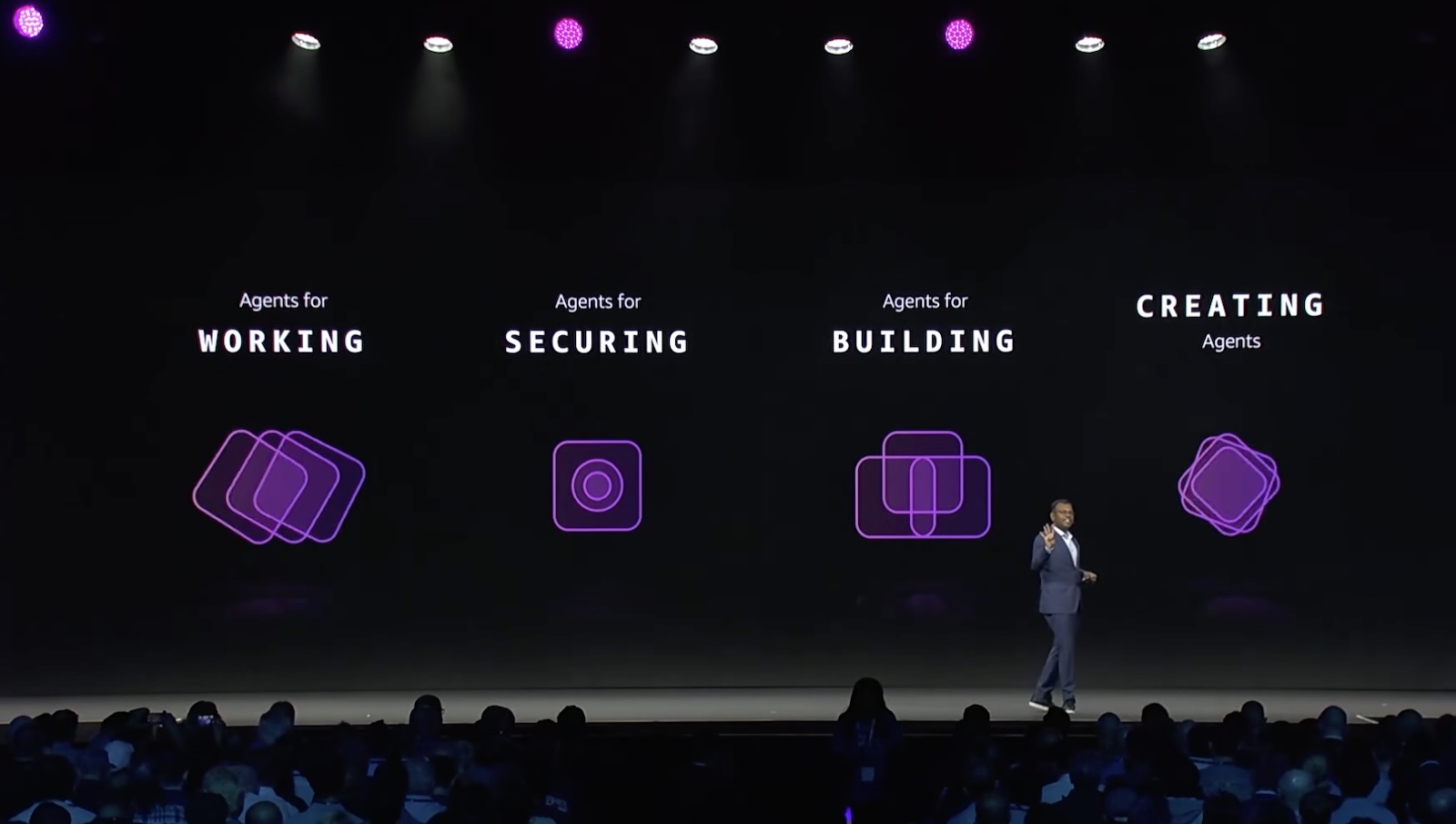
The landscape of generative AI is undergoing a seismic shift, moving from simple chat-based interfaces to sophisticated, autonomous "agentic" systems. This transition was the focal point of the 2026 AWS Summit in New York City, where Swami Sivasubramanian, AWS VP of Agentic AI, took the stage to outline how Amazon Web Services is fundamentally re-engineering the enterprise AI stack.
The summit served as a stage for a series of high-impact announcements aimed at helping businesses move beyond the "experimentation phase" of AI and into a realm of autonomous productivity, governed security, and continuous improvement.
Main Facts: The Rise of Agentic AI
The core message from this year’s keynote was clear: the next generation of enterprise software is not defined by prompts, but by outcomes. AWS is pivoting its strategy to emphasize "Agentic AI"—systems capable of independent reasoning, tool usage, and complex problem-solving.
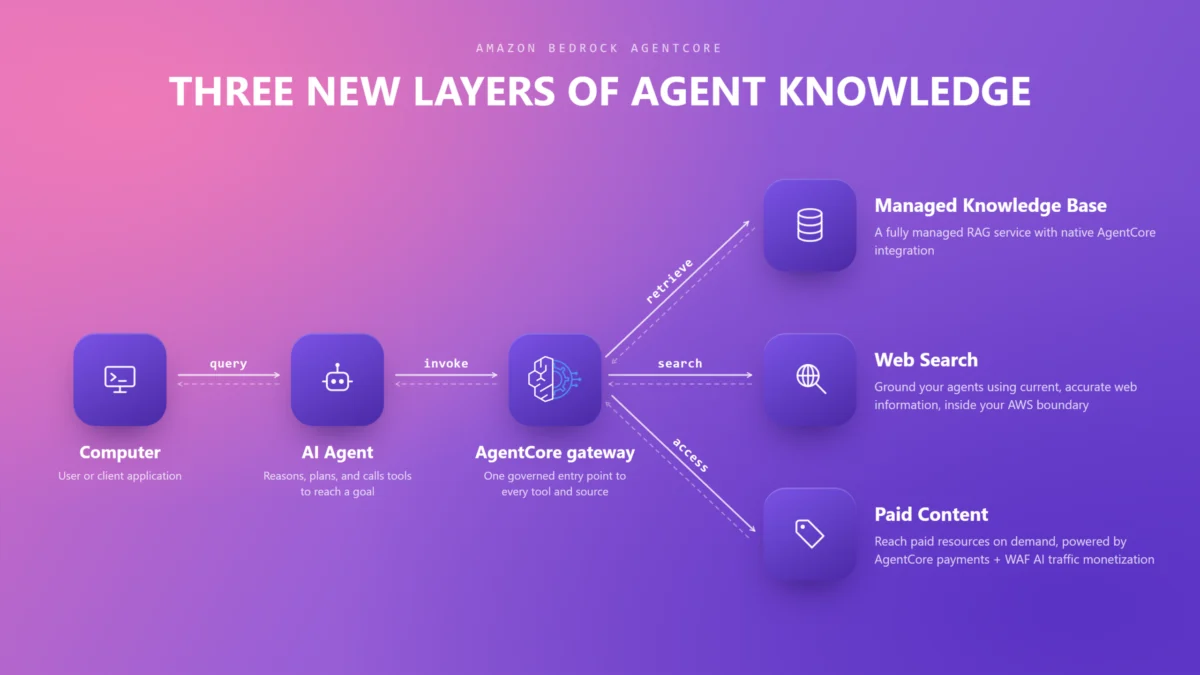
The centerpiece of these announcements is the evolution of Amazon Bedrock AgentCore. AWS is significantly expanding the capabilities of this framework, moving it from a basic orchestration tool to a robust environment where AI agents can access organizational knowledge, web-based data, and paid subscriptions. This allows for the creation of agents that are not just "smart," but contextually aware of the specific proprietary data that drives a business.
Furthermore, the introduction of Amazon Quick’s autonomous agents marks a significant leap in workplace automation. These agents are designed to function in the background, performing specialized tasks—ranging from financial order processing to CRM-linked sales intelligence—without the constant need for human intervention.
Chronology of Announcements
The summit unfolded as a meticulously staged reveal of the AWS roadmap for the remainder of 2026:

- Morning Keynote (June 17, 2026): Swami Sivasubramanian opened the summit by defining the "Agentic Era." The keynote focused on the necessity of moving from AI models that merely generate text to agents that execute business processes.
- Bedrock AgentCore Expansion: Immediately following the keynote, technical documentation was released detailing the new knowledge-layer integrations, allowing agents to ingest diverse data sources and operate within secure enterprise boundaries.
- The Launch of Amazon Quick Agents: Mid-day, the focus shifted to productivity. The debut of autonomous agents within the Amazon Quick suite showcased a new paradigm for cross-application workflow automation.
- Integration Reveal: The afternoon sessions highlighted the new "Activity Feed," a consolidated interface designed to act as a centralized command center for enterprise communications.
- Follow-up Releases (June 18, 2026): AWS followed the main event with a series of additional minor product updates and service improvements to reinforce the new ecosystem of tools.
Supporting Data: Empowering the Autonomous Workforce
The technical implementation of these new agents is built on a foundation of three critical pillars: broader knowledge, continuous learning, and scalable governance.
1. Broadening Knowledge Layers
Previously, agents were limited to static datasets. The new update to Bedrock AgentCore allows developers to link agents to real-time, dynamic data streams. This includes:
- Organizational Data: Secure, internal wikis and databases.
- Web Knowledge: Real-time retrieval of external market trends.
- Paid Subscriptions: API-based access to high-value, third-party data feeds.
By providing these layers, AWS enables agents to act on information that is as fresh as the market itself, rather than relying on stale, pre-trained model knowledge.
2. The Amazon Quick Autonomous Suite
The most tangible impact for the end-user comes via the new Amazon Quick agents. These are specialized "workers" configured with distinct personas and toolsets:
- The Finance Agent: Designed to handle high-volume order processing, reducing manual reconciliation time.
- The Sales Agent: A sophisticated monitor that integrates across Slack, email, and CRM platforms. It doesn’t just read messages; it drafts follow-ups, identifies potential risks in the sales pipeline, and proactively recommends the next best action for a sales representative.
3. The Unified Activity Feed
AWS is tackling the "context-switching" tax—the hours lost when employees jump between browser tabs and communication platforms. The new AI-powered Activity Feed synthesizes email, calendar, and task management into a single, prioritized view. It uses machine learning to discern user priorities, learning which threads require immediate attention and which can be deferred, effectively serving as an intelligent filter for the modern digital workday.
Official Responses and Strategic Vision
During the keynote, Swami Sivasubramanian emphasized that the goal of these tools is to provide "frictionless productivity."

"We are moving past the era where a human has to hold the hand of an AI for every single step," Sivasubramanian noted. "Our focus is on building agents that possess the institutional memory to understand why a decision is made, the security controls to ensure it stays within corporate policy, and the ability to learn from their own successes and failures in production."
AWS leadership has consistently positioned these updates as a response to the "AI fatigue" reported by many CTOs, who have found that while generative models are impressive, integrating them into existing legacy workflows remains a major hurdle. By providing pre-built agents and governance frameworks, AWS is lowering the barrier to entry for complex enterprise AI deployment.
Implications: The New Enterprise Standard
The implications of these announcements are profound, impacting both the job market and the internal structure of IT departments.
The Shift from "Building" to "Governing"
For developers, the challenge is shifting. It is no longer just about building a model; it is about "governing the agent." AWS’s new controls allow for scale, ensuring that as agents become more capable, they do not exceed their authority. This will likely lead to a new category of IT roles: "Agent Managers," who oversee the efficacy, security, and ethical alignment of autonomous AI systems.
Productivity Gains vs. Human Oversight
The promise of "reclaiming hours every day" is a bold claim. If the Amazon Quick agents can successfully offload the mundane tasks of drafting emails and flagging risks, the nature of white-collar work will change significantly. The human role shifts from doing the work to reviewing the output of the agent. This increases the speed of business but also places a higher premium on critical thinking and high-level decision-making.
Competitive Pressure
By integrating these capabilities directly into the AWS stack, Amazon is creating a formidable moat. Enterprises already hosting their data on AWS will find it increasingly difficult to justify moving to third-party AI solutions when the infrastructure for "Agentic AI" is natively available within the Bedrock ecosystem. Competitors in the cloud and AI space—such as Microsoft and Google—will likely face renewed pressure to provide similarly integrated, "out-of-the-box" autonomous agents.
Security and Trust
The introduction of these tools also brings the challenge of trust. As agents gain access to email, Slack, and financial tools, the potential for error increases. AWS has addressed this by focusing heavily on the "control plane" of these agents, ensuring that even as they gain autonomy, they operate within strict "guardrails." The success of these agents will depend heavily on whether enterprises feel comfortable handing over the keys to their communication and finance stacks to an AI.
Conclusion: A New Chapter for AWS
The 2026 AWS Summit in New York City was a milestone event that signaled the end of the "hype" cycle and the beginning of the "execution" cycle. By focusing on agentic architectures, AWS is betting that the future of the cloud is not just storage or compute, but intelligent, autonomous action.
As businesses begin to implement these new tools in the coming months, the focus will undoubtedly shift toward measurement: How much time is truly saved? How accurate are the agents? And, perhaps most importantly, how do these systems reshape the culture of the companies that adopt them? For now, AWS has provided the blueprint for a future where AI is not just a tool in the box, but a member of the team.