Standardizing the Intelligence Era: Inside the Kubernetes AI Conformance Journey
By: Frederico Muñoz (SAS Institute) and Kirti Goyal (Independent)
Date: October 29, 2026
As the global infrastructure landscape pivots toward large-scale machine learning, Kubernetes has solidified its position as the de facto control plane for AI. However, the rapid acceleration of AI workloads—ranging from distributed training clusters to real-time inference—has introduced significant risks of ecosystem fragmentation. To navigate this, the cloud-native community has successfully transitioned the "AI Conformance" initiative from a temporary working group into a permanent subproject under SIG Architecture.
In this special spotlight, we sat down with two of the architects of this transformation: Janet Kuo (Senior Staff Software Engineer at Google and Co-chair of SIG Apps) and Yuan Tang (Co-founder of TensorScale AI), to discuss how the community is ensuring that Kubernetes remains a universal, stable, and interoperable foundation for the next decade of AI innovation.
The Genesis of AI Conformance: A Response to Fragmentation
The catalyst for the AI Conformance program was a growing realization that while AI was running on Kubernetes, it was doing so in silos. Vendors were creating proprietary stacks for GPU scheduling, networking, and inference, leading to "vendor lock-in" by design.
"It became obvious that everyone was starting to run AI on Kubernetes, but vendors were building their infrastructure stacks in different ways," explains Janet Kuo. "I was worried about ecosystem fragmentation. If Kubernetes became a collection of incompatible AI silos, it would lose its value as a universal platform."
Kuo pitched the initial proposal to CNCF leadership, eventually rallying a coalition of community leaders including Yuan Tang, Rita Zhang, and Mario Fahlandt. The objective was simple yet ambitious: define a shared, community-governed baseline for what it means for a Kubernetes distribution to be "AI-ready."
The Working Group Era (2025–2026)
Before the initiative found its permanent home in SIG Architecture, it operated as a Working Group (WG). The WG acted as a sandbox for consensus. It was here that the community tackled the "Gateway AI Inference Extension" and established the foundational requirements for accelerator support. By the time the Working Group was archived, it had achieved its primary goal: shifting the industry from vendor-specific AI infrastructure to a shared baseline of performance and portability.
Chronology: From Concept to Permanent Governance
The trajectory of AI Conformance serves as a blueprint for how the Kubernetes project manages paradigm shifts.
- Late 2025: The CNCF launches the official Certified Kubernetes AI Conformance Program. The initiative is presented to the public, gaining immediate attention from major industry players like AWS, Google Cloud, NVIDIA, and Red Hat.
- Early 2026: The AI Working Group is established to formalize technical requirements. The community begins the iterative process of defining "MUST" and "SHOULD" criteria for AI workloads.
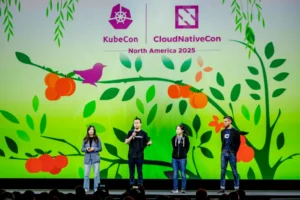
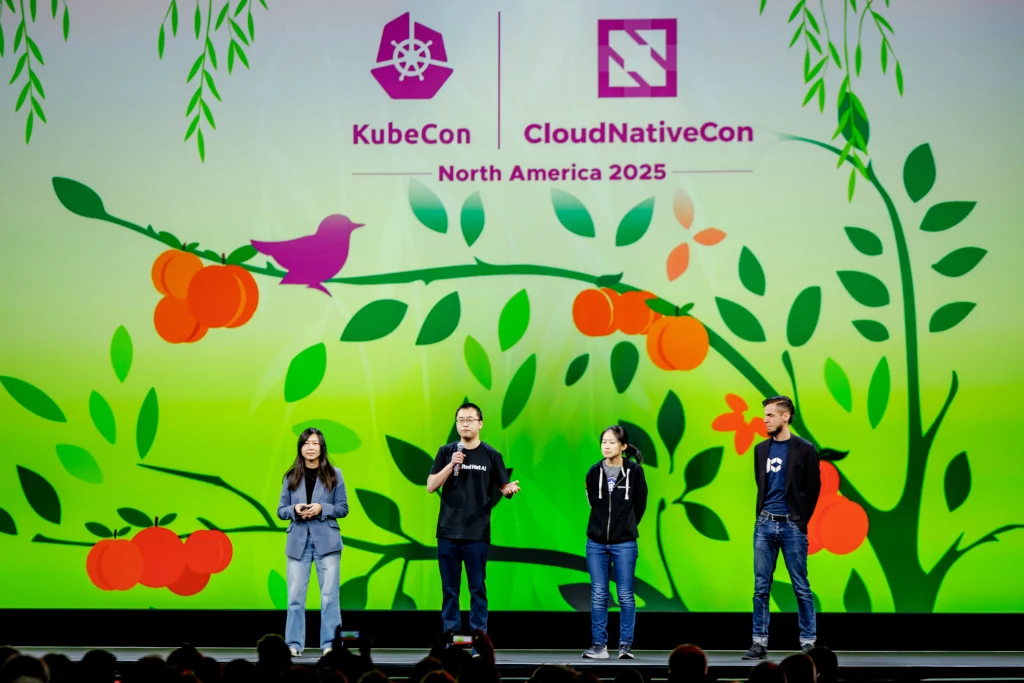
- Mid-2026: Rapid adoption occurs. At KubeCon EU 2026, the program reports a jump from 18 to 31 certified platforms in a matter of months.
- Late 2026: With the initial standards solidified, the Working Group concludes its mission. The project transitions into a permanent subproject under SIG Architecture, marking AI as a "first-class citizen" in the Kubernetes ecosystem.
Bridging the "Stable vs. Fast" Divide
One of the most profound challenges discussed during our interview was the tension between the speed of AI development and the deliberate, slow-moving nature of Kubernetes core APIs.
"AI moves very fast, while Kubernetes is designed to be stable and boring," says Yuan Tang. "We structured the program around this exact tension."
The Tiered Graduation Model
To manage this, the subproject employs a tiered maturity model:
- Recommended (SHOULD): New AI infrastructure concepts are introduced here first. This allows the ecosystem to experiment with new patterns—such as novel ways to handle accelerator metrics—without binding Kubernetes to rigid, premature APIs.
- Mandatory (MUST): Once an API matures, gains broad ecosystem adoption, and proves its utility, it is graduated to a "MUST" requirement for conformance.
This approach ensures that the "base" of Kubernetes remains stable, while the "AI layer" can evolve at the breakneck pace required by researchers and data scientists.
Supporting Data: Why Standardization Matters
The data presented at KubeCon 2026 tells a story of industry-wide consensus. The list of initial adopters and contributors reads like a "who’s who" of the cloud-native world: Akamai, Alibaba Cloud, AWS, Broadcom, CoreWeave, DaoCloud, Google Cloud, Kubermatic, Microsoft Azure, NVIDIA, Oracle, SUSE, Red Hat, and SAP.
The rapid growth in certification—from 18 to 31 platforms in a single quarter—indicates that enterprises are not just looking for "AI support" in their Kubernetes clusters; they are looking for verifiable, standardized guarantees that their models will run consistently regardless of the underlying cloud or on-prem provider.
Implications for the Future of Kubernetes
The move to SIG Architecture is more than an administrative change; it is a strategic signal. It confirms that AI is no longer an "add-on" or a specialized use case.
Deep Integration with Core Primitives
As a subproject of SIG Architecture, AI Conformance will now have a direct seat at the table regarding core Kubernetes design principles. This is critical for the evolution of features like Dynamic Resource Allocation (DRA).
"Instead of treating AI as an add-on layer, we are looking at how core Kubernetes primitives—like scheduling and resource allocation—need to adapt at a foundational level," explains Kuo. "We are thinking about the next decade of AI workloads, not just the current ones."
The End of "AI Hype" and the Rise of "AI Infrastructure"
The transition signals the maturation of the market. The industry has moved past the phase of merely "chasing AI hype" and into the phase of "building AI infrastructure." By standardizing how these systems interact with GPUs, high-performance networking, and low-latency inference, the community is ensuring that Kubernetes remains the universal control plane for the modern data center.
How to Get Involved
For those looking to contribute to the future of AI in Kubernetes, the doors are open. The transition to a permanent subproject has created a more formal structure for incoming code and requirements.
- For Contributors: The main repository is located at
kubernetes-sigs/ai-conformance. The team encourages developers to review theKAR(Kubernetes AI Requirement) templates and contribute to the automated Go test suites in thetest/directory. - For Vendors: Platform vendors interested in obtaining the "Certified Kubernetes AI" badge should refer to the documentation at
cncf/k8s-ai-conformance. - For Architects: The project maintains regular meetings under the SIG Architecture umbrella, where the long-term roadmap for AI integration is discussed.
Conclusion: A Unified Future
The journey of AI Conformance within Kubernetes is a testament to the power of open-source collaboration. By choosing to standardize early, the community has avoided the fractured landscape that plagued previous infrastructure revolutions.
As Janet Kuo and Yuan Tang noted in our concluding remarks, the speed at which the industry has rallied around this initiative is "mind-blowing." It proves that the demand for portability and interoperability is universal. As we look toward 2027 and beyond, the work happening within SIG Architecture will likely be the bedrock upon which the next generation of AI-native applications is built.
By keeping Kubernetes "stable and boring" at its core, while allowing the AI ecosystem to innovate rapidly on top of it, the project has ensured its relevance for years to come. The era of fragmented, vendor-locked AI stacks is coming to an end; the era of standardized, cloud-native intelligence has begun.