The Convergence of Everything: How IoT is Redefining the Social Media Landscape
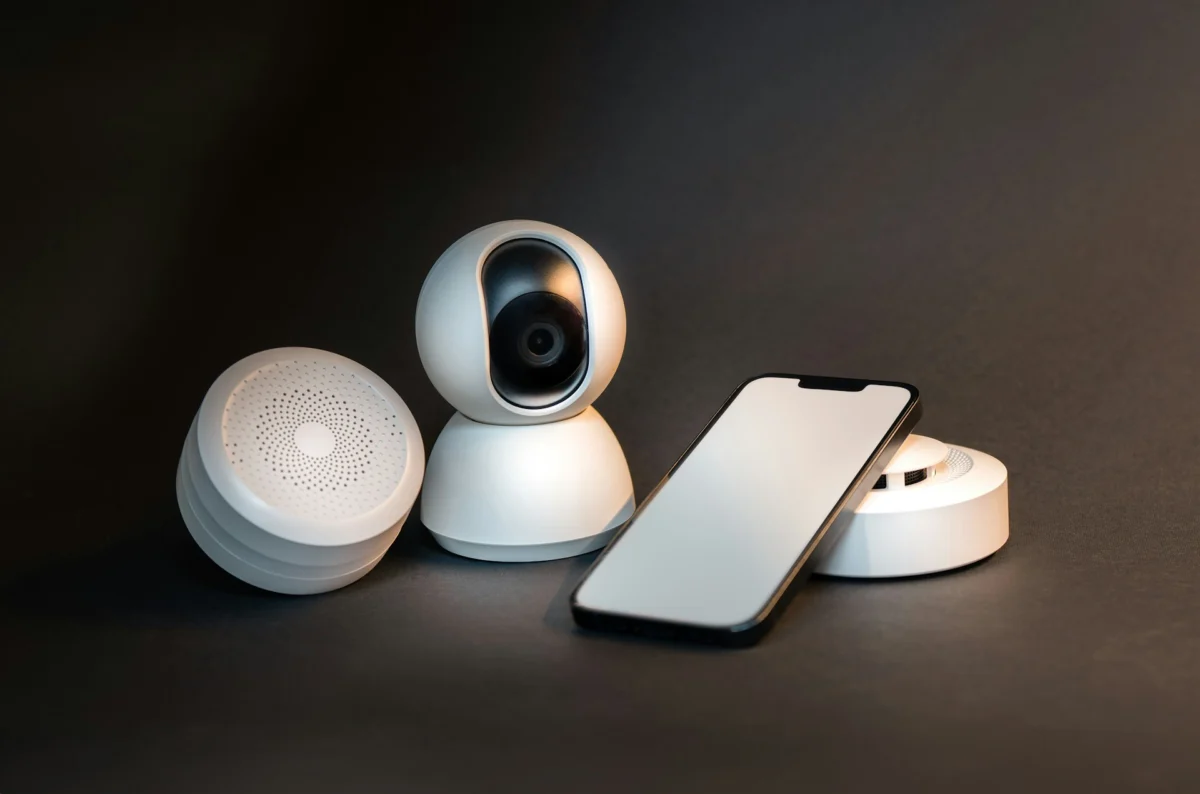
The era of social media as a static, human-curated gallery is drawing to a close. For the past two decades, the social experience has been defined by a deliberate, manual process: capturing a moment, crafting a caption, and waiting for the validation of a "like." However, a silent revolution is underway. Driven by the proliferation of the Internet of Things (IoT), our digital presence is evolving from a collection of snapshots into a real-time, persistent stream of data-driven insights.
As we approach 2035, with projections indicating over 50 billion connected devices worldwide, the line between our physical lives and our digital identities is blurring. Social media is no longer just a destination; it is becoming an ambient layer of reality powered by the gadgets we live with.
The Core Transformation: From Manual Posting to Ambient Intelligence
At its simplest, the Internet of Things (IoT) is a vast, interconnected mesh of smart devices—from the mundane smart thermostat to the sophisticated sensors embedded in our automobiles and wearable health tech. Traditionally, these devices have acted in isolation or within closed ecosystems. The shift we are witnessing today involves integrating this granular data into the social sphere.
The Mechanics of Integration
When a smart appliance communicates with a social network, it transforms private, functional data into public or semi-public content. Consider a smart kitchen that identifies a low supply of a staple ingredient and automatically polls your "Cooking Fam" group for brand recommendations. This is not merely automation; it is the transition of social media from a tool of self-expression to a utility of predictive living.
Chronology of the IoT-Social Merge
- The Early Days (2010–2015): Social media was platform-centric. Integration was limited to simple "Share to Facebook" buttons on third-party websites.
- The Wearable Era (2016–2020): Fitness trackers like Fitbit began allowing users to broadcast workout achievements directly to their feeds, marking the first wave of automated social validation.
- The Intelligent Ecosystem (2021–2024): Platforms like Samsung SmartThings scaled to hundreds of millions of users, creating the infrastructure for cross-device communication.
- The Predictive Future (2025–2035): We are entering an era where AI-driven IoT devices will curate and generate social content autonomously, fueled by real-time biometrics, environmental data, and location history.
Supporting Data: The Scale of the Digital Footprint
The growth of IoT is staggering, and its integration with social media is a mathematical inevitability. According to recent data from IoT Analytics, the sheer volume of connected devices ensures that the "data exhaust" produced by human behavior will continue to explode.
Key Statistics
- Device Density: In 2024 alone, over 156 million smartwatches were sold globally. Each unit acts as a localized sensor array, tracking heart rate, oxygen levels, GPS coordinates, and movement patterns.
- Market Penetration: Approximately 46% of Gen Z users now utilize social platforms as their primary search engine, bypassing traditional browser-based discovery.
- User Sentiment: Despite privacy concerns, PWC reports that 51% of consumers prioritize personalized experiences, suggesting that the convenience of IoT-integrated social media will likely outweigh the perceived discomfort of data harvesting for the majority of the population.
Four Pillars of the IoT-Social Revolution
The merger of these technologies will fundamentally reshape the user experience across four distinct domains.
1. Real-Time, Auto-Generated Content
The "friction" of content creation—the mental effort required to photograph, edit, and post—is being removed. Your devices will serve as proxies for your experiences. A road-trip dashboard could broadcast real-time scenic updates to your followers, or a smartwatch could verify your athletic milestones without you ever picking up a phone. This shifts the focus from curating a life to capturing a life.
2. Hyper-Personalized Feeds and Predictive Algorithms
Social media platforms are hungry for data to keep users engaged. By incorporating IoT data—sleep quality, stress levels, purchasing habits, and emotional states—platforms can transition from reactive to predictive. Your feed will no longer show you what you liked yesterday; it will anticipate what you need tomorrow.
3. Social SEO and the Decision-Making Engine
Search is evolving from keywords to context. When you ask a smart speaker or a car’s dashboard for a recommendation, it is tapping into a vast, decentralized database of social proof. Brands and creators who master "Social SEO" will become the primary nodes in this decision-making engine. The smart fridge that suggests a recipe based on what is trending in your local social circles is the ultimate manifestation of social-led commerce.
4. Seamless Augmented Reality (AR)
AR is the visual interface of the IoT world. Smart glasses will soon overlay social data onto the physical world. Walking down a street, you might see "social tags" floating above a restaurant, displaying the real-time feedback of your social circle. The hardware, led by innovations like Meta’s Ray-Ban glasses, is already laying the groundwork for a world where digital social layers are ubiquitous.
The Dark Side: Implications and Official Responses
While the potential for convenience is immense, the risks are equally profound. The centralization of such intimate data into the hands of a few tech giants has raised significant alarm.
The Mental Health and Privacy Crisis
The industry is currently facing a reckoning. Numerous lawsuits, including those tracked by TorHoerman Law, have highlighted the potential for platforms to exploit psychological vulnerabilities. The core allegation in many of these cases is that algorithms are engineered to encourage addiction, particularly in younger users.
When you add IoT data to the equation, the psychological stakes rise. If an algorithm knows you are tired, lonely, or anxious because your wearable device has reported your physiological data to the platform, it can manipulate your feed to exploit those states.
Regulatory Challenges
Governments globally are struggling to keep pace. The primary concern is the "Big Trade-Off": the exchange of deep personal privacy for the convenience of an automated digital life.
- Data Breach Vulnerability: As IoT devices become more integrated, a single security breach in your smart home ecosystem could potentially expose your entire digital identity, from physical location to health records.
- The Right to Obfuscation: There is a growing call for "data minimization" laws, where companies are restricted from collecting data that is not strictly necessary for the device’s core function.
The Human Factor: Will IoT Take Over?
Despite the march of technological progress, the essence of social media remains rooted in human connection. Technology, no matter how advanced, is merely a set of tools.
While our feeds will become more automated, more immersive, and more predictive, the fundamental desire to be seen, heard, and understood remains unchanged. The risk is not that IoT will replace human interaction, but that it will hollow it out by replacing authentic connection with algorithmic convenience.
Looking Ahead
The future of social media will be defined by the choices we make today. Do we want a passive experience where our devices dictate our interests and broadcast our movements? Or do we want to build a framework where IoT serves as a foundation for genuine community?
As we move toward a future where our refrigerators, cars, and eyewear are all active participants in our social discourse, we must remain vigilant. The technology is capable of creating a hyper-connected world, but it is up to us to ensure that the human element remains the heartbeat of that world. The integration of IoT and social media is inevitable, but its character is still ours to define.