The Digital Transformation of Industrial Oversight: How Smart Level Sensors are Redefining Operational Efficiency
In the modern industrial landscape, data is the new currency of efficiency. Across sectors as diverse as petrochemical refining, municipal water management, and large-scale agriculture, the pressure to optimize resource utilization, slash overhead costs, and mitigate catastrophic downtime has never been higher. At the heart of this operational evolution is a deceptively simple device undergoing a radical technological renaissance: the industrial level sensor.
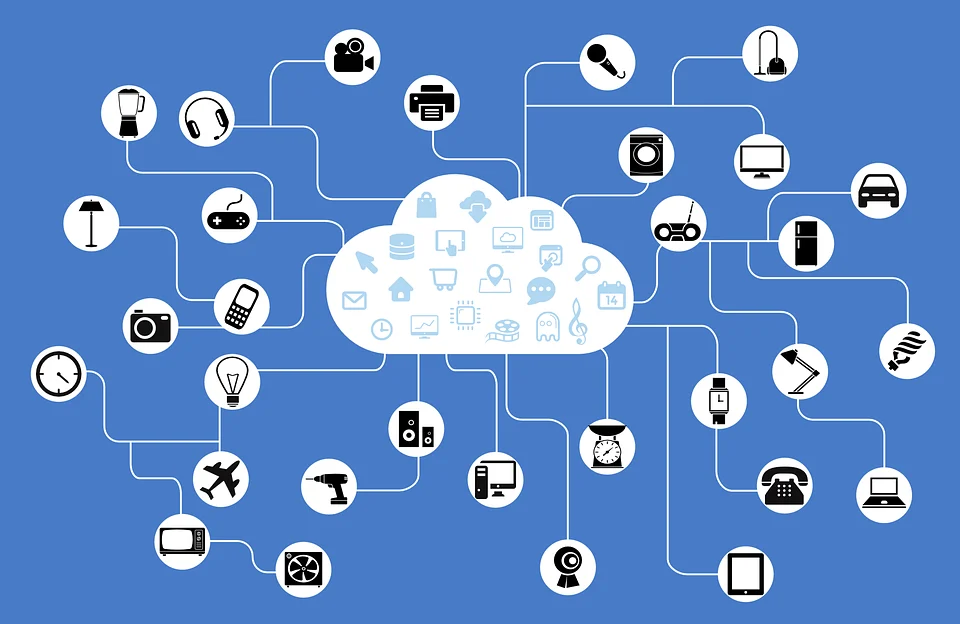
Once relegated to the realm of manual inspection and rudimentary analog gauges, level monitoring has transitioned into a sophisticated pillar of the Industrial Internet of Things (IIoT). By integrating high-precision sensing hardware with cloud-based analytics, industries are moving from reactive, labor-intensive maintenance cycles to a model of proactive, data-driven intelligence.
The Evolution of Monitoring: From Manual Legwork to Digital Precision
For decades, the standard for inventory management in industrial settings was inherently human-centric. Field technicians were tasked with the "manual dip"—the physical act of traveling to remote storage tanks, silos, and reservoirs to check liquid or material levels.
A Chronology of Industrial Monitoring
- The Era of Manual Inspection (1950s–1990s): Inventory was managed through physical gauges, sight glasses, and manual measuring tapes. This period was characterized by significant time lags, high labor costs, and frequent human error.
- The Rise of Wired Automation (1990s–2010s): SCADA (Supervisory Control and Data Acquisition) systems introduced hard-wired sensors. While more accurate, these systems were rigid, prohibitively expensive to install in remote locations, and difficult to scale.
- The IIoT Revolution (2015–Present): The convergence of low-power wide-area networks (LPWAN), cloud computing, and advanced sensor technology (radar and ultrasonic) has created a paradigm where every tank can be a "smart" node in a global network.
The shift away from manual monitoring is not merely a matter of convenience; it is a response to the inherent inefficiencies of the old guard. Manual inspections are prone to delays, which can lead to "runouts" (running out of critical materials) or environmental disasters due to undetected overflows. Furthermore, sending personnel to hazardous, remote, or confined-space environments creates unnecessary safety liabilities.
The Architecture of Smart Level Monitoring
Smart level monitoring is defined by its ability to convert physical variables into actionable digital insights. An IIoT-enabled system consists of three distinct layers:
- The Sensing Layer: High-accuracy hardware—typically radar, ultrasonic, or guided-wave radar sensors—that detects the volume or mass of contents without requiring frequent physical maintenance.
- The Connectivity Layer: Wireless communication protocols such as LoRaWAN, NB-IoT, LTE-M, or satellite connectivity, which allow sensors to transmit data from the most remote reaches of an operation.
- The Intelligence Layer: Cloud-based dashboards and AI-driven platforms that aggregate data, generate alerts, and visualize trends, allowing management to make decisions based on real-time telemetry rather than outdated spreadsheets.
Real-World Impact: Case Studies in Efficiency
Municipal Water Management
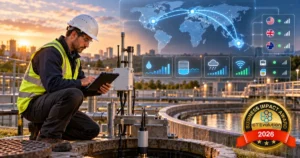
Water utilities operate the most geographically dispersed infrastructure of any public service. In traditional setups, identifying a leak or an overflow often relied on resident reports or scheduled site visits. Today, smart level sensor networks are transforming these utilities into proactive entities. By monitoring groundwater wells, reservoirs, and wastewater basins in real time, municipalities can now detect abnormal storage patterns that indicate a potential leak or a pipe failure. In flood-prone regions, these systems provide critical early warnings, triggering automated pump activations that prevent structural damage and protect public safety.
The Energy Sector: Oil, Gas, and Chemicals
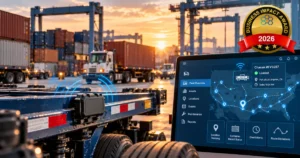
In the oil and gas industry, the stakes of monitoring failure are incredibly high—ranging from environmental contamination to massive economic losses. Modern IIoT monitoring platforms provide 24/7 visibility into fuel storage and production pipelines. By centralizing data from hundreds of dispersed sites, energy companies can optimize their logistics. Rather than sending trucks on a fixed, often unnecessary schedule, supply chain managers can use "just-in-time" delivery models, dispatching fuel only when sensors indicate a tank is nearing its threshold.
The Technological Vanguard: Radar vs. Ultrasonic
As industries demand higher reliability, the choice of sensor technology has moved toward non-contact solutions.
- Radar-Based Sensors: These have become the gold standard for industrial applications. They offer millimeter-level accuracy and are immune to changes in temperature, pressure, or vapor, which often plague traditional sensors. They are increasingly being integrated into cloud-connected Modbus systems, allowing for seamless enterprise resource planning (ERP) integration.
- Ultrasonic Sensors: These remain a preferred choice for liquid applications where direct contact with the substance is undesirable or physically impossible. Their relative ease of installation and cost-effectiveness make them ideal for bulk inventory management in sectors like food production and chemical manufacturing.
Predictive Maintenance: The Shift from "Fixed" to "Condition-Based"
Perhaps the most significant financial benefit of IIoT-enabled sensors is the transition to predictive maintenance. In the past, maintenance was "time-based"—components were replaced on a calendar regardless of whether they were worn out.
Through continuous data collection, AI algorithms can now perform "health checks" on industrial equipment. If a tank level fluctuates in a way that suggests a faulty pump or a valve obstruction, the system triggers an alert before the hardware fails. This capability significantly reduces the total cost of ownership (TCO) and extends the lifecycle of critical infrastructure.
Supporting Data and Economic Implications
Industry analysts have noted that the adoption of smart level monitoring yields a measurable return on investment (ROI) within 12 to 18 months. Key performance indicators (KPIs) typically improved by this technology include:
- Reduced Logistics Costs: Up to 30% reduction in delivery frequency due to optimized scheduling.
- Safety Compliance: An 80% reduction in man-hours spent in hazardous zones for manual gauge checks.
- Resource Conservation: Significant decreases in wastage—especially in water and chemical usage—through precise volume tracking.
Official Perspectives: The Path to Autonomy
Industry experts emphasize that the next phase of this technological evolution is full autonomy. "We are moving past the phase of merely observing data," says one lead systems architect in the IIoT space. "The immediate future is about systems that can self-calibrate and autonomously adjust processes to match demand."
However, this transition is not without hurdles. Industry leaders have identified three primary areas of concern:
- Cybersecurity: As the "attack surface" increases with every connected device, companies are forced to invest heavily in end-to-end encryption and secure network segmentation.
- Legacy Integration: Many facilities operate with "brownfield" infrastructure—older equipment that was never designed for digital connectivity. Bridging the gap between 30-year-old tanks and 21st-century cloud platforms remains a significant engineering challenge.
- Connectivity Gaps: Despite the proliferation of 5G and LPWAN, many rural or subterranean industrial sites still face challenges with signal reliability, necessitating hybrid communication strategies that include satellite backhaul.
Future Outlook: A Sustainable Industrial Landscape
The integration of smart level sensors is becoming an essential component of the global "Sustainability Mandate." By reducing unnecessary fuel consumption for delivery trucks, preventing chemical spills, and eliminating water waste through leak detection, smart sensors are directly contributing to the ESG (Environmental, Social, and Governance) goals of major corporations.
As AI-based analytics continue to mature, the sensors of tomorrow will do more than just measure; they will act. We are looking at a future where sensors, pumps, and valves communicate in a closed-loop system, independently optimizing industrial processes to achieve peak efficiency with minimal human intervention.
Conclusion
The transformation of the humble level sensor into an intelligent, connected node is a microcosm of the broader Fourth Industrial Revolution. For the manufacturing, energy, and utility sectors, the decision to modernize is no longer a luxury; it is a prerequisite for survival.
Organizations that embrace this shift will benefit from a leaner, safer, and more responsive operational model. Those that cling to manual, siloed monitoring methods will find themselves increasingly unable to compete in an economy that demands real-time responsiveness and rigorous resource efficiency. As we look ahead, the smart sensor stands as the silent sentry of the modern industrial world—ensuring that operations remain not only profitable but also sustainable for the long term.