From Fragility to Foresight: The Digital Revolution Reshaping Global Supply Chains
For over three decades, the global supply chain was governed by a singular, rigid philosophy: efficiency at all costs. Companies pursued "just-in-time" delivery, razor-thin inventories, and single-source procurement strategies to maximize margins. In a predictable, interconnected world, this model functioned with clockwork precision. However, the last few years have shattered that illusion. From the global paralysis of the COVID-19 pandemic to the Suez Canal obstruction and the semiconductor crisis, the world has entered an era of "permacrisis."
These events exposed a fundamental, systemic flaw: efficiency without visibility is merely fragility in disguise. Today, the race to digitize the supply chain is no longer a luxury; it is a critical evolution, transforming supply chains from "blind" cost centers into resilient, data-driven engines of competitive advantage.
The Core Mandate: Replacing Blind Optimization with Intelligent Resilience
The Visibility Gap
The fundamental challenge facing modern enterprises is the "visibility gap." While most organizations possess a clear view of their immediate (Tier 1) suppliers and internal warehouses, the chain becomes increasingly opaque thereafter. Tier 2 and Tier 3 suppliers—the manufacturers of sub-components and raw materials—are often hidden from the primary buyer. Yet, it is within these obscure nodes that the most catastrophic risks reside. A specialized chemical plant closure or a logistics bottleneck in a volatile region can halt production lines thousands of miles away.
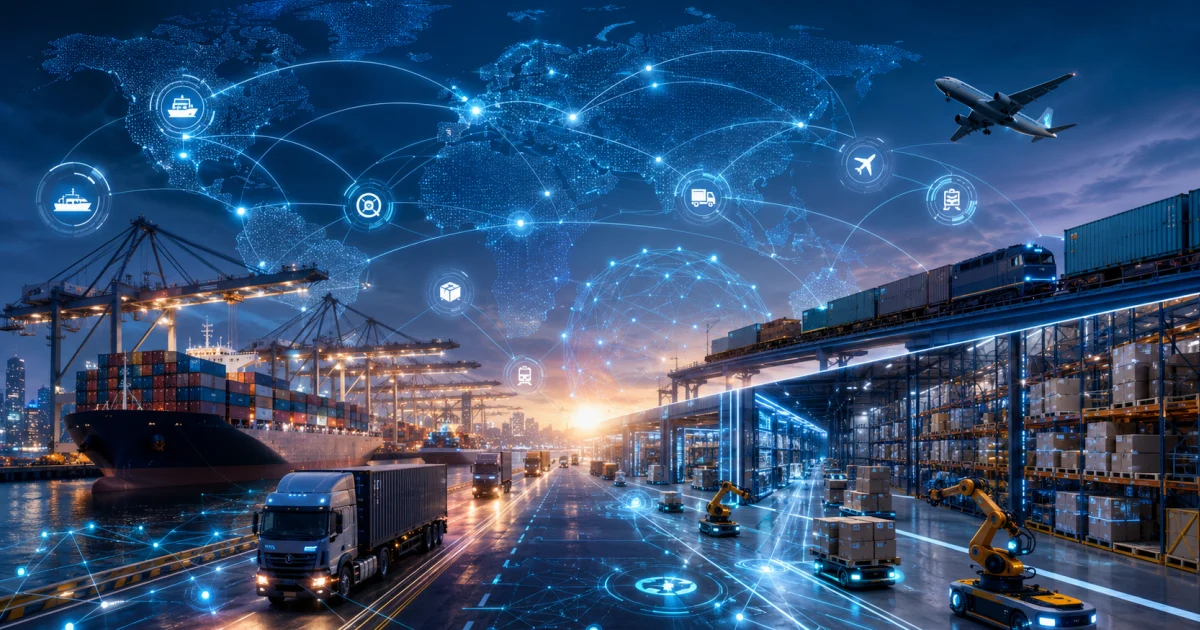
To bridge this, industry leaders are shifting toward network-based data sharing. By leveraging IoT tracking and AI-driven monitoring, firms are now surfacing signals of distress long before they evolve into full-blown crises.
Chronology: The Evolution of Supply Chain Strategy
- 1990s – 2010s: The Era of Lean Efficiency: The supply chain was optimized for cost. Just-in-time (JIT) manufacturing and offshoring became the gold standards, prioritizing low-cost labor and minimal inventory holding costs.
- 2020 – 2022: The Great Disruption: The pandemic and subsequent geopolitical shocks proved that "lean" meant "vulnerable." Stockouts, port congestion, and component shortages became the new baseline.
- 2023 – 2024: The Investment Phase: Organizations began heavy investment in cloud-based supply chain management (SCM) platforms and real-time tracking, transitioning from reactive firefighting to proactive risk management.
- 2025 and Beyond: The Autonomous Era: The current frontier involves AI-orchestrated control towers capable of automated scenario planning and self-correcting logistics, moving toward the "self-healing" supply chain.
Supporting Data and Technological Pillars
The IoT Transformation
Real-time tracking has moved beyond simple package scanning. Modern shipments are now instrumented with sophisticated GPS, temperature, humidity, and shock sensors. For sectors like pharmaceuticals, food, and high-end electronics, this is not a luxury—it is a regulatory and quality mandate. Continuous monitoring ensures that the "cold chain" remains unbroken, while at the warehouse level, RFID and computer vision are replacing manual cycle counts, effectively closing the costly gap between "system inventory" and "physical inventory."
AI-Driven Demand Sensing
Traditional forecasting models relied on historical sales data and static spreadsheets. AI has disrupted this by ingesting vast, disparate datasets:
- Macro-signals: Economic indicators, geopolitical sentiment, and inflation trends.
- Micro-signals: Real-time point-of-sale data, social media sentiment, and hyper-local weather patterns.
This continuous, multi-factor analysis allows companies to adjust production schedules in real-time, significantly reducing stockouts and minimizing capital tied up in excess safety stock.
Official Perspectives and Industry Implications
Industry leaders, including those in consumer goods and industrial distribution, are reporting that digital transformation is yielding significant ROI. By shifting from periodic reviews to continuous monitoring, these organizations are realizing:
- Financial Stability: Reduced inventory carrying costs through precise demand alignment.
- Risk Mitigation: The ability to simulate "what-if" scenarios, such as the sudden closure of a key trade route or a sudden spike in raw material prices.
- Sustainability: The ability to track Scope 3 emissions. As carbon reporting becomes a regulatory requirement, digital product passports—which track a product’s provenance and carbon intensity through its lifecycle—are becoming standard infrastructure.
Control Towers: The Command Centers of Modern Trade
The "Supply Chain Control Tower" has emerged as the architectural solution to the problem of fragmented data. By aggregating inputs from suppliers, logistics partners, and internal production systems, these platforms provide a "single pane of glass" view.
When an exception occurs—such as a delayed shipment or a sudden demand surge—the control tower doesn’t just alert the manager; it models the downstream impact and presents actionable, trade-off-balanced responses. Decisions that previously required days of email chains and cross-departmental meetings are now being resolved in minutes.
The Human Dimension: Cultural Shifts in Operations
Perhaps the most underestimated aspect of this digital transformation is the human element. Supply chain professionals, historically conditioned to be "firefighters" who react to the latest emergency, must now pivot to roles in data analytics and scenario planning.
This requires a fundamental change in organizational culture:
- From Reaction to Prediction: Moving from "What happened?" to "What might happen, and how should we prepare?"
- Probabilistic Thinking: Leaders must learn to manage uncertainty using simulated scenarios rather than relying on fixed, deterministic plans.
- Training and Redesign: Companies that succeed are not just installing software; they are investing in training programs that bridge the gap between traditional operations management and advanced data science.
Sustainability as a Byproduct of Visibility
Sustainability and efficiency are increasingly viewed as two sides of the same coin. The digitization of the supply chain inherently promotes efficiency, which leads to lower fuel consumption, better space utilization in shipping containers, and less waste. Furthermore, the infrastructure required to track products for operational efficiency is the same infrastructure needed to meet emerging "digital product passport" regulations. By digitizing, companies are effectively killing two birds with one stone: optimizing for the balance sheet and the planet simultaneously.
Conclusion: The End of Flying Blind
The era of the "blind" supply chain is drawing to a close. The volatility of the last few years has served as a harsh but necessary catalyst, forcing a wholesale re-evaluation of global logistics.
Organizations that fail to embrace this transformation risk being outmaneuvered by competitors who can see further, react faster, and operate with greater precision. Those that lean into digital capability—integrating AI, IoT, and real-time visibility—are doing more than just reducing their risk profile. They are turning the supply chain into a top-line growth driver, enabling higher service levels and more flexible business models.
In the modern economic landscape, resilience is the new efficiency. As global markets remain unpredictable, the ability to see the horizon before it shifts will define the market leaders of the next generation. The transition from reactive management to proactive intelligence is not just a technological upgrade; it is the definitive strategy for survival in the 21st-century global marketplace.
Edited by Erik Linask. This article explores the intersection of IoT, AI, and supply chain logistics, highlighting the shift toward data-centric, resilient operations.