The Evolution of Kubernetes Observability: Transitioning from the Legacy Dashboard to Headlamp
By Will Case (Headlamp)
Monday, June 1, 2026
For nearly a decade, the Kubernetes Dashboard has served as the unofficial "front door" to the cloud-native world. For countless engineers, system administrators, and students, it provided the first visual realization of what was happening inside their clusters—a welcoming interface that demystified the often-opaque world of YAML files and CLI commands. As of June 2026, the Kubernetes Dashboard project has officially been archived, marking the end of an era.
While the retirement of such a foundational tool is a significant moment for the CNCF ecosystem, it is not an end, but a pivot. As Kubernetes matures from a niche orchestration tool into the fundamental infrastructure of the modern web, the requirements for its management interfaces have evolved. Enter Headlamp, a project designed to inherit the mantle of the Kubernetes Dashboard while drastically expanding its capabilities to meet the demands of contemporary, multi-cluster, and multi-tenant environments.
The Chronology of an Ecosystem Shift
To understand why this transition is occurring, one must look at the lifecycle of the original Kubernetes Dashboard. Launched in the early years of the project, it was built to solve a specific problem: making Kubernetes accessible to those who were not yet comfortable with kubectl.
- Early Days (2015–2018): Kubernetes Dashboard gains massive adoption. It becomes the standard for visual cluster management, focusing primarily on single-cluster visibility.
- Expansion Phase (2019–2023): As companies scale, the limitations of a single-cluster, browser-only dashboard become apparent. The community begins exploring more robust, extensible alternatives.
- The Modern Era (2024–2026): Headlamp emerges as a leading contender, prioritizing extensibility and developer experience. The Kubernetes Dashboard project enters a long-term maintenance mode, culminating in its official archive in mid-2026.
The archival of the Dashboard is not a signal of abandonment, but a recognition that the community needs tools built for the realities of 2026: GitOps, AI-driven troubleshooting, and complex, multi-cluster architectures.
Mapping Workflows: Continuity as a First Principle
One of the greatest fears during any infrastructure migration is the "workflow shock"—the feeling that a new tool requires you to relearn your daily routine. The designers of Headlamp have approached this with a "continuity-first" philosophy.
Familiarity in Resource Management
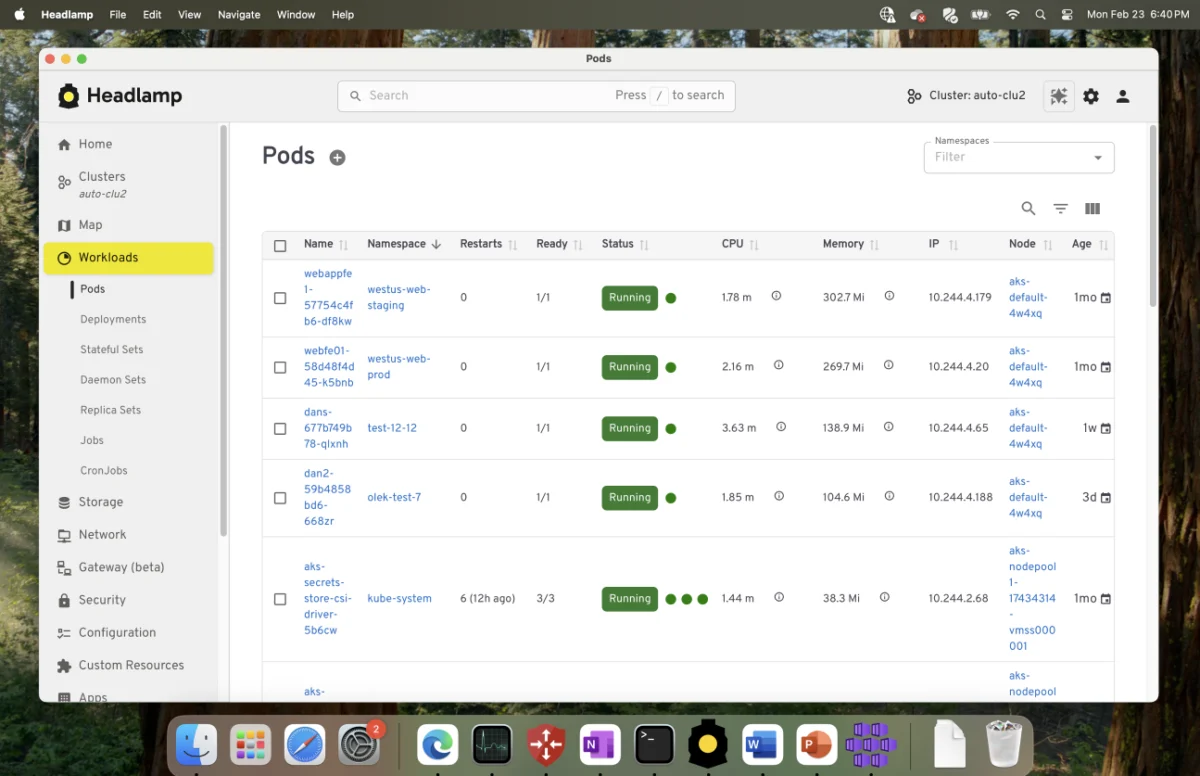
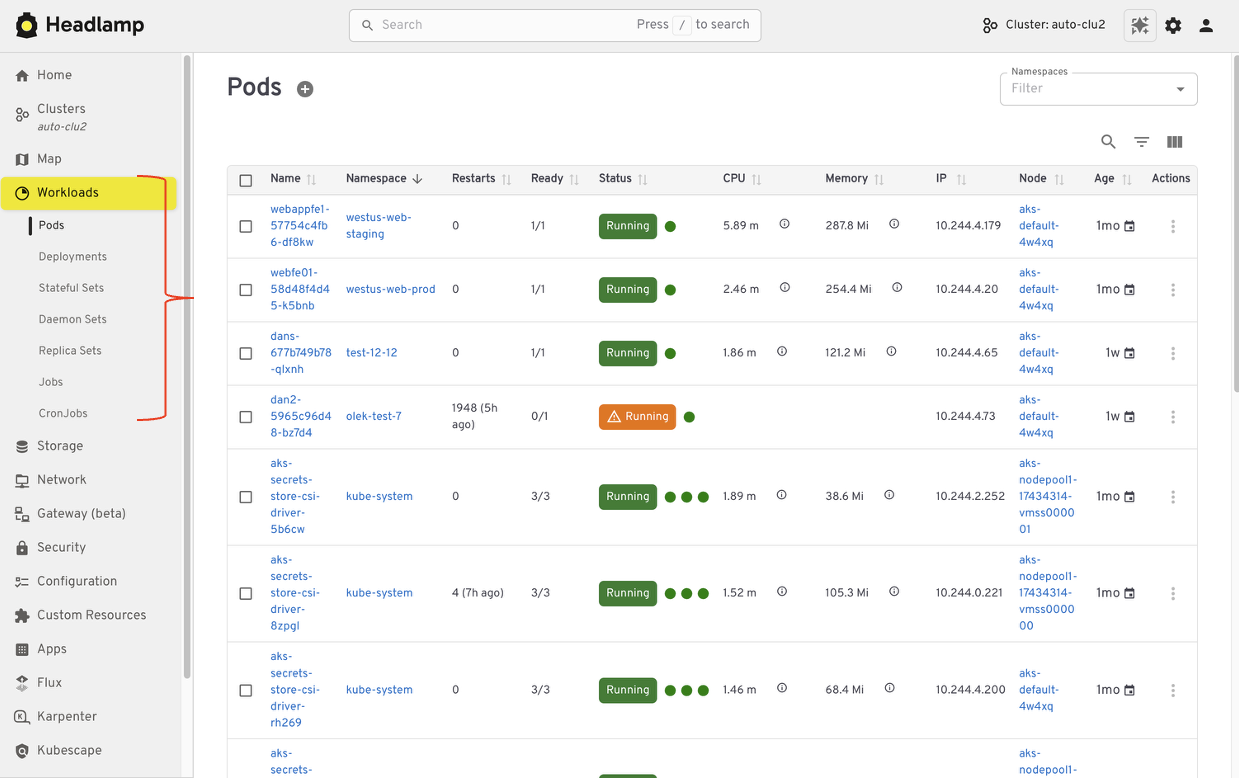
If you have spent years navigating the Kubernetes Dashboard, you will find your muscle memory largely intact. Whether you are inspecting pods, scaling deployments, or auditing services, Headlamp provides a native, intuitive home.
- Resource Browsing: The hierarchical view of namespaces and resources remains. You can still drill down into logs, view events, and inspect pod status with the same level of granularity you were accustomed to.
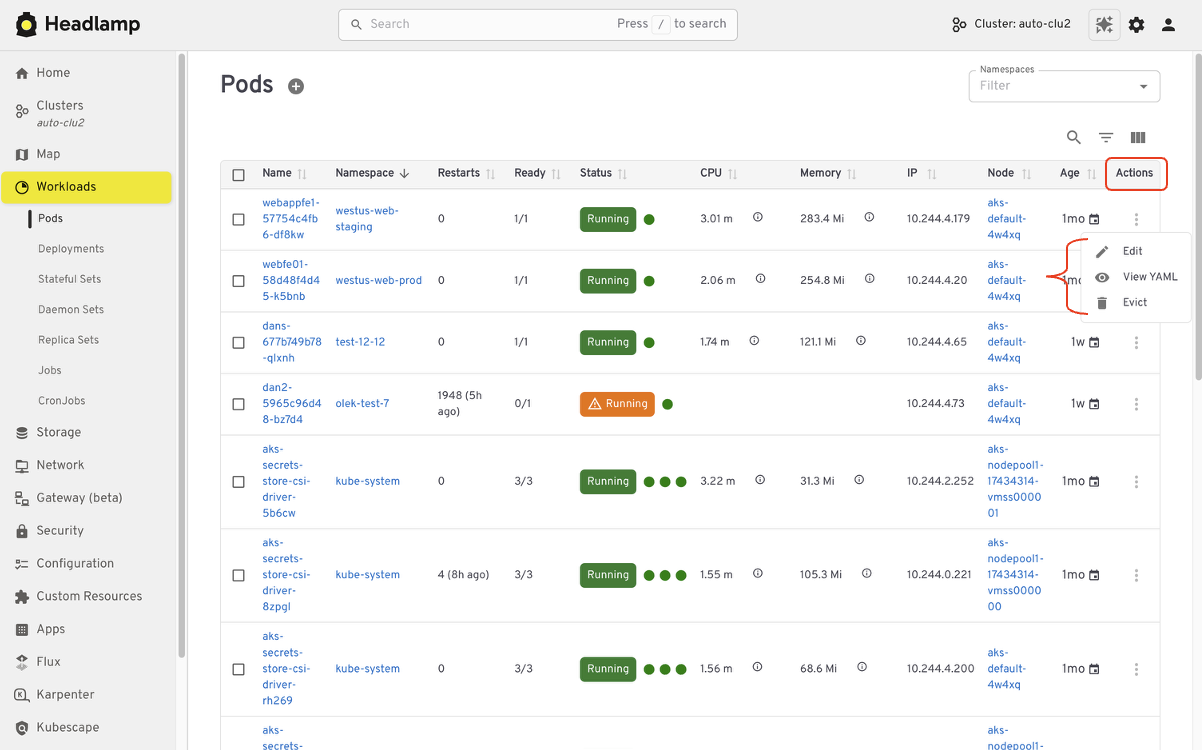
- Direct Interaction: The power to edit manifests, delete resources, or patch deployments remains front and center. Crucially, Headlamp does not bypass Kubernetes security; it adheres strictly to existing RBAC (Role-Based Access Control) configurations. If your team had the authority to perform an action in the Dashboard, those permissions translate seamlessly to Headlamp.
Visualizing Relationships
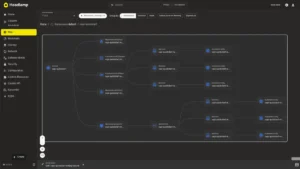
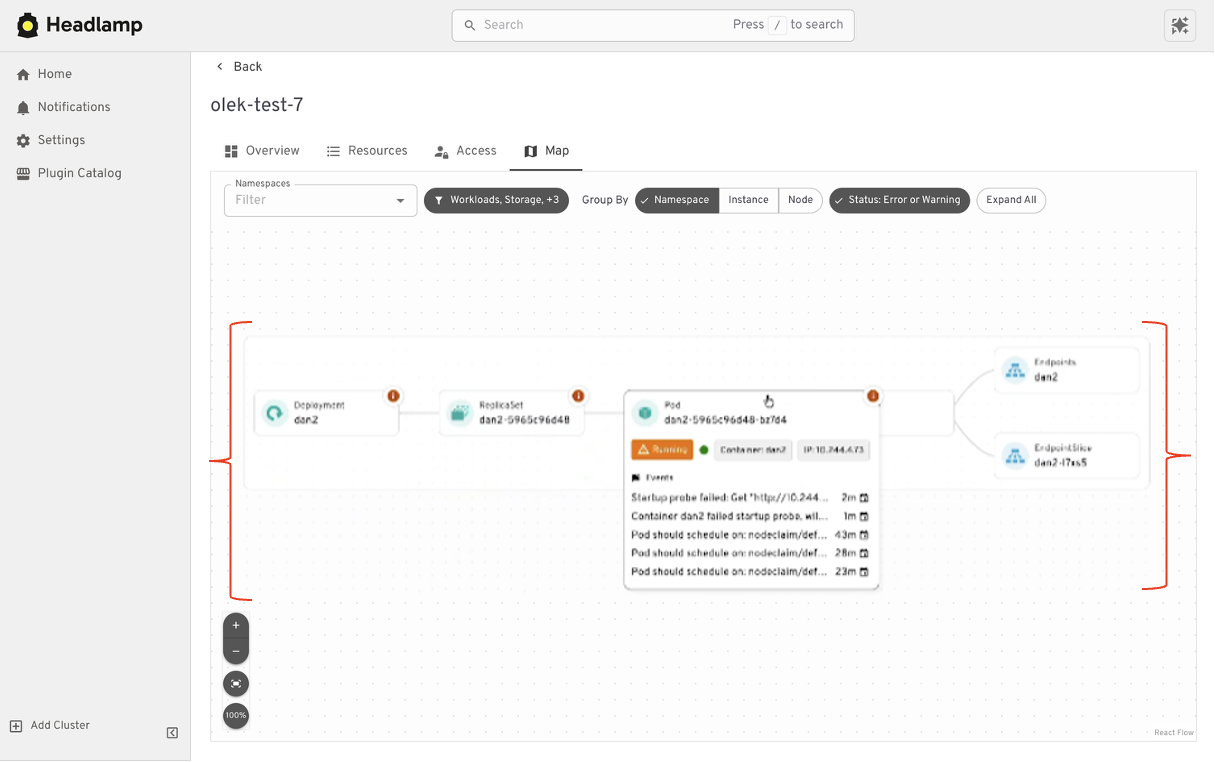
The legacy Dashboard was excellent at showing what existed; Headlamp aims to show how things connect. By offering enhanced visual representations of service dependencies and workload relationships, Headlamp provides the context that is often lost in a static list view, helping operators identify the root cause of a failure without needing to map out dependencies mentally.
Beyond the Legacy: The New Frontier of Management
While the legacy Dashboard served the needs of a single-cluster world, Headlamp is architected for the complexity of modern enterprise environments.
The Multi-Cluster Revolution
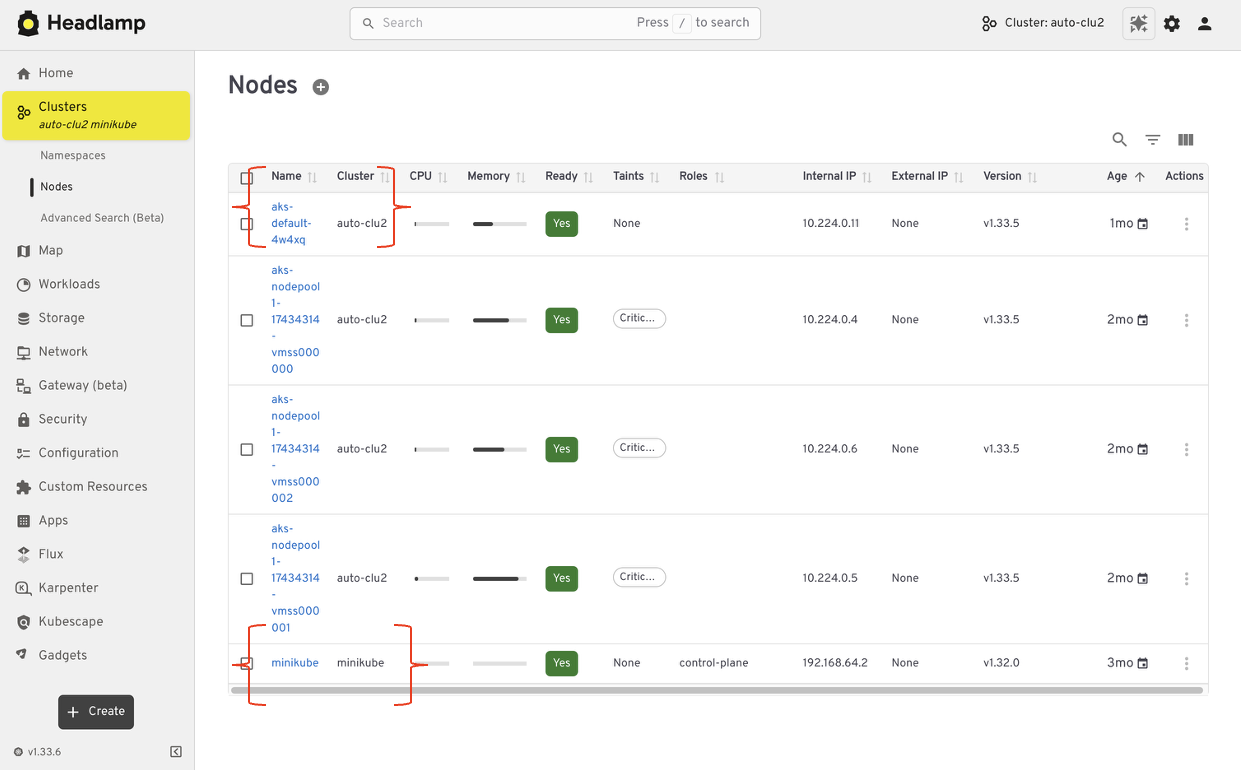
Modern Kubernetes deployment rarely involves just one cluster. With development, staging, production, and disaster recovery environments often spread across different regions or clouds, the "single-pane-of-glass" requirement is no longer optional. Headlamp allows users to manage multiple clusters from a single, unified interface. This eliminates the need to jump between browser tabs or re-authenticate constantly, ensuring that operators can maintain context across their entire infrastructure footprint.
Application-Centric Views: The Power of Projects
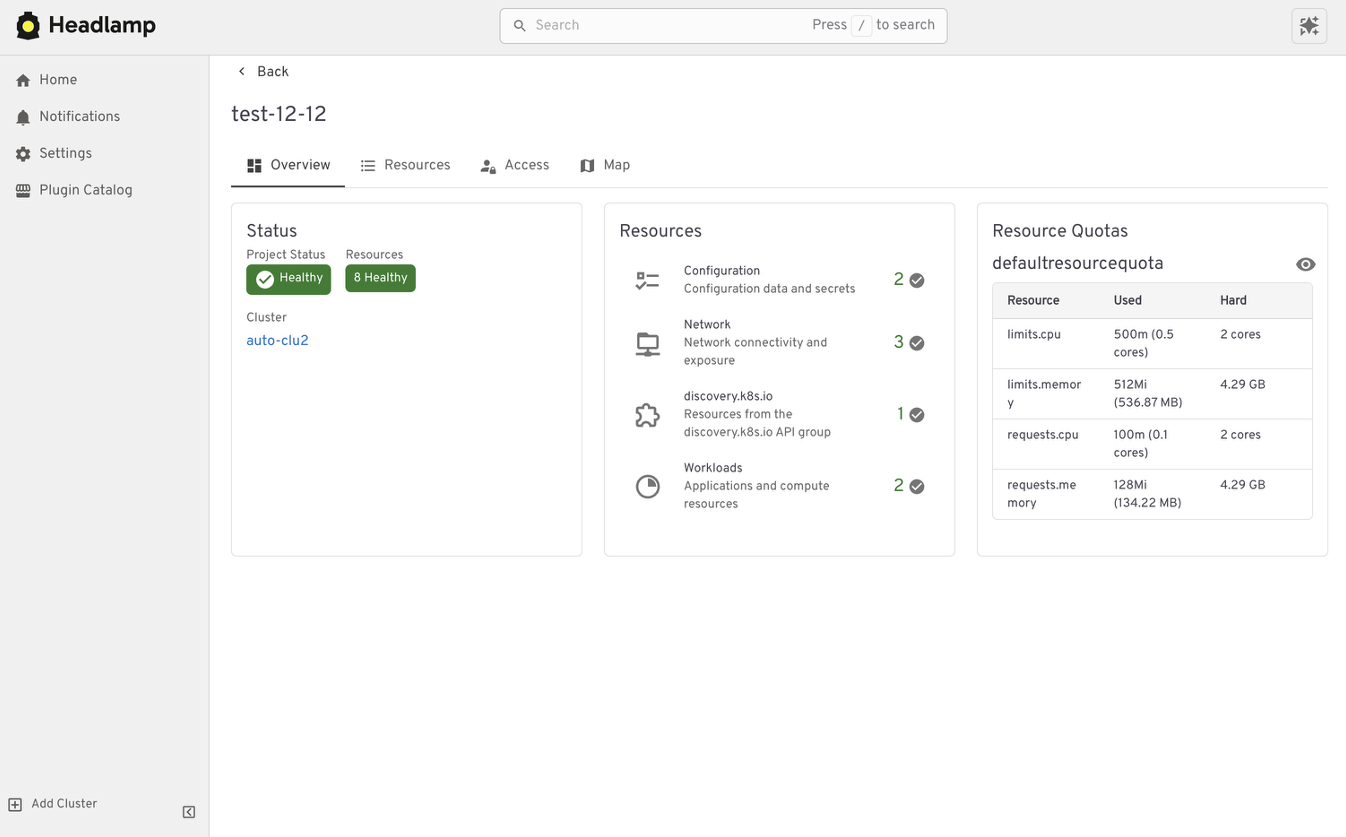
Perhaps the most significant upgrade in the Headlamp experience is the introduction of "Projects." In the original Dashboard, users were forced to view their clusters through the lens of individual resources (e.g., "Show me all the Deployments").
Projects change this perspective. By grouping related workloads, services, and configurations into a logical "Project," teams can view their applications as a cohesive whole. This aligns with how developers actually work, shifting the focus from infrastructure clutter to application health. Because this is built on top of native Kubernetes labels and namespaces, it remains compatible with existing CI/CD pipelines.
An Extensible Ecosystem
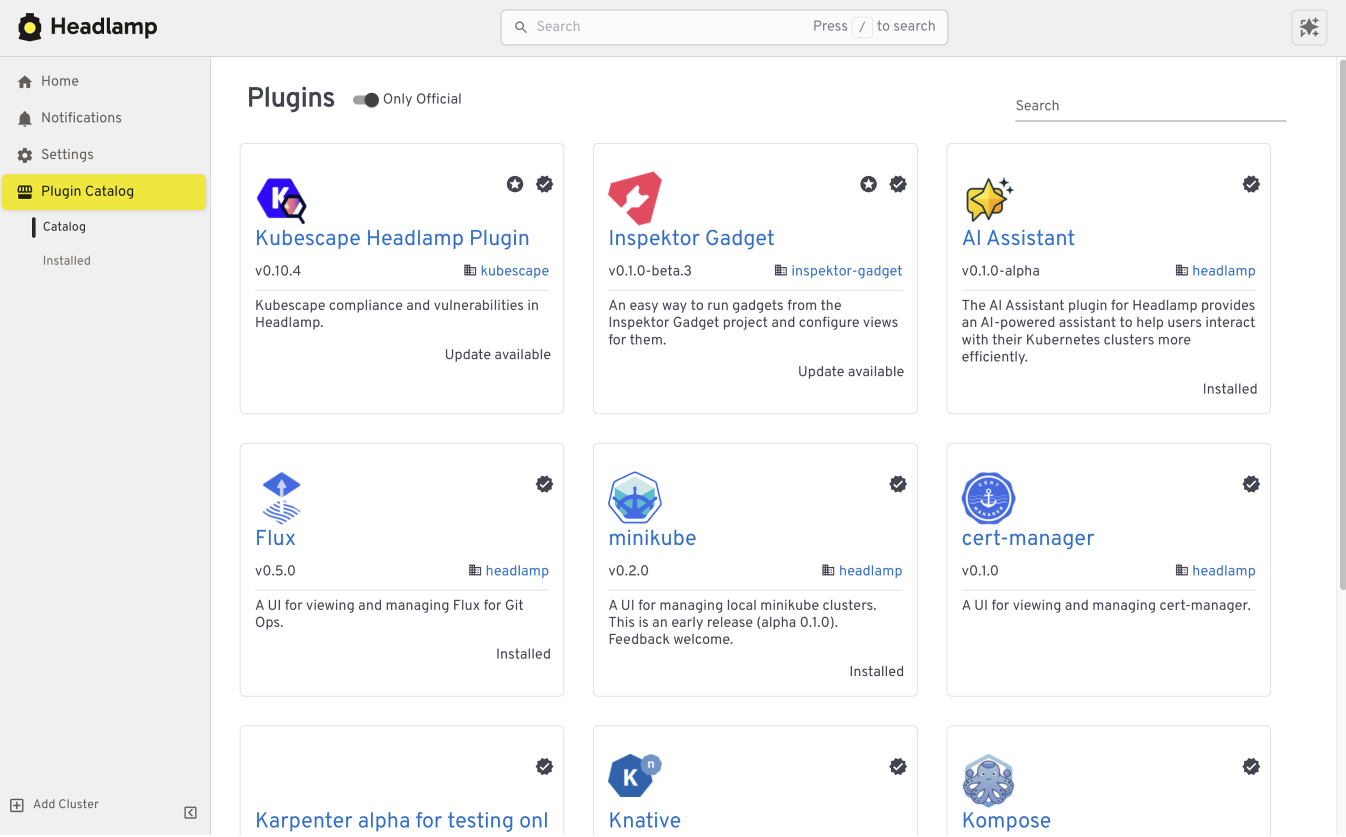
The static nature of the original Dashboard was both a strength and a weakness. Headlamp addresses this through a robust plugin architecture. This allows teams to inject custom functionality directly into the UI.
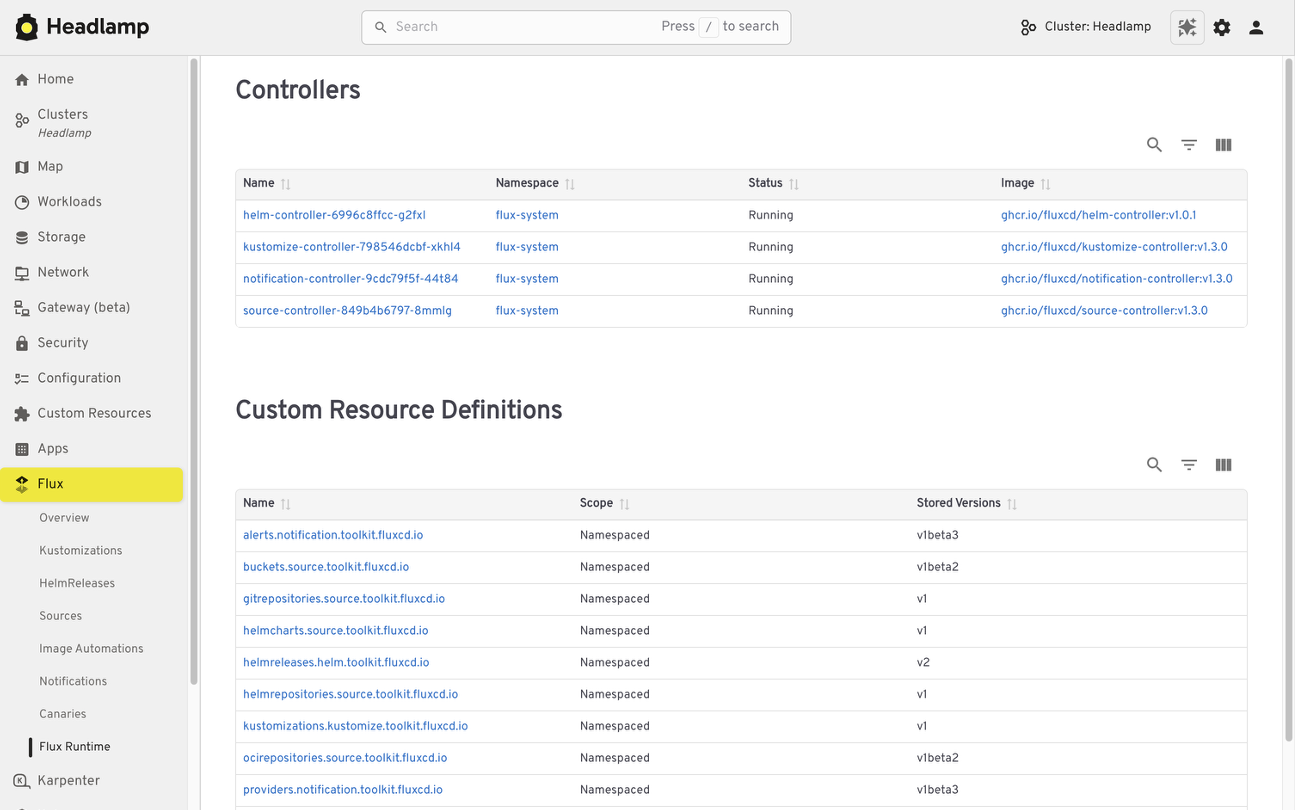
- GitOps Integration: The Flux plugin allows teams to manage GitOps-driven deployments without leaving the dashboard.
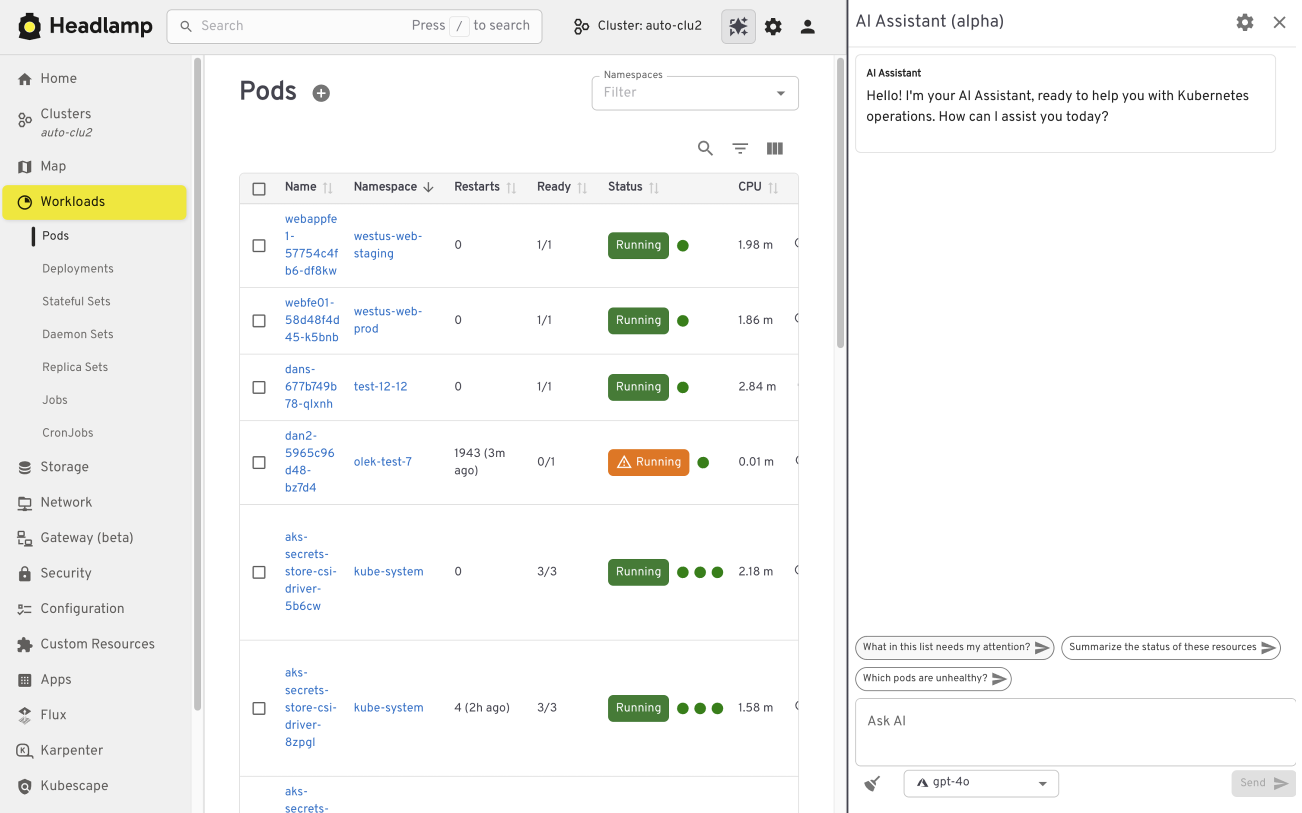
- AI-Assisted Troubleshooting: Perhaps the most exciting addition, the integrated AI assistant, allows developers to query their cluster in natural language, ask for explanations of complex errors, and receive guided remediation steps—all within the context of the resource they are currently viewing.
Deployment Flexibility: In-Cluster vs. Desktop
Headlamp is designed to be as portable as the workloads it manages. Users have two primary ways to deploy:
- In-Cluster Deployment: For shared team environments, Headlamp can be deployed directly into the cluster. This maintains a central, governed point of access for all team members, ensuring that every operator is looking at the same source of truth.
- Desktop Application: For individual developers or SREs working on local clusters (like minikube or kind), the desktop application is an invaluable tool. It allows you to connect to multiple clusters via your local
kubeconfigwithout requiring any additional resources or agents to be installed inside the clusters themselves.
Implications for Teams and Organizations
The transition to Headlamp is more than just an interface swap; it represents an upgrade in operational maturity. For organizations that have relied on the Kubernetes Dashboard, the move to Headlamp provides:
- Lower Onboarding Costs: Because the UI remains intuitive, the training overhead for team members is minimal.
- Improved Security Posture: By leveraging existing RBAC and offering granular control over cluster access, Headlamp integrates easily into enterprise security frameworks.
- Future-Proofing: With a plugin-heavy architecture, teams can build their own custom internal tooling directly into the interface, reducing "tool fatigue" where developers are forced to context-switch between five different applications to manage one service.
Preparing for the Migration
As organizations begin the transition, the focus should be on auditability. Review your existing kubeconfig and service account permissions. Since Headlamp respects standard Kubernetes authentication, the move is largely configuration-free.
For many, the first step is simple: download the Headlamp desktop application and point it at your current clusters. You will immediately notice that the "window into Kubernetes" has not been replaced—it has been polished, expanded, and equipped for the next decade of cloud-native development.
For detailed installation guides, plugin documentation, and community resources, visit headlamp.dev. The next chapter of Kubernetes visibility is here, and it is designed to grow alongside you.