Unlocking Next-Gen Mobile AI: XNNPack Revolutionizes TensorFlow Lite with Dynamic Range Quantization
By Alan Kelly, Software Engineer
In the rapidly evolving landscape of on-device machine learning, the ability to deliver high-performance AI inference on resource-constrained hardware is the "holy grail" of mobile development. TensorFlow Lite, the industry-standard framework for edge AI, has reached a new milestone. By integrating dynamic range quantization directly into XNNPack—TensorFlow Lite’s highly optimized CPU backend—engineers have successfully quadrupled inference performance compared to traditional single-precision baselines. This leap forward promises to bring sophisticated, AI-powered features to a wider array of older and entry-level devices, democratizing access to high-end machine learning capabilities.
Main Facts: The Power of XNNPack and Dynamic Quantization
At its core, the update centers on the optimization of two fundamental operations: Fully Connected and Convolution 2D layers. These layers are the building blocks of most modern neural networks, particularly in computer vision and generative AI.
XNNPack serves as the backbone for TensorFlow Lite on CPUs, which remain the default and most widely available execution target for mobile applications. By adding support for dynamic range quantization, the team has effectively bypassed the limitations of previous quantization methods.

Unlike full integer quantization—which requires a complex "representative dataset" to calibrate accuracy—dynamic range quantization offers a more accessible path. During model conversion, weights are compressed to 8-bit integers, while activations remain in floating-point format until the moment of inference. At runtime, these activations are quantized on-the-fly, allowing the system to balance the efficiency of 8-bit math with the precision of 32-bit floating-point outputs.
Chronology: A Trajectory of Performance
The path to this breakthrough was defined by a series of iterative improvements aimed at maximizing CPU efficiency.
- The Early Days (fp32 and fp16): Initially, developers relied on standard single-precision (fp32) inference. While accurate, it was computationally expensive. The introduction of half-precision (fp16) marked a turning point, allowing developers to utilize modern mobile hardware capable of processing twice the data per instruction.
- The Rise of Full Integer Quantization: To further reduce model size and power consumption, full integer quantization was introduced. However, this method proved cumbersome, requiring representative datasets and often failing on complex models like Stable Diffusion due to unsupported operators.
- The XNNPack Integration: Recognizing the bottlenecks in standard TFLite kernels, the engineering team began porting optimized operator implementations into XNNPack.
- The Milestone (TensorFlow 2.17+): With the latest release, dynamically quantized XNNPack inference is now enabled by default. This transition represents years of work in architecture-specific optimizations, spanning ARM, x86 (SSE/AVX/AVX512), and WebAssembly.
Supporting Data: Benchmarking the Speedup
The performance gains are not merely theoretical; they are backed by extensive testing across diverse hardware, including the latest ArmV9 processors found in the Pixel 8 (Tensor G3) and the OnePlus 11 (Snapdragon 8 Gen 2).
Competitive Benchmarking
When compared against standard TFLite kernels, the new XNNPack-based implementation shows staggering improvements. For instance, the Stable Diffusion diffusion model experienced a 6.2x speedup over the original float32 model.

Why Dynamic Outperforms Full Integer
Counterintuitively, dynamic range quantization often outperforms full integer quantization. While one might expect "full integer" to be faster because it uses only integer arithmetic, the reality is more nuanced. Full integer quantization relies on calibration during conversion; if the ratio of input and output scales falls outside an optimal range, performance degrades. Dynamic range quantization calculates zero-points and scales at runtime based on actual observed activations, maximizing the usage of the 8-bit range and often resulting in a more efficient execution path.
Visualizing Accuracy
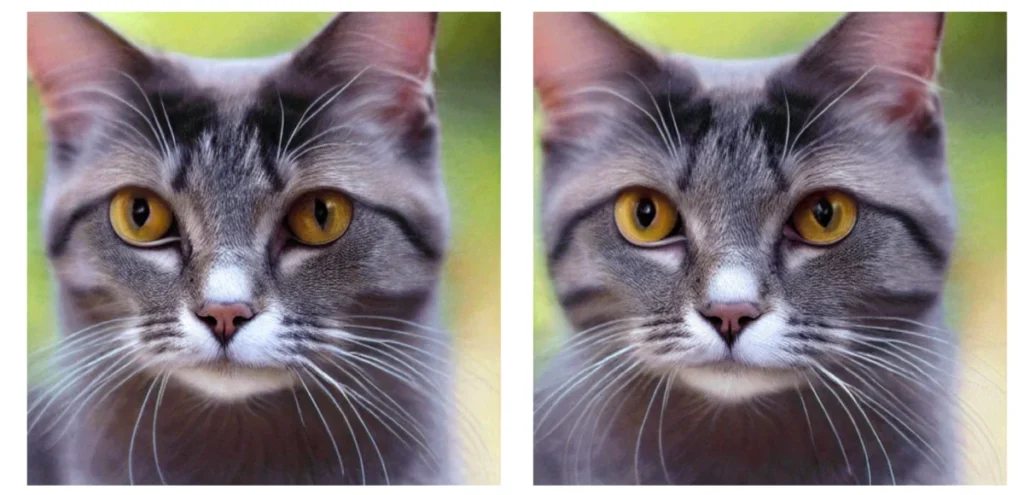
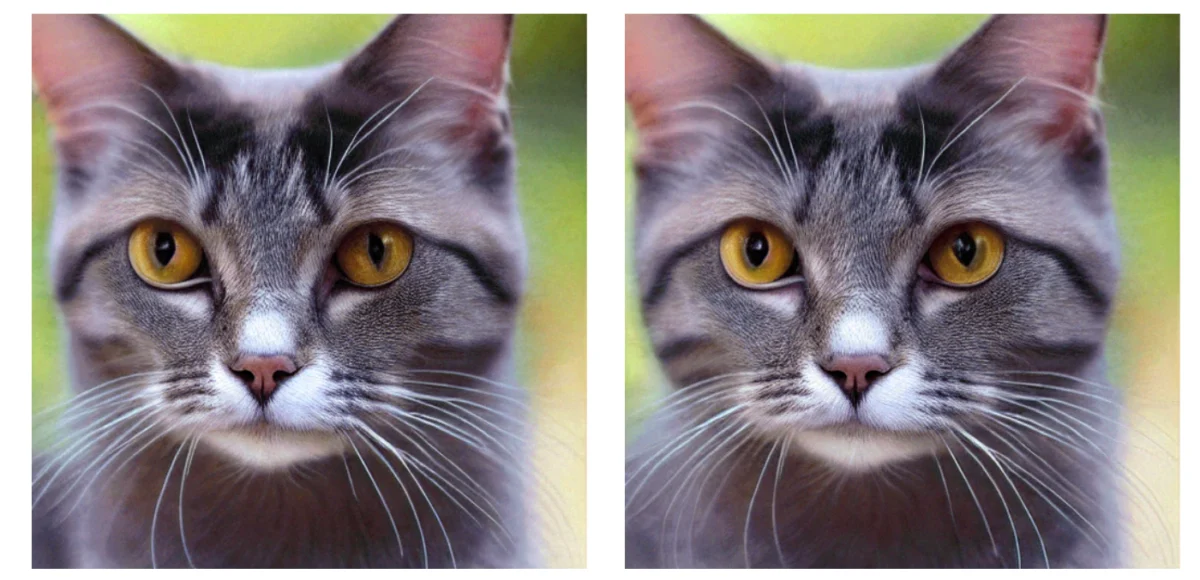
A common fear with quantization is the loss of model fidelity. To address this, the team performed a side-by-side comparison of image generation between fp32 and fp16 (mixed precision) inference. Using the Stable Diffusion model, the generated images were visually indistinguishable, confirming that the reduction in bit-depth did not sacrifice the creative output of the model.
Implications: The Democratization of Edge AI
The implications of this update are profound, reaching far beyond the technical specifications of TensorFlow Lite.
Lowering the Barrier to Entry
Full integer quantization has long been a "black box" for non-expert users. The need for a representative dataset and the risk of "unsupported operator" errors during conversion made it a significant hurdle. By making dynamic range quantization the default and simplifying the conversion process via the converter.optimizations = [tf.lite.Optimize.DEFAULT] flag, the technology is now accessible to the broader developer community.

Extending Hardware Lifecycles
By enabling high-performance inference on older, lower-tier mobile devices, this update effectively extends the useful life of hardware. Features that were previously restricted to flagship devices due to computational demands can now be deployed to a wider install base. This is critical for global markets where hardware turnover is slower.
Powering Global Services
The impact is already being felt in the wild. This technology is currently powering some of Google’s most significant products, including the Gemini AI model, real-time audio denoising in Chrome OS, and enhanced communication features in Google Meet. By open-sourcing these improvements, the team is ensuring that developers everywhere can integrate similar, high-fidelity AI experiences into their own applications.
Official Responses and Future Outlook
The success of this project is a testament to the collaborative effort of the engineering teams at Google. Frank Barchard and Quentin Khan were instrumental in the development of the dynamic range quantization inference pathways.
As we look toward the future, the focus remains on closing the gap between cloud-based AI and on-device performance. The combination of mixed-precision (fp16) and dynamic range quantization is currently the most robust strategy for balancing latency, memory footprint, and model accuracy.

For developers eager to start, the path is clear: transition to TensorFlow 2.17 or utilize the nightly builds. By adopting these optimizations, the industry moves one step closer to a future where powerful, generative AI runs seamlessly and privately on every smartphone on the planet.
How to Get Started
- Update your environment: Ensure you are using TensorFlow 2.17 or later.
- Enable the optimization: Use the
converter.optimizations = [tf.lite.Optimize.DEFAULT]flag during the model conversion process. - Profile your models: Use the TFLite profiler to monitor performance bottlenecks.
- Validate: While dynamic range quantization is robust, always validate your specific model against a large dataset to ensure accuracy requirements are met.
The evolution of XNNPack is not just an update to a library—it is a shift in the philosophy of edge computing. By making high-performance AI more efficient and easier to implement, the barrier to innovation has never been lower.