Supercharging On-Device AI: TensorFlow Lite and the Evolution of XNNPack Quantization
In the fast-evolving landscape of artificial intelligence, the transition from massive, cloud-based data centers to localized, on-device processing has become the new frontier. Software engineers and developers are constantly seeking the "holy grail" of machine learning: high-fidelity model performance running seamlessly on constrained hardware. Today, that goal is closer than ever, thanks to a significant performance breakthrough within TensorFlow Lite’s XNNPack backend.
The team behind TensorFlow Lite has officially announced that XNNPack’s Fully Connected and Convolution 2D operators now support dynamic range quantization. For the end user, this translates to faster, more responsive AI features on smartphones and edge devices. For developers, it represents a substantial leap in accessibility, effectively quadrupling inference performance compared to traditional single-precision baselines.
Main Facts: A Paradigm Shift in Quantization
At the core of this development is the optimization of CPU-based inference. CPUs remain the most ubiquitous hardware target for TensorFlow Lite, powering everything from entry-level Android devices to flagship handsets. By implementing dynamic range quantization—a technique where weights are compressed to 8-bit integers while activations remain in floating-point format—the XNNPack team has bypassed the traditional bottlenecks of on-device model deployment.
This breakthrough effectively bridges the gap between the speed of full-integer quantization and the precision of floating-point (fp32) models. Unlike previous methods, which often required complex representative datasets to calibrate quantization parameters, dynamic range quantization calculates these parameters in real-time. This reduces the friction for developers, allowing them to optimize models without the technical overhead of traditional "fully-quantized" workflows.

Chronology: The Road to Dynamic Efficiency
The journey toward this milestone has been a multi-year effort to refine XNNPack, the high-performance CPU backend for TensorFlow Lite.
- Early Days of TFLite: Initially, developers were forced to choose between full-integer quantization—which could be error-prone and data-intensive—or standard fp32 inference, which was often too resource-heavy for older devices.
- The Rise of Half-Precision (fp16): In late 2023, the team demonstrated that half-precision inference could effectively double performance on hardware equipped with fp16 acceleration. This served as a critical proof-of-concept for mixed-precision strategies.
- The Integration Phase: Throughout 2024, the XNNPack team focused on integrating dynamic range quantization into the core operator suite. By optimizing these for diverse architectures—including ARM, ARM64, x86 (SSE/AVX/AVX512), and WebAssembly—the team ensured that the performance gains would be felt across the entire ecosystem.
- The Current Release: With the rollout of TensorFlow 2.17, dynamic range quantization is enabled by default in prebuilt binaries. This marks the transition of the technology from an experimental feature to a standard tool for every TFLite developer.
Supporting Data: Benchmarking the Performance Gains
To understand the scale of this improvement, one must look at the empirical data. Testing across various computer vision models reveals that the performance gains are not just incremental—they are transformative.
In comparative benchmarks, models like Stable Diffusion—which previously struggled with full integer quantization due to unsupported operators—saw an extraordinary 6.2x speed-up compared to the original float32 model.
Why Dynamic Range Outperforms
One might assume that full-integer quantization (where everything is converted to 8-bit) would be faster than dynamic range quantization. However, profiling data suggests otherwise. In many real-world scenarios, full-integer quantization requires specific "optimal paths" based on the ratio of input and output scales. If a model’s scale falls outside these parameters, performance drops. Dynamic range quantization, by calculating parameters on the fly, often avoids these "quantization artifacts," resulting in a smoother, more consistent execution profile that often outpaces fully-quantized alternatives.

The Power of Mixed Precision
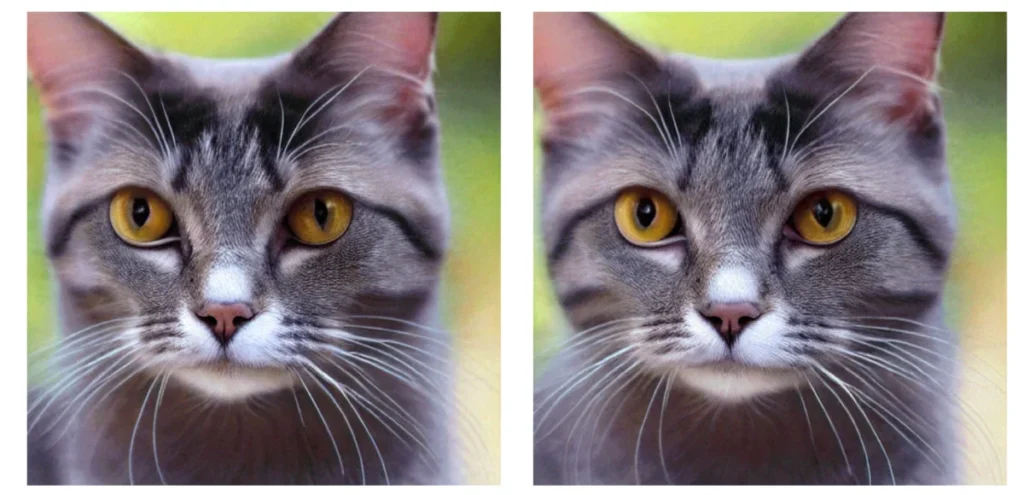
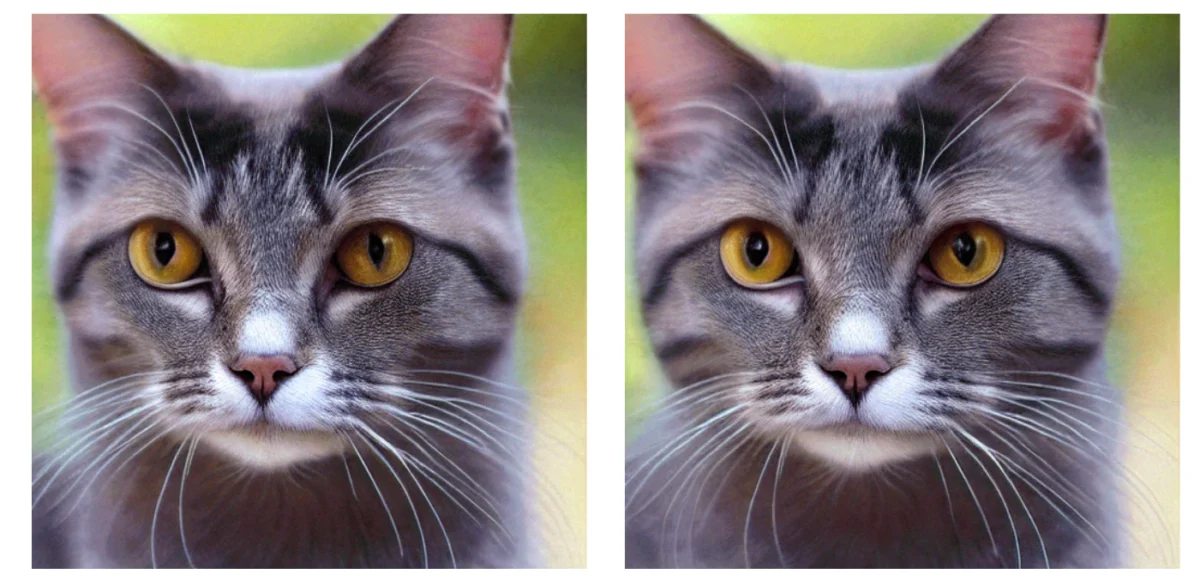
The inclusion of mixed-precision support (combining dynamic range quantization with fp16) allows modern devices to leverage their hardware-level fp16 acceleration. By reducing the mantissa bits, the CPU can process twice as much data per instruction. Visual evidence, specifically in the comparison of cat-themed images generated by Stable Diffusion, demonstrates that the quality loss between fp32 and fp16 is virtually indistinguishable to the human eye, confirming that the trade-off is well worth the computational gains.
Official Responses and Expert Commentary
Alan Kelly, a lead software engineer on the project, emphasizes that the primary goal was accessibility. "Full integer quantization is hard," Kelly notes. "Converting models is difficult, error-prone, and accuracy is not guaranteed. The representative dataset must be truly representative to minimize quantization errors."
The engineering team, including key contributors Frank Barchard and Quentin Khan, has focused on making these optimizations "invisible" to the user. By simply updating to the latest version of TensorFlow, developers can now enable these optimizations using a single flag: converter.optimizations = [tf.lite.Optimize.DEFAULT].
This shift toward "effortless optimization" is a direct response to feedback from the developer community, who have long requested a more user-friendly path to on-device efficiency.

Implications: The Future of On-Device AI
The implications of this update are profound for the entire AI industry. By making high-performance inference accessible to non-expert users, Google is effectively lowering the barrier to entry for local AI.
Democratizing AI Deployment
In the past, running complex models like Large Language Models (LLMs) or generative diffusion models on a mobile device was restricted to companies with massive engineering teams capable of custom hardware-specific optimization. With XNNPack’s latest update, a developer working on a basic audio-denoising app or a local image generator can achieve performance levels previously reserved for flagship, proprietary software.
Expanding the Hardware Reach
Because XNNPack supports such a wide array of architectures—including WebAssembly—this update extends beyond smartphones. It means that high-performance AI is coming to the web browser and the desktop, independent of GPU availability. This is particularly vital for privacy-conscious applications where users prefer to keep data processing local rather than sending it to a cloud server.
Real-World Integration
This technology is not theoretical. It is already powering critical features in Google’s own product suite, including Gemini, Google Meet, and Chrome OS audio-denoising features. As these tools continue to roll out, the standard for "smooth" AI performance is being set higher.

The successful implementation of dynamic range quantization serves as a case study for the industry: progress in AI is not solely defined by the size of the neural network or the complexity of the training data, but by the efficiency with which that intelligence can be delivered to the end-user. As we move forward, the focus will undoubtedly shift toward even more sophisticated mixed-precision methods, but for now, the marriage of XNNPack and dynamic range quantization represents the most significant step forward for on-device CPU inference in recent years.
Developers are encouraged to test their own models using the latest nightly TensorFlow builds or the 2.17 release to witness these gains firsthand. As the ecosystem continues to embrace these tools, the dream of "AI for everyone, everywhere" becomes significantly more tangible.