Decoding the Future of Personalization: Google Announces Inaugural Recommendation Systems Developer Summit
By Technology Editorial Desk
In the modern digital economy, recommendation systems serve as the invisible architects of our online experiences. From the curated playlists on Spotify to the hyper-personalized product suggestions on Amazon and the endless content loops of social media platforms, these algorithmic engines dictate how we discover information, entertainment, and commerce. As the demand for more sophisticated, responsive, and ethical personalization grows, Google is stepping forward to bridge the gap between theoretical research and practical implementation.
Google has officially announced its first-ever Developer Summit on Recommendation Systems, a virtual event scheduled for June 9, 2023. This landmark gathering marks a significant push by the tech giant to democratize access to its internal engineering expertise and empower developers to build next-generation recommendation architectures.
The Core Objectives: Why Now?
The announcement, spearheaded by Google Developer Advocate Wei Wei, comes on the heels of the successful launch of Google’s centralized recommendation systems landing page last year. While that resource provided a foundational roadmap, the developer community’s appetite for deeper technical integration has only intensified.
Modern recommendation systems have evolved from simple collaborative filtering models into complex, multi-stage pipelines involving deep learning, real-time feedback loops, and large-scale data processing. Developers today are not merely asking how to build a basic recommender; they are asking how to build efficient ones that scale, how to handle cold-start problems, and, most pressingly, how to integrate generative AI and Large Language Models (LLMs) into these frameworks.
The summit aims to address these technical hurdles by providing a direct line of communication between the architects of Google’s proprietary machine learning suites and the broader developer ecosystem.
Chronology of Innovation: From Basic Filtering to Generative Retrieval
To understand the significance of this upcoming summit, one must look at the evolution of Google’s contribution to the machine learning community.
- Early Days: Initial efforts were largely focused on academic research and internal use cases, with limited public-facing tooling.
- The TensorFlow Era: With the introduction of TensorFlow, Google began modularizing its machine learning capabilities, allowing developers to build custom models with greater flexibility.
- Specialized Toolkits: Over the past few years, Google systematically released purpose-built libraries to address specific pain points in recommendation architectures:
- TensorFlow Recommenders (TFRS): A library designed to simplify the building, training, and evaluation of recommendation models.
- TensorFlow Ranking: A specialized toolset for learning-to-rank tasks, essential for search and discovery features.
- TensorFlow Agents: A framework for reinforcement learning, increasingly vital for systems that learn from user interactions in real-time.
- The Generative Pivot: The most recent chapter involves the integration of generative AI. Google is currently pioneering "generative retrieval," a paradigm shift where recommendation tasks are treated as generative processes rather than traditional classification or retrieval problems.
This chronological progression demonstrates that the summit is not merely a promotional event, but a strategic effort to move the industry toward a new standard of "generative-first" personalization.
Supporting Data: The Anatomy of a Modern Recommender
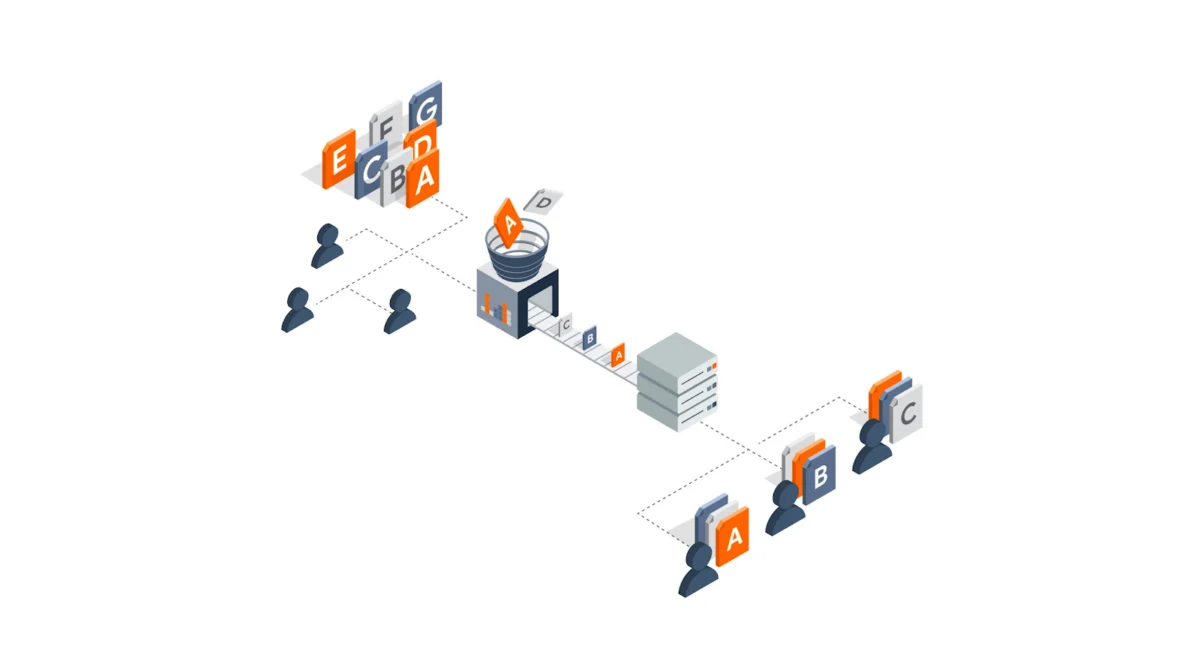
At the heart of the summit’s agenda is the "multi-stage" architecture. Google’s internal research suggests that high-performing recommendation systems typically consist of three distinct phases, each of which will be a focus of the upcoming sessions:
- Candidate Generation: The process of narrowing down millions of items to a few hundred relevant ones. This stage relies heavily on embedding techniques and approximate nearest neighbor search.
- Scoring (Ranking): A more computationally expensive phase where deep neural networks rank the candidate items based on predicted user engagement, conversion probability, or long-term satisfaction.
- Re-ranking and Filtering: The final stage, which incorporates business logic, diversity constraints, and fairness filters to ensure the recommendations are not only relevant but also safe and varied.
According to Google’s internal documentation, the integration of LLMs at the candidate generation and ranking stages has shown significant improvements in "contextual understanding." By leveraging the semantic power of LLMs, recommenders can now interpret the intent behind a user’s search or interaction far more accurately than traditional keyword-based systems.

Official Perspectives: Bridging the Expertise Gap
In his official communication, Wei Wei emphasized that the summit is designed to be inclusive of all skill levels. "Whether you’re just getting started or a seasoned practitioner in this exciting domain, you’re sure to find something valuable," Wei stated.
The event will feature a lineup of Google engineers who have been instrumental in the development of the TensorFlow ecosystem. By granting the public access to the minds behind these products, Google is effectively attempting to standardize how recommendation systems are built globally. This approach mirrors the company’s broader "open-source-first" philosophy, which aims to foster an ecosystem where the best practices are shared, thereby raising the baseline of user experience across the internet.
Key sessions to look forward to include:
- Deep Dives into TFRS: Practical workshops on optimizing the TFRS pipeline for production environments.
- Generative AI Integration: Insights into how to use Large Language Models to provide "conversational" recommendations.
- Scaling AI Infrastructure: Best practices for deploying recommendation models on cloud infrastructure, focusing on latency reduction and cost optimization.
Implications: The Future of the "Intelligent Web"
The implications of this summit are far-reaching. As the industry grapples with data privacy, the "black box" nature of AI, and the demand for transparency, developers are being pushed to create systems that are not only accurate but also explainable.
Ethical Considerations and Fairness
A major, albeit implicit, theme of the summit is the responsible deployment of AI. Modern recommendation systems are prone to bias—often amplifying existing societal disparities. By centralizing the training on tools like TensorFlow Ranking, Google hopes to provide developers with the guardrails necessary to build "fair" systems. This includes built-in metrics for monitoring bias and tools for auditing the diversity of recommendation outputs.
The Generative Shift
Perhaps the most disruptive topic on the agenda is the transition to generative retrieval. If successful, this shift could render traditional search bars and static recommendation carousels obsolete, replaced by fluid, conversational interfaces that suggest content based on nuanced, multi-turn dialogues. This represents a fundamental change in the relationship between the user and the digital interface.
Democratizing Personalization
For smaller startups and individual developers, building a recommendation system has historically been a resource-heavy endeavor, often requiring massive compute budgets and large data science teams. Google’s commitment to providing modular, high-level APIs lowers this barrier to entry significantly. By attending this summit, developers can access a "blueprint" for building enterprise-grade systems without having to reinvent the wheel.
Conclusion: How to Participate
The Developer Summit on Recommendation Systems is a clear signal that Google views the next wave of web development through the lens of hyper-personalization. As the line between search and recommendation blurs, the tools shared at this event will likely become the foundational building blocks for the next decade of digital interaction.
For those interested in participating, the virtual event is scheduled for June 9, 2023, from 10:00 AM to 12:15 PM US Pacific Time. Registration is currently open, and the event is free of charge. Prospective attendees are encouraged to register via the official Google RSVP portal to receive updates, access session links, and gain pre-summit materials.
As the industry stands on the precipice of a generative AI revolution, this summit offers a rare opportunity to learn from the architects of the systems that influence our digital lives every single day. Whether you are looking to optimize your company’s conversion rates or simply want to understand the mechanics of the algorithms that shape the world, this event is poised to be the defining professional development moment of the summer for the AI engineering community.