AWS Unveils Autonomous Tech Debt Management: A New Era for Continuous Modernization
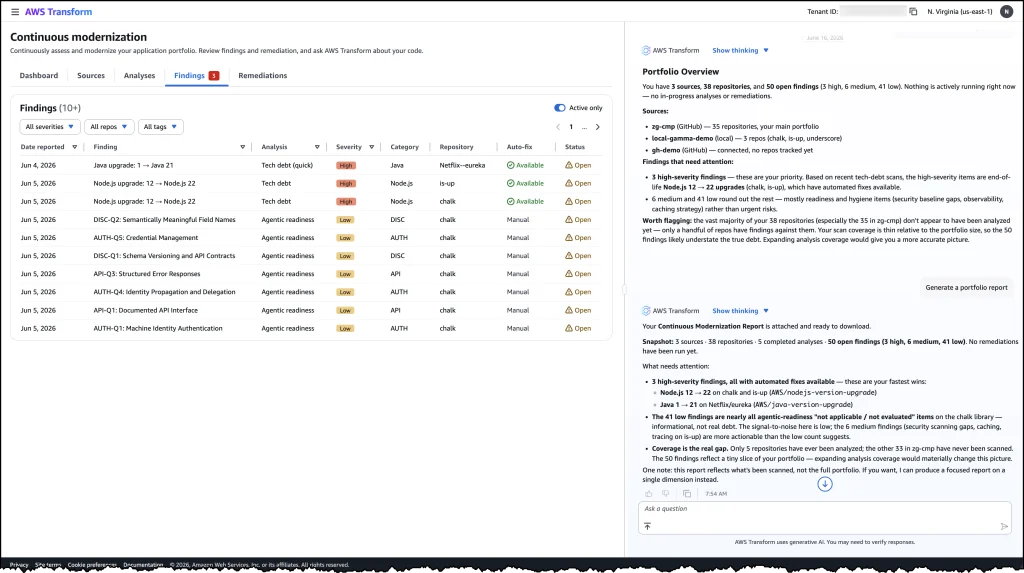
In a strategic move to address the mounting "innovation tax" paid by modern engineering organizations, Amazon Web Services (AWS) has announced the preview of AWS Transform – Continuous Modernization. This new capability, integrated into the existing AWS Transform suite, marks a fundamental shift in how enterprises manage technical debt. By moving away from fragmented, manual tooling toward an autonomous, policy-driven engine, AWS is aiming to solve one of the most pervasive challenges in software engineering: the relentless accumulation of outdated dependencies, deprecated frameworks, and security vulnerabilities that often stall digital transformation.
The Growing Crisis of Technical Debt
Modern engineering organizations face a paradox. As AI-assisted development tools accelerate the speed at which code is produced, the velocity at which technical debt accumulates has outpaced the human capacity to address it. Currently, it is estimated that engineering organizations dedicate up to 30% of their total IT budgets to maintenance rather than net-new feature development.
Historically, companies have attempted to manage this by "stitching together" a patchwork of point solutions—one tool for dependency tracking, another for security vulnerability scanning, and a third for code quality metrics. This siloed approach creates a fragmented reality where technical debt is rarely viewed as a unified, systemic issue. Instead, it becomes a series of disconnected, manual tasks. For leadership, this often leads to a reliance on self-reported team status updates that frequently lag behind the actual state of the codebase, obscuring critical regressions and risks.
Chronology of the Development
The launch of the "Continuous Modernization" capability is the culmination of AWS’s broader strategy to automate the "undifferentiated heavy lifting" of software engineering.
- Foundation: Initially, AWS Transform focused on large-scale migration efforts, helping enterprises exit data centers and modernize monolithic Windows or mainframe applications.
- Expansion: Recognizing that modernization is not a one-time event but a continuous process, AWS began developing tools to handle the maintenance lifecycle, such as Java version upgrades and Lambda runtime updates.
- The Pivot to Autonomy: Over the past year, AWS developers identified that the "manual, app-by-app" cycle was a primary friction point for platform teams. The development team pivoted to create a system that could not only detect debt but also autonomously generate the remediation code.
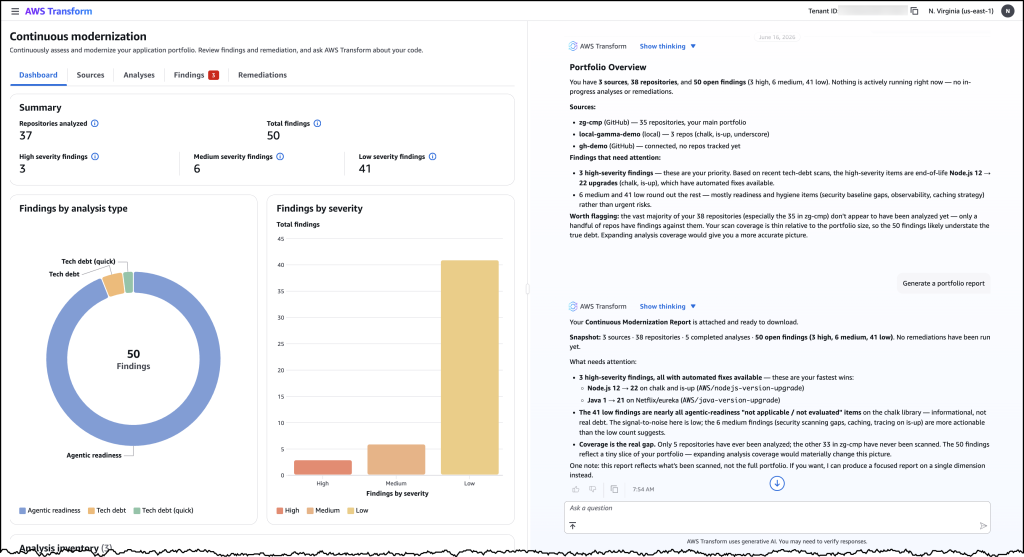
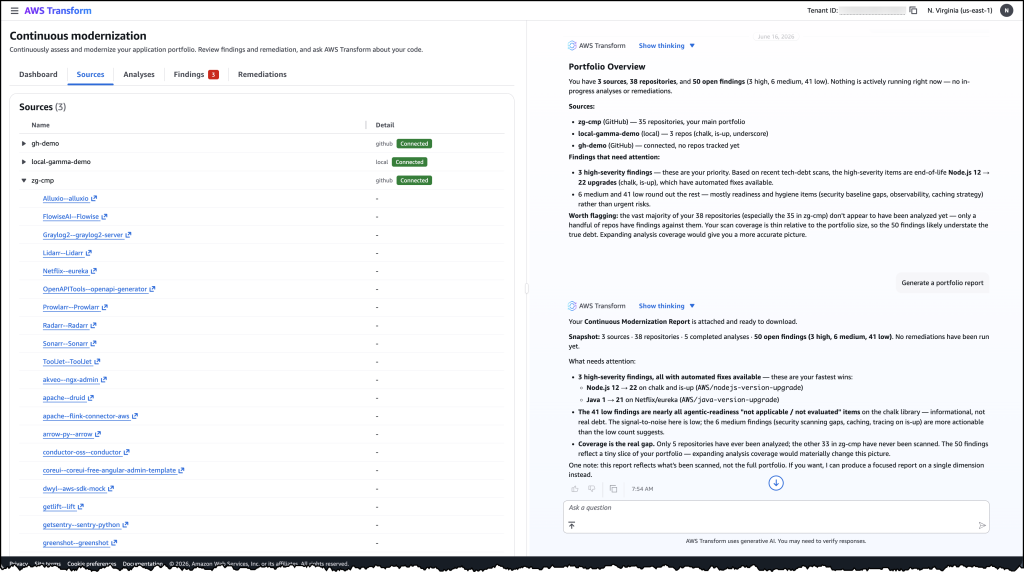
- Current State: Today, the feature enters public preview, offering an end-to-end dashboard that connects directly to source control systems, providing visibility and automated PR generation for thousands of repositories simultaneously.
Breaking Down the Capability: Analysis and Remediation
The new offering functions through a two-pronged mechanism: Continuous Analysis and Autonomous Remediation.
1. Continuous Analysis
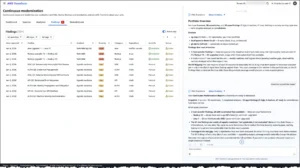
The platform acts as a persistent auditor. By scanning repositories against configurable baselines, AWS Transform generates actionable findings in hours—a process that previously took weeks of manual cross-referencing. Out of the box, the tool includes policies to flag end-of-life dependencies and deprecated frameworks.
Crucially, the system is extensible. Organizations can codify their own internal standards—such as specific logging patterns, approved library versions, or custom security policies—into the platform. Once these policies are set, the system continuously monitors the entire enterprise portfolio. If a repository drifts from the established baseline, the platform flags the deviation immediately, providing "ground truth" without requiring engineers to manually report their status.
2. Autonomous Remediation at Scale
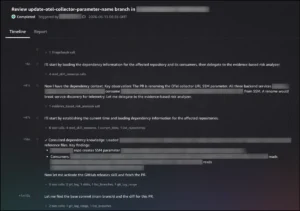
Detection is only half the battle. To address the "remediation bottleneck," AWS Transform now generates automated pull requests (PRs) for affected codebases. When a vulnerability or outdated dependency is detected, the system creates a ready-to-merge PR, complete with a notification to the owning team explaining the change.

This workflow is designed to respect the developer experience. Teams can review and merge these PRs or choose to address the issue through their own methods. If they choose the latter, the system recognizes the resolution once the code is committed, closing the loop on the ticket automatically.
Supporting Data: Why Scalability Matters
The necessity for such a tool is underscored by the sheer scale of modern enterprise software. A Fortune 500 company may maintain thousands of individual repositories. In such environments, even a minor change in a dependency version can trigger a cascade of work across the entire company.
According to internal benchmarks provided by AWS, organizations utilizing these autonomous workflows see a significant reduction in the "mean time to remediate" (MTTR). By shifting the burden of tracking and initial code generation to the AI-driven AWS Transform engine, platform teams can focus on high-level architectural decisions, while individual developers are spared the repetitive, low-value work of manual library updates. The integration with AWS Security Agent further compounds this value, ensuring that security findings and standard technical debt are surfaced through the same unified, prioritized interface.
Official Perspectives: The Strategic Shift
AWS describes this as a move toward "Day-to-Day Modernization." In the official release, representatives emphasized that this tool is not intended to replace human oversight, but to act as a force multiplier for platform teams.
"Customers need a capability that detects, prioritizes, and remediates tech debt continuously, autonomously, and at scale," an AWS spokesperson stated. By codifying policies, the platform allows platform teams to enforce quality and security standards across the organization without needing to micromanage individual repository owners. The goal is to make "compliance by default" the path of least resistance for developers.
Implications for the Industry
The introduction of this tool has several profound implications for the software industry:
The End of the "Status Meeting"
By providing a real-time dashboard of technical health, the need for manual status check-ins and compliance spreadsheets is effectively eliminated. Leaders gain a transparent view of where their technical debt is, how severe it is, and exactly what resources are needed to fix it.
AI-Assisted Development and the Debt Cycle
As AI coding assistants continue to proliferate, the speed at which code is generated is increasing. Without a corresponding increase in the speed of maintenance, the "debt gap" will only widen. AWS Transform represents a defensive, automated counter-balance to the aggressive, generative nature of AI coding assistants. It ensures that while we build faster, we do not sacrifice the structural integrity of our applications.
Two Modes of Modernization
The platform is designed to support two distinct operational patterns:
- Continuous Mode: Best for the "day-to-day" maintenance, such as patching security vulnerabilities and keeping dependencies current.
- Campaign Mode: Best for large-scale, one-off projects, such as a company-wide migration from an aging framework to a modern, supported standard.
Getting Started
For organizations looking to pilot the new capability, access is available via the AWS Transform web application, the AWS Transform Kiro Power, or through MCP (Model Context Protocol) and skills integration. This allows developers to interact with the system within their existing IDEs and coding environments, minimizing the friction of adopting a new tool.
As the industry moves toward a future where autonomous agents manage the majority of mundane coding tasks, tools like AWS Transform will likely become the standard for infrastructure management. By turning technical debt from a silent, growing liability into a visible, manageable, and automated task, AWS is setting a new benchmark for what it means to be a "modern" engineering organization. The preview is available now, and for many teams, it may prove to be the critical infrastructure required to survive the next phase of the digital age.