Meta’s "Pocket" Initiative: Is Generative AI Finally Democratizing Game Development?
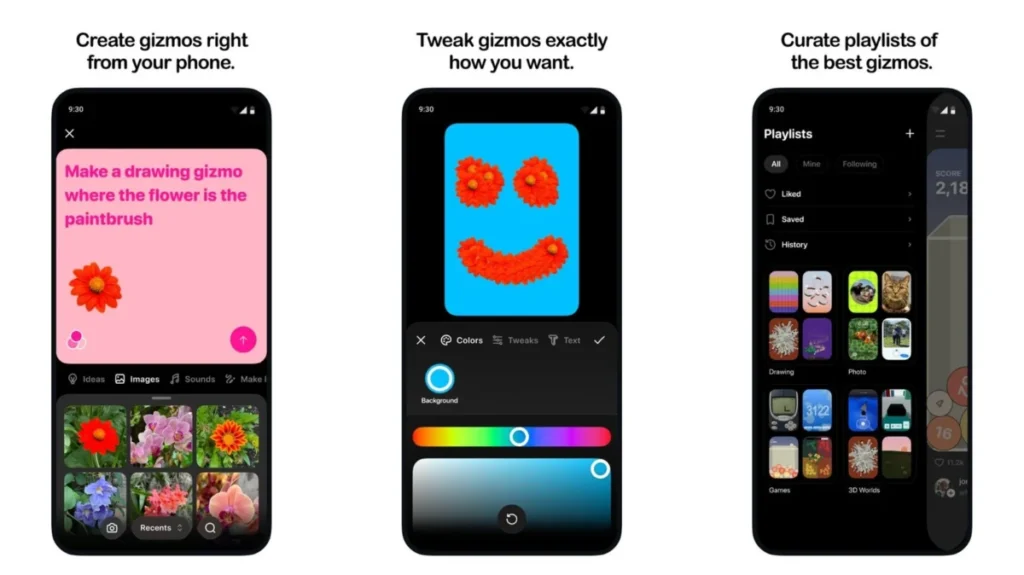
In an era where artificial intelligence is rapidly transitioning from a novelty to an essential utility, Meta Platforms has taken a bold step toward the next frontier of user-generated content. The tech giant has quietly soft-launched a new mobile application titled "Pocket," a creative platform designed to allow users to build and share interactive experiences—often referred to as "gizmos"—using the power of generative AI.
While the app remains in a limited, regional testing phase, its arrival signals a significant shift in how Meta intends to integrate generative models into the daily lives of its users. By prioritizing "vibe-coding"—a colloquial term for using natural language prompts to generate functional code and interactive design—Meta is positioning itself to lead the charge in the democratization of game development.
The Genesis of Pocket: Uncovering the Soft Launch
The existence of Pocket was first brought to public attention by mobile developer and reverse engineer Alessandro Paluzzi, who identified the app’s footprint on digital storefronts earlier this week. Following his disclosure on X (formerly Twitter), the tech community began to piece together the origins of the project.
According to data provided by the analytics platform AppFigures, Pocket has been available for download on both iOS and Android platforms since June 29, 2026. Despite its public listing, the application is currently shrouded in mystery. It remains unavailable in major markets, including the United States, and Meta’s own internal help pages confirm that the rollout is highly selective, stating that "the Pocket app is not yet available everywhere."
The app’s branding is centered on the concept of "vibe-coding," a philosophy that suggests the barrier to entry for software creation should be lowered to the point where a user’s creative intent—their "vibe"—is enough to generate complex, functional interactive experiences.
Chronology of Development
The emergence of Pocket is not a bolt from the blue; it is the culmination of a strategic acquisition and development roadmap that has been in motion for several months.
- Early 2026: Meta reportedly begins an aggressive recruitment drive, targeting the engineering talent behind Gizmo, an AI-centric startup known for its ability to transform simple user prompts into interactive digital experiences.
- March 2026: News breaks that the core team behind Gizmo has officially joined Meta’s "Superintelligence Labs." Industry analysts immediately speculated that Meta intended to cannibalize the startup’s technology to bolster its internal AI tooling.
- Late June 2026: Meta completes the initial build of its new platform. The internal project name, ironically, retains the "Gizmo" nomenclature.
- June 29, 2026: Pocket is soft-launched on global app stores. The package name on the Google Play Store,
com.facebook.gizmo, confirms the direct lineage between the startup’s original product and Meta’s new app. - July 2, 2026: Reverse engineers identify the app, leading to public discourse regarding Meta’s latest venture into generative AI.
Supporting Data and Technical Context
The technical foundation of Pocket relies on Meta’s continued evolution of its Large Language Models (LLMs). By leveraging the same underlying technology that powers its broader Meta AI ecosystem, the company is attempting to automate the "boilerplate" of software development.
The "Gizmo" Connection
The decision to utilize the "Gizmo" branding is a calculated move to capitalize on the existing cultural cachet of the startup. Gizmo was widely praised for its intuitive interface, which allowed non-coders to build functional widgets and mini-games by simply describing them in plain English. By folding this technology into the Meta ecosystem, the company is effectively turning its billions of users into potential game designers.
Integration with the Meta Ecosystem
Unlike independent game engines like Unity or Godot, which require a steep learning curve and knowledge of C# or C++, Pocket is designed for the mobile-first, social-media-native generation. It is highly probable that once the app exits its trial phase, the "gizmos" created within Pocket will be deeply integrated into the Facebook and Instagram feeds, allowing for a new type of social engagement where users share interactive content rather than just static images or videos.
Official Responses and Corporate Silence
As of this writing, Meta has remained notably tight-lipped regarding the long-term vision for Pocket. The company has not issued a press release, nor has it provided a timeline for a wider, international rollout.
When contacted for comment, a Meta spokesperson offered no specific details on the app’s roadmap, sticking to standard corporate protocols regarding unannounced products. This silence is typical for Meta’s "soft-launch" strategy; by limiting access to specific regions and hardware models, the company can stress-test its AI models and server infrastructure without the immense pressure of a global launch.
However, the lack of an official announcement has not stopped speculation. The prevailing theory among Silicon Valley analysts is that Pocket serves as a "sandbox" for Meta to refine its generative AI capabilities before integrating them into their more mission-critical platforms.
Implications: The Future of "Vibe-Coding"
The release of Pocket carries profound implications for the gaming and software development industries.
1. The Death of the "Expertise Barrier"
For decades, the creation of interactive software was the exclusive domain of those who could navigate complex IDEs (Integrated Development Environments) and master syntactical programming languages. "Vibe-coding" represents a paradigm shift where the user interface acts as a translator between human language and machine execution. If Pocket succeeds, we could see an explosion of user-generated content that mirrors the scale of the early internet’s blogosphere—but for interactive games.
2. The Rise of "AI Slop" vs. Creative Democratization
Critics of Meta’s rapid AI deployment argue that the platform could lead to a glut of low-quality, automated content—often referred to in tech circles as "AI slop." The concern is that if the barrier to creation is removed entirely, the digital landscape will be overwhelmed by generic, derivative, or broken experiences that clog the user experience. Meta faces a significant challenge: how to curate high-quality interactive content while keeping the creative process frictionless.
3. The Shift in Meta’s Business Model
Meta’s aggressive pursuit of AI, evidenced by its work on animations for profile photos and dedicated AI feeds, suggests a pivot. The company is no longer just a social network; it is becoming a generative AI utility provider. By owning the platform where these "gizmos" are created, Meta ensures that it retains control over the digital "real estate" where the next generation of social interaction will occur.
4. Competitive Pressure on Game Engines
While Pocket is not an immediate threat to high-end engines like Unreal Engine, it poses a direct challenge to mobile-gaming giants like Roblox and Supercell. If users can create compelling, bite-sized games on their phones during their commute, the value proposition of established platforms may shift. Meta is betting that the ease of creation will outweigh the depth of traditional development tools.
Conclusion
Meta’s Pocket application is a bold, if currently opaque, experiment in the future of human-computer interaction. By moving beyond text-to-image or text-to-text generation, the company is attempting to master text-to-experience.
Whether Pocket becomes the next major pillar of the Meta ecosystem or fades into the graveyard of experimental apps depends on three factors: the stability of its generative models, the quality of the user experience, and Meta’s ability to foster a community that values innovation over mere volume. For now, the tech world waits, watching to see if "vibe-coding" is merely a passing trend or the foundational architecture of the next generation of social software.
As the trial continues to expand, the question is no longer whether AI can create games, but whether those games will be meaningful enough to keep us playing. Meta is banking on the idea that in the near future, the most successful game developers will be the ones who can articulate the best "vibe."