Unveiling the Enigma of the Scantron: A Deep Dive into the Analog Heart of Digital-Era Grading
For generations of students across the globe, the Scantron sheet remains an indelible icon of academic life – a crisp, often red-tinted rectangle of paper adorned with endless rows of bubbles, each awaiting the decisive swipe of a #2 pencil. The very mention of it conjures memories of high-stakes exams, the quiet tension of carefully filling in an answer, and the pervasive mystery surrounding the machine that devoured these sheets, spitting out grades with uncanny speed. While many remember the ritual, few truly understood the intricate, yet remarkably simple, technology at its core.
Thanks to the meticulous work of content creator [SimonRetro], featured in his latest video, the veil has been lifted on the Scantron machine, revealing not a complex digital behemoth, but an elegant dance of analog optics and early digital logic. His exploration demystifies the legendary #2 pencil requirement and provides a fascinating look into a device that shaped standardized testing for decades. This article delves into the operational specifics, historical context, and enduring legacy of the Scantron, examining its impact on education and the timeless appeal of understanding the mechanics behind our everyday tools.
Main Facts: The Scantron’s Enduring Simplicity
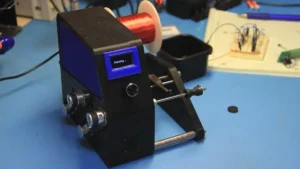
At its core, the Scantron machine, particularly the model explored by [SimonRetro], is a testament to the power of dedicated, purpose-built hardware. Far from the software-driven, interconnected devices of today, the Scantron operates as a remarkably standalone unit. Its user interface is sparse, consisting of little more than two rocker switches. One serves as the primary on/off control, ingeniously doubling as the mechanism to clear the machine’s memory and initiate the programming of a new test. This programming process is equally straightforward: a pre-marked answer key sheet is fed into the machine, establishing the correct responses against which all subsequent student submissions will be graded.
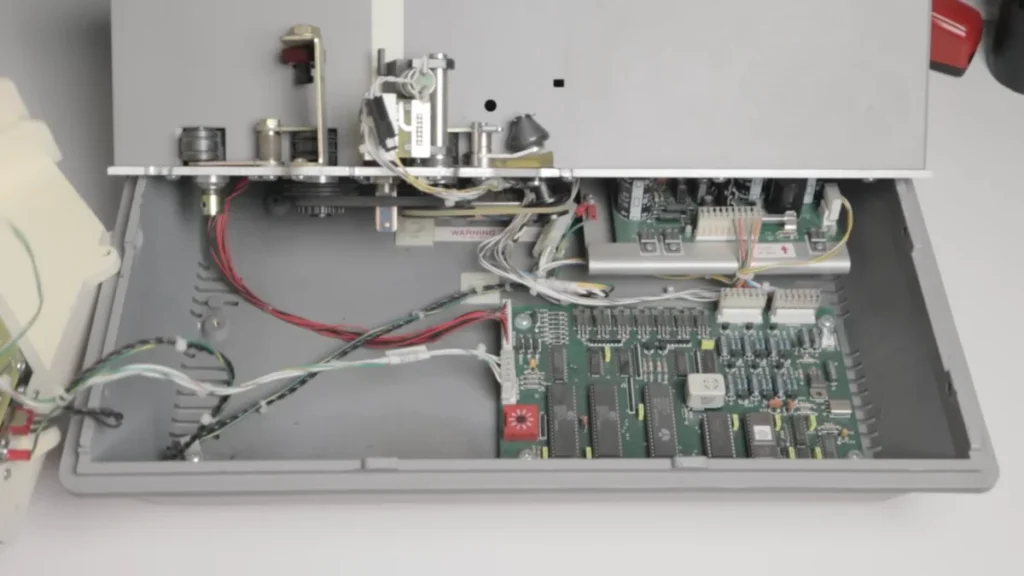
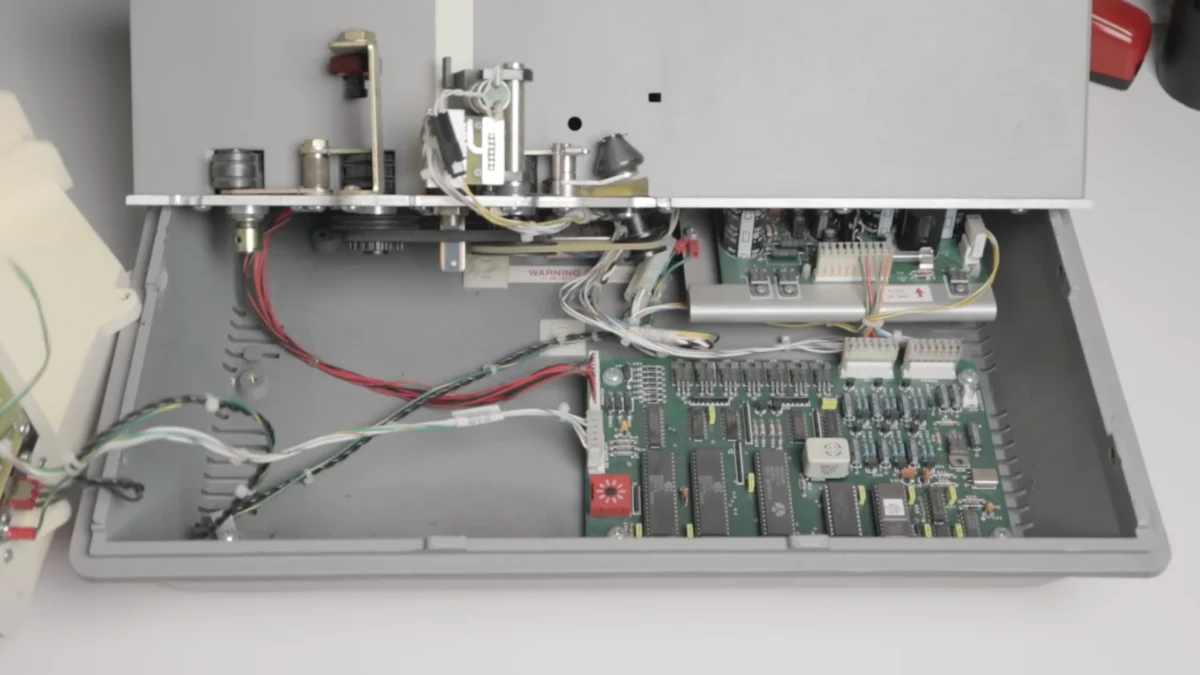
[SimonRetro]’s reverse engineering effort unveils an internal architecture that is both ingenious and indicative of its era. A single control board, populated with early-1990s-era chips, orchestrates the entire operation. Crucially, the machine relies on an incandescent lightbulb, rather than modern LEDs, to illuminate the six distinct reading sections of the Scantron card. An arrangement of belts and motors precisely guides each card through the reading apparatus, ensuring accurate scanning. For output, a robust seven-pin dot matrix printer, working in conjunction with a pair of ink rollers, inscribes results directly onto the processed cards, providing immediate feedback.
Perhaps the most compelling revelation from [SimonRetro]’s investigation concerns the specific requirements for marking. Through a series of empirical tests, he experimented with various writing instruments—pens, Sharpies, colored pencils, and pencils of differing lead hardness—to discern which marks the Scantron would register and which it would ignore. These practical demonstrations underscore the fundamental principles of optical mark recognition (OMR) that underpin the Scantron’s functionality, confirming the critical role of the #2 pencil in its design and operation.
Chronology: From Manual Labor to Automated Assessment
The story of the Scantron is inextricably linked to the broader history of standardized testing and the relentless human quest for efficiency in assessment. Its development emerged from a profound need to streamline the labor-intensive process of manual grading, particularly as educational systems expanded and the volume of student assessments grew exponentially.
The Genesis of Automation in Grading
Before the advent of optical mark recognition (OMR) technology, grading large-scale, multiple-choice examinations was a monumental undertaking. Teachers and administrators spent countless hours manually sifting through papers, comparing answers, and tallying scores. This not only consumed valuable pedagogical time but also introduced an element of human error and subjectivity into the grading process. As educational institutions began to adopt multiple-choice formats for their inherent objectivity and ease of scoring, the demand for an automated solution became increasingly pressing. Early attempts at automation often involved complex punch-card systems or even rudimentary electrical circuits designed to detect marks, but these solutions were often cumbersome, expensive, or prone to malfunction.
The Birth of Scantron
The conceptual framework for what would become the Scantron machine began to solidify in the mid-20th century. The Scantron Corporation itself was founded in 1972, building upon earlier innovations in optical scanning technology. The core idea was to create a machine that could "read" human-made marks on a pre-printed form by detecting differences in light reflection. The brilliance lay in its simplicity: a mark made with a graphite pencil would absorb more light than the blank paper, and this difference could be reliably detected by photo-sensors.
The company’s early machines, while perhaps less refined than the models many remember, quickly demonstrated their transformative potential. They offered an unprecedented speed and accuracy in grading, allowing educators to process thousands of answer sheets in a fraction of the time it would take manually. This efficiency was a game-changer, particularly for large school districts, universities, and organizations conducting standardized entrance or certification exams.
Evolution and Ubiquity
Throughout the 1970s, 1980s, and into the 1990s, Scantron machines became ubiquitous in educational settings across North America and beyond. Their presence in classrooms and testing centers became synonymous with objective assessment. The familiar "bubble sheet" became a standard format for everything from weekly quizzes to national standardized tests. The company continually refined its machines, improving their speed, reliability, and the types of data they could capture and report. While the fundamental OMR technology remained consistent, internal components evolved, benefiting from advancements in microelectronics and manufacturing. The Scantron’s robust build quality and relatively low maintenance requirements further cemented its status as an indispensable tool. Its peak era saw it not just grading exams but also used for surveys, inventory management, and data collection in various industries, demonstrating the versatility of its core technology.
The Digital Transition
As the 21st century dawned, the educational landscape began to shift dramatically with the proliferation of personal computers, the internet, and sophisticated software solutions. Online learning platforms, digital assessment tools, and advanced data analytics offered new paradigms for evaluating student performance. This digital revolution posed a significant challenge to the traditional, analog-centric Scantron model. While Scantron Corporation itself evolved, developing software-based assessment solutions, online testing platforms, and integrated data management systems, the physical Scantron machine’s dominance began to wane in certain sectors. Many institutions transitioned to fully digital grading, allowing for more dynamic question types, immediate feedback, and richer analytical data. However, for its sheer simplicity, cost-effectiveness, and reliability in environments with limited technological infrastructure or specific security requirements, the physical Scantron machine continued to find niches, particularly in K-12 education and specific certification bodies. Its story is one of a technology that, while seemingly static, adapted within its market and laid the groundwork for future assessment innovations.
Supporting Data: The Science Behind Optical Mark Recognition (OMR)
The Scantron machine, far from being a black box, operates on well-established scientific principles, primarily Optical Mark Recognition (OMR). Understanding these principles illuminates why specific marking requirements, like the #2 pencil, were not arbitrary rules but fundamental necessities for the machine’s accurate functioning.
The Science Behind Optical Mark Recognition (OMR)
OMR technology works by detecting the presence or absence of a mark in a specific position on a document. This is achieved by shining a light onto the paper and measuring the amount of light reflected back. A blank portion of the paper reflects a significant amount of light. When a mark is present, especially one made with a substance that absorbs light, less light is reflected. The Scantron’s internal photo-sensors convert these varying light reflections into electrical signals. A strong signal indicates a blank space, while a weaker signal (due to light absorption) indicates a filled-in bubble. These signals are then interpreted by the control board’s logic, determining whether a mark meets the threshold for a valid answer.
The Crucial Role of Graphite: Why #2 Pencil?
The choice of the #2 pencil was not coincidental; it was critical to the Scantron’s optical sensing mechanism. Graphite, the primary component of pencil lead, is an excellent conductor of electricity and, more importantly for OMR, a highly effective absorber of light. When a #2 pencil mark is made, the graphite particles create a dense, opaque layer that significantly reduces the amount of light reflected from the paper.
- Graphite vs. Ink: While ink also absorbs light, many inks are semi-translucent or have varying chemical compositions that can interfere with consistent optical detection. Some inks might even reflect light in a way that confuses the sensors. Furthermore, permanent ink marks cannot be erased, leading to potential scoring errors if a student changes their mind.
- Graphite vs. Wax/Colored Pencils: Colored pencils contain wax and pigments that reflect light differently than graphite. They might not absorb enough light to register as a definite mark, or their color could interact unexpectedly with the machine’s light source and sensors.
- Pencil Hardness: The "2" in #2 pencil refers to its hardness scale (HB in the international system). A #2 pencil strikes an optimal balance: it’s soft enough to leave a sufficiently dark, light-absorbing mark without requiring excessive pressure, yet hard enough to retain a relatively fine point and resist smudging excessively.
- Harder pencils (e.g., #3, #4 or H grades): These contain more clay and less graphite, producing lighter, fainter marks that might not absorb enough light to be consistently detected by the Scantron.
- Softer pencils (e.g., #1 or B grades): These contain more graphite, producing darker marks, but they are also prone to smudging, leaving residue that could be misread as a mark in adjacent bubbles, or even damaging the delicate paper as it passes through the machine.
- The #2 pencil, therefore, represented the sweet spot for reliable optical detection and user-friendliness.
The "Standalone" Nature and Internal Mechanics
The Scantron’s standalone nature was both a design choice and a technological necessity of its time. By relying on dedicated hardware, it minimized dependencies on external computers or complex software configurations, making it incredibly robust and easy to deploy in diverse environments.
- Light Source: The use of an incandescent lightbulb, as observed by [SimonRetro], highlights the technology’s age. Incandescent bulbs, while generating heat, provide a broad spectrum of light that was reliably absorbed by graphite. Modern OMR systems might use LEDs for greater energy efficiency and longevity, but the principle remains the same. The light is typically directed through a lens system to focus it precisely on the bubbles.
- Photo-sensors: Arranged in an array corresponding to the bubble positions, these sensors detect the reflected light. Each sensor converts the light intensity into an electrical voltage.
- Motor and Belt System: Precision is paramount. A carefully calibrated system of rubber belts and electric motors ensures that each Scantron sheet is fed through the reading area at a consistent speed and precisely aligned. Any misalignment could lead to misreads or damage to the sheet.
- Early ’90s Control Board: This board, likely featuring microcontrollers and various logic gates, is the "brain" of the machine. It processes the signals from the photo-sensors, compares them against the programmed answer key, tallies scores, and manages the printer. Its design prioritized reliability and efficiency for a single, well-defined task.
The Printing Mechanism
The seven-pin dot matrix printer, powered by ink rollers, provided immediate, on-card feedback. This type of printer uses a series of small pins to strike an inked ribbon against the paper, forming characters from a matrix of dots. It’s a robust and cost-effective printing method, perfectly suited for printing numerical scores, error codes (e.g., "multiple marks detected"), or other diagnostic information directly onto the student’s answer sheet as it exits the machine. This eliminated the need for a separate computer and printer, further reinforcing the Scantron’s self-contained functionality.
[SimonRetro]’s Experimental Insights
[SimonRetro]’s practical experiments provide empirical validation for these technical explanations. His tests, where he intentionally marked sheets with various tools, directly illustrate the OMR system’s sensitivities:
- Pens and Sharpies: Likely produced inconsistent results. While dark, some inks might not have the optimal light absorption properties, or their sheen could cause erroneous reflections.
- Colored Pencils: Almost certainly failed to register, as their wax and pigment composition prevents sufficient light absorption.
- Different Pencil Hardnesses: Would have demonstrated the critical window of the #2 pencil. Harder pencils would result in "no mark detected" errors, while softer pencils might lead to "multiple marks" due to smudging or inconsistent dark areas.
These experiments are not just entertaining; they serve as a powerful educational tool, allowing viewers to viscerally understand the limitations and precise requirements of a technology that was once a mysterious authority figure in their academic lives.
Official Responses: Scantron Corporation’s Evolving Legacy
While the original article does not detail "official responses" in the traditional sense, we can infer the company’s approach and market position, alongside the broader educational community’s reception, to understand the "official" context of Scantron technology.
Scantron Corporation’s Legacy and Evolution
Scantron Corporation, the company behind these iconic machines, has a rich history that extends far beyond the physical OMR device. Recognizing the shifting technological landscape, Scantron proactively diversified its offerings. Today, the company is a comprehensive provider of assessment and technology solutions. While it still supports and sells OMR scanners and forms, its product portfolio has expanded to include:
- Software-based assessment platforms: Allowing for online test creation, administration, and grading with advanced analytics.
- Data management services: Helping institutions collect, analyze, and utilize educational data more effectively.
- Managed technology services: Providing IT support and infrastructure solutions for schools and businesses.
This evolution demonstrates Scantron’s adaptability and commitment to staying relevant in an increasingly digital world. They didn’t just cling to their legacy hardware but leveraged their deep understanding of assessment to build a broader ecosystem of tools. Their historical dominance in K-12 education, higher education, and various certification bodies speaks to the reliability and efficiency of their initial OMR products, which addressed critical needs for standardized, objective, and rapid grading.
In terms of addressing common user issues, Scantron forms were designed with specific margins and clear instructions to minimize errors. Machines themselves often had error detection capabilities, such as flagging sheets with multiple marks for a single question or those that were completely blank. This level of robustness was part of their appeal.
Educator Perspectives
The introduction and widespread adoption of Scantron machines elicited a mixed, though generally positive, response from educators:
-
Pros:
- Unprecedented Speed: The primary benefit was the dramatic reduction in grading time. This freed up educators to focus more on teaching, curriculum development, and individual student support, rather than hours spent on repetitive grading tasks.
- Objectivity and Consistency: Scantron machines eliminated human bias in scoring, ensuring that every student’s paper was graded identically according to the programmed answer key. This was particularly valued in high-stakes testing.
- Data Collection: Early Scantron machines could often provide basic statistical analysis, such as average scores, item analysis (which questions were commonly missed), and score distributions, offering valuable insights into test effectiveness and student learning.
- Cost-Effectiveness: For large-scale testing, the initial investment in a Scantron machine and forms was often offset by the labor savings over time.
-
Cons:
- Lack of Qualitative Feedback: The Scantron system was inherently limited to quantitative, multiple-choice assessment. It could not provide feedback on essay questions, critical thinking processes, or partial understanding, leading to concerns about a narrower definition of learning.
- Rigidity: The format constrained test design. Questions had to fit the multiple-choice or true/false paradigm, potentially limiting the depth and breadth of what could be assessed.
- Student Errors: While efficient, the system was unforgiving of student errors in marking, such as stray marks, incomplete bubbles, or using the wrong pencil, leading to frustration when valid answers were not read correctly.
- Environmental Concerns: The sheer volume of paper forms used annually raised environmental questions, particularly as digital alternatives emerged.
Despite these drawbacks, for many years, the advantages of speed and objectivity often outweighed the limitations, cementing the Scantron’s place as a fundamental tool in the educator’s arsenal. It shaped pedagogical approaches, encouraging the development of effective multiple-choice questions that could still gauge understanding within its constraints.
Implications: Scantron’s Enduring Legacy and Modern Relevance
The Scantron machine, though often seen as a relic of a bygone era, has left an indelible mark on education and continues to offer valuable lessons in technological innovation and societal impact. Its story extends beyond mere mechanics, touching upon the philosophy of assessment, the dynamics of technological change, and the inherent human curiosity that drives reverse engineering.
The Enduring Impact on Education
Scantron machines profoundly influenced the landscape of educational assessment, particularly in the latter half of the 20th century.
- Standardization and Efficiency: The technology played a crucial role in enabling the widespread adoption of standardized testing. Its ability to quickly and consistently grade large volumes of tests made national and state-level assessments logistically feasible. This contributed to the "efficiency paradigm" in education, where objective, quantifiable metrics gained prominence.
- Shaping Assessment Design: The Scantron’s capabilities, by necessity, influenced how tests were designed. Educators became adept at crafting effective multiple-choice questions that could still measure complex cognitive skills, albeit within the confines of the OMR format. This era saw a focus on clear, unambiguous questions and answer choices.
- Debate on Assessment Philosophy: The dominance of Scantron-graded tests also fueled ongoing debates about the merits of multiple-choice testing versus more subjective, open-ended assessments. Critics argued that relying too heavily on Scantron-friendly formats might inadvertently de-emphasize critical thinking, creativity, and the nuanced expression of knowledge. However, proponents highlighted the fairness and reliability of objective scoring. The Scantron machine, in essence, became a symbol in this enduring pedagogical discussion.
Technological Nostalgia and Modern Relevance
The fascination with devices like the Scantron, as exemplified by [SimonRetro]’s video, speaks to a broader trend of technological nostalgia. There’s a particular charm in understanding the tangible, mechanical workings of devices from our past, especially when contrasted with the often opaque, software-driven systems of today.
- The Appeal of Retro Tech: The Scantron offers a window into an era where hardware was king, and functionality was often achieved through clever mechanical and optical engineering rather than lines of code. For many, it evokes memories of childhood and simpler times, sparking curiosity about how these seemingly magical machines actually functioned.
- Comparison with Modern Tools: Placing the Scantron alongside contemporary digital assessment tools (e.g., online quizzes, AI-powered grading systems, adaptive learning platforms) highlights the rapid evolution of educational technology. Modern tools offer instant, detailed feedback, personalized learning paths, and rich data analytics that go far beyond what a Scantron could ever provide.
- Enduring Niches: Despite the rise of digital alternatives, OMR technology, and by extension, Scantron-like devices, still hold relevance in specific niches. Their advantages include:
- Offline Capability: Ideal for environments with unreliable internet access or where digital devices are prohibited during testing.
- Security: Physical forms can sometimes offer a perceived security advantage against digital hacking or manipulation.
- Cost-Effectiveness at Scale: For extremely high-volume, standardized data collection where only simple "yes/no" or multiple-choice answers are needed, OMR can still be a highly efficient and economical solution. Examples include elections (ballot scanning), large-scale surveys, and specific government forms.
The Philosophy of Reverse Engineering
The work of creators like [SimonRetro] transcends mere technical curiosity; it embodies a profound philosophy of reverse engineering. By taking apart and explaining the inner workings of everyday objects, they:
- Foster Curiosity: They encourage us to look beyond the surface of technology and ask "how does that work?"—a fundamental driver of scientific inquiry and innovation.
- Demystify Technology: They make complex systems understandable, breaking down barriers between the user and the creator. This demystification empowers individuals with knowledge and critical understanding.
- Appreciate Innovation: By understanding the constraints and solutions of past technologies, we gain a deeper appreciation for the ingenuity involved in their creation and the advancements that have led to current innovations. The Scantron, in its elegant simplicity, was a groundbreaking device for its time.
- Inspire Future Engineers: Such explorations can ignite a spark in younger generations, encouraging them to pursue careers in STEM by showing them the exciting world of discovery that lies beneath the casings of familiar machines.
In conclusion, the Scantron machine, once a source of mild anxiety and enduring mystery, stands revealed as a masterpiece of analog-digital integration from its era. Thanks to detailed explorations, its secrets—from the critical #2 pencil to its ingenious internal mechanics—are now transparent. Its legacy continues to shape our understanding of assessment, technological evolution, and the timeless human desire to understand the world around us, one carefully filled-in bubble at a time.