Unlocking the Secrets: How Open-Source Ingenuity Is Revolutionizing Remote Pump Monitoring
In an era increasingly defined by interconnectedness and data-driven decision-making, the limitations of legacy industrial equipment often pose significant challenges. Remote infrastructure, particularly critical components like water pumps in agricultural, municipal, or industrial settings, demands constant vigilance to prevent costly failures and ensure operational continuity. While sophisticated monitoring devices exist, their proprietary communication protocols can create digital islands, hindering integration into modern automation systems. This narrative explores a remarkable feat of reverse engineering that has not only cracked the code of a prevalent pump monitor but also opened new avenues for intelligent, open-source industrial automation.
Main Facts: Unlocking the Secrets of Remote Pump Monitoring
The reliable operation of pumps in remote, often unattended, locations is a cornerstone of numerous essential services and industries. From irrigating vast agricultural lands and supplying potable water to distant communities to managing industrial fluid transfer systems, these mechanical workhorses are critical. However, their remote nature makes them vulnerable to a myriad of problems — a dry well leading to cavitation, a jammed impeller causing motor overload, or sudden power fluctuations that can damage vital components. The financial repercussions of such failures, including downtime, repair costs, and potential environmental damage, can be substantial.
The Critical Role of Remote Pumps
The ubiquitous presence of pumps across diverse sectors underscores their strategic importance. In agriculture, irrigation pumps are the lifeblood of crop production, ensuring consistent water supply across vast and often sparsely populated areas. Municipal water utilities rely on remote pumping stations to maintain consistent pressure and flow throughout complex distribution networks, often spanning considerable distances. Industrial applications, ranging from mining and oil & gas to manufacturing and chemical processing, depend on pumps for the continuous movement of raw materials, products, and waste. The sheer scale and criticality of these operations mean that any disruption in pump function can have cascading effects, leading to significant economic losses, environmental hazards, or even public health crises. Manual, periodic checks on such widely dispersed assets are often impractical, expensive, and reactive, failing to prevent issues before they escalate.
The PumpSaver 233P: A Stalwart Protector with a Hidden Language
For decades, devices like the SymCom (now Littelfuse) PumpSaver Plus 233P have served as indispensable guardians for these remote pumping systems. Designed to protect submersible and surface pumps from various detrimental conditions, the 233P monitors critical parameters such as current, voltage, and power factor. Upon detecting anomalies—like an abrupt drop in current indicative of a dry well, an excessive current draw signaling a jammed impeller, or irregular power supply—it automatically disconnects the pump, safeguarding it from damage. This proactive protection has saved countless pumps and prevented untold operational disruptions.
However, the 233P, like many industrial devices of its generation, comes with a significant drawback for modern integrators: its internal data, crucial for comprehensive monitoring and automation, is locked behind a proprietary and undocumented infrared (IR) communication protocol. This IR port was designed to interface with a specific, long-since discontinued handheld "Informer" device, effectively creating a data silo that rendered the wealth of diagnostic and operational information inaccessible to contemporary monitoring and control systems. The lack of open documentation meant that despite the device’s protective capabilities, its full potential for integration into smart infrastructure remained untapped.
Elizabeth Camporeale’s Breakthrough: Reverse Engineering for Open Access
Enter Elizabeth Camporeale, a trailblazing engineer who recognized this critical bottleneck and embarked on a mission to democratize access to the PumpSaver’s data. Camporeale successfully reverse-engineered the complex infrared communication protocol used by the PumpSaver Plus 233P. This meticulous and technically demanding endeavor involved deciphering the undocumented signal patterns, baud rates, and data structures to understand how the device communicates its vital operational parameters.
Her achievement is more than just a technical triumph; it represents a significant step towards greater interoperability in industrial IoT. By making the protocol openly available on GitHub, along with a Python-based decoder, Camporeale has transformed a closed, proprietary system into an open resource for the global community. The immediate and most impactful application of this breakthrough is its integration with ESPHome, an open-source framework that allows users to seamlessly connect ESP32-based microcontrollers to popular home automation platforms like Home Assistant. This means that for the first time, operators can integrate the PumpSaver 233P into their existing smart systems, enabling real-time monitoring, alerts, and automated responses based on the pump’s actual status.
Chronology: A Journey from Obscurity to Openness
The story of the PumpSaver protocol unraveling is one that reflects a broader shift in technology: from closed, proprietary ecosystems to an increasingly open and interconnected world.
The Legacy of Proprietary Systems
The SymCom PumpSaver 233P, originally designed by SymCom Inc. before its acquisition by Littelfuse, emerged from an era where hardware manufacturers often developed bespoke communication methods for their products. This approach, while providing control over their ecosystem, invariably led to "vendor lock-in" and obsolescence issues. The "Informer unit" – a handheld device mentioned in the 233P’s installation manual – serves as a prime example. This device, specifically designed to read data from the PumpSaver’s IR port, became a single point of failure. Once discontinued, its absence left users with a functional monitor whose valuable diagnostic output was largely inaccessible to modern systems. The growing demand for interoperability, particularly with the rise of the Internet of Things (IoT) and industrial automation, starkly highlighted the limitations of such closed systems. Users and system integrators increasingly sought ways to tie disparate devices into unified monitoring and control dashboards, a task rendered impossible by undocumented protocols.
The Spark of Curiosity and Necessity
Elizabeth Camporeale’s journey to reverse-engineer the PumpSaver protocol likely began with a practical need. Faced with a scenario where critical pump data was being generated but could not be leveraged for intelligent automation, the challenge became an opportunity. Whether for a personal project, a professional assignment, or simply the intellectual curiosity inherent in many engineers, the motivation was clear: unlock the data to enhance monitoring capabilities. The initial hurdles would have been considerable, lacking any official documentation, specifications, or even hints beyond the brief mention of an "Informer unit" that displayed information. This absence of a roadmap necessitated a deep dive into the unknown.
The Reverse Engineering Process
The process of reverse engineering a communication protocol is meticulous and often iterative. Camporeale’s first step would have involved acquiring a target device, specifically a PumpSaver 233P-1.5 unit, to begin direct observation. The core challenge was to capture the invisible infrared signals emitted by the device. This typically involves using a photosensor or phototransistor—components sensitive to infrared light—connected to a microcontroller or logic analyzer.
With the hardware set up, the next phase involved signal acquisition. The PumpSaver would have been operated under various conditions, emitting different data streams, which were then recorded. The raw signal data, often appearing as a series of high and low pulses, needed careful analysis. This is where specialized tools like oscilloscopes or logic analyzers become invaluable, allowing engineers to visualize the waveform, measure pulse durations, and identify key characteristics such as baud rate (the speed of data transmission) and encoding schemes. Camporeale discovered the protocol operated at an "unusual" 5,000 baud NRZ (Non-Return-to-Zero), MSB-first. NRZ is a common encoding scheme where the signal level directly represents the bit value (e.g., high for 1, low for 0) without returning to a zero level between bits. The "MSB-first" designation indicates that the most significant bit of each byte is transmitted first, a detail critical for correct byte reconstruction.
From Raw Data to Deciphered Protocol
Once the low-level signal characteristics were understood, the real puzzle-solving began. This involved segmenting the raw bitstream into meaningful packets, identifying start and stop bits, and discerning the structure of each message. This phase often involves:
- Packet Delineation: Identifying how individual data packets begin and end.
- Byte Reconstruction: Grouping bits into bytes based on the determined baud rate and encoding.
- Checksum Verification: Many protocols include a checksum or cyclic redundancy check (CRC) to ensure data integrity. Identifying and validating this mechanism helps confirm correct decoding.
- Field Identification: Mapping specific bytes or sequences of bytes to known parameters (e.g., current value, voltage, error codes, pump status). The brief mention of the "Informer unit" in the manual, describing the information it would display, likely provided crucial clues for correlating decoded data with actual pump parameters. This iterative process of capturing, decoding, and validating against expected values is the heart of successful protocol reverse engineering.
Open-Sourcing the Solution
Recognizing the broader utility of her findings, Elizabeth Camporeale made the critical decision to open-source her work. She thoroughly documented the protocol on GitHub, providing a detailed explanation of its structure, encoding, and data fields. Crucially, she also developed a Python-based decoder implementation. This open-source approach not only ensures accessibility but also invites collaboration, allowing other engineers and enthusiasts to build upon her work, verify findings, and contribute to its robustness. This act of sharing transformed a proprietary barrier into a communal resource, embodying the spirit of the open-source movement.
Supporting Data: Technical Insights and Practical Applications
The technical achievement of reverse engineering the PumpSaver protocol is significant, but its true value lies in the practical applications it unlocks for modern monitoring and automation.
The Technical Nuances of the Protocol
The discovery of a 5,000 baud NRZ, MSB-first protocol with a specific, undocumented structure highlights the challenges inherent in interfacing with legacy industrial hardware.
- 5,000 Baud: This refers to the symbol rate, or how many signal changes (bits) occur per second. While not extremely fast, it’s a specific rate that requires precise timing for accurate reception.
- NRZ (Non-Return-to-Zero): In NRZ encoding, the signal does not return to a zero voltage level between bits. Instead, it holds its state (high or low) for the duration of the bit. This is a common and relatively simple encoding, but accurate synchronization between transmitter and receiver is crucial.
- MSB-first (Most Significant Bit First): This dictates the order in which bits within a byte are transmitted. If the receiver expects LSB-first (Least Significant Bit First) and the transmitter sends MSB-first, data will be scrambled. Correctly identifying this sequence is fundamental to reconstructing meaningful bytes.
Camporeale’s documentation, detailed on her GitHub repository, delves into the specific packet structure, command types, and data fields. This typically involves defining:
- Start/Stop Sequences: Unique bit patterns that delineate the beginning and end of a message.
- Command Codes: Specific bytes that indicate the type of data being requested or transmitted (e.g., "request current status," "send error log").
- Data Fields: The actual values being communicated, such as instantaneous current (Amps), voltage (Volts), power factor, operating hours, and specific error codes (e.g., "dry well," "overcurrent," "undercurrent," "overvoltage," "undervoltage," "phase loss," "phase unbalance").
- Checksums: A calculated value appended to the message to detect transmission errors.
The Python-based decoder implementation serves as a practical tool to parse these raw IR signals into human-readable data. It provides a software layer that abstracts the complex bit-level decoding, allowing developers to easily extract meaningful information from the PumpSaver. This eliminates the need for every new integrator to repeat the arduous reverse-engineering process.
The Power of ESPHome Integration
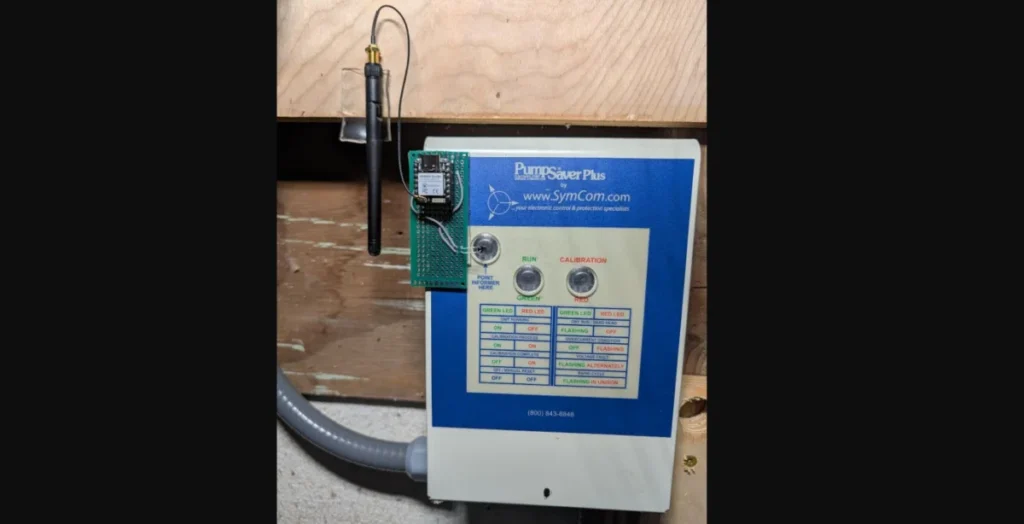
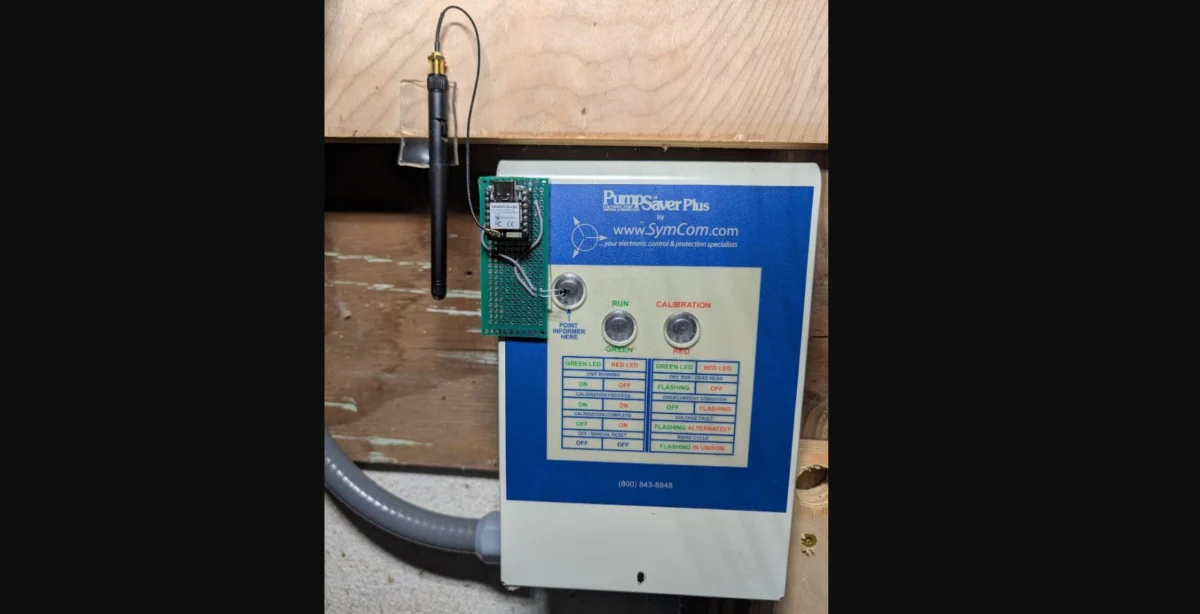
The primary motivation and immediate application of Camporeale’s work is its integration with ESPHome. ESPHome is an open-source framework that simplifies the process of creating custom firmware for ESP microcontrollers (like the ESP32 and ESP8266). It allows users to define device behavior and integrations using simple YAML configuration files, rather than complex C++ coding. This democratizes IoT development, making it accessible to a wider audience.
The setup for ESPHome integration, as described, is elegant in its simplicity:
- ESP32-C6 Module: This powerful microcontroller provides the necessary processing power to run the ESPHome firmware and handle the IR decoding. Its integrated Wi-Fi capabilities are crucial for connecting the PumpSaver to a local network and, subsequently, to a home automation system.
- Standard Phototransistor: This inexpensive component acts as the receiver for the infrared signals emitted by the PumpSaver 233P. It converts the IR light pulses into electrical signals that the ESP32-C6 can then interpret.
Through this integration, users can achieve:
- Real-time Monitoring: Continuously receive updates on critical pump parameters (e.g., current draw, voltage, pump status, error flags).
- Proactive Alerts: Configure custom notifications (via email, SMS, or home automation apps) for specific events, such as a "dry well" condition, an "overcurrent" event, or power fluctuations.
- Historical Data Logging: Store pump performance data over time, enabling trend analysis and predictive maintenance. This data can reveal gradual degradation or impending failures, allowing for scheduled maintenance rather than reactive repairs.
- Automation Triggers: Create sophisticated automation rules within platforms like Home Assistant. For example, if a "dry well" condition is detected, the system can automatically shut down the pump (if controlled remotely), send an alert, and log the event. If an "overcurrent" condition persists, a timed shutdown can prevent motor burnout.
Specific data points now accessible through this integration include:
- Motor Current (Amps): Crucial for detecting overload (jammed impeller) or underload (dry well).
- Line Voltage (Volts): Essential for monitoring power quality and detecting brownouts or surges.
- Power Factor: An indicator of motor efficiency and health.
- Pump Status (Run/Stop/Fault): Direct feedback on the pump’s operational state.
- Error Codes: Specific diagnostic messages from the PumpSaver, providing insight into the exact nature of a problem.
- Trip History: Records of past protective trips, invaluable for diagnosing intermittent issues.
Economic and Operational Advantages
The ability to access and integrate this data translates into tangible economic and operational benefits:
- Reduced Downtime: Real-time monitoring and proactive alerts allow for immediate intervention, significantly reducing the duration of pump outages.
- Preventative and Predictive Maintenance: Historical data and early warning signs enable maintenance to be scheduled before catastrophic failures occur, extending equipment lifespan and reducing emergency repair costs.
- Lower Operational Costs: Avoiding unexpected failures and optimizing pump operation through data analysis leads to more efficient energy use and reduced repair expenditures.
- Increased Equipment Lifespan: Protecting pumps from conditions like dry running or overcurrent prevents wear and tear, extending their operational life and delaying costly replacements.
- Applicability Across Sectors: These benefits are universal, impacting agriculture (optimizing irrigation schedules, preventing pump damage), municipal water management (ensuring continuous water supply, reducing infrastructure maintenance), and various industrial processes (maintaining production continuity, safeguarding valuable machinery).
Official Responses: Industry Perspectives and the Future of Interoperability
The groundbreaking nature of Camporeale’s work prompts questions about how established manufacturers and the broader industry perceive such open-source initiatives.
Littelfuse’s Stance on Legacy Protocols
Littelfuse, as the current owner of the PumpSaver product line, faces a common industry challenge: balancing support for legacy products with the demands of modern technological integration. While the original SymCom 233P was designed with a proprietary IR protocol, current Littelfuse products often feature more modern communication options (e.g., Modbus, Ethernet/IP) to facilitate integration. However, millions of legacy devices like the 233P remain in service globally.
- This publication reached out to Littelfuse for an official comment regarding Elizabeth Camporeale’s reverse engineering project and its implications for existing PumpSaver 233P units. As of the time of publication, no direct response has been received.
Generally, manufacturers tend to approach such reverse engineering efforts with caution, citing intellectual property concerns and potential liability if third-party integrations lead to device malfunction. However, there’s also an increasing recognition that open integration can extend product lifespans, enhance customer satisfaction, and even drive sales of newer, more connected models. The industry is in a transitional phase, moving from strictly proprietary systems to more open architectures, albeit often with a measured approach. Projects like Camporeale’s highlight a significant unmet need among users who require more flexible integration options for their existing hardware.
The Open-Source Community’s Embrace
In contrast to the cautious stance of some manufacturers, the open-source community has wholeheartedly embraced Camporeale’s work. Her detailed documentation and Python decoder have been met with enthusiasm, providing a blueprint for others facing similar integration challenges. The project has the potential to become a cornerstone for community-driven development around legacy industrial control devices.
- Validation and Improvement: Other developers can verify the protocol details, suggest improvements to the decoder, and adapt it for different microcontrollers or platforms.
- Extended Functionality: The base protocol decoding opens doors for developing advanced features, such as predictive analytics algorithms that leverage historical pump data to forecast potential failures with greater accuracy.
- Knowledge Sharing: The project fosters a culture of knowledge sharing, where expertise in industrial protocols and reverse engineering can be collaboratively developed and disseminated.
Industry Trends Towards Openness
The broader trend in industrial IoT (IIoT) is undeniably towards greater openness and interoperability. Initiatives like OPC UA, MQTT, and various open-source platforms are pushing for standardized communication protocols and APIs that allow devices from different manufacturers to communicate seamlessly. This shift is driven by:
- Demand for Data: Businesses recognize the immense value of operational data for optimization, efficiency, and predictive maintenance.
- Cloud Integration: The proliferation of cloud-based analytics and control platforms necessitates open pathways for data ingestion.
- Ecosystem Development: Open standards foster innovation by allowing a wider range of developers and companies to create complementary solutions.
While official support for legacy devices can be slow to materialize, community-led reverse engineering efforts like Camporeale’s serve a crucial role. They fill the gap between existing hardware capabilities and modern integration demands, proving that valuable assets don’t need to be replaced simply because their communication methods are outdated. This phenomenon highlights a growing user empowerment, where the community takes charge to extend the utility of its tools.
Implications: Paving the Way for Smarter Infrastructure
Elizabeth Camporeale’s successful reverse engineering of the PumpSaver Plus 233P’s IR protocol carries profound implications for the future of industrial automation, sustainability, and the broader open-source movement.
Empowering Users and Extending Lifespans
Perhaps the most immediate and impactful implication is the empowerment of users. No longer are operators of PumpSaver 233P units locked into a proprietary ecosystem or forced to replace perfectly functional hardware simply because its data is inaccessible. This project extends the useful life of existing industrial equipment, promoting sustainability by reducing electronic waste and maximizing the return on investment for capital assets. Users gain unprecedented control and insight into their pump operations, transforming previously "dumb" protective relays into intelligent, data-streaming devices.
A Blueprint for Future Integrations
Camporeale’s meticulous documentation and open-source approach provide a powerful blueprint for tackling similar challenges with other legacy industrial devices. Many critical pieces of infrastructure and manufacturing equipment still rely on obscure or undocumented communication protocols. Her work demonstrates that with sufficient skill, perseverance, and a commitment to open science, these digital barriers can be overcome. This could inspire a wave of similar projects, gradually chipping away at proprietary walls that currently hinder comprehensive industrial IoT deployments. It fosters a culture of investigation and open-source contribution in industrial contexts, moving beyond traditional consumer electronics.
The Broader Impact on Industrial IoT
This project significantly contributes to the vision of a truly interconnected and intelligent infrastructure. By integrating devices like the PumpSaver into open platforms like ESPHome and Home Assistant, organizations can:
- Facilitate Data-Driven Decision-Making: Aggregate data from various sources (not just pumps, but also flow meters, pressure sensors, energy monitors) into unified dashboards for holistic operational awareness.
- Reduce Reliance on Expensive, Specialized Vendor Solutions: Leverage cost-effective, open-source hardware (ESP32) and software (ESPHome) to achieve monitoring capabilities that previously required expensive, bespoke solutions from original equipment manufacturers.
- Accelerate Innovation: The open availability of data allows third-party developers and researchers to build new applications, analytics, and control strategies that might never have emerged from a closed ecosystem.
Challenges and Ethical Considerations
While the benefits are clear, it is important to briefly acknowledge the broader context of reverse engineering. The legal and ethical landscape surrounding reverse engineering, particularly when it involves commercial products, can be complex. In this specific case, Camporeale is reading public output from an IR port, not modifying firmware or bypassing security, which generally places it in a less contentious area. However, discussions around intellectual property, warranty implications, and potential liability for unintended consequences are always relevant. The importance of responsible disclosure and community collaboration, as exemplified by Camporeale’s project, helps navigate these considerations by focusing on value creation and transparency.
Conclusion: A Step Towards a More Open and Monitored World
Elizabeth Camporeale’s reverse engineering of the SymCom PumpSaver Plus 233P IR protocol is a testament to the power of open-source ingenuity. It addresses a real-world problem, unlocking valuable operational data from a critical piece of industrial equipment that was previously isolated. Her work not only provides immediate, practical solutions for enhanced pump monitoring and automation but also serves as an inspiring model for how individual contributions can drive significant progress towards a more open, interconnected, and sustainably managed world. As industries continue their digital transformation, such acts of technical liberation will become increasingly vital in building the smart infrastructure of tomorrow.