Pioneering Sustainable IoT: Narrow Studios Unveils ESP32-C6 Solar Power Management Board
FOR IMMEDIATE RELEASE
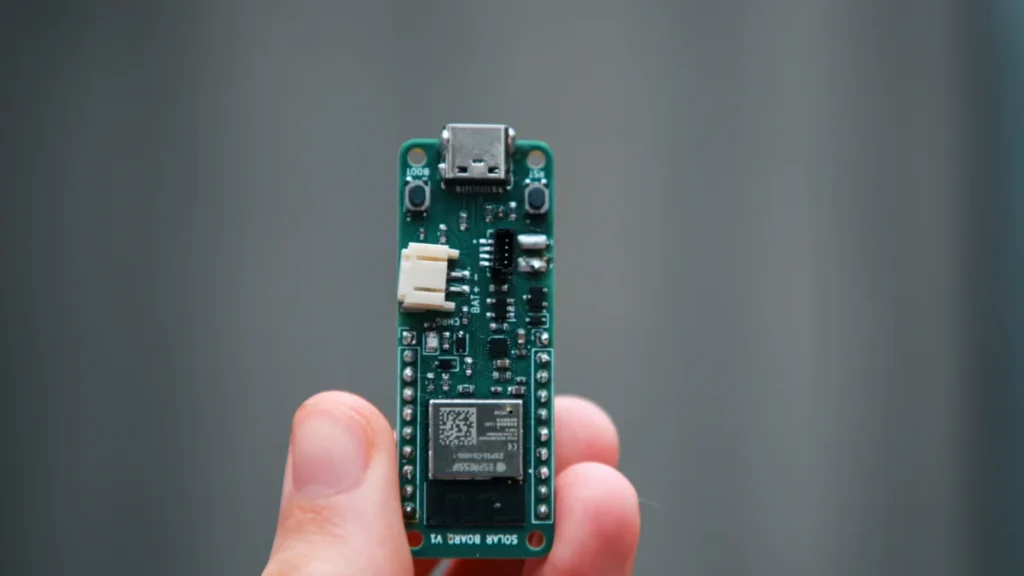
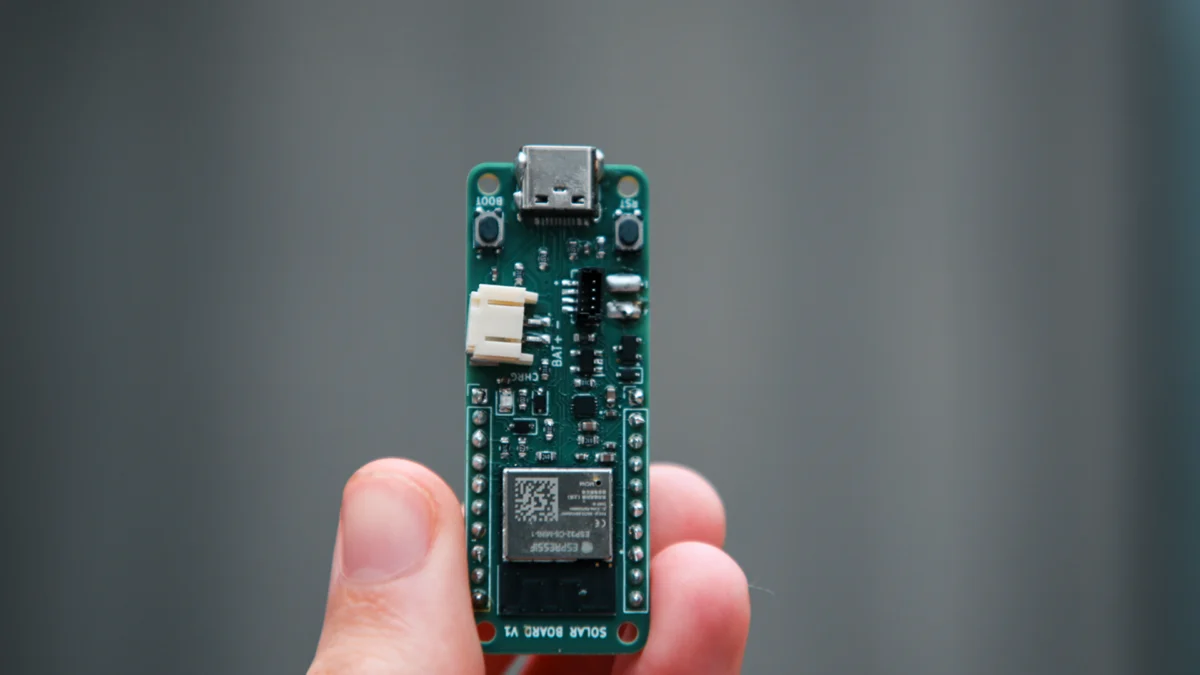
A new development board, specifically engineered for solar-powered Internet of Things (IoT) projects, has been unveiled by independent developer [Narrow Studios]. Designed around the highly versatile ESP32-C6 Mini microcontroller, this innovative board integrates advanced power management and a comprehensive suite of wireless communication protocols, addressing a critical need for efficient and robust off-grid IoT solutions. Outsourced for manufacturing to PCBWay, the board is now accessible to the global maker and developer community, promising to accelerate the development of sustainable, remotely deployed IoT applications.
The Dawn of a New Era for Off-Grid IoT Development
In an increasingly interconnected world, the proliferation of ESP32-based development boards underscores the chip’s unparalleled versatility across myriad applications. From smart home devices to industrial monitoring systems, the ESP32 series has cemented its status as a cornerstone of the modern IoT landscape. However, a specific niche has long sought a dedicated solution: robust, energy-efficient boards tailored for solar-powered deployments. It is precisely this void that [Narrow Studios] has meticulously addressed with their latest creation – a compact ESP32-C6 solar power management board.
This specialized board is not merely another entry into the crowded ESP32 market; it represents a thoughtful integration of cutting-edge hardware designed to simplify the complexities of solar energy harvesting for IoT devices. By focusing on critical aspects such as power efficiency, battery longevity, and multi-protocol communication, [Narrow Studios] has engineered a platform poised to empower a new generation of sustainable and autonomous IoT projects.
The decision to outsource manufacturing to industry leader PCBWay ensures not only high-quality production but also broad accessibility for enthusiasts and professionals alike. This collaborative model, common within the open-source hardware community, allows individual innovators to bring sophisticated designs to a global audience without the overheads of in-house manufacturing. Developers keen to integrate this solution into their projects can acquire the board directly through PCBWay’s project sharing platform.
Main Facts: A Holistic Solution for Solar-Powered IoT
At its core, the [Narrow Studios] solar power management board is an integrated solution engineered from the ground up to support long-term, autonomous IoT deployments. Its primary objective is to streamline the process of developing devices that operate independently of grid power, relying instead on ambient solar energy.
Key features and components include:
-
ESP32-C6 Mini Microcontroller: This is the brain of the operation, chosen for its advanced capabilities. The ESP32-C6 is a relatively newer entrant to Espressif’s popular series, distinguished by its support for a wide array of IoT communication protocols. Crucially, it integrates Wi-Fi 6 (802.11ax), Bluetooth 5.0 LE (Low Energy), and, significantly, the emerging standards of Matter, Thread, and Zigbee. This multi-protocol capability positions the board as a future-proof solution for diverse IoT ecosystems, from industrial sensor networks to smart agriculture applications. Its inherent power efficiency is paramount for solar-powered systems, ensuring that precious energy is conserved.
-
BQ25186 Linear Battery Charging IC from Texas Instruments: This dedicated power management integrated circuit is the heart of the board’s solar functionality. The BQ25186 is a high-performance linear charger specifically designed for compact, low-power applications. It efficiently manages the charging of a connected lithium-ion or lithium-polymer battery from the solar input, ensuring optimal power delivery and battery health. A critical feature of this IC, and one highlighted by [Narrow Studios], is its robust protection against reverse voltage. This safeguard is invaluable in field deployments, preventing damage to the board and connected components from incorrect wiring—a common oversight that can lead to irreparable harm to sensitive electronics.
-
Expanded Connectivity and I/O: The board breaks out ten general-purpose input/output (GPIO) pins, offering ample flexibility for connecting various sensors, actuators, and peripherals. For even greater ease of expansion, an I2C bus is provided via a QWIIC connector. The QWIIC ecosystem, known for its plug-and-play simplicity, allows developers to integrate a vast array of compatible sensors and modules without the need for soldering or complex wiring, significantly accelerating prototyping and deployment cycles.
The comprehensive integration of these components on a compact footprint underscores [Narrow Studios]’ commitment to delivering a developer-friendly, yet powerful, platform. It eliminates the need for developers to design custom power management circuitry, source individual components, and troubleshoot complex power interactions, allowing them to focus instead on their application-specific code and sensor integration.
Chronology: From Concept to Community Contribution
The genesis of the [Narrow Studios] solar power management board is rooted in a common challenge faced by many hardware developers: the absence of an off-the-shelf solution that perfectly aligns with a specific project requirement. In the vast ocean of ESP32 development boards, [Narrow Studios] identified a critical gap—a truly integrated and optimized board for solar-powered IoT projects.
The development journey can be outlined as follows:
-
Inception (Early 2024): The initial spark for the project arose from [Narrow Studios]’ own endeavors in solar-powered IoT. Like many innovators, the developer encountered limitations with existing boards, often requiring complex external circuitry for power management and battery charging. This firsthand experience crystallized the need for a more unified and purpose-built solution. The core idea was to combine an advanced ESP32 variant with robust solar charging capabilities on a single, compact PCB.
-
Design and Component Selection (Spring 2024): The design phase involved meticulous research and selection of key components. The ESP32-C6 Mini was chosen for its compelling feature set, particularly its support for Wi-Fi 6 and the Thread/Matter/Zigbee protocols, which are becoming increasingly vital for interoperable IoT systems. This foresight ensures the board remains relevant as IoT standards evolve. For power management, the Texas Instruments BQ25186 was identified as an ideal candidate due to its efficiency, integrated protection features, and suitability for low-power applications. The inclusion of the QWIIC connector for I2C was a deliberate choice to enhance user experience, reflecting a trend towards simplified sensor integration in the maker community. Design considerations also focused on board layout, trace routing for optimal power delivery, and ensuring a compact form factor suitable for diverse enclosures.
-
Prototyping and Iteration (Mid-2024): Like any complex hardware project, initial designs likely underwent several rounds of prototyping and testing. This iterative process is crucial for identifying and rectifying potential issues related to power stability, charging efficiency, communication reliability, and overall system performance. The embedded video from [Narrow Studios] likely provides insights into these design choices and the testing process, offering a valuable peek into the developer’s methodology.
-
Manufacturing Partnership (Summer 2024): Recognizing the benefits of specialized manufacturing, [Narrow Studios] partnered with PCBWay. This strategic decision allowed the developer to leverage PCBWay’s expertise in high-quality PCB fabrication and assembly, ensuring that the final product met professional standards. Outsourcing manufacturing is a common and effective strategy for independent developers and small teams, enabling them to focus on design and innovation rather than production logistics. PCBWay’s "share project" platform further facilitates community engagement, allowing others to easily order the board.
-
Public Release and Community Engagement (Late 2024): The board’s design, along with a detailed project page and a demonstrative video, was released to the public, primarily through platforms like Hackaday.io. This public sharing aligns with the open-source ethos prevalent in the hardware hacking community, fostering collaboration and enabling other developers to build upon [Narrow Studios]’ work. The release marks a significant milestone, transforming a personal project into a valuable resource for the wider IoT development community.
This chronological progression highlights the thoughtful, problem-solving approach undertaken by [Narrow Studios], culminating in a product that addresses a genuine need within the rapidly expanding field of sustainable IoT.
Supporting Data: Deep Dive into Technical Advantages and Market Relevance
The significance of [Narrow Studios]’ solar power management board extends beyond its immediate utility, touching upon key technological advancements and broader market trends within the IoT ecosystem.
Technical Superiority and Component Rationale:
-
The ESP32-C6 Mini: A Future-Proof Foundation: The selection of the ESP32-C6 Mini is a strategic move. Unlike earlier ESP32 variants, the C6 series incorporates a RISC-V processor, signifying a shift towards more open and efficient CPU architectures. More importantly for IoT, it supports Wi-Fi 6 (802.11ax), which offers improved power efficiency, lower latency, and better performance in dense network environments compared to previous Wi-Fi standards. This is particularly advantageous for remote IoT deployments where sporadic data bursts are common, and energy conservation is paramount.
- Multi-Protocol Prowess: The C6’s native support for Bluetooth 5.0 LE, Matter, Thread, and Zigbee is a game-changer.
- Bluetooth LE is critical for local device configuration, short-range communication, and integration with mobile applications.
- Zigbee and Thread are mesh networking protocols specifically designed for low-power IoT devices, enabling robust and self-healing networks over larger areas. Thread, in particular, is an IP-based mesh network protocol, making it highly scalable and interoperable.
- Matter, an open-source connectivity standard, aims to unify smart home ecosystems, enabling seamless communication between devices from different manufacturers. By supporting these protocols, the [Narrow Studios] board is not just ready for current IoT applications but is also poised for future interoperability demands, ensuring longevity and adaptability for deployed devices.
- Multi-Protocol Prowess: The C6’s native support for Bluetooth 5.0 LE, Matter, Thread, and Zigbee is a game-changer.
-
BQ25186: The Guardian of Power: The Texas Instruments BQ25186 linear battery charging IC is not merely a charger; it’s a sophisticated power management unit. In solar applications, efficient power conversion and battery health are critical.
- Linear Charging: While switch-mode chargers are often more efficient at higher currents, linear chargers like the BQ25186 are well-suited for low-power applications where simplicity, low noise, and compact size are prioritized. They provide a stable and clean charging current, which is beneficial for sensitive microcontrollers.
- Reverse Voltage Protection: This feature is invaluable. In a solar setup, incorrect polarity when connecting the solar panel or battery can instantly destroy unprotected electronics. The BQ25186’s integrated protection circuit acts as a safeguard, preventing damaging current flow if wires are accidentally reversed. This significantly reduces the risk of costly errors during installation, especially in remote or challenging environments where field repairs are difficult.
- Battery Management: Beyond charging, the IC often includes features like charge termination, under-voltage lockout, and over-current protection, all contributing to the longevity and safety of the connected battery—a crucial factor for maintenance-free remote deployments.
-
QWIIC Connector: Accelerating Prototyping: The inclusion of a QWIIC connector for I2C communication underscores a commitment to developer-friendliness. QWIIC, developed by SparkFun, standardizes the I2C connection, allowing developers to plug and play various sensors, displays, and other modules without worrying about wiring or pull-up resistors. This significantly reduces the time and effort required for prototyping and iterating on sensor-based applications, making the board highly attractive for rapid development cycles.
Market Need and Industry Trends:
The development of this board aligns perfectly with several burgeoning market needs and industry trends:
- Growth of Remote Monitoring and Off-Grid IoT: Industries such as agriculture, environmental science, infrastructure monitoring (e.g., bridges, pipelines), and remote security increasingly rely on IoT devices deployed in locations without easy access to grid power. Solar power offers the most viable and sustainable solution for these applications. The market for solar-powered IoT is projected to grow significantly as the demand for real-time data from remote locations intensifies.
- Emphasis on Energy Efficiency and Sustainability: As the global focus on sustainability intensifies, solutions that reduce energy consumption and reliance on disposable batteries are highly valued. Solar-powered devices contribute to a greener IoT ecosystem, reducing the environmental footprint of connected technologies.
- Open-Source Hardware and Community-Driven Innovation: The open-source nature of the design, coupled with its availability through PCBWay, exemplifies the power of community-driven hardware development. This model fosters innovation, allows for rapid iteration, and provides accessible tools for a broad range of developers, from hobbyists to small businesses.
- Interoperability and Standardisation: The ESP32-C6’s support for Matter, Thread, and Zigbee is not just a technical detail; it reflects a broader industry push towards greater interoperability in IoT. As more devices become connected, the ability for them to communicate seamlessly, regardless of manufacturer, becomes paramount. This board positions developers to build devices that are compatible with future smart environments.
Comparative Advantage and Existing Solutions:
While numerous solar-powered projects featuring the ESP32 exist (as referenced in the original article, such as a reflective LCD slabtop terminal, a solar-powered smartwatch, or even ESP32-based MPPT controllers), [Narrow Studios]’ board offers a distinct advantage: integration and simplification.
- Generic ESP32 boards require external power management modules, often involving separate battery chargers, buck/boost converters, and protection circuits. This adds complexity, increases footprint, and introduces potential points of failure.
- Custom-built solar solutions, while effective, demand significant engineering effort in power electronics design, which can be a barrier for many software-focused IoT developers.
- [Narrow Studios]’ board consolidates these essential components onto a single, compact, and professionally manufactured PCB. This "all-in-one" approach significantly lowers the barrier to entry for developing robust solar-powered IoT devices, allowing developers to focus on their application rather than reinventing the power management wheel. It essentially provides a refined, ready-to-use foundation for such projects, making it an invaluable tool for anyone looking to build their next off-grid IoT solution.
Official Responses: The Developer’s Vision and Community Engagement
While specific "official responses" in the traditional corporate sense are not applicable to an individual developer’s project, the insights shared by [Narrow Studios] himself, coupled with the inherent reception from the maker community, serve as the primary indicators of the project’s impact and philosophy.
[Narrow Studios]’ Perspective and Design Philosophy:
The embedded video and the project page serve as the primary channels through which [Narrow Studios] articulates his vision and the rationale behind his design choices. From these sources, we can infer several key aspects of his approach:
- Problem-Solving Motivation: The core driver for the project was a personal need. [Narrow Studios] likely encountered the frustrations of cobbling together various modules for his own solar-powered IoT projects. This personal pain point became the catalyst for creating a more elegant and integrated solution. His motivation was not merely to create "another ESP32 board" but one that specifically solves a persistent problem for a particular type of application.
- Emphasis on Robustness and User-Friendliness: The deliberate inclusion of features like reverse voltage protection is a strong indicator of his practical, user-centric design philosophy. He anticipates common user errors and builds in safeguards, suggesting an understanding of the diverse skill levels within the maker community. Similarly, the QWIIC connector highlights a commitment to reducing complexity and making the board accessible for rapid prototyping.
- Transparency and Knowledge Sharing: By releasing the design files (or making them available for manufacturing via PCBWay) and producing a detailed video discussing his choices, [Narrow Studios] embodies the spirit of open-source collaboration. This act of sharing is invaluable to the community, allowing others to learn from his expertise, adapt the design for their specific needs, or simply utilize the board as a foundation for their own innovations. The video, in particular, likely provides a candid discussion of the trade-offs and decisions made during the design process, offering valuable educational content.
- Community Contribution: Ultimately, the project is a significant contribution to the open-source hardware ecosystem. By sharing his meticulously designed board, [Narrow Studios] empowers countless other developers to build more easily and efficiently, fostering a ripple effect of innovation. His actions reinforce the collaborative and supportive nature of the hacker and maker communities, where knowledge and tools are freely exchanged for collective advancement.
Anticipated Community Reception:
While direct quotes from the community are not provided in the original article, the nature of such a project strongly suggests a positive and enthusiastic reception within the relevant developer communities (e.g., Hackaday, Reddit r/esp32, IoT forums).
- Appreciation for Specialization: Developers constantly seek specialized tools that simplify their work. A board explicitly designed for solar-powered IoT, with integrated power management and multi-protocol support, will likely be met with significant appreciation. It removes significant technical hurdles for those working on off-grid projects.
- Ease of Use: The QWIIC connector and well-documented features will appeal to both beginners and experienced developers looking for quick prototyping solutions. The reduction in wiring complexity is always a welcome feature.
- Cost-Effectiveness and Accessibility: By making the board available through PCBWay, [Narrow Studios] ensures that it is not only professionally manufactured but also relatively affordable and accessible globally. This democratic approach to hardware distribution is highly valued by the community.
- Inspiration for Further Projects: The project itself, and the developer’s willingness to share his process, will undoubtedly inspire others to embark on their own solar-powered IoT ventures, or even to improve upon the existing design. It demonstrates what is possible with careful design and component selection.
In essence, [Narrow Studios]’ project is a testament to individual ingenuity addressing a collective need, with his "official response" being the very act of creating and sharing this valuable tool with the global development community.
Implications: Reshaping the Landscape of Sustainable IoT
The introduction of [Narrow Studios]’ ESP32-C6 solar power management board carries significant implications for the future of Internet of Things development, particularly in the realm of sustainable and autonomously powered devices. Its impact is poised to extend across various sectors, streamlining development processes and enabling novel applications.
Streamlining IoT Development:
Perhaps the most immediate implication is the simplification of development for solar-powered IoT projects. Historically, building a robust, solar-powered device required expertise in both microcontroller programming and power electronics. Developers often had to:
- Select a microcontroller (e.g., ESP32).
- Design or integrate a separate solar charge controller for battery management.
- Implement voltage regulation for the microcontroller.
- Ensure proper battery protection (overcharge, over-discharge, reverse polarity).
- Manage quiescent current and deep sleep modes for optimal energy efficiency.
- Deal with complex wiring and multiple external modules.
[Narrow Studios]’ board dramatically reduces this complexity by integrating the most critical power management components directly onto the PCB. This means developers can now focus almost entirely on their application logic, sensor integration via the QWIIC connector, and enclosure design, rather than spending precious time and resources on fundamental power infrastructure. This lowers the barrier to entry for individuals and small teams, democratizing access to sophisticated off-grid IoT development. It accelerates prototyping cycles, reduces overall project costs, and minimizes potential points of failure associated with complex, multi-module setups.
Expanding the Scope of IoT Applications:
The availability of such an integrated and efficient board will undoubtedly unlock a new wave of practical and innovative applications, especially in areas where traditional power sources are scarce or impractical:
- Environmental Monitoring: Deploying autonomous weather stations, air quality sensors, water level monitors, and soil moisture sensors in remote agricultural fields, wilderness areas, or urban green spaces without the need for trenching power lines or frequent battery replacements.
- Smart Agriculture: Facilitating precision agriculture by enabling localized, solar-powered sensors for monitoring crop health, irrigation needs, pest detection, and livestock tracking, leading to increased yields and reduced resource consumption.
- Infrastructure Monitoring: Powering sensors for structural health monitoring of bridges, pipelines, remote industrial equipment, and utility grids, providing early warnings for maintenance and preventing costly failures.
- Wildlife Tracking and Conservation: Enabling long-term tracking devices for animal migration studies or monitoring protected species in remote habitats, powered entirely by solar energy.
- Off-Grid Security and Surveillance: Deploying low-power security cameras, motion sensors, or gate access systems in remote properties, construction sites, or temporary installations.
- DIY Smart Home/Community Projects: Empowering communities to deploy localized environmental sensors or small-scale smart city initiatives in areas where grid power is not readily available or desired, fostering grassroots innovation.
- Educational and Research Platforms: Providing an accessible and robust platform for students and researchers to experiment with low-power, self-sustaining IoT systems.
Future of ESP32 and Sustainable IoT:
This development reinforces the ESP32 platform’s continued dominance and evolution within the IoT space. The ESP32-C6, with its advanced Wi-Fi 6 and multi-protocol capabilities (Matter, Thread, Zigbee), represents Espressif’s commitment to future-proofing IoT connectivity. [Narrow Studios]’ board effectively harnesses these advancements for sustainable applications.
Moreover, the project contributes significantly to the broader movement towards sustainable IoT. By facilitating the development of solar-powered devices, it promotes:
- Reduced Carbon Footprint: Minimizing reliance on fossil fuel-generated electricity for charging or disposable batteries.
- Increased Device Longevity: Properly managed solar power and battery protection extend the operational lifespan of deployed devices, reducing electronic waste.
- Energy Independence: Empowering users and systems to operate autonomously, free from grid constraints, which is crucial for resilience and reliability in a changing world.
Innovation in the Maker Community:
Finally, the project serves as a powerful testament to the innovation stemming from the independent developer and maker communities. By openly sharing a sophisticated design and making it readily available, [Narrow Studios] exemplifies the collaborative spirit that drives progress in open-source hardware. This model encourages others to build upon existing work, fostering a vibrant ecosystem of shared knowledge and tools. It validates the idea that significant contributions to technology can originate outside large corporations, demonstrating the profound impact of individual ingenuity and community engagement.
In conclusion, [Narrow Studios]’ ESP32-C6 solar power management board is more than just a piece of hardware; it is a catalyst for innovation, a step towards a more sustainable IoT future, and a testament to the power of community-driven development. It is poised to empower a new generation of creators to build robust, autonomous, and environmentally conscious IoT solutions that can truly operate anywhere the sun shines.