In an era where the “Internet of Things” (IoT) has turned our living rooms into hubs of constant connectivity, the line between a consumer appliance and a clandestine network node has become dangerously blurred. This week, LG Electronics USA made a significant announcement that highlights a growing, often hidden, privacy crisis: the company plans to purge its webOS app store of applications that transform smart televisions into always-on residential proxy nodes.
This move comes as a direct response to a bombshell report by security research firm Spur, which revealed that more than 42 percent of apps available on LG’s smart TV platform were secretly funneling internet traffic through users’ home networks. This development raises profound questions about user consent, cybersecurity, and the ethics of monetization in the modern smart home.
The Anatomy of a Residential Proxy
To understand the gravity of the situation, one must first understand what a residential proxy is. Unlike data-center proxies, which route traffic through servers owned by companies like Amazon or Google, residential proxies route traffic through the actual IP addresses assigned to homes by Internet Service Providers (ISPs).
For businesses, these proxies are a goldmine for web scraping, ad verification, and market research, as they allow users to appear as if they are browsing from a legitimate, non-commercial household. However, for the consumer, the reality is far more invasive. When a smart TV app installs a Software Development Kit (SDK) to facilitate this, the device becomes a conduit for third-party traffic. The television, once an entertainment peripheral, is effectively hijacked to mask the identity of potentially malicious actors, researchers, or anonymous internet users, all while operating in the background of the user’s home network.
Chronology of the Discovery and Response
The alarm was first sounded on July 2, 2026, when security analysts at Spur published a comprehensive breakdown of proxy SDK prevalence in smart TV ecosystems.
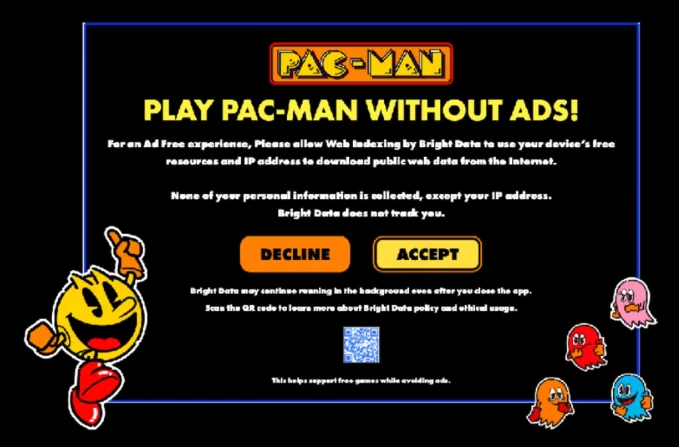
Early July 2026: Spur’s investigation revealed that over 42 percent of apps on LG’s webOS and more than 25 percent of apps on Samsung’s Tizen OS contained embedded proxy SDKs. The report identified that even mundane applications—ranging from simple games like Pac-Man to screensavers and file utilities—were bundling these hidden features.
The Reaction: Following the publication of this data, security investigators and industry observers began pressuring manufacturers for accountability. The prevalence of these SDKs suggests that either manufacturers were willfully blind to the behavior of third-party developers or that their vetting processes were fundamentally broken.
The Pivot: By the second week of July, LG Electronics USA broke its silence. John Taylor, Senior Vice President of LG Electronics USA, confirmed that the company had initiated a review of all webOS applications. The mandate is clear: developers must remove the residential proxy functionality, or face total removal from the platform.
Supporting Data: The Scale of the Intrusion
The data provided by Spur serves as a wake-up call for consumers who assumed their smart home devices were isolated endpoints. The report highlighted that the issue is not limited to a few rogue developers but is systemic.
The Role of Monetization
The primary driver behind this behavior is monetary. Residential proxy providers, such as the industry giant Bright Data—which was identified by Spur as the source of a majority of the proxy SDKs found on these TVs—pay app developers to include their code. In many instances, the developer frames this as an “alternative to ads.” For example, a game might offer the user a choice: watch a 30-second commercial or agree to let the TV serve as a proxy node.
The danger, as experts point out, is that the average consumer does not possess the technical literacy to understand the trade-off. A "consent" button clicked in a rush to play a game of Pac-Man is hardly informed consent when it grants a third-party company permanent, long-term access to the user’s network traffic.
The Ecosystem Gap
The study also revealed a disparity between platforms. While LG and Samsung are currently in the spotlight due to their market share, the broader IoT ecosystem remains largely unregulated. Because smart TVs are often viewed as "appliances" rather than computers, they are rarely subjected to the same rigorous security audits as laptops or smartphones. This has allowed developers to push updates that turn previously safe apps into sophisticated proxy tools without the user ever realizing a change has occurred.
Official Responses: LG’s Stance and the Industry Silo
In an official statement to KrebsOnSecurity, LG’s John Taylor provided clarity on the company’s path forward:
"A residential proxy network is not an intended use for LG smart TVs, and LG Electronics is working with developers to remove the residential proxy option from their apps on the webOS platform. If this option is not removed, these apps will be suspended."
Taylor emphasized that LG is currently engaged in a deep-dive review of its app store. The goal is to move from a reactive posture to a proactive one, where the evaluation process for developer-submitted apps is strengthened to prevent proxy SDKs from gaining entry in the first place.
Conversely, the companies providing these proxy services have been less transparent. Bright Data, when approached for comment, did not respond. Industry-wide, proxy providers often claim that they operate "Know Your Customer" (KYC) protocols to ensure their services aren’t used for illicit activities. They argue that these networks are vital for legitimate business functions, such as testing how a website looks to a user in a specific geographic region. However, critics argue that these safeguards are often circumvented and that the risk to the average household—where devices are not firewalled against each other—is simply too high.
Implications: The Erosion of Network Trust
The ramifications of this discovery extend far beyond the television screen.
The "Trusted" Network Fallacy
Most consumers operate under the assumption that their home network is a "trusted" environment. Devices like printers, home security cameras, and smart locks often lack robust, individual security measures, relying instead on the perimeter protection of the home router. When a smart TV becomes a proxy node, it acts as a "Trojan Horse" inside the gate.
If an attacker routes their traffic through your TV, they are technically originating their requests from your IP address. If that traffic involves illegal content, fraud, or harassment, the legal trail points directly to the homeowner.
The Burden of Oversight
Trevor Sutter of Spur articulates a critical point regarding the illusion of choice: "A one-time consent prompt buried in a TV app is not a substitute for meaningful transparency, ongoing control, and platform oversight."
The psychological manipulation of the user—using minors or non-technical household members to gain "consent"—undermines the entire concept of a secure digital home. As we look toward the future, the burden of oversight cannot fall on the consumer. Manufacturers like LG and Samsung, who collect data and profit from app ecosystems, have a moral and fiduciary duty to ensure that their platforms do not become conduits for malicious traffic.
A Pattern of Questionable Partnerships
LG’s recent commitment to purging its store comes at a time when the brand’s reputation for privacy is already under scrutiny. The recent controversy surrounding LG’s LCD monitors, which were found to be silently installing McAfee security software through Windows Update without user prompt, has left consumers skeptical.
These two events—the proxy SDK issue and the forced installation of third-party software—paint a picture of a company struggling to balance its revenue streams with the basic expectations of consumer privacy. For the smart TV owner, the message is clear: the era of "set it and forget it" is over. Users must now treat their appliances with the same suspicion they would a budget PC.
Conclusion: Reclaiming the Living Room
As LG begins the arduous process of scrubbing its webOS platform, the industry is left with a stark reality: the monetization of user bandwidth is a lucrative, yet inherently predatory, business model. While LG’s promise to banish proxy SDKs is a welcome victory for privacy advocates, it is likely only the beginning of a broader battle.
Consumers should remain vigilant. Check your router logs if possible, monitor which devices are consuming large amounts of background data, and hold manufacturers accountable. A smart TV should be a gateway to entertainment—not a doorway for strangers to walk through your digital life. As the digital landscape continues to evolve, the devices we once trusted are being forced to prove their worth, not just as entertainment providers, but as secure, respectful members of our homes.