From Simple Pulse to Sophisticated Play: The ESP32-Powered 3D Printed LED Roulette Wheel That Defied Simplicity
Headline: Ingenuity on the Wheel: How a DIY LED Roulette Project Transcended Its Humble Origins with ESP32 and Web Connectivity
Main Facts
In the vibrant world of do-it-yourself electronics, where innovation often springs from a blend of ingenuity and pragmatic problem-solving, a particular project has captured the attention of the maker community for its ambitious evolution. Conceived by a creator known simply as "[Hulk]," this DIY 3D Printed LED Roulette Wheel stands as a testament to how even the simplest ideas can burgeon into sophisticated, connected systems, defying initial design constraints. What began with the humble thought of utilizing a classic 555 timer chip – an emblem of basic electronics – rapidly escalated into a comprehensive, Wi-Fi-enabled gaming system powered by an ESP32 microcontroller, complete with a web-based interface for multi-player interaction and scorekeeping.
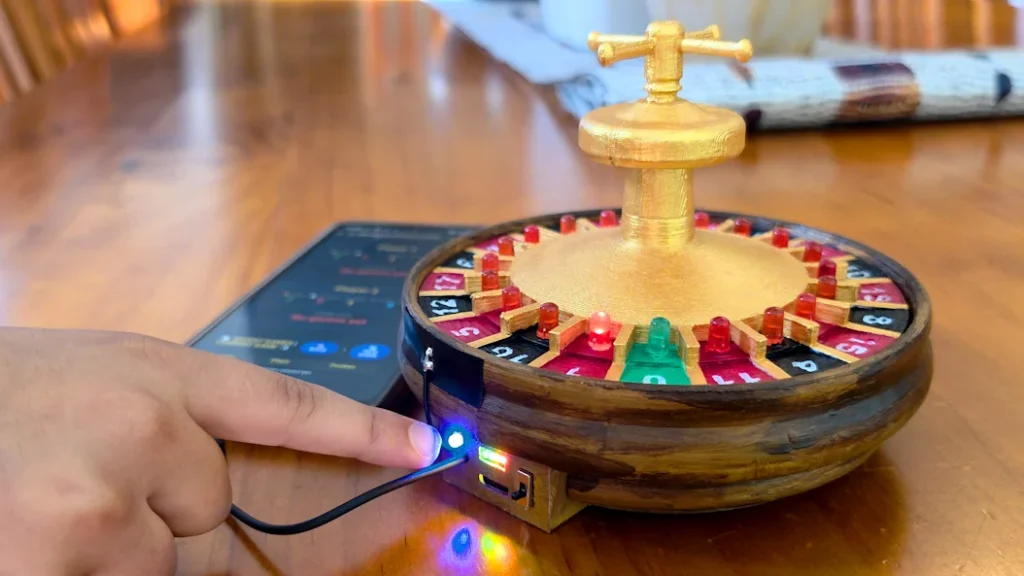
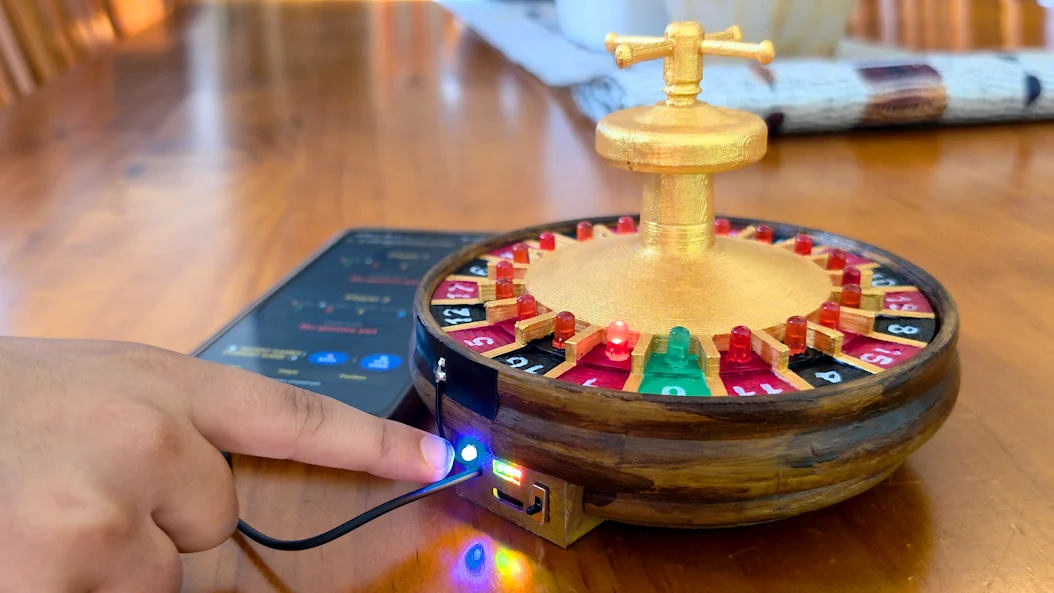
At its core, [Hulk]’s creation is a visually engaging roulette wheel, featuring a circular array of LEDs that simulate the iconic spinning ball. The physical structure of the wheel and its enclosure are meticulously crafted using 3D printing technology, providing both a functional housing for the electronics and an aesthetically pleasing finish. However, the true marvel lies beneath the surface. While the initial impulse, as [Hulk] himself muses, was to employ a straightforward 555 timer for the LED chase effect, the allure of expanded functionality proved irresistible. This "feature creep," a familiar phenomenon in many engineering endeavors, led to the adoption of an ESP32-C3 microcontroller. This powerful yet compact chip not only orchestrates the dynamic LED sequence but also tracks the virtual "ball’s" landing position, reporting results wirelessly.
The project further distinguishes itself by integrating a robust web backend. Instead of relying solely on the ESP32 to host the game’s interface – an increasingly common but often resource-intensive approach for complex UIs – [Hulk] opted for a more established architecture. The ESP32 transmits game data (the winning number) to an external server, where an SQL database logs the outcomes. A PHP-driven web frontend then presents a full-fledged gaming experience, allowing two players to place bets, view real-time results, and monitor their cumulative wins and losses. This strategic division of labor highlights a sophisticated understanding of system architecture, prioritizing reliability and a rich user experience over absolute minimalism. The result is not merely a blinking light show, but a fully playable, connected gambling simulation, demonstrating the expansive possibilities when traditional electronics merge with modern embedded systems and web development practices.
Chronology: From Concept to Connected Gaming
The journey of [Hulk]’s LED roulette wheel is a compelling narrative of iterative design, showcasing how a project can grow organically from a basic concept to a complex, feature-rich application. This evolution began with a straightforward idea and navigated through the tempting currents of added functionality, ultimately yielding a far more intricate and engaging device than initially envisioned.
The Genesis: A Simple 555 Idea
Every great project often starts with a simple spark, and for [Hulk]’s roulette wheel, that spark was the venerable 555 timer. Widely regarded as one of the most versatile and ubiquitous integrated circuits ever created, the 555 is a staple in hobbyist electronics for its ability to generate precise timing pulses and oscillations. The initial thought process likely revolved around leveraging the 555’s astable multivibrator mode to create a repetitive clock signal. This signal, when fed into a series of decade counters, could sequentially illuminate LEDs arranged in a circle, thereby mimicking the spinning ball of a roulette wheel.
The appeal of the 555 for this basic function is undeniable. It’s inexpensive, readily available, easy to understand, and requires minimal external components to operate. For a purely aesthetic, non-interactive LED chase, a 555-based circuit would have been perfectly adequate. It embodies the essence of "keep it simple, stupid" (KISS) engineering principles. However, the very simplicity that makes the 555 attractive also defines its limitations. While excellent for fixed-frequency timing, it offers no inherent capability for complex logic, decision-making, data processing, or, crucially for this project, communication and interaction beyond its direct outputs. This fundamental constraint laid the groundwork for the project’s eventual pivot.
The Inevitable Feature Creep: Enter the ESP32
As with many creative endeavors, the initial vision often expands as possibilities become clearer. For [Hulk], the rudimentary LED chase, while satisfying, quickly gave way to a desire for more. What if the wheel could know where the "ball" landed? What if it could keep score? What if players could interact with it digitally? These questions invariably pushed the project beyond the capabilities of a standalone 555 timer. This "feature creep"—the gradual expansion of a project’s scope—became the catalyst for a significant technological upgrade.
The solution presented itself in the form of the ESP32. This powerful, low-cost system-on-a-chip (SoC) from Espressif Systems is a darling of the Internet of Things (IoT) community, renowned for its integrated Wi-Fi and Bluetooth capabilities, robust processing power (typically a dual-core or single-core processor), and a generous array of GPIOs (General Purpose Input/Output pins). The ESP32 offered a complete toolkit for addressing the desired expanded functionalities. It could generate the necessary clock pulses with far greater precision and flexibility than a 555, allowing for variable speeds and complex patterns. More importantly, its processing power meant it could interpret the position of the "ball" (the illuminated LED), keep track of the winning number, and manage communication protocols. The ESP32 effectively became the central brain, transforming a simple blinking circuit into an intelligent, connected device. The original roulette wheel circuit, comprising the LED array and decade counters, was cleverly retained, but the ESP32 seamlessly stepped into the role of providing the essential clock pulses, demonstrating a thoughtful integration of old and new technologies.
The Physical Manifestation: 3D Printing’s Role
Parallel to the electronic evolution, the physical embodiment of the roulette wheel underwent its own development. [Hulk] leveraged the transformative power of 3D printing to create a custom enclosure. This modern manufacturing technique offers unparalleled advantages for hobbyists and professional prototypers alike, including rapid iteration, design freedom, and the ability to produce complex, custom-fit parts without expensive tooling.
The "handsome printed enclosure" is more than just a shell; it’s an integral part of the project’s success. It houses the delicate electronics, protects them from external elements, and provides the ergonomic and aesthetic qualities necessary for a playable game. 3D printing allowed [Hulk] to precisely design compartments for the ESP32, the decade counters, the power supply, and the LED ring, ensuring a clean and professional finish. Beyond mere functionality, the ability to custom-design the casing means that the final product looks polished and purposeful, elevating it from a mere circuit board experiment to a legitimate gaming apparatus. This choice underscores a commitment to both internal sophistication and external presentation, critical for a user-facing project.
Elevating the Game: Digital Scoring and Connectivity
Perhaps the most significant leap in the project’s chronology was the decision to move beyond a purely physical game to an interactive, digitally managed experience. [Hulk]’s humorous lament about manually tracking scores "like some kind of dark age peasant" perfectly encapsulates the driving force behind this advancement. In the 21st century, with ubiquitous computing power, the expectation is that machines should handle such tedious tasks.
The ESP32, with its computational prowess, was perfectly positioned to meet this demand. By precisely controlling the LED sequence and knowing its timing, the ESP32 could accurately determine which "number" the virtual ball landed on. This raw data—the winning number—was then transformed into actionable information. The ESP32’s integrated Wi-Fi module became the conduit for this information, allowing the device to report the outcome wirelessly. This capability opened up a world of possibilities: logging game data, tracking player statistics, and, most importantly, enabling a multi-user, interactive experience via a web interface. The transition from a simple light-up toy to a data-generating, network-connected gaming system marked the project’s true coming-of-age, embodying the principles of the Internet of Things in a playful, engaging context.
Supporting Data: The Technical Architecture
The success of [Hulk]’s DIY LED Roulette Wheel lies not just in its concept but in its meticulously designed technical architecture, a sophisticated blend of hardware and software components working in concert. This section delves into the specific technologies that underpin the project, demonstrating how each piece contributes to the overall functionality and user experience.
The ESP32-C3 Microcontroller: A Deep Dive
At the heart of the roulette wheel’s intelligence is the ESP32-C3 microcontroller. While the original article generally refers to "ESP32," the project link specifies the ESP32-C3, a notable variant within the ESP32 family. The ESP32-C3 is a single-core RISC-V processor-based Wi-Fi and Bluetooth LE microcontroller, distinguishing it from earlier dual-core Xtensa LX6/LX7 ESP32 chips. This choice offers several advantages for a project of this nature:
- RISC-V Architecture: The adoption of the open-source RISC-V instruction set architecture offers flexibility and a growing ecosystem.
- Integrated Connectivity: Its built-in 2.4 GHz Wi-Fi (802.11b/g/n) and Bluetooth 5 (LE) capabilities are paramount for the project’s wireless communication needs. This allows the roulette wheel to connect to a local network and transmit data to a server, or even potentially interact with a mobile app.
- Ample GPIOs: The ESP32-C3 provides a sufficient number of General Purpose Input/Output pins, crucial for controlling the clock pulses to the decade counters, potentially reading sensor inputs (if any were added for ball detection, though timing-based detection is more likely here), and interacting with other peripheral components.
- Low Power Consumption: While not explicitly detailed in the original article, ESP32 chips are designed for power efficiency, making them suitable for projects that might eventually run on battery power or require sustained operation.
- Development Ecosystem: Supported by Espressif’s ESP-IDF (IoT Development Framework) and compatible with the Arduino IDE, the ESP32-C3 offers a robust and accessible development environment for programming complex logic, network stacks, and peripheral control.
In this project, the ESP32-C3 acts as the central processing unit, generating precise clock signals to drive the LED chase, determining the "winning" number based on its internal timing and control, and managing the Wi-Fi communication to report results.
The Classic Decade Counter Circuitry
Despite the modern microcontroller at its core, [Hulk] wisely retained a piece of classic digital logic: the decade counter. Specifically, chips like the 74HC4017 (a CMOS decade counter/divider with 10 decoded outputs) are often used for such sequential light effects.
- Functionality: A decade counter takes a clock pulse input and, with each pulse, increments its internal count, activating one of its ten output pins sequentially. When it reaches its maximum count (e.g., 9 for a 4017), it resets and continues. By connecting the outputs to individual LEDs arranged in a circle, and by cascading multiple decade counters, a continuous "chase" effect can be created.
- Synergy with ESP32: The genius in [Hulk]’s design is the ESP32 providing the clock pulses to these decade counters instead of the 555 timer. This approach leverages the best of both worlds:
- Efficiency: Decade counters are highly efficient at their specific task of sequential output, offloading the direct management of individual LEDs from the ESP32. This frees up the microcontroller’s resources for more complex tasks like Wi-Fi communication and game logic.
- Simplicity: The physical wiring for the LED array remains relatively straightforward, using proven, robust components.
- Scalability: By cascading multiple decade counters, a large number of LEDs can be controlled with minimal GPIO pins from the ESP32 (only a clock and reset line typically).
This hybrid approach demonstrates a pragmatic engineering decision, combining the low-level efficiency of dedicated logic chips with the high-level intelligence and connectivity of a microcontroller.
The Web-Based Gaming Ecosystem
The true "feature creep" manifested most prominently in the sophisticated web-based gaming system, which moves the project beyond a mere physical novelty.
- Backend: SQL Database on a Server: Instead of trying to run a full-fledged database directly on the ESP32 (which is possible for simple data but quickly becomes resource-intensive), [Hulk] opted for a traditional server-side SQL database.
- Data Persistence and Scalability: An SQL database (e.g., MySQL, PostgreSQL) provides robust, persistent storage for game outcomes, player data, bets, wins, and losses. This allows for long-term tracking and the potential to scale to more players or more complex game rules in the future.
- Reliability: Dedicated database servers are optimized for data integrity and high availability, crucial for a gaming application where financial (even virtual) transactions are involved.
- Separation of Concerns: By separating the data storage from the embedded device, the system becomes more modular and easier to maintain.
- Frontend: PHP-Driven Web Page: The user interface for the game is a web page, dynamically generated by PHP scripts running on the server.
- Rich User Experience: PHP, a widely used server-side scripting language, can interact with the SQL database to fetch and display player information, current bets, game history, and real-time results. This enables a far richer and more interactive user interface than what could practically be hosted directly on an ESP32 with its limited memory and processing power for serving complex web assets.
- Accessibility: A web-based frontend means players can access the game from any device with a web browser (computer, tablet, smartphone) on the same local network, without needing dedicated software.
- Multi-Player Interaction: The web page allows two players (as mentioned in the original article) to place their bets, see the results as they happen, and track their individual performance over time.
- Communication Protocol: The ESP32 communicates with this server-side ecosystem. While not explicitly stated, common protocols for such interaction include:
- HTTP POST/GET Requests: The ESP32 can send simple HTTP requests to a PHP script on the server, passing the winning number as a parameter. The PHP script then processes this data, updates the SQL database, and potentially triggers updates on the web frontend.
- MQTT: For more lightweight, event-driven communication, MQTT (Message Queuing Telemetry Transport) could be used, where the ESP32 publishes the winning number to a topic, and the server subscribes to that topic.
This sophisticated web architecture demonstrates that [Hulk] isn’t just an electronics enthusiast but also possesses strong full-stack web development skills, preferring to leverage existing, powerful web technologies for the user-facing and data management aspects of the project.
3D Printing Technologies and Materials
The physical aesthetics and structural integrity of the roulette wheel are owed to modern 3D printing.
- Fused Deposition Modeling (FDM): This is the most common and accessible 3D printing technology for hobbyists. It involves extruding thermoplastic filament (like PLA or PETG) layer by layer to build a three-dimensional object. FDM printers are relatively inexpensive, easy to operate, and produce durable parts suitable for enclosures and mechanical components.
- Materials:
- PLA (Polylactic Acid): A popular choice for its ease of printing, biodegradability, and good surface finish. Ideal for non-load-bearing, aesthetic parts.
- PETG (Polyethylene Terephthalate Glycol): Offers greater strength, temperature resistance, and durability than PLA, making it suitable for functional parts that might experience some stress or require more robustness.
- The choice of material would depend on the specific structural requirements and desired finish of the roulette wheel’s enclosure.
3D printing allowed [Hulk] to rapidly prototype, iterate on the design, and ultimately produce a custom, professional-looking housing that perfectly integrates all the electronic and mechanical components, elevating the overall project from a functional circuit to a polished product.
Expert Commentary on Design Philosophy and Project Management
In the absence of "official responses" for a personal hobby project, we can analyze [Hulk]’s design choices through the lens of common engineering and maker philosophies. The narrative of the ESP32 roulette wheel offers valuable insights into project management, pragmatic decision-making, and the ongoing debate within the electronics community regarding tool selection.
The Creator’s Rationale: [Hulk]’s Perspective
[Hulk]’s self-assessment – "Overkill? Sure, but we suspect [Hulk] already had the equipment and experience to make this the fastest way to get a playable game" – provides a critical piece of insight into the project’s development. This statement encapsulates a fundamental principle of effective project management: leveraging existing skills and resources.
- Pragmatism Over Purity: While a purely ESP32-hosted web interface is a feasible option (as acknowledged in the original article), it often requires a different set of skills or a learning curve for those more accustomed to traditional server-side development. [Hulk]’s choice to use a PHP/SQL backend, likely a familiar environment, demonstrates a pragmatic approach. The goal was not to showcase the ESP32’s web-serving capabilities, but to create a playable game efficiently.
- The "Back Pocket" Tool: The phrase "the easiest tool to use is always the one in your back pocket, right?" perfectly articulates this philosophy. For developers with a background in web technologies, setting up a PHP script and an SQL database on an existing server is often a faster, more reliable path to a complex, multi-user interface than wrestling with the memory and processing constraints of an embedded system for a rich UI. This approach minimizes new learning overhead and maximizes development speed for the overall project.
- Iterative Design and Feature Creep: [Hulk]’s journey from a 555 to an ESP32 due to "feature creep" is not a sign of poor planning, but rather a natural progression in creative projects. It highlights the dynamic nature of innovation, where initial concepts evolve as new possibilities emerge. This iterative process, driven by a desire for enhanced functionality, often leads to more robust and feature-rich outcomes, even if it deviates from the initial minimalist vision.
Broader Implications for Hobbyist & Prototyping
[Hulk]’s project offers a microcosm of larger trends and discussions within the hobbyist and professional prototyping communities.
- The "555 vs. Microcontroller" Debate: This project perfectly illustrates the ongoing discussion: when is simple logic sufficient, and when does the power of a microcontroller become indispensable? While the 555 is excellent for basic, fixed-function timing, any requirement for decision-making, conditional logic, user interaction, or connectivity immediately points towards a microcontroller. The roulette wheel’s evolution from a 555 concept to an ESP32 reality serves as a practical demonstration of this transition point.
- Democratization of Complex Projects: The rise of affordable, powerful microcontrollers like the ESP32, coupled with accessible tools like 3D printers, has democratized the ability to create highly complex and functional devices. Projects that once required significant engineering teams and budgets are now within the reach of individual makers. This empowers a new generation of innovators to experiment, learn, and build.
- The Value of Platforms like Hackaday.io: Sharing projects on platforms like Hackaday.io (where [Hulk]’s project is hosted) is crucial for knowledge dissemination and community building. It allows other makers to learn from existing designs, draw inspiration, and contribute their own insights. This open-source ethos accelerates innovation across the entire maker ecosystem.
- Feature Creep as a Learning Process: While "feature creep" can sometimes derail projects, in a hobbyist context, it’s often a valuable learning experience. It pushes creators to explore new technologies, solve unforeseen problems, and expand their skill sets. [Hulk]’s journey from a simple timer to a full-stack connected game is a testament to this educational value.
Ultimately, [Hulk]’s design philosophy reflects a seasoned maker’s approach: choose the right tool for the job, even if it means combining diverse technologies, and don’t be afraid to let a good idea grow into something even better.
Implications: Beyond the Roulette Wheel
The creation of the ESP32-based 3D Printed LED Roulette Wheel by [Hulk] is more than just a clever gadget; it’s a powerful demonstration of integrated engineering principles with far-reaching implications for education, the future of connected devices, and the broader maker movement.
Educational Value and Skill Development
Projects of this caliber serve as invaluable educational tools, embodying a holistic approach to engineering and design.
- Interdisciplinary Skill Development: The roulette wheel project seamlessly blends several distinct disciplines:
- Electronics: Understanding of circuits, microcontrollers (ESP32), logic gates (decade counters), and power management.
- Programming: Embedded C/C++ for the ESP32, server-side scripting (PHP), and database interaction (SQL).
- 3D Design & Manufacturing: CAD modeling for the enclosure and practical experience with 3D printing.
- Networking: Concepts of Wi-Fi, client-server communication, and data transmission.
- User Interface/Experience (UI/UX): Designing an intuitive web interface for betting and scorekeeping.
By tackling such a project, individuals develop a broad and interconnected skill set that is highly valued in today’s technological landscape.
- Problem-Solving and Iteration: The narrative of "feature creep" and the transition from a 555 timer to an ESP32 is a practical lesson in problem-solving, adaptability, and iterative design. It teaches that initial ideas often evolve and that flexibility is key to overcoming limitations and achieving ambitious goals.
- Inspiring Future Makers: Showcasing complex projects built by individuals inspires others to delve into electronics, programming, and design. It demystifies technology and demonstrates that with accessible tools and dedicated effort, sophisticated creations are within reach for anyone.
The Future of Connected Devices and Gaming
[Hulk]’s roulette wheel offers a glimpse into the evolving landscape of connected devices and interactive entertainment.
- Merging Physical and Digital Play: The project perfectly exemplifies the convergence of physical objects with digital ecosystems. The physical roulette wheel acts as a tangible interface, while the game logic, scoring, and multi-player interaction are managed digitally via a web interface. This hybrid approach offers a richer, more immersive experience than either purely physical or purely digital games alone.
- IoT in Entertainment: This project is a clear example of the Internet of Things (IoT) extending into the realm of entertainment. From smart board games that track scores automatically to interactive installations that respond to user input, the principles demonstrated here can be applied to a vast array of novel gaming and leisure experiences.
- Personalized and Networked Experiences: The ability to track individual player statistics, wins, and losses over time via a database opens the door to personalized gaming experiences. Furthermore, the networked nature means such devices could potentially connect to broader online communities, enabling remote play or competitive leaderboards.
- Prototyping for Commercial Applications: While a hobby project, the architecture employed (ESP32 for embedded control, server for data/UI) mirrors many commercial IoT product development strategies. It demonstrates a viable path from concept to a functional prototype that could be scaled or adapted for a niche market.
Sustainability and Open-Source Hardware
The sharing of projects on platforms like Hackaday.io contributes to a culture of openness and collaboration within the maker community.
- Knowledge Sharing: By documenting the project, [Hulk] contributes to a collective knowledge base, allowing others to learn from the design choices, troubleshoot similar problems, and build upon the foundation. This accelerates innovation and reduces redundant effort.
- Repurposing and Adaptation: The modular nature of the project (e.g., retaining the decade counter circuit while upgrading the controller) highlights the potential for repurposing existing hardware and adapting designs. This aligns with principles of sustainability, extending the life and utility of components.
- Community-Driven Innovation: The open-source ethos fosters a dynamic environment where projects can be reviewed, improved, and remixed by a global community, leading to more robust and creative solutions.
In conclusion, [Hulk]’s DIY 3D Printed LED Roulette Wheel is more than just a pastime; it is a compelling narrative of how ambition, readily available technology, and a pragmatic approach to problem-solving can transform a simple idea into a sophisticated, interconnected system. It stands as a vibrant example of modern DIY capabilities, pushing the boundaries of what individual makers can achieve and offering valuable lessons for aspiring engineers, designers, and innovators alike.