Twenty-Five Years After 9/11: The Enduring Legacy of Clinical Resilience and Public Health Stewardship
As the United States observes the twenty-fifth anniversary of the September 11, 2001, terrorist attacks, the national conversation has shifted from the immediate trauma of the event to the long-term biological and societal reckoning that continues to unfold. While the world remembers the iconic skyline of New York City and the scarred earth of the Pentagon and Shanksville, a silent, persistent crisis has been managed in clinical settings across the country.
A landmark perspective paper, published in JAMA titled "Twenty-Five Years After 9/11—Lessons From the World Trade Center Health Program," offers a sobering yet optimistic assessment of this quarter-century journey. Authored by experts from the National Institute for Occupational Safety and Health (NIOSH) and the CDC-affiliated World Trade Center (WTC) Health Program, the report serves as both a retrospective on the physical toll of the attacks and a blueprint for future disaster preparedness.
The Evolution of a Multi-Decadal Health Crisis
The health consequences of 9/11 were not immediate in their entirety; they were cumulative. In the days following the collapse of the Twin Towers, thousands of first responders, recovery workers, and residents were exposed to a complex cocktail of pulverized concrete, asbestos, lead, jet fuel, and volatile organic compounds.
For many, the physical symptoms—a persistent "WTC cough" or skin irritation—were initially dismissed as temporary inconveniences. However, as the years progressed, these exposures manifested into a spectrum of chronic illnesses. The JAMA report identifies "multimorbidity" as the defining challenge for the surviving cohort. It is no longer uncommon for an individual within this population to manage a concurrent diagnosis of respiratory disease, gastroesophageal reflux disease (GERD), various forms of cancer, and mental health disorders.
This phenomenon of delayed onset is critical. Researchers now understand that exposure-related health declines are not a static event but a dynamic process that evolves as the population ages. The medical community has had to shift from acute trauma management to a model of geriatric and chronic disease care, acknowledging that the biological "debt" incurred on that Tuesday in 2001 is still being collected.
Chronology: From Emergency Response to Long-Term Care
The trajectory of the WTC Health Program reflects the changing understanding of disaster-related medicine:
- 2001–2003: The Acute Phase: Initial medical efforts focused on immediate injury, respiratory distress from particulate inhalation, and acute psychological trauma.
- 2004–2010: Identifying the Pattern: As evidence grew of widespread respiratory issues and cancer clusters among responders, the need for a formal, federally funded monitoring program became undeniable.
- 2011: The James Zadroga 9/11 Health and Compensation Act: This legislative milestone established the current WTC Health Program, creating a sustainable framework for monitoring and treatment.
- 2011–2020: Expansion and Refinement: The program expanded its list of "covered conditions," including an increasing number of cancers, as longitudinal data confirmed statistical links between the toxic dust and cellular mutations.
- 2021–2026: Maturity and Modernization: The focus has shifted toward integrated care models, emphasizing that the health of the cohort is best managed through a holistic approach that bridges the gap between surveillance and clinical treatment.
Supporting Data: The Impact of Dedicated Intervention
Perhaps the most compelling aspect of the JAMA report is the statistical proof that dedicated clinical intervention works. As of June 2026, the program serves more than 154,000 individuals—a massive cohort that has become a unique case study in environmental medicine.
Success in Cancer Mortality
The data suggests that participation in the WTC Health Program significantly improves survival rates. Responders who developed cancer while enrolled in the program experienced 26% to 64% lower mortality rates across multiple cancer types compared to the general population in New York State. This stark discrepancy underscores the power of early detection through regular, program-mandated cancer screenings, which have consistently exceeded national benchmarks.
Chronic Disease Management
Respiratory health, a primary concern for the cohort, has shown signs of stability due to rigorous, guideline-concordant care. The majority of members with chronic respiratory issues have achieved an effective balance between controller medications and rescue inhalers, preventing the frequency of acute exacerbations that often lead to hospitalization.
Lifestyle and Behavioral Health
The program has also had measurable success in behavioral modifications. Smoking prevalence among the cohort sits at approximately 4%, significantly lower than the 9.1% prevalence among the general U.S. adult population. Researchers attribute this success to the proactive smoking cessation services integrated into the WTC Health Program’s offerings.
Official Perspectives: The Value of Integrated Care
The authors of the JAMA paper emphasize that the success of the program is not merely clinical, but structural. By integrating surveillance, research, and clinical care, the program has created a feedback loop. When researchers notice a trend in the surveillance data, clinicians are alerted to look for specific symptoms; conversely, patient outcomes provide the raw data for future research.
"Access to no-cost care for covered conditions may improve survival, illustrating the interplay between exposure-related risk and access to care," the report notes. The authors argue that removing the barrier of out-of-pocket costs is essential when managing populations affected by large-scale environmental disasters. By mitigating the financial stress associated with chronic illness, the program allows patients to focus on adherence to treatment protocols rather than the fiscal burden of medical care.
However, the report is careful to add a nuance: while the program is a triumph, it is not a cure-all. As the cohort ages, many are developing conditions unrelated to their 9/11 exposure. The challenge for the next decade is navigating the intersection of "9/11-certified" conditions and the natural health decline associated with aging, ensuring that the WTC Health Program remains a specialized medical home rather than a generalized primary care provider.
Implications for Future Disaster Response
The lessons learned over the last 25 years have global implications for public health preparedness. As governments face the increasing frequency of climate-related disasters, industrial accidents, and large-scale environmental emergencies, the WTC Health Program provides a roadmap.
1. The Necessity of Sustained Investment
Health effects from large-scale exposures do not disappear after a news cycle ends. They unfold over decades. Policymakers must move away from the "emergency response" mindset that treats disasters as finite events and toward a "stewardship" model that commits to multi-decadal health monitoring.
2. Integrated Surveillance Systems
Future disaster responses must incorporate integrated systems that link surveillance to care. Waiting for a "signal" to emerge from general health data is too slow; specialized monitoring of exposed populations allows for the identification of emerging health risks in real-time, potentially saving thousands of lives through early intervention.
3. Mitigating Long-Term Financial Vulnerability
The evidence is clear: the ability to access care without financial friction is a primary driver of improved health outcomes. Future legislation must prioritize the removal of economic barriers for those suffering from the consequences of public disasters, as this is proven to support long-term member well-being and reduce the overall burden on the healthcare system.
Conclusion: A Living Legacy
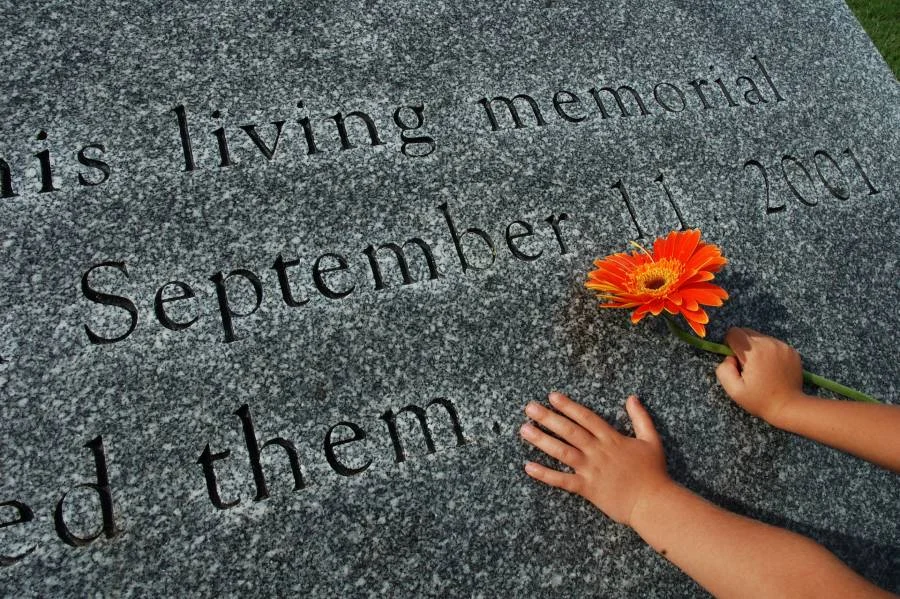
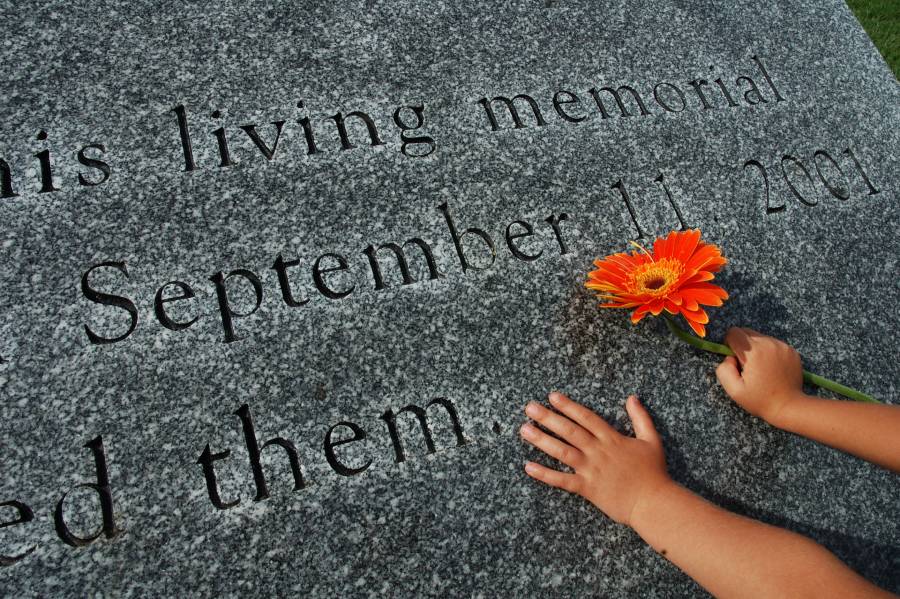
The image of a child’s hands resting on a 9/11 memorial is a poignant reminder of the intergenerational nature of this tragedy. For the 154,000 individuals currently under the care of the WTC Health Program, the events of 2001 are not a historical footnote—they are a daily reality.
The 25-year milestone is a testament to the resilience of the human body, but more importantly, it is a testament to the effectiveness of organized, empathetic, and science-driven medicine. As the program continues to evolve, its greatest contribution may be the proof that when society takes responsibility for the health of those who were harmed in its name, the long-term human cost can be mitigated. The lessons of 9/11 are now etched not only in stone but in the clinical protocols that will protect the next generation of survivors, wherever disaster may strike.