Scaling the Frontier of Human-Relevant Models: Molecular Devices and STEMCELL Technologies Unveil Automated Organoid Workflow
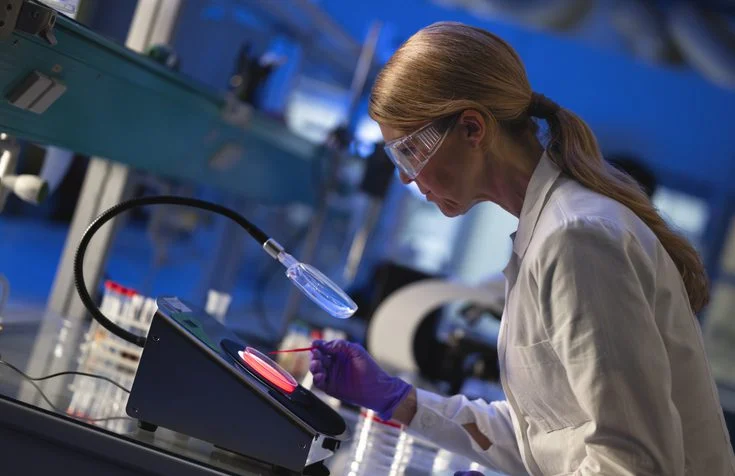
In a landmark development for the biotechnology and pharmaceutical research sectors, Molecular Devices and STEMCELL Technologies have announced the successful validation of an automated workflow designed to revolutionize the culture of human intestinal organoids. This collaboration integrates STEMCELL’s gold-standard IntestiCult™ Plus organoid growth medium with the sophisticated engineering of Molecular Devices’ CellXpress.ai™ Automated Cell Culture System.
By marrying high-precision automation with robust biological protocols, the two companies are addressing one of the most persistent bottlenecks in modern drug discovery: the labor-intensive, highly variable nature of manual organoid culture. This strategic partnership represents a significant leap toward the industrialization of "New Approach Methodologies" (NAMs), offering researchers a scalable, reproducible, and human-relevant pathway for disease modeling and therapeutic screening.
The Convergence of Biology and Automation: Core Facts
The newly validated workflow is now available to the global research community as a downloadable, ready-to-implement protocol. Designed for the CellXpress.ai platform, the system automates the lifecycle of human intestinal organoids, from initial culture and monitoring to complex analysis.
Key features of this integration include:
- Standardization: Elimination of manual handling variability, which has historically hindered the reproducibility of organoid-based studies.
- Scalability: Enabling laboratories to move from "bench-scale" pilot experiments to high-throughput, high-content screening.
- Enhanced Throughput: Reducing hands-on time for laboratory personnel, allowing researchers to reallocate their expertise toward data interpretation and hypothesis generation rather than repetitive maintenance tasks.
- Biological Integrity: Maintaining the physiological relevance of STEMCELL’s specialized media while utilizing the intelligent, image-based feedback loops of the CellXpress.ai system.
A Strategic Timeline: From Concept to Validation
The announcement is the culmination of months of intensive cross-functional collaboration. The partnership was structured to leverage the unique strengths of both entities: STEMCELL Technologies provided the deep biological expertise required to define performance criteria and functional characterization, while Molecular Devices engineered the automation framework to ensure that these criteria were met consistently across every plate and well.
The Development Arc:
- Feasibility Phase: The initial collaboration focused on benchmarking manual intestinal organoid culture against the requirements for autonomous maintenance. Scientists from both organizations identified critical checkpoints—such as media changes, organoid growth monitoring, and passaging—that were most prone to human error.
- Protocol Engineering: Molecular Devices adapted the CellXpress.ai system’s software to recognize and respond to the specific morphological signatures of intestinal organoids, ensuring that the system could "see" and "feed" the cultures at the optimal developmental stages.
- Validation and Stress Testing: The workflow underwent rigorous testing to ensure that the automation process did not compromise the cell-based functional characteristics essential for valid drug discovery assays.
- Public Release: With the validation complete, the protocol is now being disseminated to academic, biotech, and pharmaceutical labs, marking the first milestone in a broader roadmap for future organoid model integrations.
Supporting Data: Why Intestinal Organoids Matter
To understand the significance of this development, one must appreciate the scientific landscape. Traditional 2D cell cultures often fail to capture the complex architecture and physiological responses of human tissues. Intestinal organoids—3D, self-organizing structures derived from stem cells—provide a more accurate representation of the gut lining, including its barrier function and responses to pathogens or pharmacological agents.
However, the "organoid gap"—the difficulty of scaling these models—has limited their use to smaller labs or specialized cores. Data suggests that manual organoid culture is a primary cause of experimental noise. Variations in the timing of media replenishment or physical handling during passaging can lead to significant differences in organoid size and maturity, complicating the interpretation of high-throughput drug screens.
By automating these processes, the CellXpress.ai system ensures that every organoid in a 384-well plate receives identical treatment. This consistency is not just a convenience; it is a scientific requirement for FDA-level data submission and the development of robust, reproducible therapies.
Official Responses and Strategic Vision
The leadership teams at both organizations emphasized that this partnership is a response to the growing demand for human-centric research models.
Perspective from Molecular Devices
Mary Duseau, President of Molecular Devices, highlighted the potential for this technology to change the daily life of the scientist. "Organoids have the potential to give researchers a more human-relevant view of disease and treatment response, but their broader use depends on making these models easier to implement at scale," Duseau stated. "This collaboration is an important step toward giving more scientists practical access to advanced cellular models while freeing them to focus on the biological questions that can inform the development of better therapies."
Perspective from STEMCELL Technologies
Dr. Allen Eaves, President and CEO of STEMCELL Technologies, focused on the broader impact for the scientific community. "This collaboration helps make advanced organoid workflows more accessible to scientists working across drug discovery, disease research, and translational biology," Dr. Eaves noted. "Together, we’re enabling researchers to combine well-established organoid culture systems with automation, supporting the adoption of new approach methodologies (NAMs) and making it easier to generate reproducible results and scale their work as research needs evolve."
Implications: The Future of Drug Discovery and NAMs
The shift toward NAMs—methodologies that replace, reduce, or refine the use of animal models—is currently one of the most significant trends in global healthcare regulation. The ability to generate consistent human intestinal organoids at scale provides a powerful tool for this transition.
Impact on Toxicology and Disease Modeling
With this workflow, pharmaceutical companies can now perform large-scale toxicology studies on human tissue models much earlier in the drug development pipeline. Detecting potential hepatotoxicity or gut-related side effects in the discovery phase, rather than in clinical trials, could save the industry billions of dollars and, more importantly, prevent the exposure of patients to unsafe compounds.
The "Portfolio" Approach
The announcement explicitly states that this is only the beginning. The two companies have already committed to evaluating additional organoid models. As they expand this portfolio, the CellXpress.ai system will become a central hub for "organ-on-a-plate" research, potentially encompassing lung, brain, and liver models in the near future.
Democratizing Advanced Science
Perhaps the most profound implication is the democratization of high-end research. Previously, only the most well-funded institutes could maintain the massive teams required to manage large-scale organoid cultures. By embedding this expertise into an automated system, Molecular Devices and STEMCELL are lowering the barrier to entry, allowing smaller biotech startups and academic laboratories to perform the same sophisticated, high-content research as global pharmaceutical giants.
Conclusion: A New Standard for the Laboratory
The validation of the IntestiCult™ Plus workflow on the CellXpress.ai system is more than just a successful product integration; it is a blueprint for the future of laboratory operations. As the life sciences industry continues to move away from legacy animal models and toward sophisticated, human-derived cellular systems, the need for intelligent, automated, and scalable infrastructure will only grow.
By combining the biological rigor of STEMCELL Technologies with the technical prowess of Molecular Devices, this collaboration provides the research community with a reliable, scalable foundation. As these validated workflows proliferate, they will undoubtedly accelerate the pace of discovery, leading to a deeper understanding of human biology and, ultimately, the development of the next generation of life-saving therapeutics.
The road ahead remains long, with many complex biological challenges yet to be automated, but the path is now significantly clearer. With this milestone, the vision of a standardized, high-throughput, human-relevant research future has moved from a theoretical goal to a practical reality in labs around the world.