The Dual-Origin Brain: How a Biological "Discovery" Rewrites the History of Human Development
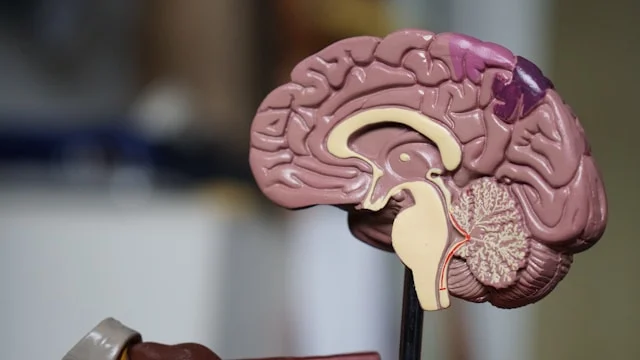
For generations, the scientific community has operated under a singular, intuitive assumption: the human brain is a unified organ, derived from a single progenitor source during embryonic development. This model suggested that all neural structures—from the cerebral cortex responsible for abstract mathematics to the brain stem regulating our involuntary heartbeat—shared a common cellular ancestry.
New research published in Nature Neuroscience by a collaborative team from Stanford Medicine, the California Institute of Technology (Caltech), and the University of California, San Francisco (UCSF), has effectively dismantled this paradigm. The study, titled "Two parallel neural ectoderm progenitors contribute to the developing brain," reveals that the brain is not one organ, but two distinct, ancient nervous systems that have been physically fused throughout evolutionary time.
Main Facts: A Tale of Two Origins
The human brain is functionally divided into three main regions: the forebrain, the midbrain, and the hindbrain. Traditionally, developmental biologists believed these regions branched off from a single pool of progenitor cells.
The researchers, led by senior author Kyle Loh, PhD, associate professor of developmental biology at Stanford, have proven that the forebrain/midbrain complex and the hindbrain (the brain stem) emerge from entirely different populations of progenitor cells. These two populations, the anterior neural ectoderm (aNE) and the posterior neural ectoderm (pNE), are lineage-committed from the very first moments of gastrulation—the stage when an embryo begins to differentiate its body plan.
This discovery is not merely a classification change; it is a fundamental shift in how we understand human biology. The forebrain, the seat of human consciousness, language, and abstract thought, follows a completely separate developmental track than the hindbrain, the primitive, critical system responsible for breathing, heart rate regulation, and hunger.
Chronology of the Discovery
The road to this discovery began with a shift in focus toward the earliest moments of life. By studying mouse embryos, the team—co-led by PhD candidates Carolyn Dundes and Rayyan Jokhai—mapped the genetic and epigenetic landscape of early neural development.
The Embryonic Split
During the gastrulation stage, the researchers identified two mutually exclusive progenitor cell populations:
- The Anterior Pathway: Marked by the expression of the gene Otx2, this cell line is destined exclusively to become the forebrain and midbrain.
- The Posterior Pathway: Marked by the expression of the gene Gbx2, this line is committed solely to the formation of the hindbrain.
The researchers discovered that these cell populations do not overlap. Using advanced chromatin analysis, they found that the DNA packaging in these cells is fundamentally different. These distinct "chromatin landscapes" act like a biological lock, sealing each progenitor into its specific identity. They are, in effect, two parallel trains on tracks that never intersect.
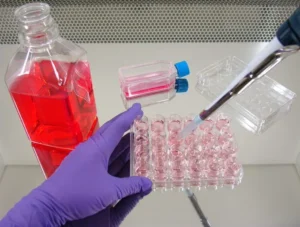
This explains why, for decades, researchers attempting to cultivate hindbrain neurons in a laboratory setting met with consistent failure. They were inadvertently attempting to force forebrain/midbrain progenitors to become hindbrain tissue—a biological impossibility. By identifying the correct, distinct starting cell, the team finally succeeded in generating functional human hindbrain motor neurons in vitro.
Supporting Data: Evolution’s 600-Million-Year Blueprint
To understand the depth of this finding, the researchers peered back into the evolutionary record. They examined the developmental patterns of chickens, zebrafish, and even the acorn worm—a primitive organism that shares a distant common ancestor with humans.
Remarkably, the study confirmed that this "two-brain" pattern exists across all these species. The bifurcation of the neural ectoderm into two distinct populations predates the origin of chordates, dating back roughly 550 to 600 million years. This suggests that during the evolution of complex life, nature "packaged" two separate, pre-existing nervous systems together into one cranium.
"Jellyfish, which diverged from humans about 600 to 700 million years ago, have two nervous systems at different ends of their body," the researchers noted. The human brain appears to be the result of evolutionary pressure pushing these two separate systems into a singular, space-efficient, yet distinct, anatomical structure.
Official Responses and Perspectives
The implications of this study are being felt across the fields of developmental biology and neurology.
"We’ve shown for the first time that the front of the brain arises from a totally different progenitor cell than the back of the brain," stated Dr. Kyle Loh. "Our discovery means that we can now grow neurons from the back of the brain, the hindbrain, in a petri dish and study their functions."
Rayyan Jokhai, a co-first author, reflected on the philosophical shift the discovery requires: "I was surprised at our findings because the word ‘brain’ implies a contiguous organ that likely has a singular origin. But even 500 million years ago, there were these separate neural systems, which now almost operate as one, which is very cool."
The team’s success in growing functional hindbrain motor neurons—confirmed by observing electrical action potentials and the production of specific proteins responsible for facial and swallowing muscle control—provides a new roadmap for future neurological research.
Implications for Modern Medicine
The clinical potential of this discovery is immense, particularly regarding neurodegenerative diseases that have long baffled the medical community.
Combating ALS and SMA
Conditions like Spinal Muscular Atrophy (SMA) and Amyotrophic Lateral Sclerosis (ALS) specifically target hindbrain neurons. SMA is a leading genetic cause of death in infants, while ALS is a debilitating, progressive disease. Because scientists previously lacked the ability to generate lab-grown hindbrain tissue, they were forced to study these diseases through indirect methods or animal models that often failed to capture human-specific pathology.
With the ability to differentiate human pluripotent stem cells into pNE and subsequently into hindbrain motor neurons, researchers now have a high-fidelity model to observe the exact mechanism of cellular degeneration. This could accelerate the development of regenerative therapies, potentially slowing or halting the loss of swallowing and breathing functions in patients.
Beyond Motor Function: Metabolism and Beyond
The hindbrain’s role extends to involuntary regulation of internal states, including hunger. The discovery provides a clearer biological context for current pharmacological interventions. For instance, the mechanisms behind popular weight-loss drugs like semaglutide, which interact with hunger circuits in the hindbrain, can now be studied with greater precision.
By understanding the distinct lineage of the hindbrain, researchers can also better investigate Diffuse Intrinsic Pontine Glioma (DIPG), a lethal childhood cancer located in the hindbrain. Because DIPG tumors arise in a region controlling vital functions like breathing and consciousness, they are notoriously difficult to treat. A clearer understanding of the cellular origin of this tissue could yield new, targeted therapeutic strategies.
The Future of Brain Research
The "dual-origin" model is not just a revision of textbooks; it is a bridge to the next frontier of neuroscience. The research team is already planning to extend their studies to understand the developmental origins of the spinal cord and to delineate the precise, independent paths that lead to the complexity of the human central nervous system.
"Now we have a model to better understand these devastating diseases, and work toward regenerative therapies for them," Jokhai concluded.
By stripping away the assumption of a singular, monolithic brain, the researchers have opened a window into the deep history of our biology. We are, it seems, a fusion of two ancient, specialized systems—a realization that provides the necessary tools to mend the systems when they begin to fail. As the scientific community digests these findings, the focus will undoubtedly shift from treating the brain as a single, opaque mystery to understanding it as a precisely engineered, dual-component marvel of evolutionary history.