Redefining EV Architecture: INFAC and Vicor Integrate DC-DC Conversion Directly into 800V Battery Packs
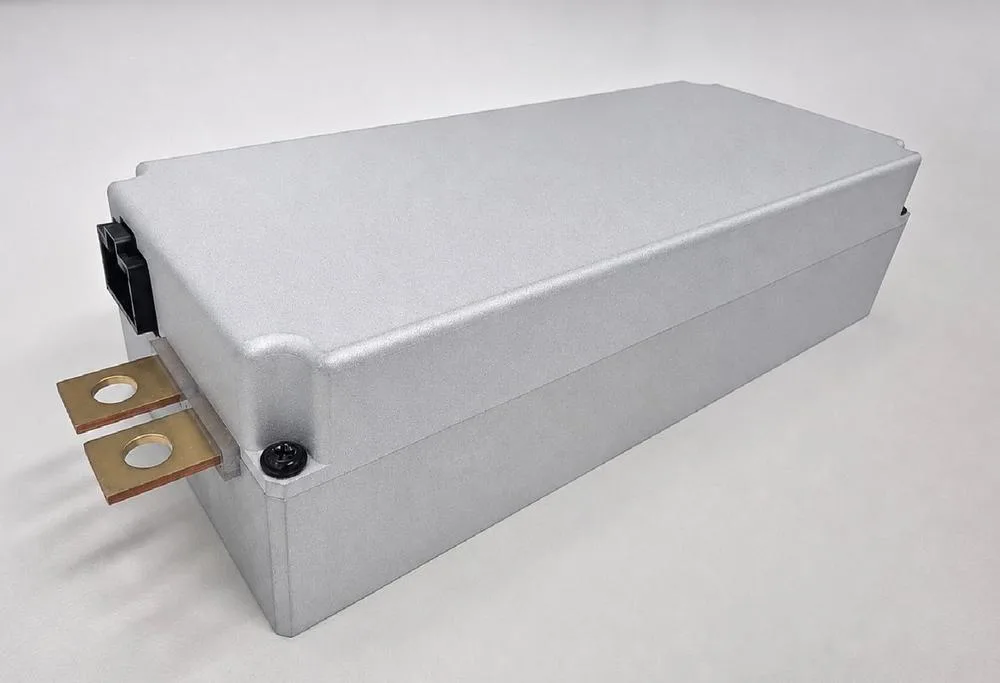
SEOUL, South Korea — In a development poised to reshape the engineering paradigms of modern electric vehicles (EVs), South Korean automotive supplier INFAC Corporation has unveiled an advanced 800V EV battery pack design. This next-generation architecture breaks away from traditional powertrain layouts by seamlessly integrating a high-power, fully isolated, and regulated 800V-to-48V DC-DC converter directly within the battery pack enclosure itself.
By eliminating the bulky, remote “silver-box” converters traditionally mounted outside the battery assembly, INFAC’s innovation slashes vehicle weight, simplifies high-voltage cabling, optimizes thermal management, and paves the way for efficient 48V zonal electrical architectures. Enabled by high-density modular power components from Vicor, the breakthrough promises to extend vehicle range and reduce manufacturing costs across upcoming EV platforms.
Main Facts: The Core Engineering Breakthrough
At the heart of INFAC’s latest development is a paradigm shift in how electrical power is stepped down and distributed throughout an electric vehicle.
Traditionally, 800V or 400V battery systems act primarily as passive high-voltage storage hubs. Step-down conversion to lower voltages—required to run body electronics, chassis controls, and auxiliary systems—typically happens externally via dedicated DC-DC converter modules housed elsewhere in the vehicle chassis. These remote units demand their own dedicated mounts, heavy high-voltage shielding, and, crucially, independent liquid-cooling loops to manage intense thermal loads.
INFAC’s new design reimagines the battery assembly as an intelligent, active energy distribution hub. By embedding the 800V-to-48V conversion stage directly inside the 800V battery pack, the company achieves Safety Extra-Low Voltage (SELV) distribution right at the source.
To overcome the severe spatial limitations of fitting power electronics inside an already crowded battery pack, INFAC partnered with Vicor Corporation, leveraging its ultra-dense power modules. Specifically, the design utilizes the Vicor BCM6135 high-density bus converter combined with the PRM3735 regulator.
The resulting power module boasts an exceptionally compact form factor:
- Dimensions: 215 x 45 x 82 mm (Length x Width x Height)
- Total Volume: 793 cm³
- Weight: Approximately 1.5 kg
This remarkable power density allows the conversion hardware to fit comfortably inside the battery enclosure without requiring any relocation of battery cells or sacrificing overall energy capacity. Furthermore, by placing the DC-DC converter inside the battery, INFAC taps directly into the battery pack’s existing robust liquid-cooling infrastructure, completely bypassing the need for a secondary, external cooling system.
Chronology: The Evolution Toward Zonal Power Architectures
The journey toward INFAC’s battery-integrated converter reflects a broader, multi-year industry transition away from legacy distributed wiring harnesses and toward streamlined zonal architectures.
The Era of Distributed Subsystems (Pre-2020)
In early generations of mass-market EVs, power distribution closely mirrored internal combustion engine (ICE) layouts. High-voltage battery packs delivered raw power to distant inverters, while separate auxiliary batteries (typically 12V lead-acid or early lithium-ion variants) powered cabin electronics, infotainment, and lighting. As vehicle electrical loads grew exponentially with the advent of advanced driver-assistance systems (ADAS) and autonomous driving sensors, 12V networks proved inadequate, causing heavy copper wiring harnesses to balloon in both weight and complexity.
The Shift to 48V and High-Voltage Platforms (2020–2024)
As automakers aggressively transitioned to 800V battery architectures to enable ultra-fast charging and reduce motor current, the industry simultaneously embraced 48V auxiliary systems to handle heavy accessory loads (such as active suspension, electric steering, and thermal blowers) while reducing cable gauge and copper weight. However, these 48V systems relied on remote, chassis-mounted DC-DC converters, which remained a persistent bottleneck in terms of space, weight penalties, and duplicated thermal management plumbing.
The Integration Breakthrough (2025–Present)
Recognizing that traditional remote converters conflicted with aggressive weight-reduction and cost-optimization targets, INFAC engineers conceptualized a tightly integrated solution. By collaborating with power-density leaders like Vicor, INFAC solved the immense engineering hurdles of electrical isolation, high-temperature resilience, and ruggedized packaging within tight spatial envelopes. The resulting system establishes a new benchmark for battery pack design, transforming a passive storage container into a self-contained power distribution node.

Supporting Data: Specifications and Performance Metrics
The engineering success of INFAC’s battery-integrated power module relies heavily on component-level performance specifications and system-level efficiency gains.
| Metric / Parameter | Traditional Remote DC-DC Architecture | INFAC Integrated 800V-to-48V Architecture |
|---|---|---|
| DC-DC Location | External chassis / Auxiliary bay | Directly inside the 800V battery pack |
| Cooling Infrastructure | Dedicated secondary liquid-cooling loop | Shared primary battery liquid-cooling system |
| Module Dimensions | Varies (Typically bulky "silver-box") | 215 x 45 x 82 mm (L x W x H) |
| Module Volume | Several thousand cm³ (including casing/plumbing) | 793 cm³ |
| Module Weight | High (includes heavy brackets and shielding) | ~1.5 kg |
| Cabling Requirements | Extensive high-voltage runs to remote converters | Minimized high-voltage routing; direct SELV distribution |
Thermal and Electrical Synergy
By piggybacking on the battery pack’s advanced liquid-cooling system, the Vicor BCM and PRM modules maintain optimal operating temperatures even under heavy continuous loads (ranging from 3.5 kW to 12 kW for powertrain subsystems, body electronics, and chassis controls). This thermal synergy eliminates component hot-spots and avoids the thermal throttling that often plagues poorly ventilated auxiliary converters.
Official Responses and Industry Perspectives
Industry analysts and engineering leaders have highlighted the strategic importance of INFAC’s design philosophy in lowering the barrier to widespread 48V zonal adoption.
"Traditional approaches to power delivery simply were not aligned with the automotive industry’s rigorous goals for weight reduction, cost optimization, and design simplicity," noted engineering representatives close to the INFAC development team. "By rethinking where conversion happens, we move past the limitations of the conventional ‘silver-box’ mindset."
Power electronics experts have similarly emphasized the critical enabling role played by advanced modular components. Housing high-voltage conversion functions inside a battery pack was historically deemed impractical due to severe dimensional constraints, strict electrical safety isolations, and stringent ruggedness requirements against vibration and shock.
By utilizing Vicor’s high-density BCM6135 and PRM3735 architectures, INFAC bypassed these historical roadblocks. Power module specialists note that the high efficiency and low thermal dissipation of these components make high-frequency power conversion viable inside enclosed, sealed battery environments without compromising structural integrity or safety margins.
Implications: The Future of EV Design and Manufacturing
The commercialization and deployment of INFAC’s integrated 800V-to-48V battery pack design carry far-reaching implications for the global automotive landscape.
1. Mass Reduction and Extended Driving Range
Every kilogram saved in an electric vehicle translates directly into efficiency gains. By eliminating heavy external mounting brackets, redundant cooling lines, and lengthy runs of shielded high-voltage cabling, INFAC’s design significantly reduces parasitic vehicle weight. This reduction directly correlates to improved energy efficiency and extended driving range per charge.
2. Streamlined Zonal Architectures
The automotive industry is rapidly standardizing around zonal electrical/electronic (E/E) architectures, where vehicle functions are grouped by physical location rather than distinct functional domains. INFAC’s approach acts as a natural catalyst for this shift, providing clean, highly regulated 48V Safety Extra-Low Voltage (SELV) power directly from the energy source. This simplifies downstream wiring harnesses, making automated vehicle assembly easier and lowering long-term manufacturing costs.
3. Redefining the Battery Pack as an Intelligent Hub
Perhaps the most profound implication is philosophical: the transformation of the EV battery pack from a passive energy reservoir into an active, highly integrated power management node. As automakers look for ways to maximize interior cabin space, lower bill-of-materials (BOM) costs, and simplify vehicle architectures, INFAC’s blueprint demonstrates that high-density power electronics and energy storage can successfully coexist within a single, highly optimized enclosure.
As electric vehicle platforms transition deeper into the 800V era, INFAC’s innovative integration model sets a new benchmark for power density, thermal efficiency, and system-level simplification across next-generation mobility platforms.