Revolutionizing Light Painting: Maker Wren Weichman Unveils the Hand-Held Persistence-of-Vision (PoV) LED Performance Wand
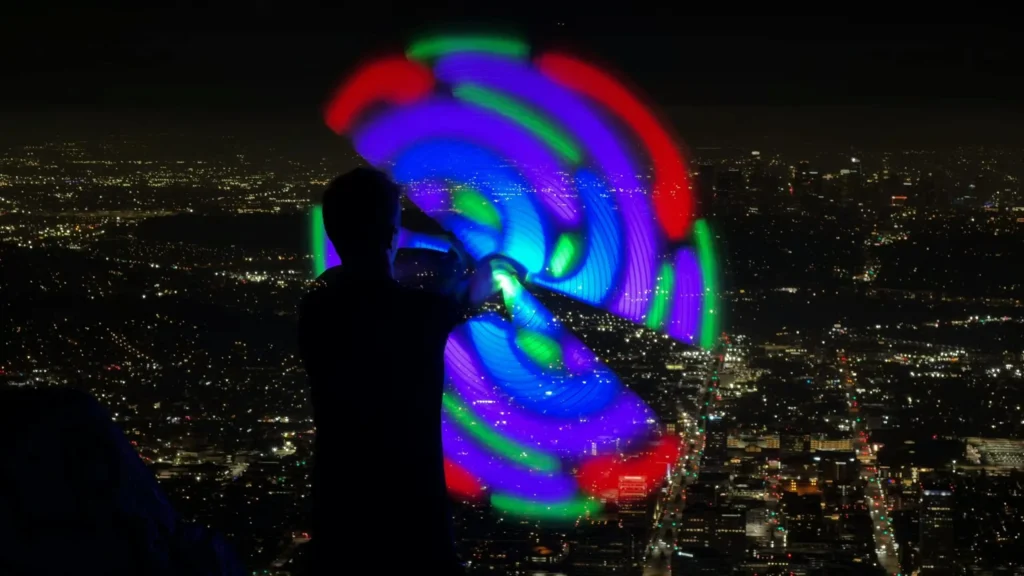
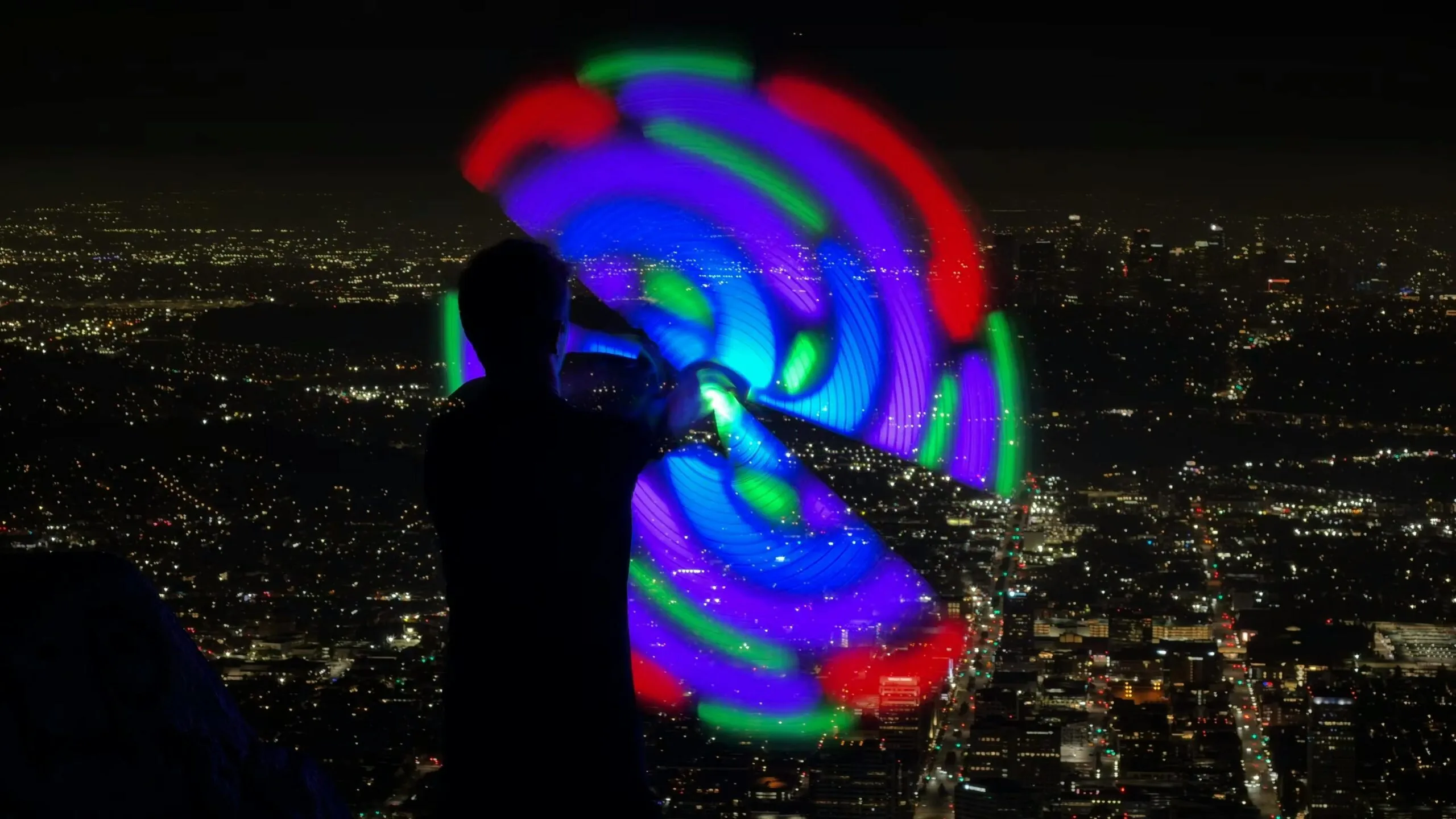
LOS ANGELES — In the intersection of high-octane performance art and embedded electronics, creators are constantly searching for new ways to bridge the digital and physical worlds. Enter content creator and maker Wren Weichman, who has successfully engineered a portable, hand-operated persistence-of-vision (PoV) LED stick designed to conjure breathtaking visual effects during live performances. Unlike classic, static light-painting tools or motor-driven desktop displays, Weichman’s device relies entirely on manual rotation, transforming human kinetic energy into digitally stabilized visual masterpieces when captured through a long-exposure camera lens.
This breakthrough project fuses high-performance microcontrollers, real-time inertial measurement units (IMUs), wireless connectivity, and ergonomic design into a singular tool. It challenges the long-held assumption that crisp, high-resolution PoV graphics require rigid, motor-driven mechanical frameworks. Instead, Weichman proves that with clever software compensation and robust hardware, the human hand can become the ultimate brush for digital light painting.
Main Facts: Anatomy of a Hand-Held PoV Display
At its core, Weichman’s creation is a sophisticated, digitally controlled light-painting instrument built for the stage. While traditional persistence-of-vision (PoV) devices often utilize motorized setups spinning at upwards of 2,000 RPM to trick the human eye into perceiving solid shapes in mid-air, this hand-held variant operates on a slightly different philosophy.
When spun by hand, the human eye perceives a rapid blur of colors; however, when captured by a camera utilizing a long exposure—roughly a quarter of a second per frame—the sensor records the complete light trail. The resulting images and videos showcase vibrant, floating graphics, geometric patterns, and dynamic text with a clarity and quality far superior to classic manual light-painting tools like steel wool or simple glow sticks.
The hardware architecture relies on a strip of addressable RGB LEDs mounted meticulously along the length of the stick. Driving this visual array is a Teensy 4.1, a powerhouse microcontroller renowned for its processing speed and capacity to manage hundreds of addressable LEDs simultaneously without dropping a single frame.
To combat the inherent inconsistencies of human movement, Weichman integrated an Inertial Measurement Unit (IMU). This sensor continuously monitors the rotational speed and trajectory of the stick in real-time. Paired with an ESP32 wireless module for smartphone communication, the wand allows users to seamlessly switch animations, adjust color profiles, and manage display parameters on the fly via a dedicated application, eliminating the need for cumbersome tethered programming.
Chronology: The Evolution of the PoV LED Wand Project
While the final product appears polished and seamless, the journey to bringing a hand-held, speed-compensated PoV display to life required careful iteration and technological selection.
Phase 1: Conceptualization and Prototyping
The project originated from a desire to elevate live performance visuals beyond standard stage lighting and pre-recorded backdrops. Weichman recognized that while motorized PoV displays existed in laboratory settings and desktop novelties, artists lacked a rugged, portable, and expressive tool that could be manipulated dynamically on stage. Initial brainstorming focused on how to mount addressable RGB LEDs onto a rigid substrate while maintaining a lightweight profile.
Phase 2: Core Processing and Display Selection
Early experiments highlighted the limitations of standard microcontrollers. Driving dense arrays of addressable RGB LEDs while simultaneously processing sensor data demands immense computational overhead. The selection of the Teensy 4.1 resolved this bottleneck, providing the raw clock speed necessary to refresh hundreds of individual LEDs instantaneously, ensuring that color transitions remained lightning-fast during rapid swings.
Phase 3: Solving the Variable Speed Dilemma
The most critical engineering hurdle was human error. Unlike a motorized rig governed by a constant electrical motor, a human hand accelerates, decelerates wobbles, and changes tempo unpredictably. Without intervention, an erratic swing ruins a PoV image, stretching pixels on one side and compressing them on the other. By introducing an IMU, Weichman established a closed-loop feedback system where the Teensy could dynamically stretch or compress the frame rendering in real-time, matching the instantaneous angular velocity of the stick.
Phase 4: Wireless Integration and Ergonomics
With the processing and sensor logic locked down, the focus shifted to usability and power delivery. The integration of the ESP32 chip enabled wireless communication, allowing creators to upload new graphics and alter animation sequences without physical rewiring. Simultaneously, battery placement was optimized: rather than packing all power at one end or relying on an external tether, batteries were strategically housed at both extremities of the stick. This design choice doubled as a mechanical counterbalance, ensuring smooth, fatigue-free rotations and stable spatial trajectories.
Supporting Data: Hardware Specifications and Technical Breakdown
To fully understand the engineering brilliance behind Weichman’s PoV stick, it is essential to examine the supporting hardware components and technical metrics that make real-time stabilization possible.
| Component | Function / Role in the Project | Key Technical Benefit |
|---|---|---|
| Teensy 4.1 | Master microcontroller driving the RGB LED strip. | Exceptional clock speed; capable of refreshing hundreds of addressable LEDs without frame drops. |
| Addressable RGB LEDs | Visual canvas mounted linearly along the length of the stick. | Produces high-density color transitions captured via long-exposure photography. |
| IMU (Inertial Measurement Unit) | Monitors rotation speed, acceleration, and trajectory in real-time. | Provides raw velocity data to compensate for irregular, hand-driven movements. |
| ESP32 Module | Wireless communication bridge to smartphones. | Enables remote effect selection and animation updates via a dedicated mobile app without rewiring. |
| Dual-End Battery Placement | Power source and physical ballast. | Balances the instrument’s weight distribution for smoother rotation and trajectory stability. |
The Mathematics of Real-Time Speed Compensation
In a standard desktop PoV display, the software assumes a fixed angular velocity ($omega = textconstant$). The time delay ($Delta t$ per column of pixels) is calculated statically:
$$Delta t = fractextAngle of a single pixel columnomega$$
In a hand-held device, however, $omega$ is a dynamic function of time: $omega(t)$. Weichman’s software algorithms read the angular velocity from the IMU at microsecond intervals. If the user slows down their swing, the Teensy automatically lengthens the time a specific column of pixels is displayed. Conversely, if the user accelerates, the column duration is compressed. This algorithmic compensation ensures that the resulting light-painted image maintains its geometric proportion regardless of the performer’s muscle fatigue or stylistic flair.
Official Responses and Creator Insights
While formal corporate press releases are absent from this independent maker project, Wren Weichman’s comprehensive documentation—shared via his viral project video—provides deep insight into the philosophy, trials, and triumphs of building the device.
Reflecting on the challenges of manual operation, Weichman emphasized that embracing human imperfection was both the project’s greatest obstacle and its most rewarding artistic feature. "A motorized rig gives you perfection, but it lacks soul," notes the maker community consensus surrounding the build. "By allowing human kinetic energy to drive the instrument, the performance becomes an authentic physical expression. The technology doesn’t replace the artist’s gesture; it amplifies it, compensating for minor flaws while preserving the raw, organic motion of live performance."
Furthermore, engineering forums and maker spaces have widely praised the integration of the Teensy 4.1 and IMU pairing as an exemplary educational blueprint. Instructors in embedded systems engineering have pointed to Weichman’s work as a textbook demonstration of closed-loop sensor integration applied to creative arts.
Makers looking to replicate or iterate upon the design have also been directed toward accessible sensor modules. For hobbyists wishing to experiment with similar motion-sensing principles, components such as the ADXL345 3-axis accelerometer offer precise physical measurements and straightforward microcontroller interfaces. Alternatively, modular rapid-prototyping ecosystems like the Blebrick format allow builders to mount sensors onto breadboards with minimal soldering required, lowering the barrier to entry for aspiring interactive artists.
Implications: The Future of Wearable, Portable, and Performative Electronics
The implications of Weichman’s hand-held PoV LED stick extend far beyond the realm of niche maker projects, touching upon live entertainment, educational engineering, and modular hardware design.
1. Transforming Live Performance and Stage Production
In the world of concerts, dance performances, and theatrical lighting, artists are perpetually seeking novel ways to engage audiences. Traditional light-emitting props (such as poi, staffs, and glowing whips) are often limited to pre-set color cycles or simple glowing patterns. A programmable, speed-compensated PoV wand opens up infinite visual possibilities. Performers can project custom logos, intricate animations, and responsive visual narratives directly into the air around them, capturing stunning real-time content for social media and broadcast production.
2. Educational Value in Embedded Systems
For students and educators in STEM fields, the project serves as a multidisciplinary masterclass. It successfully bridges hardware selection (Teensy 4.1 and ESP32), sensor calibration (IMU velocity mapping), power distribution (balanced mass centers), and software optimization (real-time frame scaling). Academic institutions looking to inspire engineering students frequently utilize interactive maker projects because they tie abstract mathematical concepts—such as angular velocity, refresh rates, and data smoothing—into tangible, visually striking results.
3. A Modular Blueprint for Future Makers
Perhaps the most significant legacy of Weichman’s build is its modularity. Because the core architecture separates processing (Teensy), sensing (IMU), connectivity (ESP32), and display (addressable LEDs), the project is inherently open to infinite customization. Makers can easily scale up the design by increasing the physical length of the stick and adding more LEDs for higher-resolution imagery, or they can integrate synchronized audio modules to tie sound effects directly to visual patterns.
By proving that persistence-of-vision technology can break free from heavy, motorized lab equipment and enter the domain of hand-held performance art, Wren Weichman has not only crafted an exceptional technical gadget—he has established a new paradigm for how humans interact with light, motion, and digital art. As the documentation and community adaptations continue to grow, the hand-held PoV wand is poised to become a staple tool in the modern digital artist’s toolkit.