Bel Fuse Expands Rail Portfolio with Second-Generation XRCM 200 and 300 DC-DC Converters
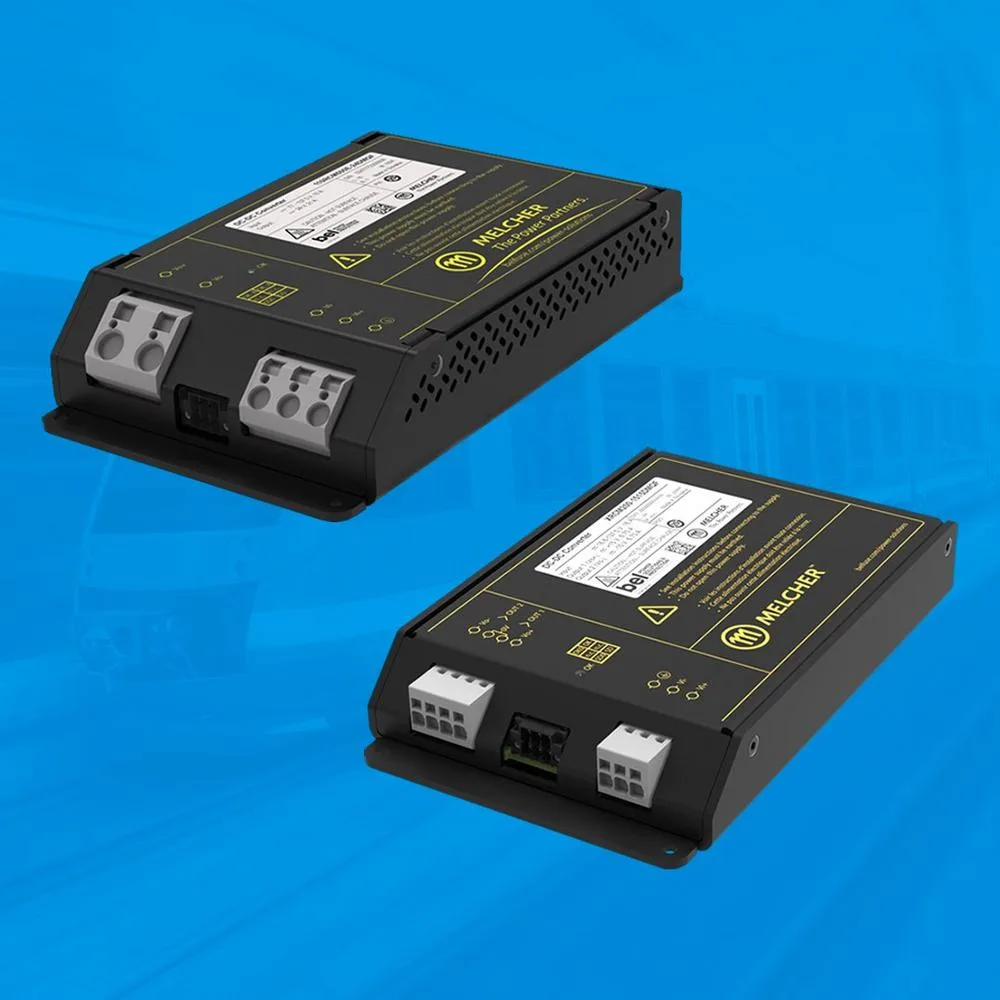
BERLIN — In the fast-evolving landscape of modern rail transportation, the demands placed on electronic systems have never been higher. Railway operators and rolling stock manufacturers are continuously challenged to deliver greater efficiency, higher reliability, and enhanced passenger safety, all while navigating increasingly complex regulatory frameworks and tighter physical installation footprints. Addressing these rigorous demands head-on, Bel Fuse Inc.—a premier global manufacturer of circuit protection, interconnects, and power management solutions for mission-critical applications—has officially announced the launch of its second-generation XRCM 200 and XRCM 300 series DC-DC converters.
Unveiled to the global transportation engineering community at the prestigious InnoTrans 2026 exhibition in Berlin, Germany, the new converter series boasts an ultra-wide input voltage range, a significantly reduced physical footprint, and industry-leading power density. Designed specifically to endure the harsh, unpredictable electrical and physical environments of railway and mass-transit applications, the XRCM 200 and XRCM 300 empower design engineers to streamline system architecture, lower integration costs, and guarantee compliance with the strictest international safety and reliability standards.
Main Facts: Engineering High-Reliability Power for Modern Rail
The newly introduced XRCM 200 and XRCM 300 series represent a major leap forward in DC-DC power conversion technology for the transportation sector. Built upon Bel Fuse’s decades of expertise in designing robust power supplies for mission-critical industrial, medical, and data solutions, these second-generation converters are engineered to bridge the gap between high performance and spatial constraints.
At the core of the XRCM series’ versatility is its remarkable ultra-wide input voltage range, supporting DC input voltages spanning from 16.8V DC to 137.5V DC. This broad operational window ensures full compatibility with virtually all standard railway battery systems deployed worldwide. By accommodating such a wide spectrum of input voltages within a single platform, Original Equipment Manufacturers (OEMs) can effectively standardise their power architectures, utilizing a unified hardware solution across diverse vehicle platforms and regional rail standards.
The product family is divided into two distinct configurations tailored to specific power distribution requirements:
- The XRCM 200 Series: A dual-output converter engineered to deliver 200W of stable power at ±15V. It serves as a highly compact, cost-effective alternative optimised for applications requiring low power consumption without sacrificing thermal or electrical performance.
- The XRCM 300 Series: A single-output powerhouse delivering 300W at 24V. Designed for heavier duty cycles, the XRCM 300 offers an extended operational temperature range, enabling continuous, uncompromised performance at ambient temperatures of up to 85°C.
Both series share a comprehensive suite of advanced protective mechanisms designed to safeguard sensitive downstream electronics. These include low inrush current characteristics and full-spectrum protection against overheating, overvoltage, overcurrent, and output short circuits. Furthermore, the units are built to seamlessly comply with the industry’s most rigorous regulatory benchmarks, including EN 50155 (Railway applications — Electronic equipment used on rolling stock), EN 50121-3-2 (Railway applications — Electromagnetic compatibility), and AREMA (American Railway Engineering and Maintenance-of-Way Association) standards.
Chronology: From Concept to Global Debut at InnoTrans 2026
The development and public introduction of the XRCM 200 and 300 series follow a carefully orchestrated timeline aimed at addressing contemporary bottlenecks in rolling stock design.
Phase 1: Identifying Industry Pain Points
In the years leading up to 2026, Bel Fuse’s engineering and business development teams engaged in extensive consultations with major rail operators and system integrators. Feedback consistently highlighted two conflicting challenges: the growing electrical complexity of modern passenger trains—driven by advanced passenger information systems, onboard Wi-Fi, and sophisticated signalling—and the shrinking physical spaces allocated for power electronics within train cars and locomotives. Furthermore, variations in global battery voltages forced OEMs to design custom power supplies for different regional markets, driving up costs and lengthening development cycles.
Phase 2: R&D and Prototyping
Armed with these insights, Bel Fuse initiated the development of the second-generation XRCM platform. The primary objective was to engineer a high-density, thermally resilient DC-DC converter that could transcend regional battery voltage disparities while fitting into tighter spatial envelopes. Through advanced topology optimization and component selection, engineers successfully integrated the ultra-wide 16.8V to 137.5V DC input capability while minimizing resistive losses and boosting overall thermal efficiency.
Phase 3: Global Unveiling at InnoTrans 2026
The culmination of this development cycle arrived in September 2026 on the global stage. Bel Fuse chose InnoTrans 2026, the world’s leading trade fair for transport technology held in Berlin from September 22 to 25, as the official launchpad for the XRCM series. Exhibiting at Hall 17, Stand No. 310, the company showcased the XRCM 200 and 300 units alongside its broader portfolio of advanced power conversion solutions tailored for modern rail systems. The exhibition provided engineers, procurement specialists, and industry media with their first hands-on look at the units’ hardware layout, robust connectors, and clear identification labeling.
Supporting Data & Technical Specifications
To fully appreciate the engineering achievement behind the XRCM 200 and 300 series, it is essential to examine the underlying technical metrics and operational boundaries that govern their performance in the field.
Electrical and Environmental Parameters
- Input Voltage Range: 16.8V DC to 137.5V DC (Supports nominal battery systems of 24V, 36V, 48V, 72V, 96V, and 110V DC with wide fluctuation margins).
- Power Output Options:
- XRCM 200: 200W total output (±15V dual output).
- XRCM 300: 300W total output (24V single output).
- Thermal Performance:
- XRCM 300 engineered for continuous operation at ambient temperatures up to 85°C without thermal derating under specified conditions.
- Inrush Current: Low inrush current design to prevent tripping of upstream circuit breakers and protect input staging components.
- Protections:
- Over-Temperature Protection (OTP)
- Over-Voltage Protection (OVP)
- Over-Current Protection (OCP)
- Short-Circuit Protection (SCP) with automatic recovery.
Regulatory Compliance and Standards
Operating within the railway sector requires absolute adherence to safety and environmental standards to prevent catastrophic failures and ensure electromagnetic compatibility (EMC) in electrically noisy environments. The XRCM series is fully certified and tested against:

- EN 50155: Governs electronic equipment installed on rail vehicles, ensuring resistance to shock, vibration, temperature extremes, and humidity.
- EN 50121-3-2: Sets strict electromagnetic emission and immunity limits for rolling stock apparatus, preventing interference with vital signalling and telecommunication networks.
- AREMA Standards: Ensures compliance with North American railway engineering guidelines, facilitating cross-continental deployment.
| Feature / Metric | XRCM 200 Series | XRCM 300 Series |
|---|---|---|
| Power Output | 200 Watts | 300 Watts |
| Output Configuration | Dual Output (±15V) | Single Output (24V) |
| Input Voltage Range | 16.8V DC – 137.5V DC | 16.8V DC – 137.5V DC |
| Max Ambient Temperature | Up to standard industrial ranges | Up to 85°C continuous operation |
| Target Standards | EN 50155, EN 50121-3-2, AREMA | EN 50155, EN 50121-3-2, AREMA |
| Primary Protection | OVP, OCP, OTP, SCP, Low Inrush | OVP, OCP, OTP, SCP, Low Inrush |
Official Responses and Industry Perspectives
The introduction of the XRCM series has drawn positive reactions from industry leaders and internal stakeholders at Bel Fuse, highlighting the company’s strategic alignment with current market needs.
Silvan Mueller, Business Development Manager for Rail Power Products at Bel Fuse, emphasized the practical challenges that inspired the new design during his address surrounding the launch:
"Rail operators and system designers need power solutions they can rely on, and that is at the heart of our work at Bel. This new generation of the XRCM series was designed to simplify installation, combining support for a wide input voltage range, a reduced footprint and the protection features technicians need to build resilient transportation systems."
Mueller further elaborated on the strategic advantage of the ultra-wide input range, noting that rolling stock engineers frequently grapple with transient voltage spikes, load dumps, and fluctuating battery states caused by auxiliary engine starts and braking systems. By engineering the XRCM converters to handle extremes from 16.8V up to 137.5V DC securely, Bel Fuse has effectively insulated downstream systems from these electrical anomalies.
Industry analysts attending InnoTrans 2026 noted that component standardization is becoming a top priority for rolling stock manufacturers facing supply chain complexities and rising production costs. By offering a single converter family capable of operating across disparate global rail voltage thresholds, Bel Fuse provides a compelling value proposition that reduces inventory holding costs for OEMs and simplifies maintenance logistics for rail operators worldwide.
Implications: Transforming Rail System Design and Maintenance
The rollout of the XRCM 200 and 300 DC-DC converters carries profound implications for the future of rail electronics, system integration, and long-term asset management.
1. Simplification of OEM Engineering Workflows
In traditional rail vehicle design, engineers often had to select distinct power supplies for different train configurations, depending on whether the rolling stock operated on a 24V, 72V, or 110V nominal battery system. This fragmentation multiplied design validation efforts, increased testing costs, and complicated documentation. The introduction of the XRCM series’ 16.8V–137.5V DC ultra-wide input window allows manufacturers to adopt a "universal power platform" approach. An engineering team can deploy the same base power architecture across regional commuter trains, high-speed intercity rail, and heavy freight locomotives, drastically cutting down time-to-market.
2. Enhanced System Reliability and Reduced Lifecycle Costs
In the rail industry, unplanned maintenance events are exceptionally costly, leading to service delays, financial penalties, and compromised passenger trust. The integration of robust electrical protections—such as comprehensive short-circuit, overvoltage, and thermal management safeguards—ensures that the XRCM converters can survive harsh transient conditions without sustaining permanent damage. Furthermore, the XRCM 300’s capability to operate continuously at ambient temperatures up to 85°C eliminates the need for bulky external cooling fans or oversized heatsinks in confined spaces, thereby removing common points of mechanical failure.
3. Future-Proofing Mass Transit Infrastructure
As urban centers expand and rail networks experience higher passenger densities, the electrification of rolling stock is accelerating. Systems such as automated train operation (ATO), advanced CCTV security networks, real-time passenger information displays, and high-speed onboard passenger Wi-Fi demand uninterrupted, clean power. By providing high power density in a compact form factor, the XRCM series ensures that rail operators can retrofit older rolling stock with modern electronic amenities without running out of electrical capacity or physical installation space.
Conclusion
The launch of the XRCM 200 and 300 series DC-DC converters underscores Bel Fuse’s enduring commitment to innovation within the mission-critical transportation sector. By combining an ultra-wide input voltage range, high power density, superior thermal resilience, and strict adherence to global railway standards like EN 50155, EN 50121-3-2, and AREMA, Bel Fuse has delivered a versatile tool that addresses the multifaceted challenges of modern rail engineering.
As transportation networks continue to modernize, solutions that reduce integration complexity while elevating safety and reliability will remain indispensable. The XRCM series stands ready to power the next generation of safe, efficient, and interconnected rail systems across the globe.
For further technical documentation, specifications, and inquiries regarding the XRCM series, engineers and procurement professionals are encouraged to visit the dedicated Bel Fuse DC-DC Converters product page, or explore the wider portfolio of mission-critical power solutions directly on the Bel Fuse Website.