Samtec Unveils Cutting-Edge Interconnect Portfolio for the SGeT oHFM.c Standard, Revolutionizing Open-Standard FPGA Deployment
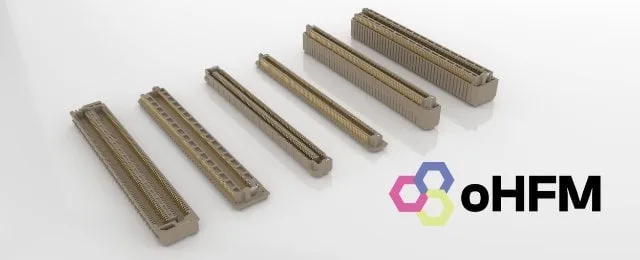
NEW ALBANY, Ind. — In a significant leap forward for high-speed embedded computing and modular design, Samtec, Inc., a globally recognized leader in electronic interconnect solutions, has officially announced a brand-new product range meticulously engineered to support the burgeoning SGeT oHFM.c standard. Leveraging the field-proven architecture of Samtec’s high-density and high-performance AcceleRate® HD and AcceleRate® HP product families, this new connector portfolio is poised to redefine how engineers design, deploy, and scale Field Programmable Gate Array (FPGA) and System-on-Module (SOM) architectures.
The introduction of these specialized connectors arrives at a critical juncture for the electronics industry. As systems at the edge and in data centers demand exponentially higher processing speeds, tighter form factors, and greater thermal and mechanical reliability, the pressure on hardware developers has never been higher. By aligning its technology with the open-standard initiatives of the Standardization Group for Embedded Technologies (SGeT), Samtec is delivering a robust, scalable infrastructure that bridges the gap between raw processing power and standardized mechanical integration.
Main Facts
The core of Samtec’s new announcement centers on the adaptation of its industry-leading AcceleRate® HD and AcceleRate® HP interconnect families to meet the rigorous physical and electrical specifications defined by the SGeT Open Harmonized FPGA Module (oHFM) standard, specifically the oHFM.c variant.
Key factual highlights of this product launch include:
- Standard Alignment: The connectors are tailored specifically for the SGeT oHFM.c standard, facilitating modular, interoperable FPGA and SOM designs.
- Family Roots: Built upon the robust foundation of Samtec’s AcceleRate® HD and AcceleRate® HP product lines, known for extreme density and high-speed signal integrity.
- Pitch and Density: The connectors feature a fine 0.635 mm pitch, packing high-density channels into remarkably compact footprints.
- Performance Metrics: Designed to support cutting-edge bandwidth performance targets of up to 64 Gbps PAM4 or 112 Gbps PAM4 per channel.
- Stack Heights: Available in versatile 5 mm and 10 mm stack heights to accommodate various clearance, cooling, and spatial requirements within embedded chassis.
- Advanced Contact System: Incorporates Samtec’s proprietary Edge Rate® contact system, featuring narrow, broadside-coupled edges to minimize crosstalk and a smooth milled mating surface for enhanced durability.
- Reliable Termination: Utilizes IPC Class 3 compliant solder column terminations, ensuring superior mechanical resilience, high thermal cycle reliability, and minimized insertion/return loss.
- Commercial Availability: The new connectors are fully industrialized, available from stock, and ready for global deployment via Samtec directly or through authorized distribution channels.
Chronology: The Path to Open Modular FPGA Standards
To fully appreciate the significance of Samtec’s latest product release, it is essential to examine the historical trajectory of FPGA development and the collaborative milestones that brought the industry to the oHFM standard.
The Era of Proprietary Customization (Pre-2020)
For decades, the deployment of mid-range and high-end FPGAs was fraught with engineering inefficiencies. Because FPGAs require immense I/O counts, specialized power delivery, and intricate thermal management, engineers routinely relied on proprietary SOM designs. Every new processor generation meant designing a custom form factor, mapping out a unique pinout, and engineering bespoke cooling mechanisms from scratch. This approach led to prolonged development cycles, inflated Non-Recurring Engineering (NRE) costs, and vendor lock-in, which stifled rapid hardware iteration.
The Inception of SGeT and the oHFM Initiative (2020–2022)
Recognizing the industry’s desperate need for standardization—akin to what COM Express and SMARC achieved for standard processors—the Standardization Group for Embedded Technologies (SGeT) turned its attention toward FPGAs. SGeT initiated working groups dedicated to establishing an open, scalable architecture that could unify FPGA deployment. The objective was clear: create a world-class open modular standard that would eliminate unique pinouts and proprietary thermal concepts while slashing engineering time. This initiative culminated in the birth of the Open Harmonized FPGA Module (oHFM™) standard.
Samtec’s Advanced Interconnect Integration (2022–2024)
As the oHFM specification matured, it became evident that standardizing the electrical and mechanical parameters would require an equally advanced physical layer. The connectors would need to handle staggering data rates—pushing past 50 Gbps into the realm of 112 Gbps PAM4—while maintaining strict mechanical durability across thousands of mating cycles.
During this period, Samtec leveraged its extensive experience with high-speed array and edge-rate technologies, mapping its AcceleRate® platforms directly onto the evolving oHFM.c requirements. Through rigorous prototyping, signal integrity simulation, and compliance testing, Samtec refined the contact geometries, stack heights, and termination methods.
Commercial Launch and Global Rollout (Present)
With the technical specifications finalized and manufacturing lines fully optimized, Samtec officially announced the immediate availability of its SGeT oHFM.c-compliant connector range. Hardware developers worldwide can now integrate these off-the-shelf connectors into their next-generation embedded boards, marking a transition from experimental oHFM designs to fully commercialized, volume-ready products.
Understanding oHFM and the oHFM.c Standard
To understand why Samtec’s new connectors are a game-changer, one must first understand the architecture of the standard they serve.
What is oHFM™?
oHFM (Open Harmonized FPGA Module) is heralded as the world’s first open modular standard specifically designed for FPGAs. Historically, FPGAs have resisted standardization due to their extreme flexibility; an FPGA can be configured as a high-speed networking switch, an accelerator for artificial intelligence, a radar signal processor, or an industrial automation controller. This versatility historically forced designers to build custom, application-specific carrier boards.
The oHFM standard solves this dilemma by introducing a unified, scalable architecture. It provides ready-made hardware blocks, standardized mechanical dimensions, and clear design rules. By shifting the complexity away from custom baseboard design and into a standardized module, oHFM drastically cuts engineering time and accelerates time-to-market for complex computing systems.
The Role of oHFM.c
Within the broader oHFM ecosystem, the oHFM.c standard dictates specific parameters for compact, high-speed interfaces, mid-range and high-end FPGAs, and field-upgradable module architectures. SOMs built around the oHFM.c connector definitions are optimized for density and thermal efficiency. They allow systems to be easily upgraded in the field simply by swapping out the FPGA module—a capability that was previously cost-prohibitive or mechanically unfeasible in proprietary designs.
Technical Deep Dive: Features and Supporting Data
The engineering behind Samtec’s oHFM.c connectors reflects decades of expertise in high-speed interconnect design. Achieving reliable data transmission at speeds exceeding 100 Gbps requires meticulous attention to both electrical physics and mechanical manufacturing tolerances.
High-Density Channel Configuration and Pitch
Modern FPGA systems require massive numbers of differential pairs to route high-speed serial data, memory interfaces, and control signals. Samtec’s oHFM.c connectors achieve this through a fine 0.635 mm pitch, allowing designers to pack a high density of channels into a minimal board footprint. This is crucial for satisfying the strict space constraints of small-form-factor embedded systems, ruggedized chassis, and edge computing nodes.
Electrical Performance: Pushing into 112 Gbps PAM4
As data rates scale to meet the demands of 5G infrastructure, high-frequency radar, and artificial intelligence at the edge, traditional Non-Return-to-Zero (NRZ) signaling is rapidly being replaced by Four-Level Pulse Amplitude Modulation (PAM4).
Samtec’s oHFM.c connectors are engineered to hit performance targets of 64 Gbps PAM4 or 112 Gbps PAM4. To achieve this level of performance without excessive signal degradation, Samtec utilizes its proprietary Edge Rate® contact system.
Signal Integrity and the Edge Rate® Advantage
Crosstalk and broadside coupling are the primary enemies of high-speed digital signals. When conductors run parallel to one another in close proximity, electromagnetic energy from one trace can bleed into another, corrupting data packets.
Samtec combats this phenomenon through the unique geometry of the Edge Rate contact system:
- Narrow Edge Alignment: Within each connector, the narrow edges of the contact system are deliberately aligned with the connector body. This structural orientation significantly reduces broadside coupling and minimizes crosstalk between adjacent channels.
- Smooth Milled Mating Surfaces: Unlike stamped contacts that feature rough or sheared edges, Samtec’s Edge Rate contacts feature a smooth, wide, milled mating surface. This design ensures consistent electrical contact, reduces wear and tear during mating and un-mating, and dramatically increases durability for high-cycle industrial and laboratory applications.
Mechanical Robustness: IPC Class 3 Solder Column Termination
In mission-critical aerospace, defense, medical, and industrial automation environments, mechanical shock, vibration, and thermal expansion pose severe threats to board-level reliability. Solder joint fatigue can lead to intermittent failures catastrophic to system operation.
To secure the connectors to the printed circuit board (PCB) with absolute reliability, Samtec employs an IPC Class 3 compliant solder column termination technique. Solder columns offer several distinct advantages over standard solder balls or surface-mount leads:
- Compliance: The vertical columns act as springs that absorb the thermal expansion mismatch between the ceramic or organic module substrate and the host PCB.
- Joint Reliability: This mechanical compliance drastically reduces stress on the solder joints during extreme thermal cycling.
- Signal Performance: Beyond mechanical resilience, Samtec’s solder column terminations exhibit excellent insertion loss and return loss performance, ensuring that the electrical transition from the PCB to the connector remains transparent to high-frequency signals.
Official Responses and Industry Perspectives
The release of Samtec’s oHFM.c interconnect portfolio has drawn significant commentary from industry leaders, standards organizations, and embedded systems architects who view the move as a validation of open-standard modular computing.
In a recent statement highlighting the launch, representatives from Samtec emphasized the company’s commitment to enabling next-generation architectures:
"Designed to meet the evolving, highly demanding needs of modern FPGA-based computing platforms, our interconnect solutions enable scalable, flexible, and reliable system architectures. By aligning our proven AcceleRate technology with the SGeT oHFM.c standard, we are giving hardware developers the high-speed tools they need to build the future of edge and embedded systems without reinventing the wheel."
Embedded systems analysts and consortium members have similarly praised the development. For years, the lack of standardized high-speed interconnects tailored specifically to open FPGA modules was seen as a bottleneck for widespread adoption. With tier-one interconnect manufacturers like Samtec throwing their weight behind SGeT standards, original equipment manufacturers (OEMs) now possess the supply chain confidence and component availability required to transition from proprietary designs to open, modular ecosystems.
Implications for the Embedded and Edge Computing Industry
The introduction of Samtec’s SGeT oHFM.c-compliant connectors carries profound implications for multiple sectors within the electronics industry.
1. Drastically Reduced Time-to-Market
By utilizing standardized oHFM.c modules interconnected via Samtec’s off-the-shelf high-speed arrays, engineering teams can bypass the grueling multi-month layout, simulation, and prototyping phases traditionally required for custom FPGA carrier boards. Development teams can focus their proprietary software and firmware efforts on core application value rather than wrestling with low-level signal integrity and mechanical housing design.
2. Accelerated Field Upgradability and Lifecycle Extension
One of the most powerful aspects of modular FPGA architecture is the ability to upgrade processing power in the field. As new FPGA silicon families are released with advanced AI acceleration cores or higher logic densities, system operators can simply replace the oHFM.c SOM on the carrier board. Samtec’s durable Edge Rate contact system—rated for high mating cycles—ensures that these connectors can withstand multiple field upgrades over a product’s operational lifespan.
3. Streamlined Thermal and Mechanical Design
The oHFM standard addresses thermal management challenges head-on by establishing unified guidelines for cooling modules. Samtec’s availability of both 5 mm and 10 mm stack heights gives thermal and mechanical engineers the flexibility required to route airflow, attach custom heatsinks, or integrate liquid-cooling cold plates directly over the module without interfering with connector integrity or signal propagation.
4. Broadening the Open-Standard Ecosystem
When hardware standards gain backing from component giants, the entire industry benefits. The availability of reliable, high-performance connectors from stock lowers the barrier to entry for smaller design houses and startups wishing to build oHFM-compatible hardware. This democratization of high-speed FPGA design fosters a more competitive, innovative marketplace.
Ordering and Availability
Samtec’s new SGeT oHFM.c-compliant connector range is fully industrialized and available immediately from stock.
Designers, engineers, and procurement specialists can place orders directly through the official Samtec website or via Samtec’s global network of authorized distributors.
For technical documentation, pinout configurations, signal integrity simulation models, and comprehensive guides on integrating Samtec interconnect solutions into SGeT oHFM.c applications, engineers are encouraged to visit the dedicated portal at samtec.com/oHFM.