Radxa Linkr Redefines Remote Management: The $59 USB-Stick IP KVM That Puts Full Computer Control in Your Browser
GLOBAL TECHNOLOGY DESK — In an era where remote work, decentralized server infrastructure, and headless systems dominate the computing landscape, the ability to interact with a machine down to its lowest-level hardware is more critical than ever. Traditional KVM (Keyboard, Video, Mouse) over IP solutions have long offered this capability, but they have historically been bulky, expensive, and encumbered by proprietary software or complex setups.
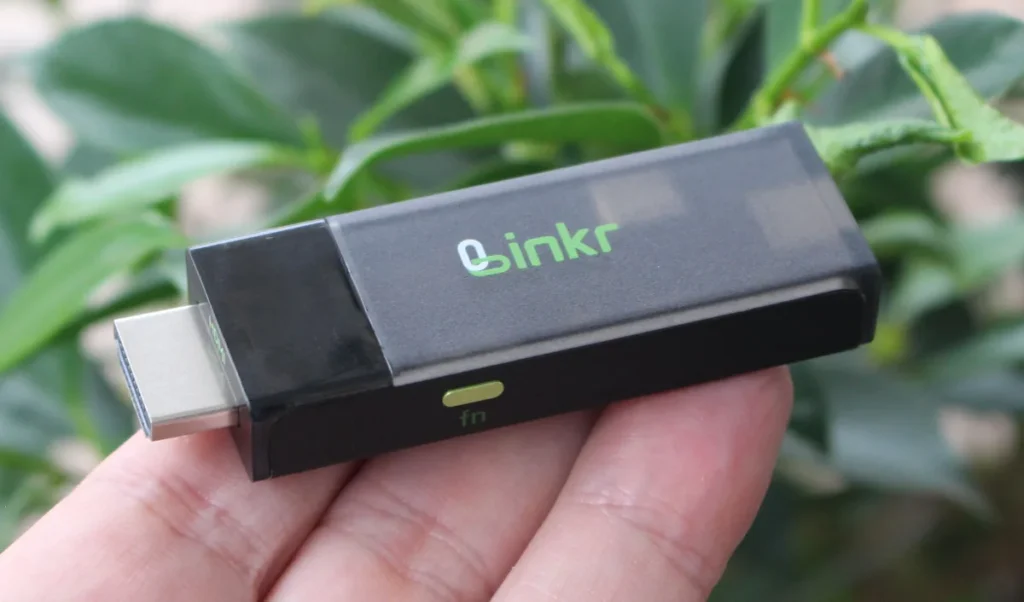
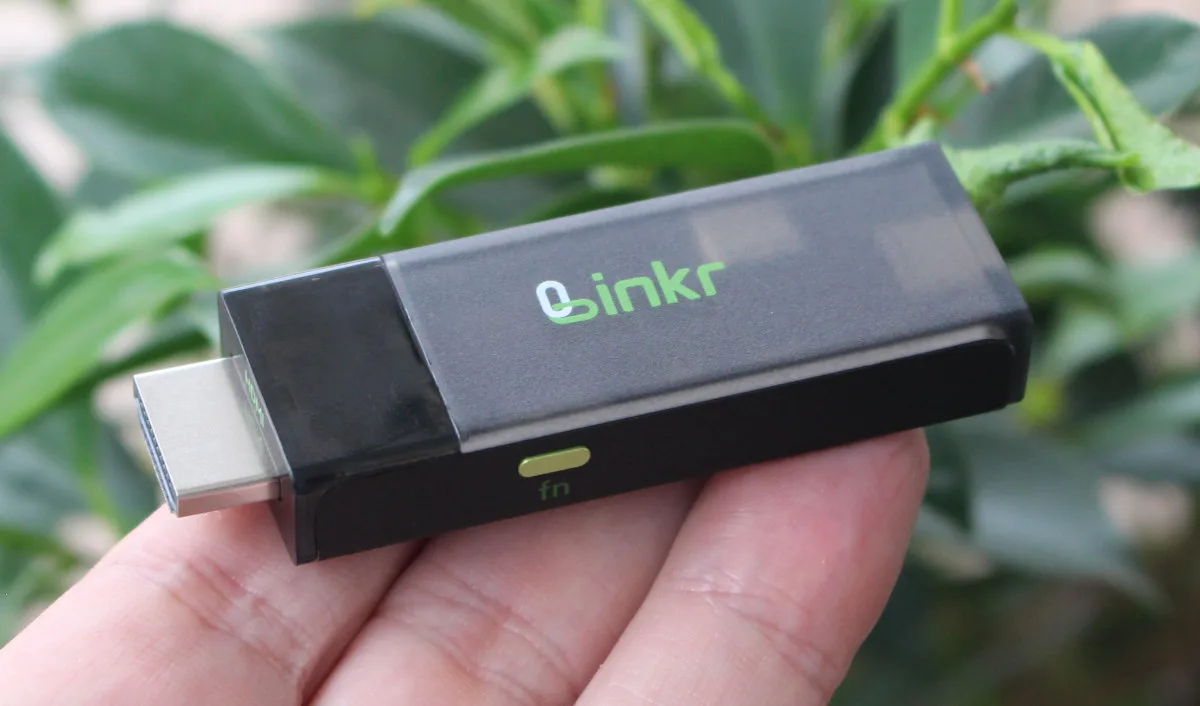
Enter the Radxa Linkr, a disruptive device developed by the renowned single-board computer manufacturer Radxa. Roughly the size of a standard USB flash drive (measuring a mere 70 x 22 x 12 mm), the Linkr transforms virtually any computer into a remotely manageable machine from anywhere in the world. Requiring no dedicated client software, the device bridges the gap between hardware-level access and modern web-browser convenience. Priced starting at an aggressively accessible $59, the Radxa Linkr is poised to reshape how system administrators, developers, makers, and power users interact with their physical hardware.
Main Facts: What Is the Radxa Linkr?
At its core, the Radxa Linkr is an ultra-compact IP KVM device designed to capture video output from a target computer via HDMI, emulate keyboard and mouse inputs via USB, and stream the interface securely over a network.
Unlike software-based remote desktop solutions (such as VNC, RDP, or TeamViewer)—which fail entirely if the target computer crashes, loses its operating system, or is sitting in the BIOS—the Linkr operates independently of the host machine’s OS. Because it hooks directly into the physical HDMI and USB ports, users can monitor boot sequences, alter BIOS or UEFI settings, reinstall operating systems, and troubleshoot critical hardware faults from a remote location as if they were sitting directly in front of the monitor.
Key specifications and features include:
- Form Factor: Ultra-compact, measuring 70 x 22 x 12 mm (comparable to a USB thumb drive).
- Target Connection: HDMI for video capture (up to 2K at 30Hz or 3072×1728 at 30fps) and USB for HID (Human Interface Device) keyboard and mouse emulation.
- Connectivity: Dual-mode Wi-Fi 6 (via an AIC8800 module), a RealTek RTL8152B Ethernet port, and a USB-C interface supporting client and access point modes.
- Processing Core: Rockchip RV1106G3 System-on-Chip (SoC), featuring a 1.2GHz Arm Cortex-A7 CPU, a RISC-V co-processor, and a 1 TOPS Neural Processing Unit (NPU) for artificial intelligence tasks.
- Security: Out-of-the-box integration with Tailscale VPN and native support for two-factor authentication (2FA).
- Pricing & Availability: Starting at $59, available globally through major distributors including AliExpress, Amazon, Arace, and Allnet.
Chronology of Development and Market Introduction
The path to the Radxa Linkr reflects a broader industry trend toward miniaturization and edge-AI integration in maker hardware.
The Evolution of IP KVMs
For decades, KVM over IP units were enterprise-grade hardware—heavy rack-mounted boxes costing hundreds or thousands of dollars. Over the past five years, the open-source community and independent developers began creating DIY alternatives, most notably the popular PiKVM project, which turns a Raspberry Pi into an IP KVM. While powerful, PiKVM setups often require sourcing multiple components (Raspberry Pi boards, HDMI capture dongles, and custom printed circuit boards) and can become bulky and relatively expensive.
Radxa’s Intervention
Recognizing the demand for an all-in-one, plug-and-play, commercially manufactured alternative that bypassed supply chain constraints and DIY assembly hurdles, Radxa engineered the Linkr. By leveraging its expertise in custom SoC designs—specifically utilizing Rockchip silicon—the company managed to compress enterprise-grade KVM functionality into a footprint no larger than a thumb drive.
- Early 2026 / Pre-Launch Phase: Specifications and engineering samples of the Linkr began circulating within maker circles, generating significant buzz due to the integration of an onboard NPU and Wi-Fi 6 connectivity—features rarely seen in traditional, single-purpose KVM dongles.
- Official Launch: Radxa formally opened project documentation via its official portal (
linkr.now), detailing operational modes, firmware architecture, and API hooks for AI automation. - Commercial Rollout: The device hit global distribution channels at an MSRP of $59, instantly positioning it as one of the most cost-effective hardware-level remote management tools on the market.
Supporting Data: Hardware, Components, and Architecture
The engineering achievement of the Radxa Linkr lies in how much computing power and interface capability has been packed into its tightly constrained dimensions. A deep dive into the hardware reveals a sophisticated bill of materials:
| Component Category | Hardware Specification | Purpose / Function |
|---|---|---|
| Main Processor | Rockchip RV1106G3 SoC | Core system management and instruction processing. |
| CPU Architecture | Arm Cortex-A7 (1.2GHz) + RISC-V Co-processor | Multitasking execution and low-power efficiency management. |
| AI Acceleration | 1 TOPS NPU (Neural Processing Unit) | Local machine learning operations, advanced automation, and diagnostic support. |
| Video Processing | 3rd-Gen 5MP ISP & VPU | Handles H.265/H.264 video encoding up to 3072×1728 at 30fps. |
| Video Capture Bridge | Rockchip RK682F (HDMI-to-MIPI CSI) | Translates incoming HDMI video signals into data the SoC can process. |
| System Memory | 256MB DDR3L | On-chip RAM for firmware execution and buffer management. |
| Storage | Optional 16GB eMMC Flash | Persistent storage for logs, configuration profiles, and system data. |
| Network & Wireless | AIC8800 Wi-Fi 6 Module + RealTek RTL8152B Ethernet | Provides flexible local network and wireless internet connectivity. |
| Power Delivery | USB-C (5V / 2A requirement) | Powers the device and facilitates direct computer communication. |
Video and Power Considerations
Technical documentation from Radxa emphasizes the importance of proper power delivery and cabling. Because the Linkr draws power through its USB-C port, users are strongly advised to use a dedicated 5V/2A power adapter rather than relying solely on the target computer’s USB port, ensuring uninterrupted stability during intense encoding sessions.
Furthermore, video fidelity depends heavily on the quality of the HDMI connection. While users can deploy longer runs—such as a 5-meter HDMI 2.1 cable—to position the Linkr conveniently away from a cramped server rack or desk setup, the USB HID connection should remain short and shielded to prevent electromagnetic interference and latency spikes in mouse and keyboard emulation. For power users seeking extended logging or local recording, an optional MicroSD card reader module utilizing an SPI interface can be attached to store diagnostic logs and video archives.
Official Responses and Documentation
Radxa has positioned the Linkr not merely as a closed-source appliance, but as an extensible ecosystem. Through the official documentation hub (linkr.now), the manufacturer has detailed extensive usage modes designed to appeal to both enterprise system administrators and software developers.

A standout aspect of the official platform release is Radxa’s embrace of advanced artificial intelligence frameworks. Unlike standard KVMs that only stream pixels, the Linkr’s onboard 1 TOPS NPU and software architecture support native integration with emerging AI agents such as OpenClaw and Hermes.
According to Radxa’s technical briefings, these AI agents can be enabled to autonomously execute diagnostic routines, monitor system error logs displayed on the screen during boot failures, execute maintenance scripts, and alert administrators to hardware-level anomalies before they cascade into catastrophic system failures.
"The modern data center and remote workspace require more than just remote eyes and hands; they require intelligent edge capabilities," noted technical documentation released via the project site. "By embedding processing power and AI agent support directly into a thumb-sized KVM, we are shifting the paradigm from passive remote viewing to active, automated machine maintenance."
Implications: What the Radxa Linkr Means for the Industry
The introduction of the Radxa Linkr at a $59 price point carries profound implications across multiple sectors of the technology industry:
1. Democratization of Hardware-Level Remote Access
Historically, out-of-band management tools like IPMI (Intelligent Platform Management Interface) or dedicated enterprise KVM-over-IP switches were restricted to enterprise data centers due to high costs. For small businesses, creative professionals, and prosumers, managing a remote workstation meant crossing fingers that a software update wouldn’t lock them out. The Linkr brings industrial-grade reliability to consumer and prosumer budgets, making hardware-level recovery accessible to anyone.
2. The Rise of AI-Assisted Edge Troubleshooting
The inclusion of an NPU and support for automation frameworks like OpenClaw and Hermes hints at the future of IT administration. Instead of human operators manually clicking through error screens over a compressed video stream, local AI co-pilots residing on the Linkr can analyze visual data from boot sequences in real time, diagnose kernel panics or blue screens of death, and suggest or execute remediation steps autonomously.
3. Enhanced Security and Flexibility via Tailscale
Remote access tools have historically been notorious attack vectors if misconfigured or exposed directly to the public internet. By baking in native Tailscale VPN integration and two-factor authentication (2FA), Radxa addresses security head-on. Users can securely tunnel into their managed machines without opening risky port forwards on their home or office routers, bridging ease-of-use with zero-trust networking principles.
4. Empowerment of the Maker and Homelab Community
Homelabs—private collections of servers and computers run by enthusiasts for learning, hosting media, and testing software—are booming. The ability to deploy a $59 stick that allows headless management of a Windows, Linux, or macOS rig without modifying the host’s internal hardware is a massive win for the community. Furthermore, the inclusion of Wi-Fi 6 and Access Point modes means the device can be configured even in environments lacking traditional wired Ethernet drops.
Conclusion
The Radxa Linkr successfully redefines what users should expect from a remote management tool. By fusing the low-level utility of a hardware KVM with the accessibility of a web browser interface, the versatility of Wi-Fi 6 and Tailscale security, and the futuristic addition of edge-AI agent support, Radxa has delivered a remarkably comprehensive package.
At $59, it removes financial barriers to entry, offering peace of mind to anyone who has ever dreaded a remote computer freezing mid-update or failing to boot after a configuration change. As units ship globally via Amazon, AliExpress, and specialized distributors, the Radxa Linkr is well-positioned to become an indispensable tool in the modern digital toolkit.
For further technical specifications, firmware updates, and documentation, visit the official project portal at linkr.now.