Raising the Bar: Google Play Unveils New Quality Standards for Android Developers
By Technical Correspondent
In a significant move to standardize the Android user experience, Google has announced a new set of quality requirements for apps and games distributed via the Google Play Store. These updates, unveiled by Raghavendra Hareesh Pottamsetty, General Manager of Google Play Developer & Monetization, represent a strategic pivot toward performance optimization and seamless user migration. As the mobile hardware landscape continues to diversify, Google is shifting the onus of system stability toward developers, setting firm thresholds for memory management and authentication processes.
The Mandate for a Healthier Ecosystem
The core philosophy behind these updates is rooted in the "shared commitment" to a robust Android ecosystem. With hardware constraints becoming a primary bottleneck for many users—ranging from budget-friendly devices with limited RAM to high-end flagships—Google is intervening to prevent "bad behavior" at the application level.
The two primary pillars of this new policy are:
- Memory Footprint Optimization: Stricter performance thresholds for memory and code efficiency.
- Zero-Tap Authentication: A mandatory shift toward seamless, secure device migration via the Android Restore Credentials API.
Google asserts that these changes are not merely administrative hurdles but essential evolutions to ensure that Android remains a premium-tier platform for all users, regardless of their device hardware.
Chronology: A Roadmap to Compliance
Google has outlined a clear timeline to allow developers sufficient lead time for technical audits and refactoring. The transition period is categorized into two distinct phases, focusing on performance and security respectively.

Phase 1: Performance Thresholds (February 2027)
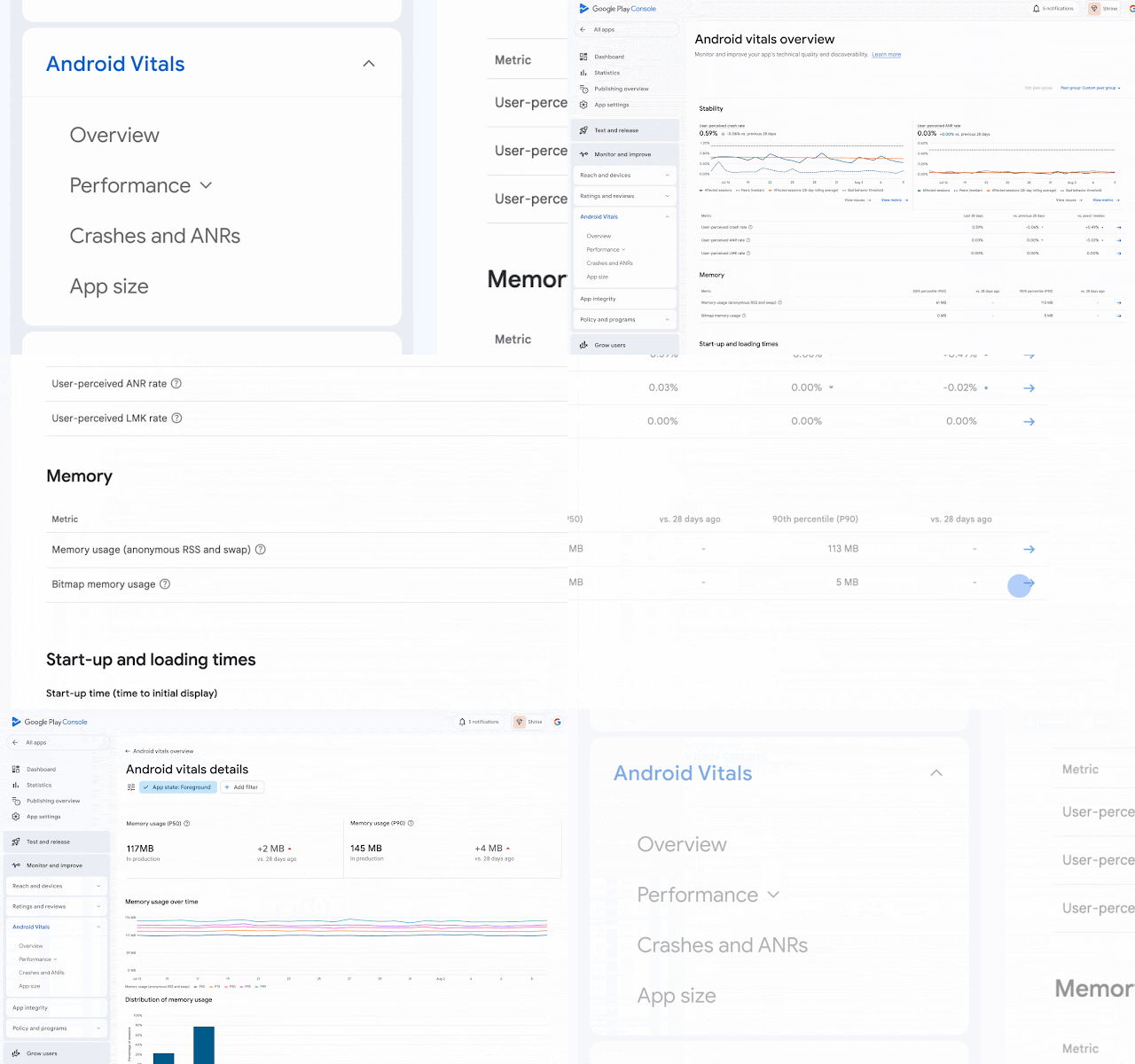
By February 2027, all applications must adhere to newly defined "bad behavior" thresholds. These metrics, which will be monitored through Android Vitals, focus on three specific areas:
- Anonymous RSS (Resident Set Size) + Swap: Controlling the total physical memory footprint of the application.
- Bitmap Memory Usage: Curbing excessive image memory consumption, which is a common culprit in app crashes.
- DEX Code Optimization: Reducing the overhead of executable code to minimize startup latency and memory bloat.
Phase 2: Zero-Tap Sign-In (April 2027)
Following the performance rollout, April 2027 marks the deadline for the implementation of the "Zero-Tap Sign-In" standard. This requirement mandates that any app offering user sign-in functionality must integrate with the Android Restore Credentials API. This ensures that when a user migrates to a new device, their session remains persistent, eliminating the friction of manual re-authentication.
Supporting Data: The Anatomy of "Bad Behavior"
To understand why these mandates are being enforced, one must look at the data Google has collected via Android Vitals. Internal analysis suggests that a significant percentage of system-wide slowdowns and unexpected app terminations are directly linked to applications that fail to respect the platform’s memory management boundaries.
Addressing Memory Bloat
Modern Android devices utilize a sophisticated "Memory Limiter" to prevent a single app from starving the OS of resources. Google’s new requirements are designed to align developer practices with the realities of this limiter. By forcing developers to optimize their code—specifically regarding DEX files and bitmap rendering—Google aims to reduce the frequency of background process kills.
The Developer Toolkit
Google has begun providing diagnostic tools within the Play Console to help developers get a head start. These tools include:
- Enhanced Memory Metrics: Providing granular visibility into how an app consumes RAM across different process states.
- DEX Optimization Insights: Automated reports that flag code structures which are inefficient or likely to trigger memory-related throttling.
Later this year, Google plans to expand these diagnostics, offering developers a "state-by-state" breakdown of app performance, allowing for surgical precision in optimization efforts.

Official Responses and Strategic Intent
In his announcement, Raghavendra Hareesh Pottamsetty emphasized that these thresholds are not static. "As the Android ecosystem continues to evolve and we better understand your unique use cases, we anticipate these thresholds to adapt over time," he noted.
This suggests a long-term strategy of "continuous improvement." Google is essentially treating app performance as a dynamic security feature. By raising the bar for code quality, they are simultaneously making the Android platform more resilient against the common pitfalls of legacy code.
For developers concerned about the impact on games, Google has offered a temporary reprieve. While games are currently exempt from the mandatory Zero-Tap Sign-In requirement, the company has indicated that specialized guidance for complex gaming authentication will be released later in 2027. Despite the exemption, Google strongly encourages gaming studios to adopt the Restore Credentials API now to prepare for the future.
Implications: The High Cost of Non-Compliance
The implications of these new policies are substantial. Failure to meet the established thresholds will not result in an immediate removal of an app, but rather a degradation of its standing within the ecosystem.
1. Visibility and Discoverability
Google has explicitly stated that apps failing to meet the new performance thresholds may face "reduced app visibility." In the competitive landscape of the Play Store, where discoverability is a primary driver of growth, a drop in ranking could be financially devastating for developers.
2. Publishing Capabilities
For severe or persistent cases of non-compliance, Google reserves the right to limit or restrict publishing capabilities. This is a clear signal that Google is moving toward a "quality-first" gatekeeping model, similar to the strategies employed by other major app store operators, to ensure that the average user experience remains high.
.gif)
3. Increased Technical Debt
Developers who have historically ignored memory management or utilized "lazy" authentication flows will now be forced to address these issues. While this represents a significant investment in time and engineering resources, it also presents an opportunity. Apps that are optimized for memory usage are generally faster, more responsive, and more battery-efficient, which correlates strongly with higher user retention rates and better store ratings.
Navigating the Transition: A Guide for Developers
To ensure a smooth transition, developers are encouraged to follow a structured roadmap:
- Immediate Audit: Use the current Android Vitals reports in the Play Console to identify existing memory bottlenecks.
- Refactoring Strategy: Prioritize the reduction of bitmap usage and optimize DEX files. These are the two most likely areas to trigger the new performance thresholds.
- Authentication Audit: Evaluate your current login flows. If you are not using the Android Restore Credentials API, begin planning an integration project immediately.
- Monitor Feedback: Keep a close eye on the Google Play Developer Help Center. As the 2027 deadlines approach, Google is expected to release further technical documentation and updated FAQs.
The Bigger Picture
The Android ecosystem is arguably at its most mature stage, and these changes reflect a move toward stability over raw growth. By standardizing the behavior of apps, Google is attempting to create a more predictable environment for consumers.
While some in the developer community may view these requirements as an overreach, the broader industry trend suggests that performance and security are becoming the most critical factors in consumer choice. Apps that provide a "premium experience"—defined by speed, security, and seamless transitions—are the ones that will win the market.
Ultimately, Google’s latest announcement is a call to action for the developer community to take ownership of their impact on device hardware. By collaborating with the platform’s limitations rather than pushing against them, developers can help ensure that the Android experience remains competitive, reliable, and user-centric for years to come.