Evolving Downstream: JNC’s MLP Technology Addresses the ‘Big Molecule’ Bottleneck in Bioprocessing
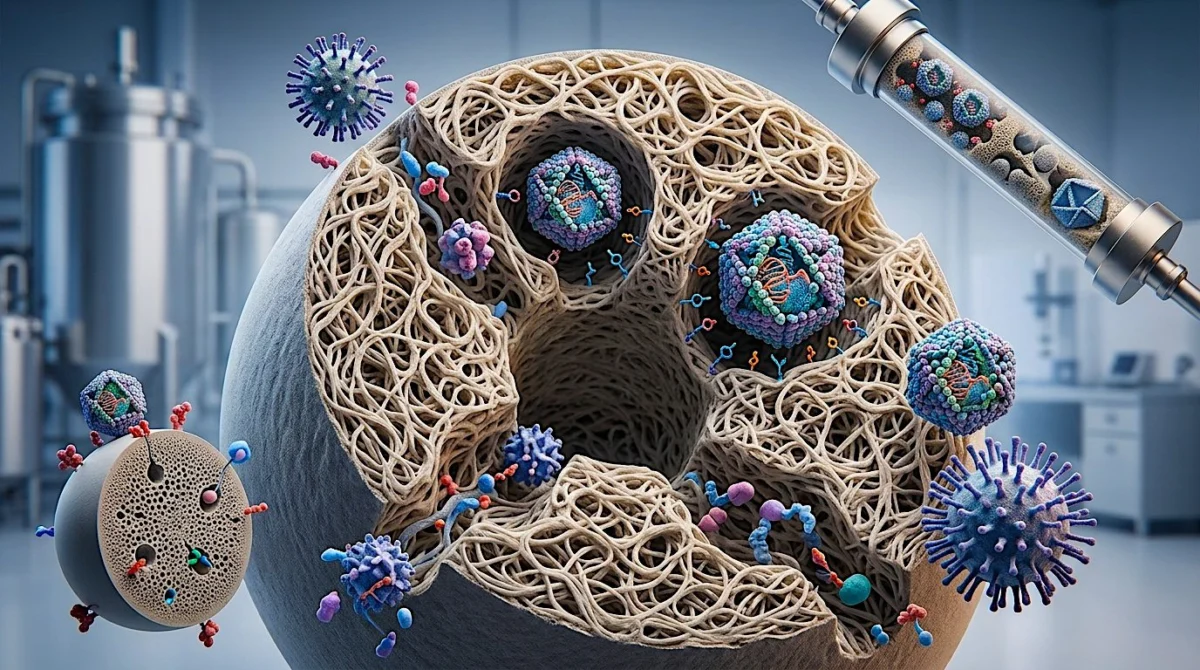
As the biopharmaceutical landscape shifts from traditional monoclonal antibodies toward complex viral vectors, mRNA vaccines, and sophisticated cell-based therapies, the industry is confronting a significant mechanical hurdle: the "size gap." The molecules and particles manufacturers must purify are growing exponentially in physical dimension, rendering many conventional porous chromatography media obsolete. At BioProcess International 2026 (BPI26), JNC Corporation is positioning its latest innovation—the Monolith-like Particle (MLP) platform—as a critical solution to this evolving downstream processing crisis.
The Main Facts: Addressing the Size Constraint
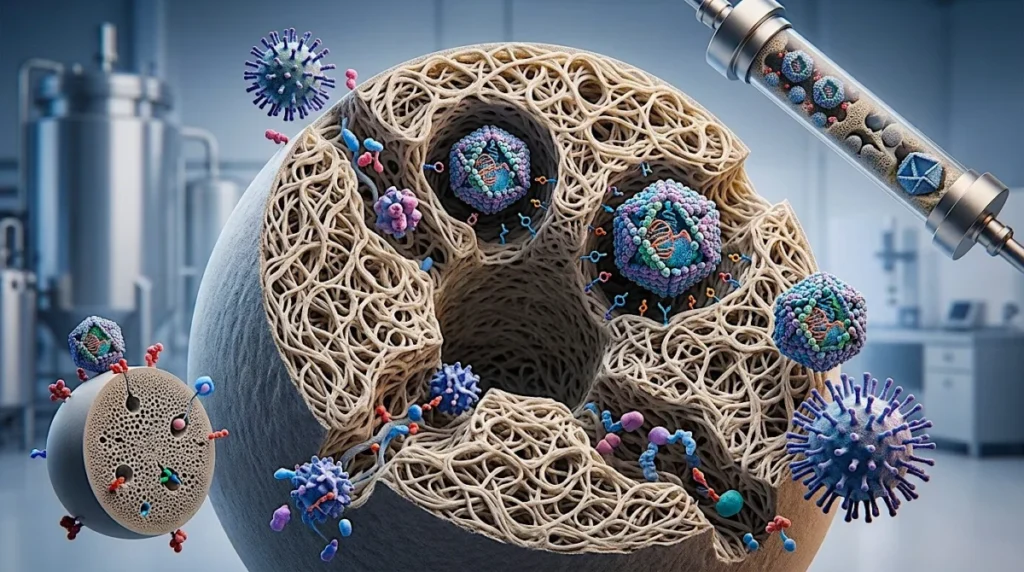
The fundamental problem facing modern downstream development is one of geometry. Conventional chromatography resins are designed with specific pore sizes optimized for the diffusion of smaller proteins. However, when these resins encounter massive structures—such as adeno-associated viruses (AAV) or inactivated viral vaccines—the targets are often physically barred from entering the bead’s interior. This results in "surface-only" binding, severely limiting capacity and resolution.
JNC’s Cellufine portfolio, a well-established family of cellulose-based chromatography media, has served the industry for years. Yet, the company’s new MLP platform represents a pivot in material science. By utilizing a wide-pore, 3D bead architecture, JNC has created a "monolith-like" environment that offers the high-speed flow characteristics of monoliths while maintaining the handling and scalability of traditional spherical beads.
The core promise of the MLP platform is to improve access for bulky biological targets. By optimizing the internal architecture, JNC allows these large, complex molecules to navigate the resin’s interior, interact with ligands more efficiently, and achieve a degree of purity that was previously considered unattainable with traditional media.
Chronology of Development: From Concept to BPI26
The trajectory of JNC’s MLP development follows a strategic progression of material engineering aimed at solving specific, persistent purification hurdles.
- Foundation Phase: JNC leveraged its deep history in cellulose-based chromatography media to understand the mechanical limits of traditional bead structures. Recognizing that standard pore sizes were becoming a bottleneck for viral vector production, the R&D team initiated the development of a wide-pore cellulose backbone.
- Architectural Innovation: The research transitioned into designing a 3D architecture that mimics the flow-through benefits of a monolithic column—which typically offers low mass-transfer resistance—within a granular resin format. This allows for easier column packing and standard operational procedures in GMP manufacturing.
- Validation of Specialized Ligands: Once the physical structure was established, JNC began integrating specific ligands to address known industry "pain points," such as the separation of empty versus full AAV capsids.
- BPI26 Showcase: The current phase marks the public unveiling of the platform, where JNC is using the BPI26 forum to share empirical data, conduct poster presentations, and engage with process developers to validate the technology in real-world, large-scale manufacturing environments.
Supporting Data: Performance Benchmarks in Viral Purification
The efficacy of JNC’s approach is substantiated by preliminary data focusing on two key products: Cellufine MLP DexQ and Cellufine MLP DexS.
The AAV Challenge (DexQ)
One of the most persistent bottlenecks in AAV manufacturing is the separation of "empty" capsids (which lack the therapeutic genetic material) from "full" capsids (which contain the desired payload). The presence of empty capsids is not only a loss of yield but can trigger unwanted immune responses in patients. JNC’s poster presentation at BPI26 detailed how the Cellufine MLP DexQ resin, utilizing its wide-pore architecture, provides the necessary internal surface area for the selective binding and elution required to resolve these two populations.
Vaccine Purification and Viral Vector Efficacy (DexS)
The performance data for Cellufine MLP DexS, which utilizes dextran sulfate as a ligand, is particularly striking for vaccine developers. In trials involving inactivated influenza virus, the resin achieved a 13-fold concentration factor. Perhaps more impressive was the impurity removal profile:
- Influenza Virus: 13-fold concentration with a 90.3% reduction in protein impurities.
- Human Coronavirus OC43: A 97.3% reduction in protein impurities accompanied by a 91% virus recovery rate.
These figures underscore a critical shift in downstream processing: the ability to maintain high recovery rates while simultaneously clearing massive amounts of host-cell proteins and process-related impurities. By providing a "highway" into the bead, the MLP structure ensures that these large targets are not just caught on the surface, but are processed through the full volume of the resin bed.
Official Perspectives: The Scientist’s View
At the heart of the technical dissemination is the work of Chigusa Mori, R&D scientist at JNC. In her presentation, “Cellufine MLP: Wide Pore Cellulose Base Bead 3D Architecture for Large Biomolecule Chromatography Applications,” Mori highlighted that the resin-design detail is no longer just about chemistry; it is fundamentally about structural physics.
Mori’s research emphasizes that for downstream developers, the pore architecture determines the entire process economics. If the target molecule cannot enter the bead, the developer is forced to use massive columns and excessive amounts of resin to compensate for the lost binding capacity. By optimizing the "3D Architecture" of the beads, JNC is effectively reducing the total resin volume required for a given batch size, which directly translates to lower buffer consumption, reduced time-on-column, and ultimately, lower costs per dose.
Implications: The Future of Downstream Processing
The introduction of the MLP platform at BPI26 signals a broader maturation of the bioprocessing industry. As therapeutic modalities move beyond traditional proteins toward complex assemblies, the "one-size-fits-all" approach to resin selection is becoming a relic of the past.
1. Re-thinking Process Performance
JNC’s strategy suggests that the physical properties of the product—not just its chemical charge or hydrophobicity—must dictate the design of the purification resin. When the product is as large as a virus particle, the "resin-design detail" of pore size becomes the primary determinant of process success.
2. Enabling Scalability
By maintaining a bead-based format, JNC avoids the technical complications often associated with large-scale monolithic columns, which can be difficult to scale linearly. Developers can continue using standard chromatography systems while gaining the performance benefits of a wide-pore architecture.
3. Economic and Regulatory Impact
For the industry, the implications are two-fold. Economically, the ability to concentrate viral vectors and vaccines more efficiently reduces the footprint of manufacturing facilities and the cost of goods sold (COGS). From a regulatory perspective, the enhanced impurity clearance—such as the 97.3% protein reduction seen with coronavirus samples—provides a stronger safety profile for final drug products, easing the path through clinical trials and regulatory filings.
Conclusion: A New Standard for Large Molecules
As the industry looks toward 2026 and beyond, the challenges of purifying large, complex biologics will only intensify. The work JNC is presenting at BPI26 suggests that the solution lies at the intersection of material science and bioprocess engineering.
By positioning large-pore cellulose chromatography as a viable pathway to handle these massive therapeutic entities, JNC is providing developers with a toolkit that bridges the gap between traditional chromatography and the next generation of medicine. Whether it is improving the purity of an AAV gene therapy or scaling the production of a next-generation vaccine, the ability to manage the "size" of the molecule is set to become the defining characteristic of high-performing downstream processes. As BPI26 continues, the industry’s focus on these MLP products highlights a clear consensus: the future of bioprocessing is not just about the ligands we use, but the architecture of the media that carries them.