The Media Bottleneck: How Just – Evotec Biologics is Rethinking Biomanufacturing Logistics
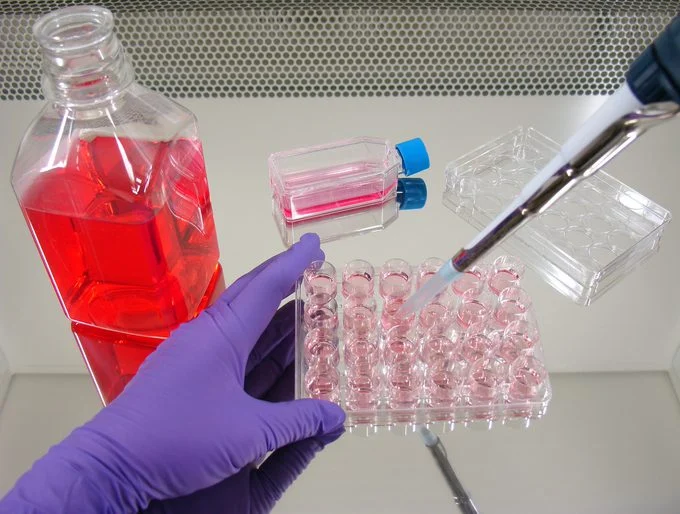
In the high-stakes world of biopharmaceutical manufacturing, the focus is often placed on the final molecule—the complex protein therapy that promises to treat cancer, autoimmune diseases, or rare genetic disorders. Yet, behind the scenes, a logistical crisis has been brewing. As the industry shifts toward intensified production and continuous processing to lower costs and increase output, the very foundation of these processes—the cell culture media—has become a significant operational hurdle.
For many manufacturers, the sheer volume of media required to sustain high-density cell cultures is creating a "storage squeeze." The industry is now looking toward innovative solutions to optimize these footprints. Among the companies leading this charge is Seattle-based Just – Evotec Biologics, which recently unveiled its J.Media platform, a concentrated, room-temperature stable powder designed to alleviate the burden of massive, cold-chain-dependent media storage.
The Bottleneck: The Hidden Cost of Cell Culture Media
The storage and preparation of culture media represent one of the most under-discussed challenges in modern biopharma. Guy Rachmuth, a key voice at Just – Evotec Biologics, explains that as manufacturers push for higher yields, the logistical requirements have scaled in ways that legacy infrastructure was never designed to handle.
"Cell culture media requires significant footprint for both batching and storing media," Rachmuth noted in an interview with GEN. "This includes the necessity for cold-temperature storage for many final liquid media formulations. When you consider that manufacturers often need tens to hundreds of thousands of liters of media per campaign, storage efficiency becomes an existential consideration for the facility."
The complexity does not end with space. Mixing equipment limitations often force manufacturers to compound multiple media batches per production run, introducing human error, increasing downtime, and ballooning operational complexity. In the context of intensified production—where continuous perfusion of bioreactors is the goal—the volume requirements skyrocket. In these setups, the media must be replenished constantly, turning the supply chain into a high-pressure, high-volume logistical race.
Chronology: From Internal Solution to Industry Standard
The development of J.Media did not begin as a commercial product. Instead, it was born out of necessity within the walls of Just – Evotec Biologics. As the firm worked on its own manufacturing programs, the team encountered the same logistical friction that plagues the rest of the industry.
Phase 1: Internal Optimization
Several years ago, the team at Just – Evotec identified that their own internal programs were being slowed down by the logistics of liquid media. They sought a solution that would be more sustainable, scalable, and easier to handle. The goal was to create a media format that could be stored at room temperature without compromising the nutritional profile required for high-density mammalian cell cultures.
Phase 2: Platform Validation
Once developed, the media was integrated into the company’s core platform technology. It underwent rigorous testing across nearly 70 internal projects, serving as the bedrock for the company’s development and manufacturing services. This "real-world" stress testing allowed the team to refine the formulation, ensuring it could handle a variety of cell lines and protein types.
Phase 3: The Public Launch
Following the success of these internal programs, Just – Evotec Biologics reached a strategic decision to commercialize the platform. The company recognized that if the media could streamline their own operations, it could provide a competitive advantage to their partners and the wider industry. The formal introduction of J.Media to the global stage took place at the BPI (Bioprocess International) conference and exhibition in Boston, where the company presented data demonstrating its performance against established, commercially available alternatives.
Supporting Data: Efficiency and Productivity Metrics
The performance claims surrounding J.Media are rooted in a series of comparative studies that highlight both its physical advantages and its biological efficacy. In an era where "volumetric productivity" is the primary metric for success, J.Media has shown significant promise.
Volumetric Productivity and Titer
During the testing phase, J.Media outperformed several industry-standard products. Rachmuth highlights that the platform supports extremely high cell densities, routinely running at 80-100 x 10^6 cells/mL. More importantly, the cells maintain high viability for extended periods—typically between 15 and 25 days, or even longer, depending on the process configuration.
In the context of perfusion operations, where media efficiency is paramount, the results have been compelling. Data shared by the company indicates that volumetric productivities of up to 4–5 g/L/day have been achieved. This level of output suggests that the media provides the precise nutrient balance required to push cells to their metabolic limits without inducing premature cell death or protein degradation.
The Footprint Advantage
Beyond the numbers, the primary differentiator remains the physical format. By shifting from traditional liquid media to a concentrated, room-temperature stable powder, the storage requirements are fundamentally altered. Facilities that previously dedicated thousands of square feet to refrigerated storage tanks can now consolidate their footprint. This enables a more flexible "plug-and-play" approach to facility design, allowing companies to pivot quickly between projects without waiting for massive, temperature-controlled shipments to arrive.
Official Responses and Perspectives
The industry reception to the J.Media platform reflects a broader trend toward "de-risking" the supply chain. For Just – Evotec Biologics, the move to offer the media as a standalone product is a strategic pivot.
"Given the success we’ve seen internally, we recognized an opportunity to make J.Media available more broadly to the industry," Rachmuth stated. "By offering it as a standalone product, we aim to help other organizations benefit from the same combination of productivity, scalability, and cost efficiency that we have integrated into our own operations."
This approach addresses a common pain point in the contract development and manufacturing organization (CDMO) space: the integration of disparate technologies. By providing a high-performance media platform, Just – Evotec is essentially offering a "known quantity" to its clients—a way to ensure that the transition from small-scale development to commercial manufacturing is as seamless as possible.
Implications for the Future of Biopharma
The shift toward technologies like J.Media has far-reaching implications for the future of drug development and the economics of biologics.
1. Enabling Continuous Manufacturing
The push toward continuous manufacturing—which promises to replace the batch-to-batch variability of the past with a steady, reliable stream of product—is inherently dependent on the stability of inputs. If the media can be stored easily and mixed on-demand, the entire "continuous" workflow becomes more robust.
2. Democratizing Access to Advanced Therapeutics
One of the major drivers of the high cost of protein therapeutics is the high cost of goods sold (COGS). If a manufacturer can increase their volumetric productivity while simultaneously reducing their warehouse footprint and energy usage (through the elimination of cold-chain logistics for media), the cost per gram of drug substance decreases. This is a critical factor in making advanced therapies more accessible to a global patient population.
3. Sustainability in Manufacturing
The biopharmaceutical industry has historically been an energy-intensive sector, particularly regarding refrigeration and HVAC requirements for large-scale manufacturing suites. Moving toward dry, room-temperature stable media significantly reduces the carbon footprint associated with shipping and storage. This aligns with the broader "green pharma" initiatives currently being adopted by major players across the globe.
4. Facility Design Flexibility
For emerging biotechs and established firms alike, the ability to build "smaller, faster, and cheaper" facilities is the new holy grail. Technologies that reduce the reliance on massive, fixed-asset infrastructure—like giant liquid media hold tanks—allow for the development of modular, multi-product facilities. J.Media is a catalyst for this design philosophy, enabling companies to focus their capital expenditure on innovation rather than storage infrastructure.
Conclusion
The evolution of J.Media from an internal tool to an industry-wide platform serves as a case study for the maturation of the biopharmaceutical supply chain. As companies look to move beyond the traditional batch-based manufacturing models, the focus must shift to the granular components of the process.
By addressing the "media bottleneck," Just – Evotec Biologics has demonstrated that even seemingly mundane logistical challenges can be transformed into opportunities for innovation. As the industry continues to move toward more complex, intensified processes, the demand for high-performance, easy-to-store, and scalable media will only grow. With J.Media, the company has positioned itself not just as a service provider, but as a technological partner capable of driving the next generation of biomanufacturing efficiency.
As for the broader implications, the industry’s response to such platforms will likely determine the pace at which we see a transition toward fully continuous, highly efficient manufacturing cycles. For now, the data is clear: the path to greater productivity is paved with smarter, more flexible, and more efficient media solutions.