The Era of Granular Choice: Amazon Web Services Expands Bedrock with GPT-6 and Claude 5.5 Offerings
SEATTLE — In the rapidly evolving landscape of enterprise artificial intelligence, a profound philosophical shift has taken hold. For years, the prevailing question in boardrooms and engineering bullpens alike was straightforward, if unnuanced: "How smart is the model?" Today, as frontier models proliferate at a dizzying pace, that binary metric has been replaced by a far more complex calculus. Architects and developers are no longer asking simply for raw intelligence; they are optimizing for a delicate economic and operational triad: intelligence, cost, and latency.
This shifting paradigm took center stage last week across the Amazon Web Services (AWS) ecosystem. In a series of high-profile rollouts on Amazon Bedrock, AWS introduced powerful new additions to its managed AI portfolio, headlined by OpenAI’s GPT-6 Sol and GPT-6 Luna, alongside Anthropic’s Claude Opus 5.5. Together, these releases underscore an industry-wide pivot toward strategic model right-sizing—matching specific workloads to precise points on the cost-performance curve rather than defaulting blindly to the largest, most expensive system available.
Main Facts: The New Frontier on Amazon Bedrock
The latest wave of model integrations on Amazon Bedrock brings targeted capabilities designed to address distinct enterprise pain points, ranging from high-frequency developer operations to long-horizon agentic workflows.
- OpenAI GPT-6 Sol: Engineered explicitly for demanding, recurring engineering and operational workloads. GPT-6 Sol targets complex coding, infrastructure management, and debugging tasks while offering significantly reduced pricing compared to previous-generation GPT-5.6 architectures.
- OpenAI GPT-6 Luna: Tailored for high-volume, focused, and repeatable enterprise tasks. Luna optimizes token throughput and operational efficiency, making large-scale automation economically viable for back-office and transactional pipelines.
- Anthropic Claude Opus 5.5: The inaugural release in Anthropic’s Claude 5.5 family. Claude Opus 5.5 introduces advanced token efficiency, executing complex actions with fewer tokens than its predecessor, Opus 5. It is heavily optimized for agentic coding and sustained, long-running operational workflows.
- The Strategic Shift: Rather than relying on a monolithic approach to AI deployment, AWS is doubling down on giving developers granular control over their infrastructure stack, balancing operational performance with predictable fiscal governance.
Chronology: How the Multi-Model Ecosystem Unfolded
The integration of GPT-6 and Claude Opus 5.5 into Amazon Bedrock represents the culmination of a multi-year strategy by AWS to establish its platform as the premier, agnostic hub for frontier artificial intelligence.
Phase 1: The Monolithic Era and the Rise of Managed AI
When generative AI first burst into the enterprise mainstream, cloud providers raced to onboard foundational models. Early implementations were defined by exclusivity and brute-force scaling. Organizations had few choices, and utilizing state-of-the-art intelligence meant accepting high latency and steep token costs.
Phase 2: The Multi-Model Blueprint on AWS
Recognizing that enterprise customers required diversity, AWS introduced Amazon Bedrock to decouple foundational models from underlying cloud infrastructure. This allowed organizations to access models from Anthropic, Cohere, Meta, AI21 Labs, and Stability AI through a unified, secure API. As competition intensified throughout 2024 and 2025, model releases accelerated, shifting the competitive advantage from mere availability to cost-to-performance optimization.
Phase 3: The Arrival of GPT-6 and Claude 5.5
Over the past several days, the AWS ecosystem reached a new milestone. The introduction of OpenAI’s GPT-6 Sol and Luna models, alongside Anthropic’s Claude Opus 5.5, signaled the maturation of the market. Models are no longer generalized experiments; they are hyper-specialized tools designed for distinct operational slots within an enterprise software development lifecycle (SDLC).
Supporting Data and Economic Architecture
The underlying architecture of these new deployments reveals a deliberate effort to solve the total cost of ownership (TCO) equation that enterprise CIOs grapple with.
Token Efficiency and Cost Reductions
Historically, scaling up model capability meant a linear or exponential increase in operational expenditure. The GPT-6 generation disrupts this curve. By offering performance metrics that eclipse older GPT-5.6 iterations while undercutting them on price, OpenAI and AWS are driving down the cost barriers of AI integration.
Similarly, Anthropic’s architectural tweaks in Claude Opus 5.5 focus heavily on token economy. By achieving higher completion quality with fewer input and output tokens, enterprises running millions of automated interactions stand to realize substantial cost savings.
Latency and Throughput Benchmarks
In production environments, latency is often the silent killer of user adoption.
- GPT-6 Luna is specifically architected for sub-second responses on high-volume, transactional tasks.
- GPT-6 Sol balances deeper reasoning capabilities with optimized inference paths for asynchronous development jobs.
- Claude Opus 5.5 addresses the latency associated with "thinking" or reasoning loops in autonomous agents, allowing multi-step reasoning tasks to execute faster without sacrificing accuracy.
Official Responses and Industry Commentary
Industry leaders and AWS architects have emphasized that this multi-model flexibility is not merely a convenience, but a foundational requirement for modern cloud architecture.
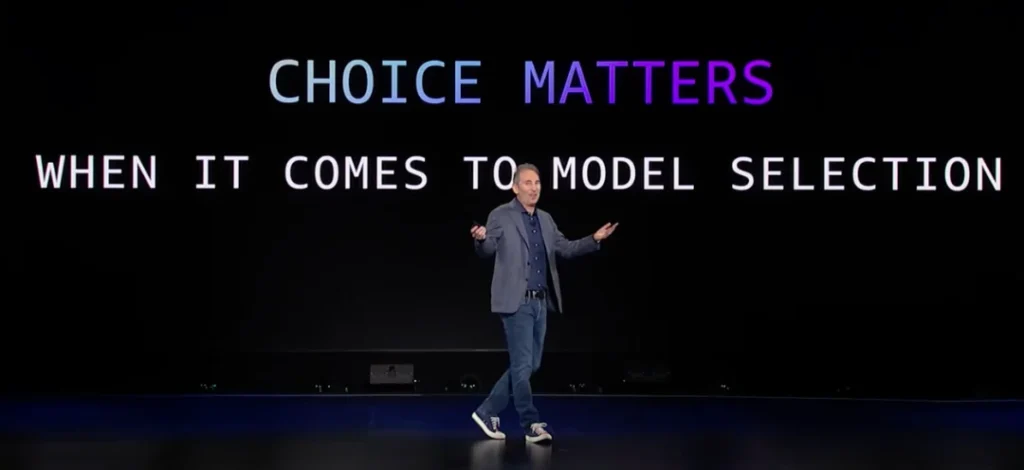
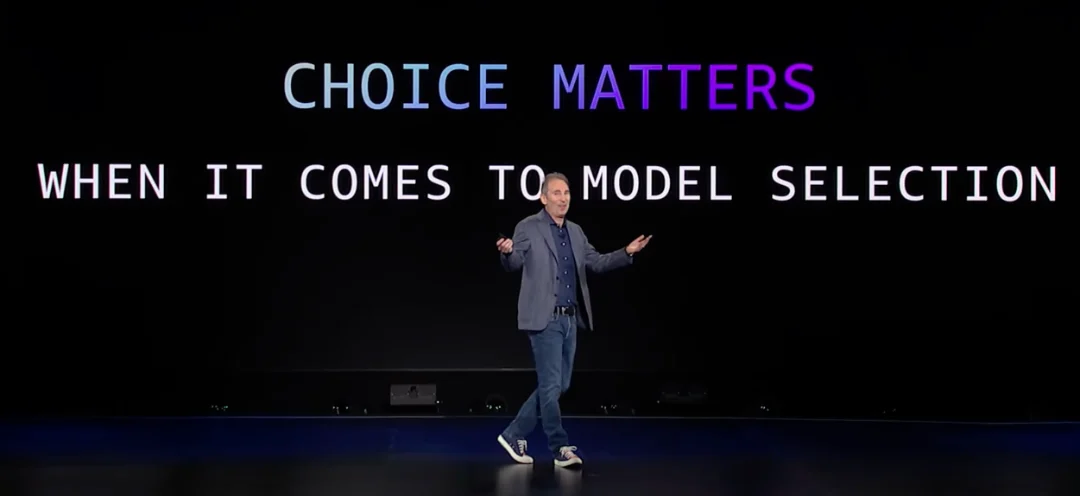
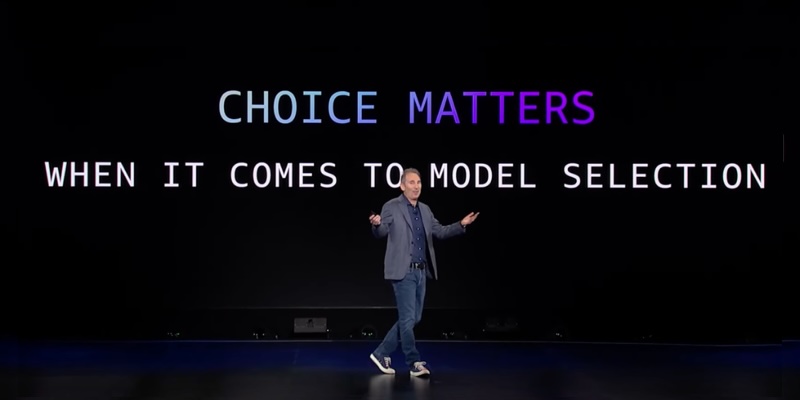
"If there’s one theme that defined last week, it’s choice," noted AWS contributor Daniel Abib in his weekly industry roundup. "The frontier models keep arriving, and the interesting question is no longer just ‘how smart is it?’ but ‘which model fits this step, at this cost, at this latency?’"
Enterprise software engineers have similarly praised the arrival of GPT-6 Sol for CI/CD pipeline automation. Early evaluations suggest that Sol’s ability to parse complex repository structures without hallucinating context markers makes it uniquely suited for automated pull request reviews and infrastructure-as-code (IaC) generation.
Anthropic representatives have highlighted that Claude Opus 5.5 was built in direct response to developer demand for long-duration autonomy. “Agents cannot be effective if they constantly lose the thread of execution or exhaust their token budgets halfway through a complex refactor,” noted an engineering lead familiar with the rollout. “Claude 5.5 represents a leap forward in sustained operational focus.”
Implications for the Enterprise
The convergence of these models on Amazon Bedrock carries wide-ranging implications for software development, enterprise budgeting, and cloud security architecture.

1. The Death of the "One-Size-Fits-All" Strategy
Organizations that previously routed all user queries or backend tasks through a single, expensive frontier model are finding themselves at a competitive disadvantage. The availability of targeted models like GPT-6 Luna for high-volume tasks and Claude Opus 5.5 for agentic reasoning encourages the adoption of composite architectures. In these setups, a lightweight, fast model handles initial classification and routing, handing off complex reasoning tasks to premium models only when strictly necessary.
2. The Acceleration of Agentic Workflows
With Claude Opus 5.5 and GPT-6 Sol entering production environments, autonomous software agents are moving from proof-of-concept sandboxes into core enterprise workflows. These agents can now autonomously write, test, debug, and deploy code over extended operational windows, fundamentally altering productivity metrics for engineering organizations.
3. Governance, Security, and Observability
As enterprise reliance on multi-model environments deepens, the complexity of monitoring these systems increases exponentially. Alongside model launches, AWS has continued to expand its observability and security tooling within Amazon Bedrock, ensuring that enterprises retain rigorous audit trails, data privacy guarantees, and compliance safeguards even as they orchestrate complex interactions across multiple third-party foundation models.
Looking Ahead
As the artificial intelligence landscape continues its relentless march forward, the differentiator for cloud providers will no longer be who has the single loudest marquee model, but who can provide the most frictionless, cost-effective, and secure environment for orchestration.
For AWS and Amazon Bedrock, the addition of GPT-6 Sol, GPT-6 Luna, and Claude Opus 5.5 marks a decisive step into an era where intelligence is commoditized, optimized, and deployed with surgical precision. Developers and enterprise leaders navigating this terrain now have more tools—and more choices—than ever before.
For a full, real-time list of AWS announcements, platform updates, and upcoming developer events, consult the official What’s New with AWS portal and the AWS Builder Center.