The Backbone of Modern Software: A Comprehensive Guide to Database Testing, Architecture, and Quality Assurance
In the rapidly evolving digital landscape of today, mobile applications, cloud ecosystems, and interconnected enterprise platforms have introduced unprecedented layers of system complexity. As user interfaces (UIs) become sleeker and more intuitive across Android, iOS, web, and desktop environments, the invisible engines powering them—the backend databases—are growing exponentially more intricate.
Ensuring the security, speed, and seamless operation of these digital vaults has transformed database testing (DB testing) from a routine maintenance task into a specialized, high-demand pillar of modern software engineering.
Main Facts: The Critical Role of Database Testing in Modern Architecture
Databases are the inevitable and indispensable core of virtually every software application in existence. Whether powering a peer-to-peer network, an enterprise-level resource planner, a localized retail point-of-sale system, or critical systems controlling spacecraft and financial ledgers, the database acts as the single source of truth.

However, as applications scale and handle high-frequency transactions—such as real-time banking operations or global stock exchanges—traditional databases often buckle under the weight of Big Data. To manage this, organizations deploy robust database management systems (DBMS) ranging from MySQL and PostgreSQL to Microsoft SQL Server, Oracle, and IBM DB2.
Because these systems vary significantly in cost, robustness, feature sets, and security architecture, rigorous database testing has become non-negotiable. QA professionals must validate more than just stored tables; they must evaluate data mapping, transactional integrity, and complex business logic to protect against catastrophic data corruption or security breaches.
Chronology: The Evolution from Simple Data Storage to Intelligent Backend Processing
Historically, databases served a straightforward, passive purpose: storing records that applications could retrieve when requested.

- The Early Era of Passive Storage: In initial software cycles, databases acted merely as electronic filing cabinets. Testing primarily involved verifying that rows and columns accepted data inputs without crashing the system.
- The Rise of Relational Complexity: As applications grew, developers began offloading business logic directly into the database tier. The introduction of relational constraints, foreign keys, triggers, and stored procedures shifted databases into active participants in application logic.
- The Big Data & Distributed Era: Modern applications demand instant access to massive, unstructured datasets across distributed cloud servers. This shift required database testing methodologies to evolve rapidly, incorporating automated script validation, concurrency stress testing, and real-time ACID compliance checks.
Supporting Data: The Core Checklist for Effective Database Testing
To execute comprehensive database testing, QA engineers must evaluate several foundational pillars. This structured checklist guides testers through what needs to be verified and why it matters.
1. Data Mapping
In any integrated system, data travels continuously back and forth between the front-end user interface and the backend database. Testers must verify that the mapping between UI fields and database columns aligns precisely with system requirements and design specifications (SRS/BRS). Every time a user interacts with the application, the underlying data mapping ensures information lands in the exact intended record.
2. ACID Properties Validation
Every transaction executed within a database must strictly adhere to the ACID properties:

- Atomicity: Ensures that a transaction is all-or-nothing. If any single step within a transaction fails, the entire transaction is aborted, and no partial data is written.
- Consistency: Guarantees that the database transitions from one valid state to another, strictly obeying all defined rules and constraints (e.g., verifying that the sum of two specific columns always equals 100).
- Isolation: Ensures that simultaneous transactions do not interfere with one another, maintaining data integrity even under heavy concurrent loads.
- Durability: Confirms that once a transaction has been committed, its changes are permanent—even in the event of a system crash, power loss, or unexpected error.
3. Data Integrity and CRUD Operations
End-users primarily interact with databases via four core actions known as CRUD: Create, Retrieve, Update, and Delete.
- C (Create): Executed when saving a new record.
- R (Retrieve): Executed when searching or viewing saved data.
- U (Update): Executed when editing existing records.
- D (Delete): Executed when removing a record from the system.
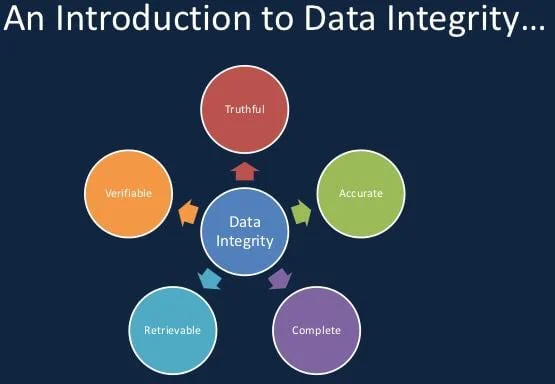
Data integrity dictates that when a user performs an update or delete action in one module or screen, the most recent, up-to-date status must instantly reflect across all other screens and forms. Outdated caching or asynchronous desynchronization compromises data integrity.
4. Business Rule Conformity
Modern databases handle complex relational constraints, automated triggers, and user-defined stored procedures. Testers must construct specialized SQL queries to validate that these complex automated components execute accurately without violating business rules.

Official Perspectives and Methodologies: How to Execute Database Testing
Approaching database testing requires a methodical, step-by-step framework that mirrors standard software testing lifecycles while utilizing specialized query execution.
The Standard Testing Process
- Environment Preparation: Set up the test database environment, ensuring it mirrors production-level configurations and data volumes.
- Test Execution: Run targeted test scripts or user-interface actions that trigger backend database modifications.
- Result Checking: Retrieve actual data outputs using SQL queries (predominantly
SELECTstatements). - Validation: Compare actual results against expected outcomes defined in the business requirements.
- Reporting: Document findings, highlight discrepancies, and report bugs to development stakeholders.
Utilizing SQL Command Categories
Testers rely heavily on structured query language (SQL) categorized into distinct operational groups:
- Data Definition Language (DDL): Commands such as
CREATE,ALTER,DROP, andTRUNCATEused to manage table schemas and structures. - Data Manipulation Language (DML): Commands used to add, modify, and remove table records.
- Data Control Language (DCL): Commands like
GRANTandREVOKEused to manage user access permissions and security authorizations.
Practical Tips for QA Professionals
- Write Your Own Queries: A proficient tester should possess a strong command of SQL and DML statements. Writing your own queries based on the database schema provides superior test coverage and builds deep technical competency.
- Leverage Automation Tools: For large-scale enterprise environments, manual verification is insufficient. Utilizing database automation testing tools and scripting languages (such as VBScript for pattern and regex validation) accelerates test execution and reduces human error.
- Collaborate Cautiously with Developers: While obtaining pre-written queries from developers can save time, testers must review them critically to ensure the queries accurately reflect business rules and do not mask underlying logic flaws.
Implications: The Future Demand for Technical Proficiency in QA
As cloud infrastructure expands and data privacy regulations tighten, the margin for error in database management shrinks daily. Organizations can no longer treat database validation as an afterthought.

While some industry skeptics historically argued that rigorous database testing introduces development bottlenecks and unnecessary expenditure, the reality proves otherwise. Proactive database testing prevents catastrophic data breaches, eliminates synchronization errors, and protects brand reputation.
Consequently, the tech industry is experiencing a massive surge in demand for quality assurance engineers who possess deep technical proficiency in core database concepts, advanced SQL scripting, and automated data validation tools. Mastering database testing is no longer just a specialized skill—it is an absolute necessity for building the resilient digital infrastructure of tomorrow.