Amazon Web Services (AWS), the undisputed titan of cloud computing, has officially announced a fundamental redesign of its customer onboarding and project management experience. Aimed squarely at developers, startups, and innovators working at the relentless pace of artificial intelligence, the newly unveiled experience strips away the traditional administrative hurdles that have historically characterized enterprise cloud adoption.
For over two decades, setting up an AWS environment meant navigating a complex maze of configuration tasks—from establishing security baselines and managing granular billing parameters to wrestling with AWS Identity and Access Management (IAM) policies. While these enterprise-grade features remain essential for global conglomerates and government entities requiring strict multi-region compliance, they have long served as friction points for individual developers and small teams looking to quickly spin up a proof-of-concept.
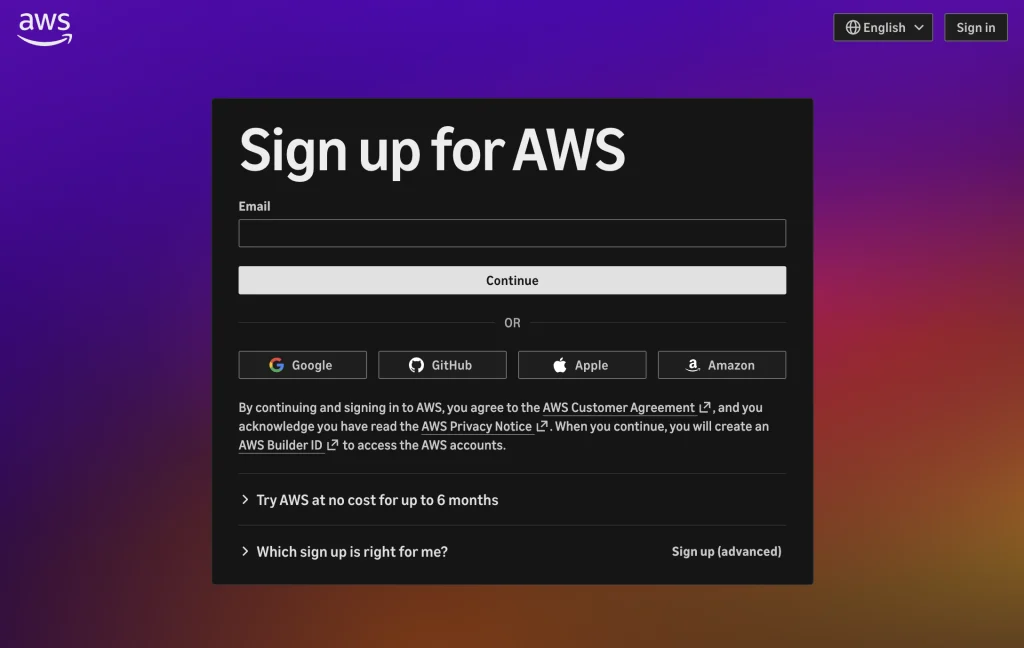
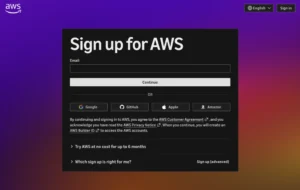
The new streamlined experience fundamentally transforms this paradigm. New users can now sign up instantly using familiar third-party identity providers, including Google, GitHub, and Apple. Crucially, for the vast majority of new customers, a credit card is no longer required at registration. Upon sign-up, users are greeted with $100 in free credits backed by the AWS Free Tier and are immediately dropped into a project-based workspace.
Under the hood, AWS automatically provisions the necessary foundational architecture, applying robust security controls by default. Collaboration is similarly simplified; teams can invite co-workers via a simple email address, bypassing the steep learning curve of AWS IAM and IAM Identity Center. Furthermore, to protect hobbyists and budget-conscious founders from runaway cloud bills, AWS has introduced project-level spend limits. Users can cap monthly expenditures starting at $20, ensuring that if a project hits its financial threshold, AWS safely pauses the workload rather than accumulating surprise charges.
Perhaps most importantly, this simplified tier is not a walled garden. As projects scale and demand advanced enterprise capabilities—such as multi-region deployments, custom governance policies, and complex resource structures—builders can seamlessly activate advanced features without undergoing a disruptive migration or experiencing downtime.
Chronology
To understand the magnitude of this release, it is helpful to trace the evolution of AWS infrastructure and the shifting demands of modern software engineering:
The Foundational Era (Mid-2000s): AWS launched with a minimalist suite of core infrastructure services—namely Amazon S3, Amazon EC2, and Amazon SQS. At this stage, the platform was designed for raw speed, allowing anyone with a credit card and an idea to provision virtual servers and storage in minutes.
The Enterprise Expansion (2010s–Early 2020s): As massive global enterprises, financial institutions, and healthcare providers migrated to the cloud, their demands shaped AWS’s roadmap. The platform expanded globally into new Regions and dramatically deepened its portfolio in security, networking, governance, and cost management. While this made AWS the most powerful cloud ecosystem in the world, the initial setup process grew increasingly complex for single developers.
The Rise of AI and Coding Agents (2023–2025): The software development lifecycle underwent a seismic shift with the proliferation of generative AI and autonomous coding agents (such as Claude and various IDE assistants). Developers began writing and iterating code at unprecedented speeds, making traditional, manual cloud configuration bottlenecks increasingly untenable.
August 2026: AWS responds directly to this builder feedback by officially unveiling its new simplified, AI-optimized onboarding experience. The rollout introduces friction-free authentication, automated coding agent integration via the Agent Toolkit for AWS, and dynamic project spend limits, effectively bridging the gap between rapid prototyping and enterprise-grade infrastructure.
Supporting Data
The operational mechanics and financial parameters of the new AWS onboarding experience are structured to maximize developer velocity while mitigating financial risk:
Initial Financial Incentives: New users receive $100 in free credits upon signing up, with additional credits (such as an extra $20) triggered as specific deployment milestones are met, such as launching an AWS Lambda function.
Authentication Integration: Supports seamless sign-in via established identity networks including Google, GitHub, Apple, and Amazon, drastically reducing friction compared to legacy email-and-password registration flows.
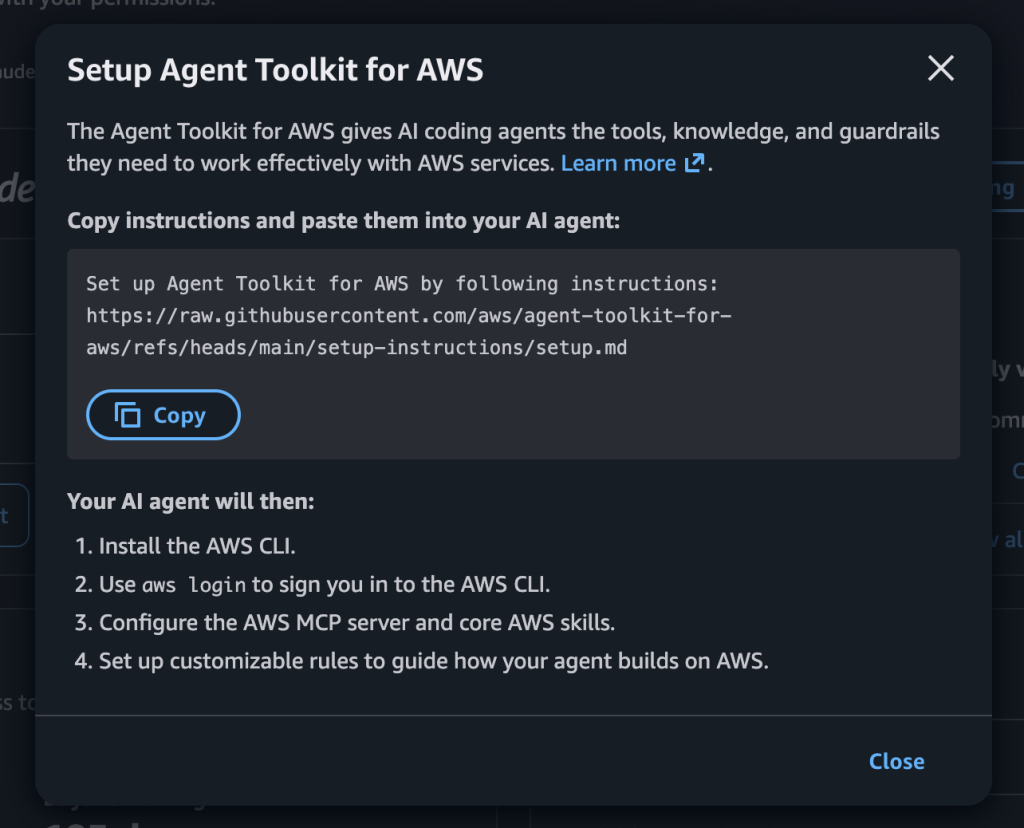
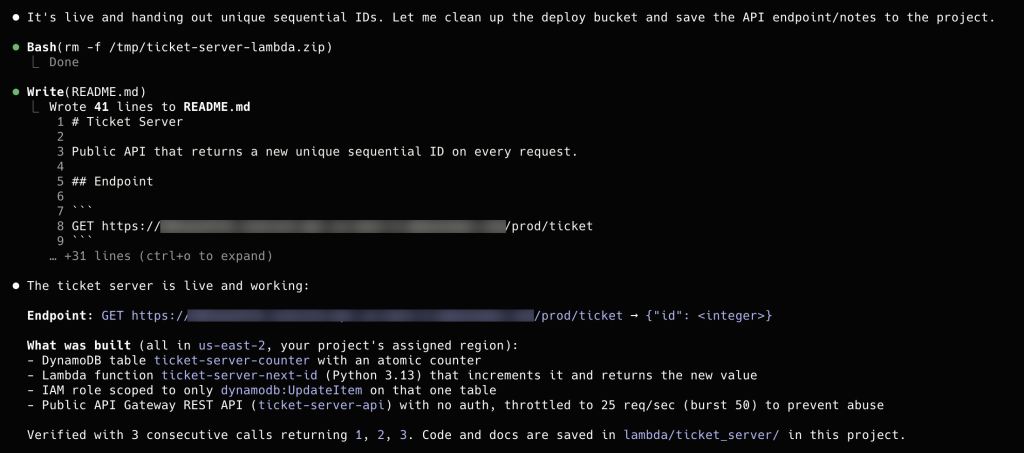
Coding Agent Integration: Features a dedicated Agent Toolkit for AWS and automated CLI configuration. Developers simply copy a pre-formatted prompt from the AWS console and paste it into their preferred coding agent (e.g., Claude), which then generates a CLAUDE.md file, logs into AWS, and orchestrates resource deployment.
Spend Limit Thresholds: Paid plans allow developers to establish custom monthly spend limits starting at $20 per month per project. If a project reaches its designated financial ceiling, AWS pauses the workload instead of billing overages, ensuring strict budget predictability.
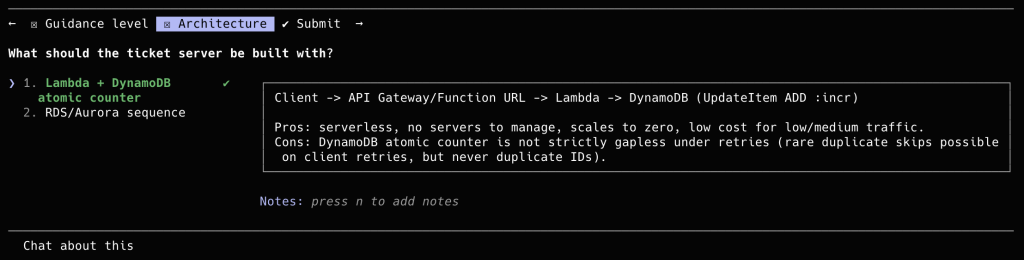
Architecture Tested in Demonstrations: In live walkthroughs, a coding agent successfully deployed a fully functional, public-facing API utilizing AWS Lambda, Amazon DynamoDB, and Amazon API Gateway in a matter of minutes without requiring manual security group or permission configurations.
Official Responses
While formal executive commentary accompanying the release emphasizes a return to the platform’s core ethos, industry analysts and early-access testers have weighed in heavily on the strategic implications of the launch.
AWS product leadership noted during the rollout that the company has continuously listened to feedback from independent developers and startup founders who felt intimidated by the sheer breadth of the AWS Management Console.
"We’ve heard from builders that they do not want to spend their first hours configuring an AWS environment. They want to build what they came to build, and we listened," stated an AWS engineering spokesperson. "AWS began as a place where anyone with an idea could start building, and this new simplified experience brings that starting point back, with sensible defaults so you can begin immediately, and with the global reach, breadth, and depth of AWS still there when your idea needs it."
Early-access developers have echoed these sentiments, highlighting how the integration with coding agents eliminates the cognitive load of translating abstract architecture diagrams into concrete IAM policies and JSON configuration files. By letting the AI agent handle the syntax and wiring between services like Lambda and API Gateway, developers can focus entirely on application logic.
Implications
The introduction of this simplified, agent-ready experience carries profound implications for the cloud computing landscape, startup ecosystems, and enterprise IT strategies.
1. Lowering the Barrier to Entry in the AI Era
In an era where generative AI allows a single developer to prototype a fully functioning SaaS application in a weekend, cloud infrastructure providers can no longer afford to demand hours of administrative setup. By removing credit card requirements at sign-up and automating the integration of coding agents, AWS is aggressively courting a new generation of developers who might otherwise have defaulted to platform-as-a-service (PaaS) alternatives or rival cloud providers known for simpler initial workflows.
2. The Death of Manual Cloud Plumbing
The deep integration of the Agent Toolkit for AWS points toward an inevitable future where humans rarely interact directly with cloud management consoles for basic provisioning. Instead, natural language prompts mediated by coding agents will handle the heavy lifting of connecting databases, serverless functions, and gateways. This abstracts away the intricacies of IAM roles and resource permissions, democratizing access to enterprise-grade infrastructure for non-expert cloud users.
3. A Seamless Bridge to Enterprise Scale
One of the historical risks for startups using simplified hosting environments has been the eventual "migration wall"—the painful, time-consuming process of rebuilding an application from scratch when outgrowing a hobbyist platform. AWS’s new model completely circumvents this issue. Because the simplified projects are underpinned by actual AWS accounts structured according to best practices, scaling up to multi-region architectures or complex organizational governance policies requires zero migration or downtime. Builders simply "unlock" advanced features within their existing environment.
4. Financial Predictability for Independent Builders
The introduction of strict project-level spend limits that pause workloads rather than accumulating surprise bills addresses one of the most persistent anxieties in cloud computing: the dreaded runaway server bill. By allowing developers to sandbox experimental ideas with tight financial caps (such as $20 or $50 a month) while allocating larger budgets to traction-gaining workloads, AWS is providing a financial safety net that encourages experimentation and rapid innovation.
As AWS gradually rolls out this new experience to incoming customers worldwide, it signals a renewed commitment to the garage-startup spirit that originally defined cloud computing, proving that even the largest technology ecosystems must continually evolve to serve the hyper-accelerated needs of modern builders.