Next-Gen FPV Telemetry: OpenDrone-hw Unveils a Versatile Family of Open-Source ExpressLRS Receivers
By Tech & Hardware Desk
Published: September 2026
Main Facts
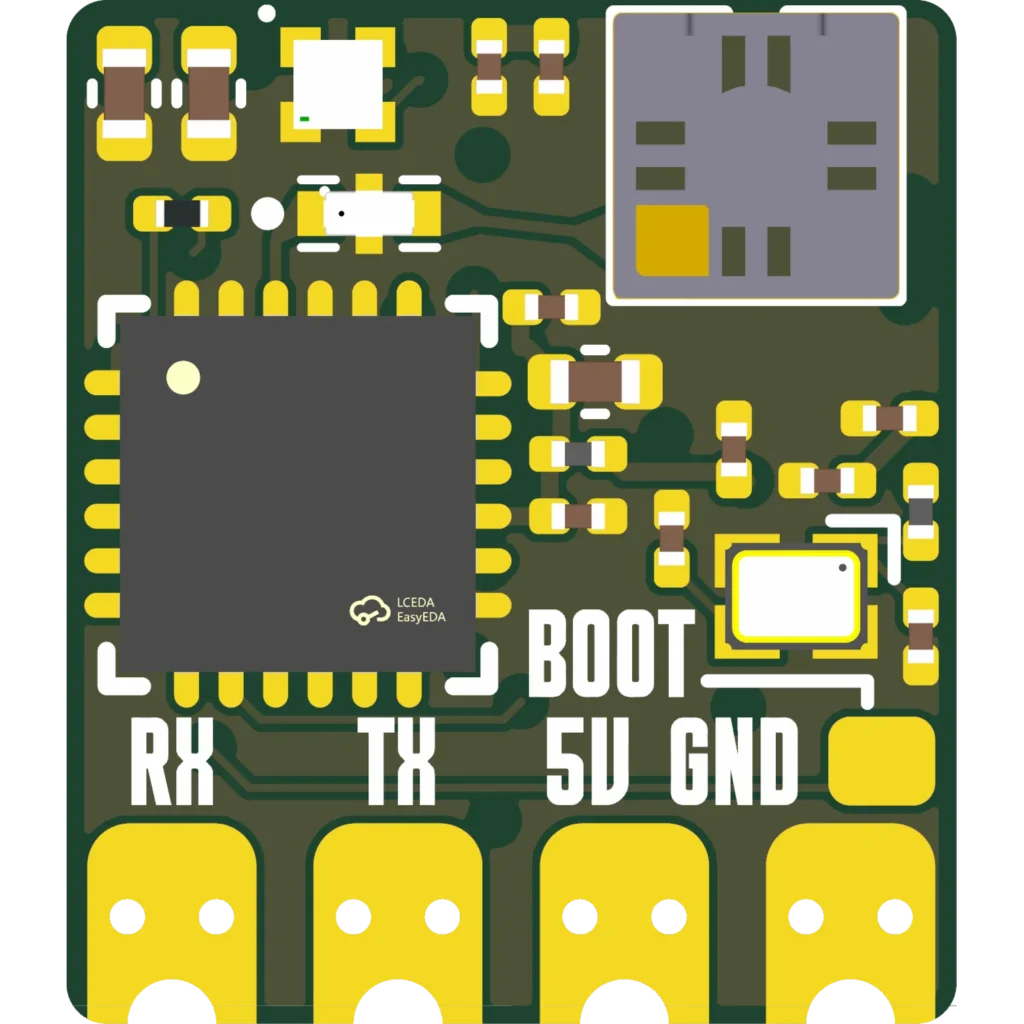
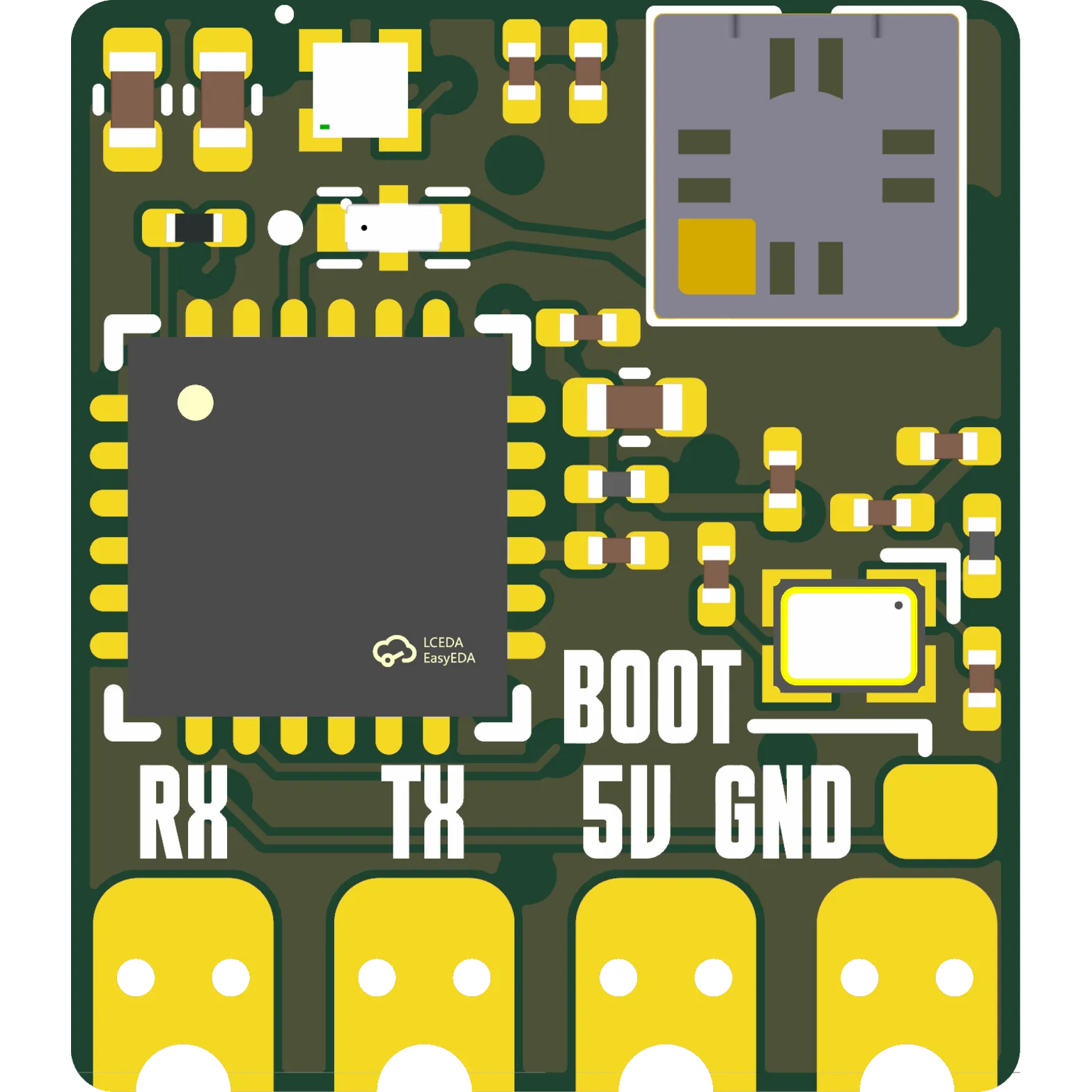
The First-Person View (FPV) drone community is experiencing a paradigm shift in long-range telemetry and control link reliability, thanks to an ambitious new open-source hardware initiative. Developed by contributor Bastian2001 under the banner of OpenDrone-hw, a new family of four distinct ExpressLRS (ELRS) receiver variants has been introduced. Built around a unified technological core consisting of the Espressif ESP32-C3 microcontroller and Semtech radio architecture, these receivers are designed to cater to every conceivable flight profile—ranging from micro-quadcopters requiring ultra-lightweight footprints to long-range cinematic platforms demanding maximum signal robustness.
At the heart of these receivers lies advanced Chirp Spread Spectrum (CSS) modulation paired with Fast Fourier Transform (FFT) signal decoding. This sophisticated mathematical and radio-frequency (RF) pipeline allows the system to achieve an equivalent processing gain of 24 dB, enabling the recovery of control and telemetry packets even when signals are buried deep below the receiver’s baseline noise floor.
The OpenDrone-hw OpenRX lineup currently comprises four distinct form factors:
- Lite: Optimized for minimal footprint and weight, running on the 2.4 GHz band with a 13 dBm (20 mW) telemetry output.
- Lite-UFL: Shares the identical ultra-compact dimensions of the Lite version but incorporates a UFL connector for external antenna flexibility.
- Mono: A higher-powered, dual-band variant utilizing the LR1121 chip, capable of delivering 22 dBm (158 mW) of telemetry power.
- Gemini: The pinnacle of the lineup, offering dual-band capabilities and maximum signal redundancy and power (22 dBm) for extreme environments.
Crucially, the entire family utilizes a unified ExpressLRS firmware image, which can be effortlessly flashed via standard Betaflight passthrough methods or over-the-air via Wi-Fi. Comprehensive schematics, PCB layout files, and documentation have been made fully open source and are hosted on the official OpenDrone-hw OpenRX GitHub repository.
Chronology
The evolution and release of the OpenDrone-hw ExpressLRS receiver family represent the culmination of iterative open-source hardware design, community-driven firmware standardization, and rigorous field testing:
- The Genesis of OpenDrone-hw: Recognizing a gap in the market for highly optimized, modular, and deeply integrated open-source receiver hardware that could fully leverage the rapid advancements of the ExpressLRS project, developer Bastian2001 conceptualized the OpenRX project. The goal was to establish a standardized hardware baseline using modern silicon (ESP32-C3) while offering specialized form factors.
- Prototyping and RF Engineering Challenges: Early development focused on balancing PCB real estate with high-frequency signal integrity. Transitioning to a sophisticated 6-layer PCB design with a 1.0 mm thickness allowed the engineering team to maintain tight impedance control. During this phase, unconventional design choices—such as utilizing a via directly to connect the antenna on certain variants—were simulated, tested, and refined to prove that performance degradation could be entirely mitigated by careful ground-plane placement.
- Chipset Integration and Firmware Unification: As the project matured, the hardware architecture expanded from a single 2.4 GHz design to include the Semtech LR1121 radio IC. This enabled the integration of dual-band capabilities into the Mono and Gemini variants without bloating the physical dimensions of the receiver boards. Simultaneously, compatibility with the unified ExpressLRS firmware ecosystem was locked in, ensuring users could rely on the mature configuration tools already established by the global ELRS community.
- Field Testing and Extreme Validation: Following internal bench testing, the receivers underwent grueling real-world field trials. Notably, a stress test conducted through dense forest canopies—a notorious graveyard for 2.4 GHz and high-frequency control links—demonstrated rock-solid connection stability well beyond the 5-kilometer mark.
- Public Release and Open-Source Openings: The project culminated in the public release of manufacturing files, Gerber layouts, and source documentation on GitHub. This allows not only FPV hobbyists and DIY makers to build their own receivers, but also paves the way for boutique manufacturers to adopt or adapt the open designs.
Supporting Data
To truly understand the engineering achievement behind the OpenDrone-hw OpenRX series, one must examine the underlying physics, RF performance metrics, and physical dimensions that govern these tiny circuit boards.
Modulation and Signal Processing Gains
Traditional analog and basic digital radio links often struggle when signal attenuation causes the carrier-to-noise ratio to drop. ExpressLRS utilizes Chirp Spread Spectrum (CSS) modulation, where data is encoded into the starting frequency of a "chirp"—a tone characterized by a linear frequency rise over time.
When the signal arrives at the OpenDrone-hw receiver, the Semtech radio chip and associated DSP pipeline multiply the incoming signal with an inverse chirp. Applying a Fast Fourier Transform (FFT) on the resulting product isolates the precise starting frequency of the chirp. This demodulation technique yields an astonishing 24 dB equivalent gain. Consequently, the receiver remains fully functional even when parsing signals that reside below the thermal noise floor of the receiver circuitry itself—a primary reason behind its phenomenal long-range resilience.
Hardware Specifications Matrix
| Variant Name | Dimensions (mm) | Frequency Band | RF / Telemetry Output | Primary Use Case |
|---|---|---|---|---|
| Lite | 10.0 x 11.5 | 2.4 GHz | 13 dBm (20 mW) | Micro-drones, toothpicks, ultra-light builds |
| Lite-UFL | 10.0 x 11.5 | 2.4 GHz | 13 dBm (20 mW) | Whoops and small quads needing external antennas |
| Mono | 10.0 x 17.3 | Dual-Band (via LR1121) | 22 dBm (158 mW) | Mid-to-long-range cinematic and freestyle drones |
| Gemini | 17.0 x 15.7 | Dual-Band (via LR1121) | 22 dBm (158 mW) | Extreme long-range, high-interference environments |
Construction and Thermal/RF Considerations
Building an RF receiver smaller than a fingernail requires immense precision. The OpenDrone-hw team opted for a 6-layer PCB architecture measuring precisely 1.0 mm in thickness. This multi-layer approach is crucial for isolating noisy digital power rails (generated by the ESP32-C3 microcontroller) from sensitive analog RF traces connected to the SX1281 or LR1121 radio chips.
Furthermore, the decision to route an antenna connection via a via—traditionally discouraged in standard textbook RF design due to inductive parasitics—was successfully executed by surrounding the transition point with dense stitching ground-plane vias. This containment prevents stray radiation and maintains optimal VSWR (Voltage Standing Wave Ratio) across the operating spectrum.
Official Responses
While open-source hardware projects driven by individual contributors often originate as grassroots efforts, the reception from the broader FPV and open-source telemetry community has been overwhelmingly enthusiastic.
In statements released alongside the GitHub repository documentation, the development team behind OpenDrone-hw emphasized the collaborative ethos of the project:
"ExpressLRS has fundamentally transformed how pilots interact with their aircraft, proving that open-source protocols can vastly outperform expensive proprietary systems. With the OpenRX project, we wanted to demonstrate that the hardware layer could be equally flexible, accessible, and high-performing. By embracing modern microcontrollers like the ESP32-C3 and combining them with advanced CSS demodulation, we are empowering makers and pilots to build custom links tailored precisely to their flight dynamics without compromising on range or reliability."
Prominent members of the ExpressLRS developer community have also lauded the project for its adherence to unified firmware standards. Because the OpenRX boards do not require proprietary forks of the ELRS codebase, users benefit instantly from every upstream security patch, feature addition, and telemetry optimization released by the core ExpressLRS development group. Community maintainers have highlighted that projects like OpenDrone-hw validate the scalability of the ELRS ecosystem, bridging the gap between custom DIY electronics and commercial-grade reliability.
Implications
The introduction of the OpenDrone-hw ExpressLRS receiver family carries profound implications for the FPV drone industry, the maker movement, and the future of open-source RF design.
1. Democratization of High-End RF Performance
Historically, achieving dual-band telemetry and output powers exceeding 100 mW in a compact form factor meant relying on closed-source, proprietary hardware modules that locked users into specific ecosystems. By publishing complete Gerber files, schematics, and bill-of-materials (BOM) lists, OpenDrone-hw ensures that any hobbyist with a standard reflow setup—or any small-scale manufacturer—can produce high-end telemetry hardware. This lowers the economic barrier to entry for advanced FPV experimentation.
2. Paradigm Shift in Board Design and Miniaturization
The successful implementation of unconventional routing choices—such as via-based antenna feeds on a 6-layer 1.0 mm PCB—serves as a case study for future RF hardware engineers. It proves that theoretical constraints can be safely pushed when backed by rigorous electromagnetic simulation and precise ground-plane management. As drone frames continue to shrink while performance demands escalate, the footprint-to-power ratio established by the Lite and Gemini variants sets a new benchmark for the industry.
3. Strengthening the Resilience of Open-Source Ecosystems
The reliance on standard silicon (ESP32-C3) shields the project from volatile semiconductor supply chains that often plague specialized, single-source ASICs. By anchoring the design to universally available microcontrollers and widely supported radio chips (SX1281 and LR1121), OpenDrone-hw guarantees long-term maintainability and parts availability.
4. Broadening Horizons Beyond FPV
While the immediate beneficiaries are FPV drone racers, freestylers, and long-range cinematic pilots, the underlying architecture of these receivers holds immense promise for other remote-robotics sectors. Unmanned Ground Vehicles (UGVs), autonomous fixed-wing mapping planes, and open-source robotics projects requiring robust, low-latency, long-range telemetry can easily adapt these receiver designs to their own control architecture.
As the FPV community continues to push the boundaries of what is possible with open-source technology, projects like OpenDrone-hw’s ExpressLRS receivers stand as a testament to what collaborative engineering can achieve. With extreme range verified in harsh real-world conditions, a unified firmware approach, and fully transparent documentation, this hardware family is poised to become a staple in the toolkit of modern FPV makers worldwide.