CAMBRIDGE, Mass. — In the rapidly evolving landscape of artificial intelligence, a quiet revolution is taking place at the very edge of computing. TinyML—the burgeoning field of machine learning dedicated to running intelligent models on ultra-low-power microcontrollers and resource-constrained edge devices—promises a future where everyday objects, from smart home appliances to industrial sensors, possess local visual intelligence.
However, this technological frontier has long been hindered by a critical bottleneck: a severe scarcity of high-quality, large-scale training data tailored specifically to the unique constraints of micro-scale models.
Addressing this foundational challenge head-on, a team of researchers from Harvard University—comprising Colby Banbury, Emil Njor, Andrea Mattia Garavagno, and Vijay Janapa Reddi—has officially unveiled WakeVision. Touted as a high-quality, large-scale dataset engineered specifically for TinyML computer vision applications, Wake Vision shatters previous limitations by introducing a staggering 6 million images, positioning itself as a monumental leap forward for edge AI research and development.
Main Facts: What is Wake Vision?
At its core, Wake Vision is designed to tackle the foundational computer vision task for ultra-low-power devices: person detection. Whether a smart doorbell is waking up to recognize a homeowner or an industrial safety monitor is ensuring no unauthorized personnel have entered a restricted zone, reliable person detection is the bedrock of modern edge intelligence.
The scale of Wake Vision is unprecedented for the domain. With approximately 6 million images, it is nearly 100 times larger than the Visual Wake Words (VWW) dataset, which has served as the de facto standard and baseline for person-detection research in TinyML since its introduction.
Rather than offering a one-size-fits-all approach, Wake Vision provides researchers with two distinct training sets, meticulously filtered and labeled to optimize the trade-off between dataset scale and data purity. By democratizing access to this data under a permissive Creative Commons license (CC-BY 4.0), the Harvard team aims to transition TinyML from experimental prototypes to robust, production-grade deployments.
Chronology: The Evolution from Visual Wake Words to Wake Vision
To understand the monumental significance of Wake Vision, one must examine the chronological progression of computer vision in resource-constrained environments.
The Early Era of Resource-Constrained ML: For years, machine learning research was dominated by massive, overparameterized models trained on colossal datasets like ImageNet. These models required cloud-based infrastructure or powerful GPUs, rendering them entirely incompatible with battery-operated microcontrollers that often possess mere kilobytes of memory and operate on milliwatts of power.
The Birth of Visual Wake Words (2019): Recognizing the need for edge-specific benchmarks, researchers introduced the Visual Wake Words (VWW) dataset in 2019. VWW provided a binary classification benchmark (person vs. no person) optimized for tiny devices. While it catalyzed initial progress in the TinyML community, its relatively small scale and inherent dataset limitations eventually capped its utility, making it difficult to train production-grade models robust enough for the chaotic unpredictability of the real world.
The Paradigm Shift (2023–2024): As demand for privacy-preserving, offline, and low-latency edge devices surged, the limitations of existing datasets became glaringly apparent. Researchers realized that scaling up required more than just throwing data at a problem; it required a fundamental re-evaluation of how data quality impacts under-parameterized models.
The Launch of Wake Vision (Late 2024): Culminating months of rigorous data curation, filtering, and benchmarking, the Harvard research team officially introduced Wake Vision. By synthesizing millions of curated images with fine-grained real-world evaluation benchmarks, the project established a new gold standard for the TinyML community, complete with an active public leaderboard to track state-of-the-art models.
Supporting Data: Why Quality and Scale Matter in TinyML
In mainstream deep learning, conventional wisdom often dictates that data quantity trumps data quality. Because overparameterized models possess billions of parameters, they possess the capacity to memorize or adapt around noisy labels and errors within massive training corpora.
However, Wake Vision’s creators discovered that TinyML turns this rule upside down.
Under-Parameterized Realities
TinyML models are intentionally compact, often containing anywhere from tens of thousands to a few million parameters (e.g., ranging from 78K to 11M parameters). Empirical data from the Wake Vision project reveals a striking revelation: for under-parameterized models, high-quality labels (low error rates) are significantly more beneficial than raw data volume.
When models lack massive parameter overhead, they cannot easily absorb or ignore noise in the training set. Consequently, cleaner labels lead directly to superior test scores and lower error rates. However, the researchers also discovered that larger, error-prone datasets are far from useless—they unlock their maximum potential when paired with sophisticated, fine-grained training pipelines.
The Two-Tiered Training Advantage
To exploit this dynamic, Wake Vision provides two distinct training datasets. The Harvard team demonstrated that the most effective strategy involves a two-step transfer-learning pipeline:
Pre-training on the massive, broader dataset to capture diverse visual concepts.
Fine-tuning on the high-quality, purified dataset to hone precision and minimize false positives.
This combination yields performance gains that vastly outperform models trained on either approach in isolation.
Official Responses and Expert Perspectives
The release of Wake Vision has sent ripples of excitement through the academic and industrial machine learning communities. Industry leaders and academic institutions alike have lauded the project for its rigorous methodology and foresight.
"The growth of TinyML has immense potential to transform everything from healthcare monitoring to smart infrastructure, but we have been flying blind due to a lack of data infrastructure," notes the research team in their introductory technical releases. "Wake Vision bridges the chasm between academic theory and real-world deployment by providing the statistical foundation that tiny models desperately need."
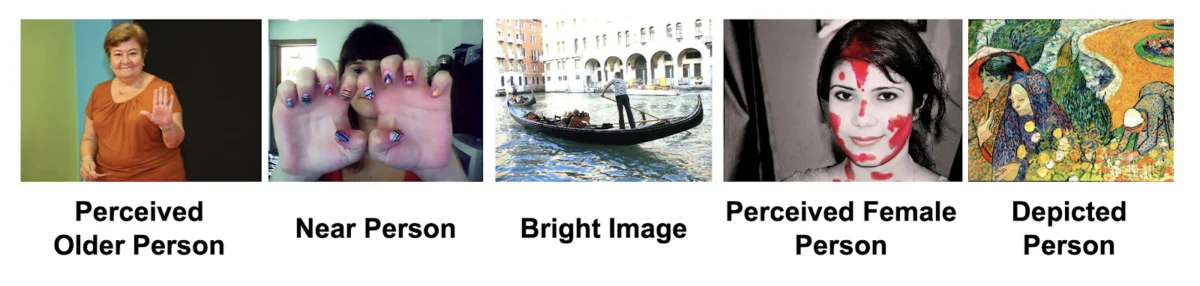
Early adopters and edge AI engineers have praised the inclusion of fine-grained benchmarks. Unlike legacy datasets that merely test for the presence of a human silhouette, Wake Vision incorporates nuanced evaluation splits. These allow developers to test how models perform under challenging real-world conditions, such as:
Varying lighting conditions (e.g., excessively bright or dark environments).
Proximity variance (detecting subjects both close to the lens and far in the background).
Demographic and phenotypic diversity (ensuring equitable detection across perceived age and gender categories).
By surfacing these metrics early in the development cycle, the dataset proactively addresses algorithmic bias and reliability concerns that plague edge deployments.
Implications: The Future of Edge AI and TinyML
The implications of the Wake Vision dataset extend far beyond academic benchmarks; they fundamentally alter what is possible in commercial product development and scientific research.
1. Privacy-First Smart Devices
With a reliable, high-performing person detection model trained on Wake Vision, consumer hardware can process visual inputs locally on-device. Because video feeds do not need to be streamed to the cloud for analysis, user privacy is inherently preserved—a critical selling point for modern smart home ecosystems.
2. Democratizing Access to Edge AI
By making Wake Vision seamlessly accessible through major dataset repositories and pairing it with a permissive CC-BY 4.0 license, Harvard has lowered the barrier to entry for independent developers, startups, and university labs. Anyone with an interest in edge computing can now train production-grade models without prohibitive financial or legal hurdles.
3. Fostering Competitive Innovation via the Wake Vision Leaderboard
To maintain momentum and foster a collaborative scientific community, the project hosts a dedicated Wake Vision Leaderboard on its official platform (wakevision.ai/#leaderboard). This live leaderboard allows researchers worldwide to submit their models, compare accuracy and robustness metrics, and continuously push the boundaries of what ultra-low-power microcontrollers can achieve.
4. Sustainability and Energy Efficiency
As global data center energy consumption faces intense scrutiny, shifting computational workloads to ultra-low-power edge devices offers a sustainable path forward. Microcontrollers running optimized TinyML models consume mere fractions of a watt, paving the way for truly green artificial intelligence.
Get Started Today
The release of Wake Vision marks the end of the data scarcity era for TinyML computer vision and the beginning of a new chapter characterized by precision, scale, and real-world reliability.
Researchers, engineers, and machine learning enthusiasts can access the complete dataset, comprehensive codebase, and detailed evaluation benchmarks today. To explore the documentation, download the files, or submit your own custom architecture to the global leaderboard, visit the official Wake Vision Website.
The tools are ready. The data is vast and pristine. The only remaining question is: How will you shape the future of edge AI?