
The Backbone of Modern Software: A Comprehensive Guide to Database Testing, Architecture, and Quality Assurance
Main Facts: The Critical Role of Database Testing in Complex Digital Ecosystems
In an era defined by ubiquitous mobile applications, high-frequency financial platforms, and cloud-native microservices, the complexity of front-end user interfaces is matched only by the intricate architectures humming away in the backend. As modern computing scales to accommodate big data loads that traditional storage models can no longer handle, ensuring the absolute security, integrity, and performance of underlying databases has become a non-negotiable pillar of software engineering.
Database (DB) testing is no longer a peripheral task delegated to the final stages of deployment; it is a core quality assurance discipline. Whether an application powers a healthcare network, an e-commerce giant, a banking ledger, or deep-space telemetry, the database acts as the foundational engine. Without rigorous validation of these backends, applications risk catastrophic data corruption, security vulnerabilities, and system-wide failures.
To navigate this landscape, QA professionals utilize a wide array of database management systems (DBMS) and tools—ranging from relational stalwarts like Microsoft SQL Server, Oracle, MySQL, and PostgreSQL to enterprise-grade utilities like IBM DB2 and Toad. Each platform introduces distinct trade-offs regarding cost, robustness, and security, making specialized testing methodologies essential for modern development pipelines.

Chronology: The Evolution of Backend Validation
The discipline of software testing has undergone a radical transformation alongside the evolution of data architecture. Understanding how database testing reached its current sophisticated state requires examining its chronological development:
- The Early Client-Server Era (1990s): Database testing primarily involved basic table verification and simple CRUD (Create, Retrieve, Update, Delete) operation checks against monolithic, localized databases. Applications were less complex, and data mapping was linear.
- The Web and Enterprise Expansion (2000s): With the proliferation of web applications and distributed enterprise software, databases grew in size and complexity. Developers began pushing business logic directly into the database tier via stored procedures, triggers, and relational constraints. Testing expanded to include procedural validation and schema verification.
- The Mobile and Big Data Explosion (2010s–Present): The rise of smartphones, Android apps, and high-frequency transaction systems introduced unprecedented loads. Traditional databases strained under unstructured big data. Testing methodologies evolved to rigorously enforce ACID (Atomicity, Consistency, Isolation, Durability) properties across distributed networks, requiring sophisticated test automation and specialized DB testing scripts.
Supporting Data: What to Test and Core Methodologies
A successful database testing strategy focuses on four primary validation pillars: Data Mapping, ACID Properties, Data Integrity, and Business Rule Conformity.
1. Data Mapping and CRUD Operations
Data constantly travels back and forth between the user interface (UI) and the backend database. Testers must ensure that this mapping is seamless, accurate, and fully compliant with system requirement specifications (SRS) and business requirement specifications (BRS).

Every user action on an application’s GUI boils down to one of four core CRUD operations:
- Create: Saving a new transaction triggers a write operation in the database.
- Retrieve: Searching or viewing records initiates a read request.
- Update: Editing an existing record modifies current database rows.
- Delete: Removing a record purges or deactivates data within the system.
Testers must verify that every front-end field accurately maps to its corresponding backend database column, ensuring that user actions correctly update the designated tables without data loss or truncation.
2. ACID Properties Validation
Every transaction executed by a database must strictly adhere to the four ACID properties to maintain system stability:

- Atomicity: Ensures that a transaction is all-or-nothing. If any step within a multi-step transaction fails, the entire operation rolls back, leaving the database unaffected.
- Consistency: Guarantees that a transaction brings the database from one valid state to another, maintaining all predefined integrity constraints (such as checking that the sum of two specific columns always equals 100).
- Isolation: Ensures that concurrent transactions executed simultaneously do not interfere with one another, preventing dirty reads or race conditions.
- Durability: Confirms that once a transaction has been committed, its changes are permanent, even in the event of system crashes, power failures, or software errors.
3. Data Integrity
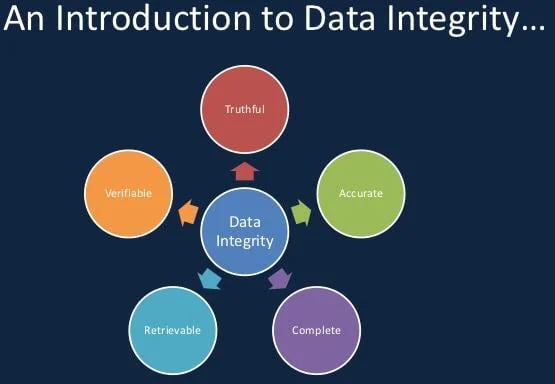
When modern applications utilize multiple modules, screens, or forms that interact with the same shared data, maintaining Data Integrity is vital. If a user updates a record in one module, the most recent value must instantly reflect across all other associated interfaces. Outdated values or asynchronous updates lead to critical user-facing errors and data corruption.
4. Business Rule Conformity
Modern databases store much more than raw records; they house complex relational constraints, triggers, and stored procedures. Testers must write specialized SQL queries and execute automated scripts to validate that these backend business rules execute accurately under both normal and exceptional loads.
The Database Testing Checklist: Step-by-Step Implementation
Executing a thorough database test requires a structured, step-by-step methodology:

- Environment Preparation: Set up the test database environment, ensuring it mirrors production configurations closely while utilizing sanitized test data.
- Test Execution: Execute test scenarios using SQL queries—predominantly utilizing
SELECTstatements alongside Data Definition Language (DDL), Data Manipulation Language (DML), and Data Control Language (DCL) commands. - Result Verification: Compare actual outputs against expected architectural outcomes and business requirements.
- Reporting: Document and report findings, anomalies, and performance bottlenecks to developers and stakeholders.
Practical Testing Tips for QA Professionals
- Write Your Own Queries: A competent database tester should possess strong SQL and DML skills. Writing independent queries gives testers deep confidence in their validation processes and uncovers edge cases that developer-provided queries might miss.
- Leverage Automation Tools: For complex or distributed databases, manual verification is tedious. Utilizing automated database testing tools and VBScript/Python validation scripts significantly enhances test coverage and efficiency.
- Understand Table Structures: Comprehensive manual data testing requires an intimate knowledge of the application’s database schema, foreign keys, unique constraints, and default values.
Official Perspectives and Industry Implications
Industry leaders and quality assurance experts increasingly emphasize that database testing is the ultimate safety net for enterprise software. While some organizations historically viewed rigorous backend testing as a budgetary bottleneck or a source of deployment delays, modern perspectives have shifted dramatically.
As cyber threats multiply and data privacy regulations (such as GDPR and CCPA) tighten, database security testing and structural validation have become critical board-level concerns. Ensuring that user permissions are properly managed via Data Control Language commands (GRANT and REVOKE) prevents unauthorized data access and breaches.
Strategic Implications for Software Development
- Technical Proficiency Demand: There is a surging market demand for QA engineers who are technically proficient in advanced database concepts, SQL optimization, and distributed data management.
- Shift-Left Quality Assurance: Catching database anomalies, schema errors, and constraint violations early in the development lifecycle drastically reduces the cost of bug remediation.
- Enhanced User Trust: Applications built on rigorously tested backends deliver uninterrupted performance, reliable data synchronization, and robust security, directly translating to higher user retention and brand loyalty.
In conclusion, while front-end interfaces capture the user’s eye, the database remains the beating heart of any digital application. By investing in comprehensive database testing strategies encompassing data mapping, ACID compliance, and business rule verification, engineering teams can build resilient, secure, and future-proof digital systems.







