Empowering Innovation: Google Announces the Third Annual Women in Machine Learning Symposium 2023
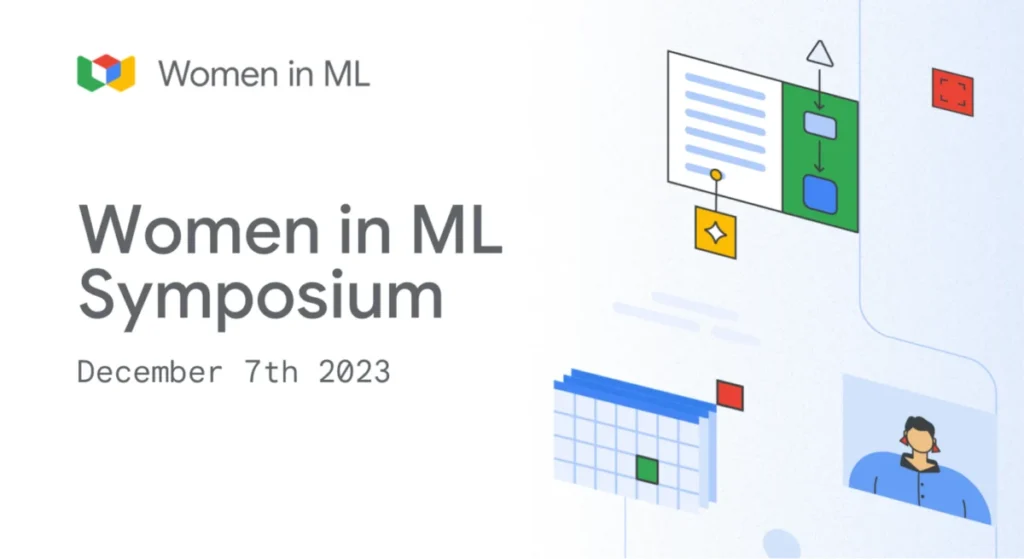
SAN FRANCISCO — In an era defined by the rapid evolution of artificial intelligence and machine learning (AI/ML), fostering diversity and inclusion remains a paramount challenge and opportunity for the technology sector. Addressing this imperative head-on, Google has officially announced the return of the Women in Machine Learning (WiML) Symposium, marking its third consecutive year of celebrating, connecting, and elevating women in these transformative fields.
Scheduled for December 7, 2023, the virtual event will run from 9:30 AM to 1:00 PM PT. Spearheaded by Sharbani Roy, Senior Director of Product Management at Google, the symposium promises an immersive, half-day journey designed to cater to practitioners, researchers, and enthusiasts across all expertise levels—from curious beginners to seasoned industry veterans.
As generative AI reshapes global industries, the 2023 symposium arrives at a critical juncture, offering a platform to discuss cutting-edge technical breakthroughs, ethical considerations, and real-world applications. Registrations are currently open, with global participants expected to log in for a rich agenda featuring keynotes, panel discussions, and deep technical dives.
Main Facts
The third annual Women in Machine Learning Symposium is structured to be a comprehensive, high-impact virtual gathering. Here are the core details of the event:
- Date: December 7, 2023
- Time: 9:30 AM – 1:00 PM PT
- Format: Virtual (Accessible globally via live stream and interactive platforms)
- Host: Google (Led by Sharbani Roy, Senior Director, Product Management)
- Target Audience: Inclusive of all genders, welcoming students, researchers, developers, and industry professionals at every skill level.
- Key Themes: Generative AI, privacy-preserving AI, underlying hardware accelerators, robust ML frameworks, and cross-industry practical applications.
- Participating Organizations: Google, Google Health, NVIDIA, Adobe, and various open-source communities.
- Registration: Open via the official Google AI Developers event portal.
The event aims to break down barriers to entry in tech, provide actionable insights into building with Google AI, and highlight the pioneering contributions of women shaping the future of intelligent systems.
Chronology: The Evolution of the WiML Symposium
To understand the significance of the 2023 symposium, it is essential to trace the trajectory of Google’s commitment to community-building in artificial intelligence.
The Genesis and Early Milestones
Google has long recognized that the burgeoning fields of AI and machine learning risk perpetuating historical demographic imbalances if deliberate steps toward inclusivity are not taken. While traditional academic and corporate conferences often struggle with gender representation—frequently seeing women account for a minor fraction of speakers and attendees—dedicated initiatives began to shift the paradigm.
The Inaugural and Second Symposia (2021–2022)
Building on grassroots movements within the broader tech ecosystem, Google formalized its commitment by launching the annual Women in Machine Learning Symposium.
- The 2021 Event: Laid the groundwork by introducing foundational machine learning concepts alongside advanced discussions on ethics and bias in AI algorithms. It established a virtual footprint that allowed thousands of participants from developing tech regions to join without geographical constraints.
- The 2022 Event: Expanded its technical breadth significantly. Building upon the success of the previous year, the 2022 symposium dove deeper into production-ready machine learning, TensorFlow ecosystems, and early explorations of transformer models just as the generative AI boom began to take shape. Archives of the 2022 event continue to serve as vital educational resources for developers worldwide.
The 2023 Milestone
Now, in its third iteration, the 2023 symposium reflects a maturing industry. Machine learning is no longer a peripheral corporate research department; it is the core engine driving products across healthcare, finance, creative arts, and enterprise software. Recognizing this, the 2023 agenda bridges the gap between theoretical research and scalable, production-grade deployment, ensuring attendees walk away with practical, forward-looking knowledge.
Supporting Data: The Current Landscape of Women in AI
While initiatives like Google’s WiML Symposium are vital, they exist within a broader industry ecosystem that continues to grapple with systemic representation disparities. Analyzing workforce and academic data provides crucial context for why targeted symposia remain necessary.
Representation Gaps in the Tech Workforce
According to various global technology labor reports and diversity disclosures from major firms:
- The Workforce Ratio: Women traditionally hold approximately 25% to 30% of overall roles in major technology companies. However, that percentage drops significantly when isolating specialized technical fields like artificial intelligence and machine learning research, where women often make up less than 20% of the workforce.
- Leadership Deficit: The disparity is even more pronounced in executive and principal researcher positions, limiting the pipeline of female mentorship for the next generation of engineers.
- Academic Enrollment: Although computer science and data science enrollments among women have risen steadily over the past decade, retention in advanced AI/ML post-graduate tracks continues to face hurdles due to lack of peer networks and inclusive institutional cultures.
The Economic and Innovation Imperative
Beyond social equity, data consistently demonstrates that diverse teams build better, safer, and more innovative AI products. Homogeneous teams risk introducing blind spots into model training data, algorithmic design, and deployment strategies—leading to biased outcomes that can negatively impact marginalized communities.
By fostering a collaborative environment that highlights female leaders from organizations like Google Health, NVIDIA, and Adobe, the WiML Symposium directly addresses the leadership deficit, providing visible role models and measurable pathways for career advancement in AI.
Official Responses and Perspectives
Leadership from Google and participating tech giants have emphasized the collaborative, forward-thinking spirit of the upcoming event.
In her official announcement, Sharbani Roy, Senior Director of Product Management at Google, noted the unique design of the symposium:
"We’re back with the third annual Women in Machine Learning Symposium… Join us virtually for an immersive and insightful set of deep dives for every level of Machine Learning experience."
Roy highlighted that the event is intentionally structured to be a welcoming gateway for newcomers while offering advanced technical rigor for seasoned practitioners. This dual approach ensures that whether an attendee is writing their first neural network or architecting privacy-preserving federated learning systems at scale, they will find tangible value in the sessions.
Furthermore, industry partners collaborating on or speaking at the event have echoed the sentiment that solving the world’s most complex computational challenges requires drawing from the widest possible talent pool. Representatives from NVIDIA and Adobe have pointed out that the intersection of generative AI and human creativity demands diverse ethical frameworks—perspectives that are inherently enriched when women lead the conversation.
Implications: What the Symposium Means for the Future of AI
The implications of the Women in Machine Learning Symposium extend far beyond a single half-day virtual conference. By convening thousands of developers, researchers, and leaders, the event influences the trajectory of AI development in several key ways:
1. Democratizing Access to Cutting-Edge Knowledge
By offering the event virtually and free of charge, Google removes financial and geographical barriers that often prevent students, independent developers, and professionals from developing nations to access world-class technical education. Sessions covering open-source tools and foundational concepts empower attendees to immediately apply these technologies in their local communities and workplaces.
2. Advancing Responsible and Privacy-Preserving AI
As machine learning models ingest unprecedented volumes of data, concerns surrounding data privacy, surveillance, and algorithmic bias have reached a fever pitch. The 2023 symposium dedicates significant programming to privacy-preserving AI. Ensuring that diverse groups of engineers are at the forefront of designing these safeguards guarantees that future technologies respect user privacy equitably across all demographics.
3. Strengthening the Cross-Industry Pipeline
The presence of leaders from diverse sectors—ranging from healthcare (Google Health) to graphics and computing hardware (NVIDIA) and digital media (Adobe)—illustrates that machine learning is no longer siloed. Attendees gain a holistic view of how ML models operate across different hardware accelerators, cloud infrastructures, and application layers. This cross-pollination of ideas accelerates innovation, helping to solve complex problems in drug discovery, climate modeling, and creative workflows.
4. Cultivating Mentorship and Community Networks
Perhaps the most enduring impact of the WiML Symposium is the community it builds. Isolation in technical fields is a primary driver of attrition among underrepresented groups. By establishing a robust network of peers, mentors, and sponsors, the symposium creates a resilient support system that sustains careers long after the virtual event concludes.
Conclusion and How to Participate
As artificial intelligence continues to redefine the boundaries of human capability, ensuring that its development is guided by a diverse, inclusive, and brilliant community is more critical than ever. The third annual Women in Machine Learning Symposium stands as a beacon of progress, offering education, inspiration, and collaboration on a global scale.
Event Details at a Glance:
- Date: December 7, 2023
- Time: 9:30 AM – 1:00 PM PT
- Cost: Free (Virtual Attendance)
To secure your spot, explore the full speaker lineup, and review the detailed agenda, visit the official Google AI Developers WiML Symposium 2023 Event Page and RSVP today. Join the conversation online and be part of shaping an inclusive, innovative future for machine learning.