From Pixels to Plasma: The Engineering Marvel Behind a Life-Sized Goddard
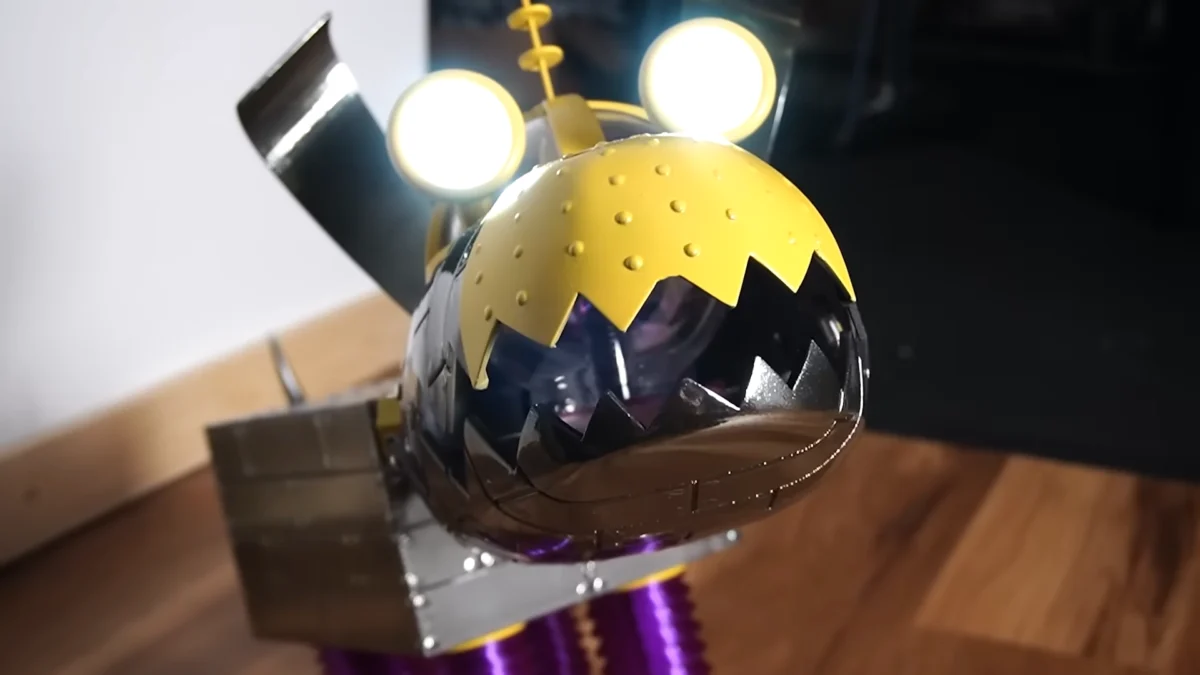
For a generation of viewers who grew up in the early 2000s, The Adventures of Jimmy Neutron, Boy Genius remains a cornerstone of nostalgic animation. Among the cast of eccentric characters, none captured the imagination quite like Goddard—the hyper-intelligent, multi-functional robotic canine. While he existed as a CGI construct on television screens, for one innovative maker named Kiara, the dream of owning a real-life Goddard was not merely a fantasy; it was an engineering challenge waiting to be solved.
What follows is an exploration of the meticulous design, complex fabrication, and technical ingenuity required to transition a fictional digital asset into a fully functional, animatronic companion.
Main Facts: Bringing the Boy Genius’s Best Friend to Life
The project, documented extensively by the creator known as Kiara, represents a significant achievement in amateur robotics and mechanical design. Unlike static props or cosplay shells, this version of Goddard is a life-sized, articulated animatronic that captures the aesthetic and functional spirit of the original cartoon.
Core Technical Specifications:
- Fabrication Method: 3D printing, following the digital extraction of original 3D models from Jimmy Neutron GameCube titles.
- Aesthetic Finish: Specialized chrome and purple paint application to replicate the iconic cartoon look.
- Key Actuation: Linear actuators integrated into the chassis for leg movement, with high-torque servos and a fishing-line tensioning system for head articulation.
- Signature Feature: A functional plasma ball housing, serving as Goddard’s "brain" and maintaining his signature visual glow.
This project sits at the intersection of digital archeology and modern fabrication. By sourcing original geometry from legacy video games, the creator was able to bypass the need for custom 3D modeling from scratch, ensuring that the proportions and "feel" of the robot were authentic to the source material.
Chronology of Development
The journey from a childhood memory to a finished robot was a multi-stage process that spanned several months of iterative design.
Phase 1: Digital Archeology (Months 1–2)
The project began with a hunt for raw data. By extracting 3D assets from Jimmy Neutron video game files, Kiara was able to obtain a foundational mesh of Goddard. However, raw game assets are rarely "print-ready." Kiara spent weeks cleaning up the meshes, ensuring manifold geometry, and segmenting the model into parts that could be printed on standard desktop 3D printers.
Phase 2: Structural Engineering and Printing (Months 3–5)
Once the digital files were prepared, the massive printing phase commenced. Given the life-sized nature of the project, printing was handled in sections. The structural integrity was paramount, as the shell needed to house heavy linear actuators and power supplies. During this phase, Kiara also had to design internal mounting points that were not present in the original character model.
Phase 3: Mechanical Integration (Months 6–8)
This was the most grueling phase of the project. The legs required linear actuators to provide the necessary force to mimic a dog’s gait. The head, meanwhile, presented a unique challenge: the neck needed to move in fluid, organic ways. Using a sophisticated system of servos and fishing-line pulleys—a technique frequently used in professional film animatronics—Kiara achieved a range of motion that allows the head to tilt and swivel with uncanny realism.
Phase 4: Aesthetics and Final Assembly (Months 9–10)
The final stage involved the tedious process of sanding, priming, and painting. Achieving the signature chrome finish required automotive-grade coatings to ensure a reflective, metallic look. The purple accents were airbrushed to perfection, and the plasma ball was wired into the central cavity, providing the final, iconic touch that differentiates Goddard from a standard toy.
Supporting Data: The Mechanics of Animating Fiction
To understand the complexity of Kiara’s work, one must look at the mechanical constraints she faced. Designing an animatronic is a balancing act between weight, power, and torque.
Servo-Pulley Systems
In the world of high-end animatronics, the "fishing line and servo" method is favored because it allows for a high degree of miniaturization. By placing the heavy servos in the torso and running high-tensile fishing line to the head assembly, the developer keeps the "head weight" low, reducing the risk of motor burnout and allowing for faster, more natural movements.
Power Management
The integration of a plasma ball introduced a unique electrical challenge. Plasma balls require high-voltage, low-current power sources, which can create significant electromagnetic interference (EMI). Kiara had to ensure that the control signals for the servos were properly shielded to prevent the "brain" of the robot from causing the legs to jitter or fail.
Professional Perspectives and Industry Context
The field of DIY animatronics has exploded in recent years, fueled by the accessibility of affordable microcontrollers (like the Arduino and Raspberry Pi ecosystems) and high-quality 3D printing. Kiara’s Goddard is a prime example of the "Prosumer" shift—where hobbyists are utilizing tools that were previously reserved for professional prop houses in Hollywood.
According to industry observers in the maker community, projects like this serve as a "proof of concept" for complex mechanical problem-solving. While the robot is intended as a display piece, the skills utilized—inverse kinematics, CAD design, and electrical engineering—are identical to those used by companies like Disney Imagineering or Boston Dynamics.
Implications: The Future of Fan-Made Robotics
The completion of this life-sized Goddard project has significant implications for the broader maker community.
Democratization of Character Replication
We are entering an era where characters from digital media can be manifested into the physical world with near-perfect fidelity. As 3D printing materials become more advanced and actuators become smaller and more powerful, the barrier to entry for building complex, articulated robots is rapidly lowering.
The Preservation of Digital Heritage
Kiara’s use of game assets highlights a growing trend: the use of legacy media as a blueprint for hardware. As older games fade into obscurity, the act of extracting and "re-birthing" these characters into the physical world acts as a form of cultural preservation. It takes a static, pixelated memory and turns it into a tactile, interactive experience.
The Path Forward
For aspiring makers, the lesson of Goddard is clear: passion is the best fuel for technical learning. Kiara did not start with a degree in mechanical engineering; she started with a desire to see a beloved character walk into the real world. By breaking down the monumental task into manageable phases—digital preparation, structural printing, mechanical integration, and aesthetic finishing—she successfully navigated the "Valley of Despair" that often leads many hobbyist projects to be abandoned halfway through.
As the video of the project continues to circulate, it serves as a beacon for what is possible when patience and technical curiosity collide. Whether it is a singing Magikarp or a dystopian robot dog, the ability to bring fiction to life is no longer the exclusive domain of major studios. It is, quite literally, in the hands of the fans.
Final Thoughts: A Tribute to the Boy Genius
Ultimately, Goddard is more than just a collection of plastic, wire, and code. He is a testament to the enduring impact of creative media on the engineers of tomorrow. When we see Goddard tilt his head in response to a command, we aren’t just seeing a triumph of robotics; we are seeing the fulfillment of a promise made by a cartoon years ago—that with enough imagination and a little bit of "genius" in our own right, even the most impossible gadgets can find a home in our reality.
As Kiara continues her journey in the world of animatronics, one thing is certain: the line between the digital screen and our living rooms has never been thinner. We look forward to seeing what character—or what robotic marvel—she chooses to bring to life next.