A Lost Art Reborn: How a Webcam is Bridging the Past and Future of CGI Animation
Los Angeles, CA – In an era dominated by hyper-realistic computer-generated imagery (CGI), the intricate dance between physical models and digital artistry often feels like a relic of a bygone age. Yet, a recent project by the acclaimed visual effects collective Corridor Crew has not only paid homage to this transitional period but has ingeniously revitalized a "lost" animation technique using nothing more than a standard webcam and a miniature figure. This innovative endeavor shines a spotlight on the foundational challenges faced by pioneering animators, particularly those behind seminal works like Jurassic Park, and offers a compelling glimpse into how accessible technology could democratize complex animation workflows.
The team’s success in manipulating digital models with intuitive, camera-based motion capture harks back to a critical juncture in film history when animators sought to bridge the tactile familiarity of puppetry and stop-motion with the burgeoning possibilities of digital rendering. Their open-source "PoseCap" plugin now allows anyone with a camera to replicate a workflow reminiscent of the 1990s’ most advanced VFX studios, proving that sometimes, the most revolutionary advancements can be found by re-examining the wisdom of the past through a modern lens.
The Dawn of Digital: A Chronology of Blended Realities
The transition from practical effects and stop-motion animation to sophisticated CGI was not an abrupt leap but a gradual evolution, marked by experimentation and the ingenious fusion of old and new techniques. For decades, filmmakers relied on meticulously crafted miniatures, intricate puppetry, and frame-by-frame stop-motion to bring fantastical creatures and impossible scenarios to life. Classics like Ray Harryhausen’s mythological beasts in Jason and the Argonauts or the alien chess set in Star Wars: A New Hope are testament to the artistry and painstaking effort involved in these physical methods.
The Early Forays into CGI (1980s-Early 1990s):
The 1980s saw the nascent stages of CGI integration, primarily for abstract or mechanical elements. Films like Tron (1982) and The Last Starfighter (1984) showcased groundbreaking digital sequences, but their applications were often limited by computational power and rendering capabilities. Creating organic, lifelike characters, especially creatures, remained a monumental hurdle. Animators found purely digital workflows to be counter-intuitive, lacking the immediate, tactile feedback that physical models provided. The process of keyframing every subtle movement on a computer screen felt detached and laborious compared to physically manipulating a puppet or model.
Jurassic Park: The Apex of Hybrid Animation (1993):
The turning point arrived definitively with Steven Spielberg’s Jurassic Park. While renowned for its revolutionary CGI dinosaurs, the film’s success was equally dependent on a sophisticated blend of digital effects, animatronics, and a crucial hybrid technique that served as the spiritual predecessor to Corridor Crew’s recent work.
Initially, legendary stop-motion animator Phil Tippett was brought on board to create the dinosaurs using his "go-motion" technique, an advanced form of stop-motion that introduced motion blur. However, as CGI capabilities rapidly advanced during production, the decision was made to shift towards digital dinosaurs. This pivot famously led to Tippett’s quip, "I think I’m extinct," to which Spielberg responded, "Don’t you mean ‘extinct’?"
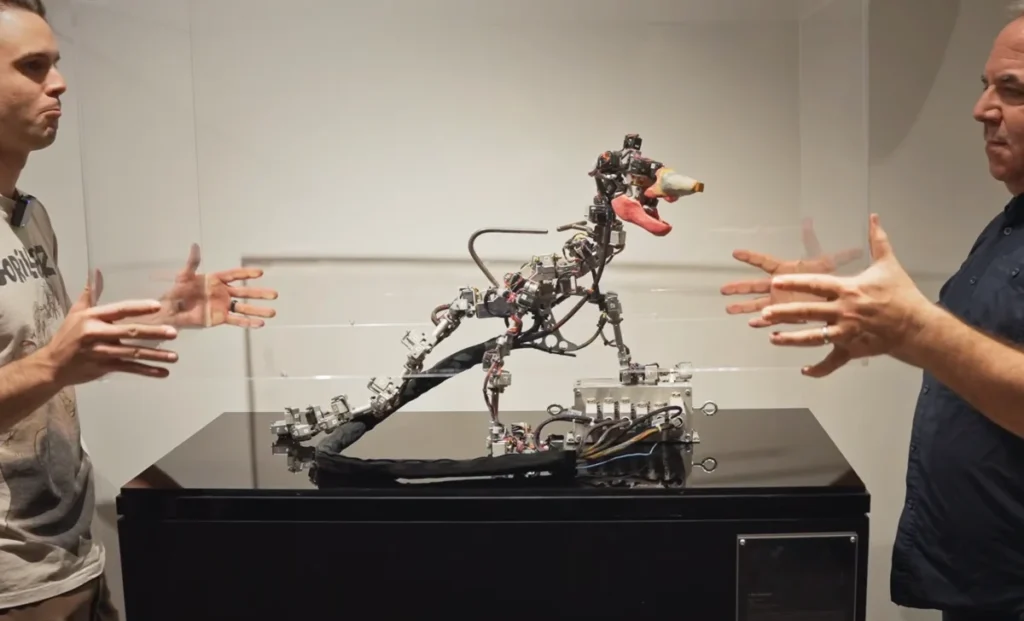
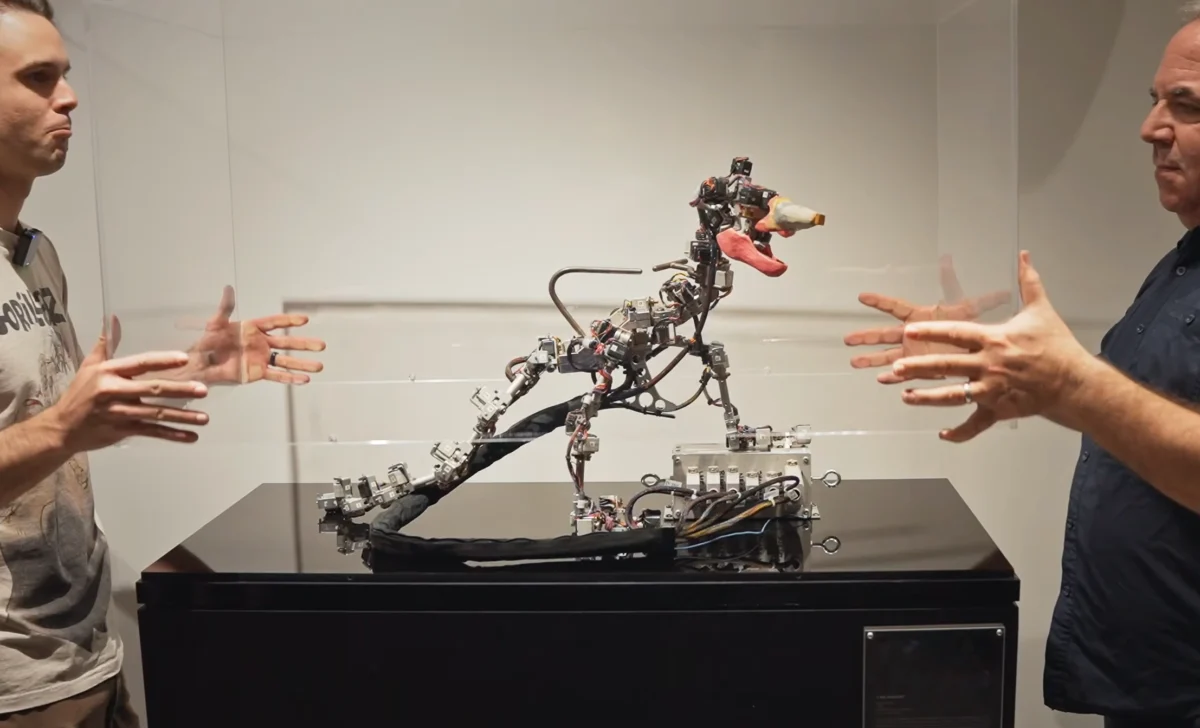
Yet, Tippett’s expertise wasn’t entirely discarded. To facilitate the animators’ transition from physical models to digital ones, a specialized input device was created. This "dinosaur input device" was essentially a physical puppet equipped with sensors. Animators could manipulate the physical model – feeling its weight, its joints, its resistance – and these movements were then translated in real-time to the corresponding digital model on screen. This allowed animators, familiar with the nuances of puppetry, to imbue the digital dinosaurs with a naturalistic fluidity and sense of weight that would have been exceedingly difficult to achieve through purely digital keyframing at the time. It was a tangible bridge, allowing human intuition and physical artistry to guide the nascent digital realm.
Species and the Humanoid Challenge (1995):
The exploration of hybrid physical-digital input continued beyond dinosaurs. The 1995 film Species presented another challenge: animating a humanoid creature. For this, a sophisticated humanoid input device, akin to a detailed marionette adorned with sensors, was employed. As depicted in historical behind-the-scenes footage and stills, animators could physically puppeteer this miniature, and its movements would be mirrored by the digital character on screen. This allowed for the capture of nuanced human-like gestures and locomotion, tackling the "uncanny valley" problem even before the term became widespread. These devices represented a crucial evolutionary step, proving the viability of using physical interaction to drive digital animation.
Supporting Data: Corridor Crew’s Modern Reimagining
Despite their foundational importance, these specialized input devices eventually faded into obscurity. As CGI software matured, offering more intuitive digital interfaces and robust animation tools, and as motion capture technology evolved to directly record human actors, the need for these physical intermediaries diminished. The technology, once cutting-edge, became a curious footnote in VFX history – until now.
Corridor Crew, known for their deep dives into visual effects, technical challenges, and often recreating iconic movie scenes, recognized the inherent value in this "lost" methodology. Their project sought to answer a fundamental question: Could the tactile, intuitive experience of animating a physical model be replicated and democratized using readily available, modern technology? The answer, unequivocally, is yes.
The Mechanics of Modern Recreation:
Corridor Crew’s approach is elegant in its simplicity and profound in its implications. They developed a motion capture plugin, christened "PoseCap," that leverages a standard webcam to track the movements of a small, human miniature. By holding and manipulating this miniature with their hands, animators can directly influence the digital model on screen.
The core technology behind PoseCap likely utilizes advanced computer vision algorithms, possibly involving markerless motion tracking. Modern machine learning models are adept at recognizing and tracking key points on objects, even in 2D video feeds. By training a model on the specific miniature – identifying its joints, limbs, and orientation – the webcam can capture its movements in real-time. This positional and rotational data is then translated and applied to the corresponding digital rig within 3D animation software (like Blender, Maya, or Unreal Engine).
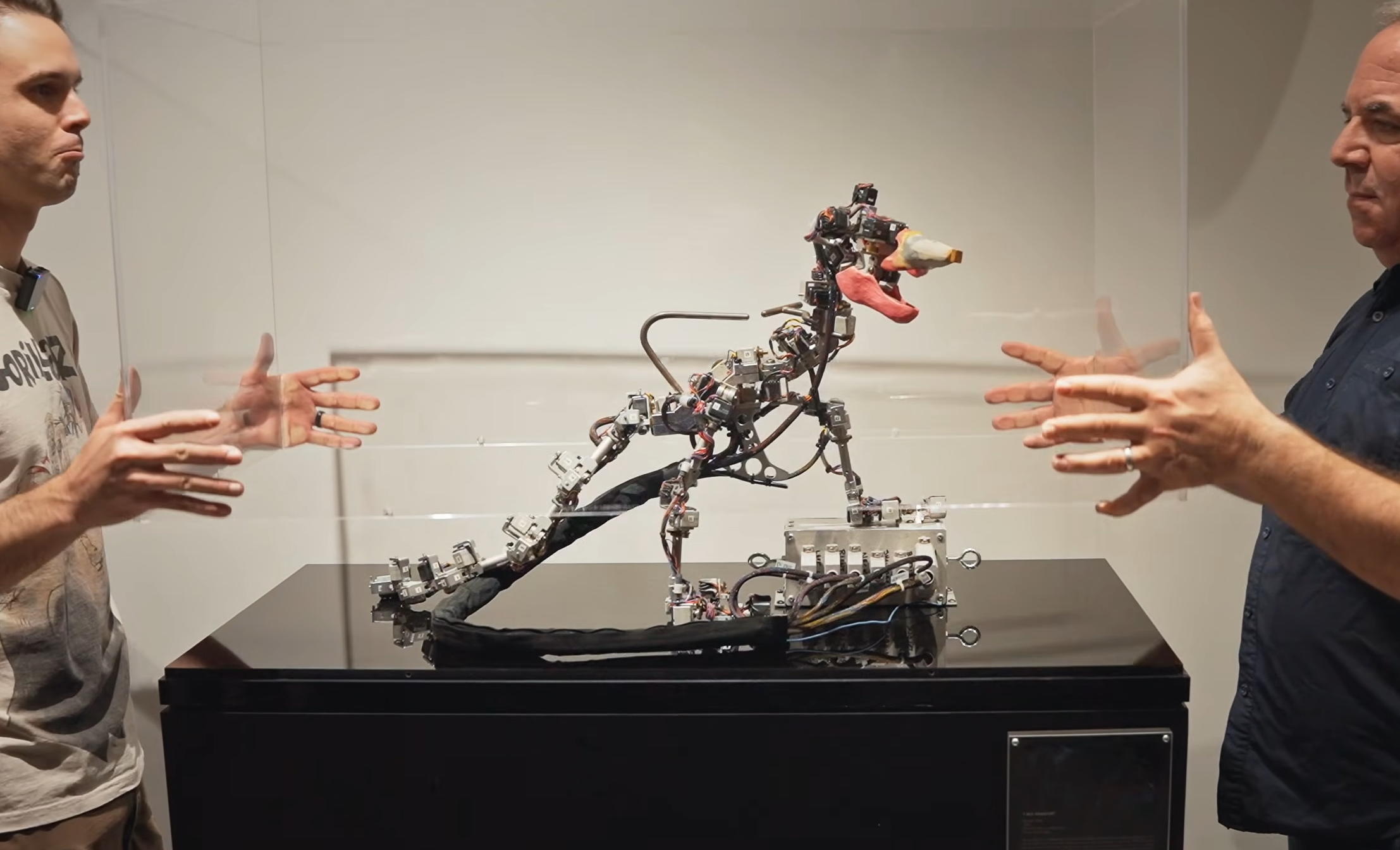
The project is significant for several reasons:
- Accessibility: Unlike the custom-built, expensive, and often proprietary hardware of the 90s, Corridor Crew’s solution requires only a webcam and a miniature, making sophisticated animation input accessible to independent creators, students, and hobbyists worldwide. The open-source nature of the PoseCap plugin further amplifies its reach.
- Intuition and Workflow: It reintroduces the "feel" and direct manipulation that animators found so valuable in the early days. Feeling the weight and touch of a miniature, understanding its balance and kinetics through physical interaction, can lead to more natural and expressive animations than purely mouse-and-keyboard input. This directly addresses the initial challenges faced by Jurassic Park animators.
- Educational Value: The project serves as a practical lesson in the history of VFX, demonstrating the ingenuity required to overcome technological limitations and the cyclical nature of innovation. It allows contemporary animators to experience a workflow that was pivotal in the evolution of their craft.
The YouTube video showcasing their work provides a compelling demonstration, illustrating how subtle hand movements on the miniature translate into dynamic, lifelike animations of digital characters. This tangible connection between the physical and digital is a powerful reminder of the human element at the heart of even the most technologically advanced art forms.
Shifting Paradigms: The Industry’s Embrace and Abandonment
The initial enthusiasm for hybrid input devices, as seen with Jurassic Park and Species, eventually waned. While offering an intuitive bridge, these systems presented their own set of limitations and ultimately succumbed to the inexorable march of technological progress and shifting industry demands.
Reasons for Abandonment:
- Scalability and Efficiency: Custom-built physical input devices were expensive to manufacture, maintain, and adapt. As film productions grew in scale and complexity, the need for more standardized, scalable, and efficient workflows became paramount. Purely digital workflows, once cumbersome, became streamlined.
- Advancements in Digital Tools: Animation software rapidly evolved. Sophisticated inverse kinematics (IK) and forward kinematics (FK) rigging systems, advanced spline editors, and intuitive animation curves allowed animators to achieve high levels of realism and control directly within the digital environment. The "feel" of physical manipulation was increasingly emulated through software tools.
- Rise of Performance Capture: The most significant factor was the advent of robust performance capture (often called "motion capture" or "mocap"). This technology allowed for the direct recording of human actor movements, which could then be applied to digital characters. Mocap offered unparalleled realism for human and humanoid characters, eliminating the need for intermediary physical puppets. It also sped up production significantly, especially for projects requiring extensive character animation.
- Specialization vs. Generalization: The dinosaur input device was highly specialized. As the industry moved towards generalized tools and pipelines that could handle a wide range of animation tasks, highly specific hardware became less attractive.
- Data Fidelity: While intuitive, the sensor data from physical puppets might not always have been as precise or easily editable as digitally generated keyframes or full performance capture data.
Industry Perspectives Today:
Today, the vast majority of major film productions rely on either pure keyframe animation, performance capture, or a combination of both. While animation veterans and historians acknowledge the crucial role of hybrid devices in the early days of CGI, there is little professional impetus to revert to them for large-scale productions. The industry prioritizes speed, cost-effectiveness, and the ability to iterate quickly within a fully digital pipeline.
However, the sentiment among many artists and educators remains that there is an undeniable value in tactile interaction. The "official response," if one could generalize, is a recognition of the hybrid methods’ historical significance and an appreciation for projects like Corridor Crew’s that keep these pioneering spirits alive. For many, the ability to physically manipulate an object resonates deeply with the artistic process, tapping into a different cognitive pathway than abstract screen manipulation.
Implications: Democratizing Creativity and Re-evaluating Intuition
Corridor Crew’s project extends far beyond a nostalgic recreation; it carries significant implications for the future of animation, education, and creative technology.
Democratizing Animation:
By making a sophisticated motion capture input system accessible with off-the-shelf components, Corridor Crew has lowered the barrier to entry for complex animation. This empowers:
- Independent Filmmakers: Small studios and individual artists can now experiment with character animation and creature design without needing expensive, professional-grade motion capture suits or complex rigging setups.
- Students and Educators: Animation schools can use this plugin as an intuitive teaching tool, allowing students to grasp the fundamentals of character movement and puppetry in a hands-on, engaging way. It provides a tangible link to animation principles that can sometimes feel abstract in a purely digital environment.
- Hobbyists and Makers: The maker community, always keen to explore innovative applications of technology, will find endless possibilities for creative expression, from animated shorts to interactive digital puppets.
The Enduring Value of Intuitive Interfaces:
The core insight behind the 90s hybrid devices, and now Corridor Crew’s webcam solution, is the human need for intuitive, tactile interfaces in creative work. While digital tools offer immense power, they can sometimes create a disconnect between the artist’s intent and the final output. The ability to physically "feel" the animation, to experience the kinetics of a character through one’s own hands, taps into a primal artistic impulse. This project highlights an ongoing debate in human-computer interaction: how to design digital tools that enhance creativity without sacrificing the intuitive, physical engagement that often sparks inspiration.
The Cyclical Nature of Innovation:
Technology often progresses in cycles. What is deemed obsolete today might find new life with tomorrow’s advancements. The "dinosaur input device" was abandoned because its limitations outweighed its benefits given the technology of its time. However, with the advent of powerful, accessible computer vision and machine learning, those limitations have been dramatically reduced, allowing the core concept to flourish once more. This reminds us that historical "dead ends" in technology can often be fertile ground for future innovation when revisited with new tools and perspectives.
Beyond Animation:
The implications could extend beyond character animation. Imagine architects manipulating miniature building models to explore digital designs in real-time, or product designers physically sculpting digital prototypes. The principle of using a simple, physical interface to control complex digital models has broad applicability across various design and creative fields.
In conclusion, Corridor Crew’s re-imagining of a "lost" VFX device is more than just a clever hack; it’s a profound statement on the enduring value of intuitive interfaces, the accessibility of modern technology, and the rich, often overlooked history of visual effects. By bridging the past and future, they have not only paid tribute to the pioneering spirit of early CGI animators but have also opened up exciting new avenues for creative expression for a new generation of digital artists. The era of tactile digital animation, it seems, is far from extinct.