Alan Turing’s Secret Legacy: Unearthing the Revolutionary "Delilah" Speech Encryptor
LONDON, UK – While the name Alan Turing is indelibly linked with the cracking of the Enigma code and the dawn of computing, a lesser-known facet of his prodigious genius has recently come to light, revealing a remarkable foresight into modern digital communication. Codenamed Delilah, this nearly-forgotten speech encryption device, developed in the shadows of World War II, stands as a testament to Turing’s multidisciplinary brilliance, foreshadowing technologies that would become commonplace decades later. Its story, meticulously preserved in the personal archives of a collaborating engineer, offers a compelling narrative of innovation, wartime secrecy, and the enduring importance of documenting human endeavor.
The recent revelations, sparked by an article in Popular Mechanics, highlight Delilah as an early, groundbreaking form of digital encryption. Developed concurrently with Turing’s monumental efforts against the Nazi Enigma machine – itself a marvel of mechanical cryptography – Delilah pursued a different, equally critical objective: securing Allied voice communications from enemy interception. The device’s extraordinary compactness and portability, especially when contrasted with its contemporary counterparts, underscore a visionary approach to secure communications that was far ahead of its time.
The Main Facts: A Glimpse into Turing’s Unsung Innovation
At its core, Delilah was designed to scramble human speech, rendering it unintelligible to unauthorized listeners, and then decrypt it on the receiving end, ensuring secure conversations. Its development was cloaked in the utmost secrecy, taking place at a discreet location away from the bustling code-breaking hub of Bletchley Park, where Turing spearheaded the Enigma project. This separation allowed Turing to focus his inventive energies on a distinct, yet equally vital, cryptographic challenge: defensive communication security.
Central to Delilah‘s implementation was a collaboration between Turing and a young, exceptionally talented electrical engineer named Donald Bayley. Bayley’s role was pivotal, translating Turing’s complex theoretical concepts and intricate mathematical designs into practical, functional circuitry. Crucially, Bayley also maintained an extensive personal record of their work, including design notes, discussions, and observations – a trove of historical data that remained hidden for decades. These invaluable documents, which surfaced at auction a few years after Bayley’s passing in 2023, have finally provided a first-hand account of Delilah‘s genesis and capabilities, bringing this unsung chapter of wartime innovation into the public consciousness.
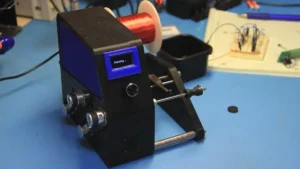
What truly set Delilah apart was its revolutionary design for portability. In an era where secure voice systems were gargantuan, power-hungry machines, Turing and Bayley engineered Delilah into three relatively small boxes, collectively weighing approximately 39 kilograms, and crucially, capable of being battery-powered. This miniaturization was an astonishing feat for the 1940s, promising a level of tactical flexibility for secure communications that no other system could offer. However, by the time Delilah was fully developed and ready for potential deployment, World War II had drawn to a close, leading to the project’s quiet discontinuation without ever seeing widespread production or operational use.
Chronology: From Wartime Necessity to Post-War Obscurity
The story of Delilah is intrinsically linked to the desperate urgency of World War II and the relentless cryptographic arms race it engendered.
The Genesis of a Parallel Project (Early 1940s)
While Alan Turing achieved global recognition for his work on breaking the Enigma code at Bletchley Park, the British war effort simultaneously faced another critical challenge: how to ensure their own high-level communications remained impervious to Axis eavesdropping. The need for secure voice channels for commanders, intelligence officers, and diplomatic personnel was paramount. It was in this environment that Turing, already a central figure in offensive cryptography, turned his mind to defensive solutions. The decision to develop Delilah at a separate, undisclosed location was likely a strategic move to compartmentalize sensitive projects and maximize security, preventing any potential leaks from compromising either the Enigma efforts or the new speech encryption device.
The Turing-Bayley Collaboration (Mid-War Years)
The crucial developmental phase of Delilah spanned several intense years during the war. Turing, with his profound theoretical insights into mathematics, logic, and cryptography, laid the conceptual groundwork. He envisioned a system that could effectively "digitize" speech – converting analog sound waves into a stream of numerical data – then scramble this data using complex algorithms, and finally re-convert it back into clear speech at the receiving end. This vision, in essence, mirrored the core principles of modern digital encryption.
However, theoretical brilliance alone could not manifest a functional device. This is where Donald Bayley’s expertise became indispensable. As a young electrical engineer, Bayley possessed the practical skills to bridge the gap between abstract concepts and tangible hardware. He was responsible for designing and implementing the intricate electronic circuits, amplifiers, filters, and other components necessary to bring Turing’s designs to life. Their collaboration was a powerful synergy: Turing provided the "what" and the "why," while Bayley provided the "how."
Bayley’s meticulous record-keeping during this period proved to be an unexpected gift to history. His copious notes, diagrams, and personal reflections on their work provided an unparalleled window into the day-to-day challenges and breakthroughs of the Delilah project. Without his dedication to documentation, much of this history would undoubtedly have been lost forever, swallowed by the prevailing secrecy of wartime operations.
The End of the War and the Project’s Demise (1945)
As the Allied forces pushed towards victory, the urgency that fueled projects like Delilah began to wane. By 1945, when the device was reportedly nearing completion and ready for potential production, the war in Europe concluded, followed shortly by the surrender of Japan. With peace declared, the immediate strategic imperative for a highly secure, portable voice encryption system diminished dramatically. The enormous resources, both human and material, that had been dedicated to wartime innovation were rapidly redirected towards reconstruction and demobilization. In this new peacetime context, the costly and highly classified Delilah project was deemed no longer necessary, and it was quietly shelved, its revolutionary potential unrealized.
The Post-Mortem Revelation (Post-2023)
For nearly eight decades, Delilah remained largely an untold story, a footnote in the vast history of wartime secrecy. Donald Bayley, the unassuming engineer whose diligent notes held the key, lived a life away from the spotlight. It was only after his death in 2023 that his personal effects, including the extraordinary collection of documents detailing his work with Turing on Delilah, came to auction. The surfacing of these papers finally allowed historians, cryptographers, and the public to piece together the full narrative of this remarkable device, casting a new light on Alan Turing’s diverse contributions to modern technology.
Supporting Data: A Technological Leap in a World of Giants
To truly appreciate Delilah‘s ingenuity, it’s essential to understand the landscape of secure voice communication during World War II. The prevailing benchmark for high-level encrypted speech was the formidable SIGSALY system, developed by Bell Labs in the United States.
The Colossus of SIGSALY
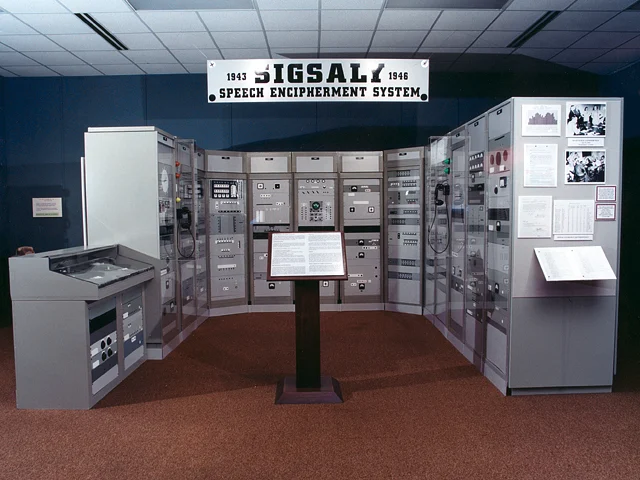
SIGSALY (the name is not an acronym, but derived from "Secure Digital SPeecH SYstem" in early design phases) was a technological marvel in its own right, deployed by the Allies for top-secret communications between leaders like Franklin D. Roosevelt and Winston Churchill. It was the first secure voice system to digitize speech, using a vocoder to analyze and synthesize voice, and then encrypt the resulting digital signal with a one-time pad. This approach made SIGSALY theoretically unbreakable.
However, SIGSALY’s capabilities came with immense practical drawbacks. It was an absolutely monstrous system, requiring a room full of equipment, weighing over 50 tons, and demanding massive power supplies. Each terminal involved racks of vacuum tube electronics, a complex phonograph system for playing one-time pads, and dedicated operators. Its sheer size and power requirements meant it could only be deployed at fixed, secure locations, such as embassies or command centers. Transporting and setting up a SIGSALY system was a logistical nightmare, severely limiting its tactical flexibility. It was a testament to American industrial might and cryptographic ingenuity, but it was anything but portable.

Delilah’s Revolutionary Miniaturization and Digital Precursor
Against this backdrop, Delilah‘s design philosophy represented a radical departure. Turing and Bayley’s achievement in compressing the essential functions of secure voice encryption into three relatively small, portable boxes, weighing a total of just 39 kilograms (approximately 86 pounds), was nothing short of revolutionary. Furthermore, the ability for Delilah to be battery-powered meant it could operate independently of fixed power grids, opening up possibilities for use in field operations, moving vehicles, or temporary command posts – scenarios completely impossible for SIGSALY.
While specific technical details of Delilah‘s internal workings are still being fully analyzed from Bayley’s notes, it is understood to have employed principles that were highly advanced for its time. It likely involved converting analog speech into a digital stream (a form of pulse-code modulation or similar early digitization), manipulating the frequencies or timing of these digital signals, and then scrambling them using a pseudo-random key sequence. This process effectively made Delilah an early precursor to modern digital encryption techniques, where voice is first digitized, then algorithmically encrypted, and finally transmitted.
The implications of such a portable, secure device, had it been deployed, would have been profound. It could have provided secure tactical communications for front-line commanders, intelligence operatives, or even resistance movements, drastically enhancing their operational security and effectiveness. The fact that this capability existed, even if unutilized, highlights a lost opportunity that could have significantly impacted the conduct of the war, particularly in its later stages.
Official Responses and Historical Context: The Shifting Sands of Priority
The official handling of the Delilah project reflects the stark realities of wartime secrecy and the rapid re-prioritization that followed the cessation of hostilities.
Wartime Secrecy and Resource Allocation
During the war, projects like Delilah were conducted under extreme secrecy, often known only to a select few within the intelligence and scientific establishments. Funding and resources would have been allocated based on perceived strategic necessity, often with little public or even broad governmental oversight. The very existence of such a device, designed to protect the most sensitive conversations, meant that its development would have been highly compartmentalized, protecting it from both enemy spies and internal leaks. Turing’s reputation as a genius and his proven track record with Enigma would have undoubtedly provided him with significant latitude and resources for Delilah‘s development.
The Post-War Disengagement
The decision to "wind down" Delilah without production or deployment after the war was not necessarily a reflection of its technical merits but rather a pragmatic response to a changed world. In the immediate aftermath of WWII, Britain faced immense challenges: economic recovery, social reconstruction, and the demobilization of millions of service personnel. The pressing need for advanced wartime technologies like Delilah evaporated overnight. There was a prevalent belief that the era of large-scale conflict was over, and the perceived peacetime "need" for such an elaborate and costly vocal encryption system was low. Resources were instead channeled into more immediate national priorities.
This decision, while understandable from a post-war economic perspective, inadvertently consigned Delilah to obscurity. Had the Cold War begun immediately, or had the perceived threat remained high, Delilah‘s potential would likely have been recognized and exploited. Instead, it became a forgotten piece of technological history, a testament to brilliant minds working on problems whose time had not yet truly arrived for public appreciation.
Modern Recognition and Reassessment
Today, the rediscovery of Delilah has sparked a renewed appreciation among historians, cryptographers, and technology enthusiasts. It serves as a powerful reminder that much of wartime innovation, especially in highly classified fields, remains hidden for decades. The "official response" in the modern era is one of awe and admiration for Turing’s broader scope of work. Cryptographic experts now recognize Delilah as a crucial stepping stone in the evolution of secure communications, a direct ancestor to the encrypted phone calls, secure messaging apps, and VPNs that define our digital age. It enriches our understanding of Turing’s legacy, demonstrating that his genius extended beyond theoretical computing and code-breaking into practical, cutting-edge electrical engineering and communication security.
Implications: Turing’s Enduring Vision and the Power of Documentation
The story of Delilah carries profound implications, not only for our understanding of Alan Turing’s legacy but also for the broader history of technology, the importance of historical documentation, and the nature of innovation itself.
Broadening Turing’s Legacy
For decades, Alan Turing was primarily celebrated for his foundational work in theoretical computer science (the Turing machine) and his pivotal role in breaking the Enigma code. Delilah adds another crucial dimension to his already monumental achievements. It reveals him not just as a brilliant mathematician and logician, but also as a pragmatic engineer with a keen understanding of applied technology and the future of secure communication. This project solidifies his reputation as a polymath whose vision spanned multiple disciplines, from abstract theory to the practical application of electronics. It underscores that his contributions to the digital age were even more pervasive than previously understood.
Foreshadowing Modern Secure Communications
Delilah‘s approach to digitizing and scrambling speech was remarkably prescient. It laid conceptual groundwork for technologies that would only become feasible with the advent of miniaturized transistors and advanced digital signal processing. Every secure phone call made today, every encrypted messaging app like WhatsApp or Signal, owes a conceptual debt to the principles explored in Delilah. It was an early, albeit analog-heavy, attempt at the very problem that modern cryptography has now largely solved: how to ensure privacy in a world of pervasive electronic communication. Its existence pushes back the timeline for the development of digital encryption, highlighting that the seeds were sown much earlier than commonly assumed.
The Indispensable Role of Documentation
Perhaps one of the most poignant lessons from Delilah‘s rediscovery is the critical importance of meticulous documentation. Donald Bayley’s decision to take "copious notes" and preserve them for decades single-handedly ensured that this significant chapter of technological history would not be lost forever. So much classified wartime innovation likely remains hidden, or has been irrevocably lost, simply because individuals involved did not or could not document their work. The story of Delilah is a powerful reminder that if the people involved don’t write things down while the knowledge is fresh, that invaluable insight can simply disappear.
This point resonates with other historical examples, such as the comprehensive documentation of liquid rocket propellants by figures like John D. Clark, whose book "Ignition!" famously details the often-dangerous and complex chemistry behind rocket fuels. What might seem like a "dry-sounding topic" can, through diligent documentation, become a vibrant, accessible, and vital part of our shared scientific and technological heritage. Bayley’s commitment to record-keeping mirrors this dedication, allowing future generations to benefit from the efforts of wartime pioneers.
Lessons in Innovation and Unfulfilled Potential
Delilah‘s story also serves as a compelling case study in innovation, its often-circuitous path, and the concept of unfulfilled potential. It demonstrates that groundbreaking ideas can emerge under intense pressure, but their adoption and impact are subject to broader geopolitical and economic forces. While Delilah never saw active service, its very existence affirms that the drive for secure, portable communication was a recognized need even in the earliest days of electronic warfare. It was a technology ahead of its time, a solution waiting for the right problem to persist into peacetime, or for the necessary supporting infrastructure and components to catch up.
In conclusion, the unearthing of Delilah is more than just an interesting historical footnote; it is a profound enrichment of Alan Turing’s legacy and a vital contribution to the history of cryptography and digital communication. It reminds us that behind the well-known narratives of wartime heroism and scientific breakthrough often lie countless untold stories of ingenuity, collaboration, and dedication, waiting for the right moment to emerge from the shadows of secrecy and take their rightful place in the annals of human achievement.